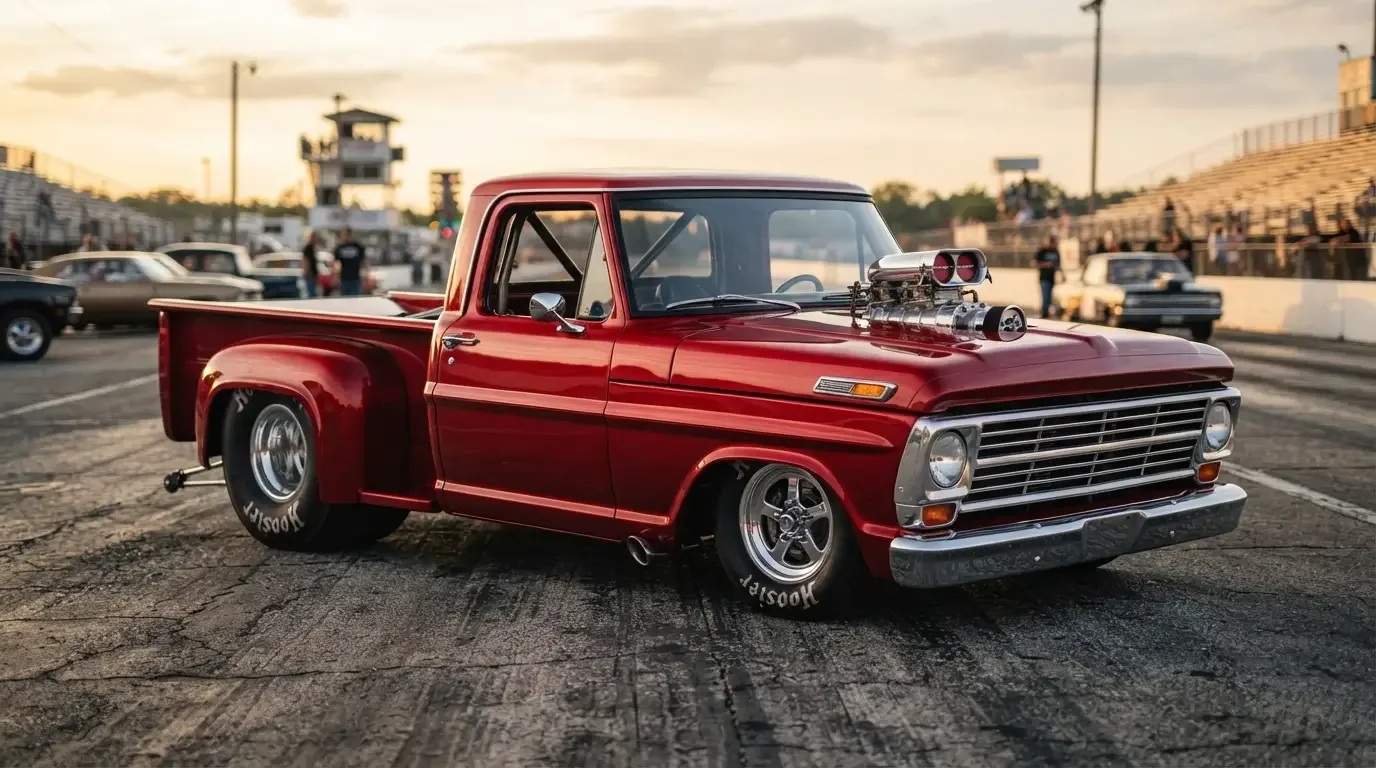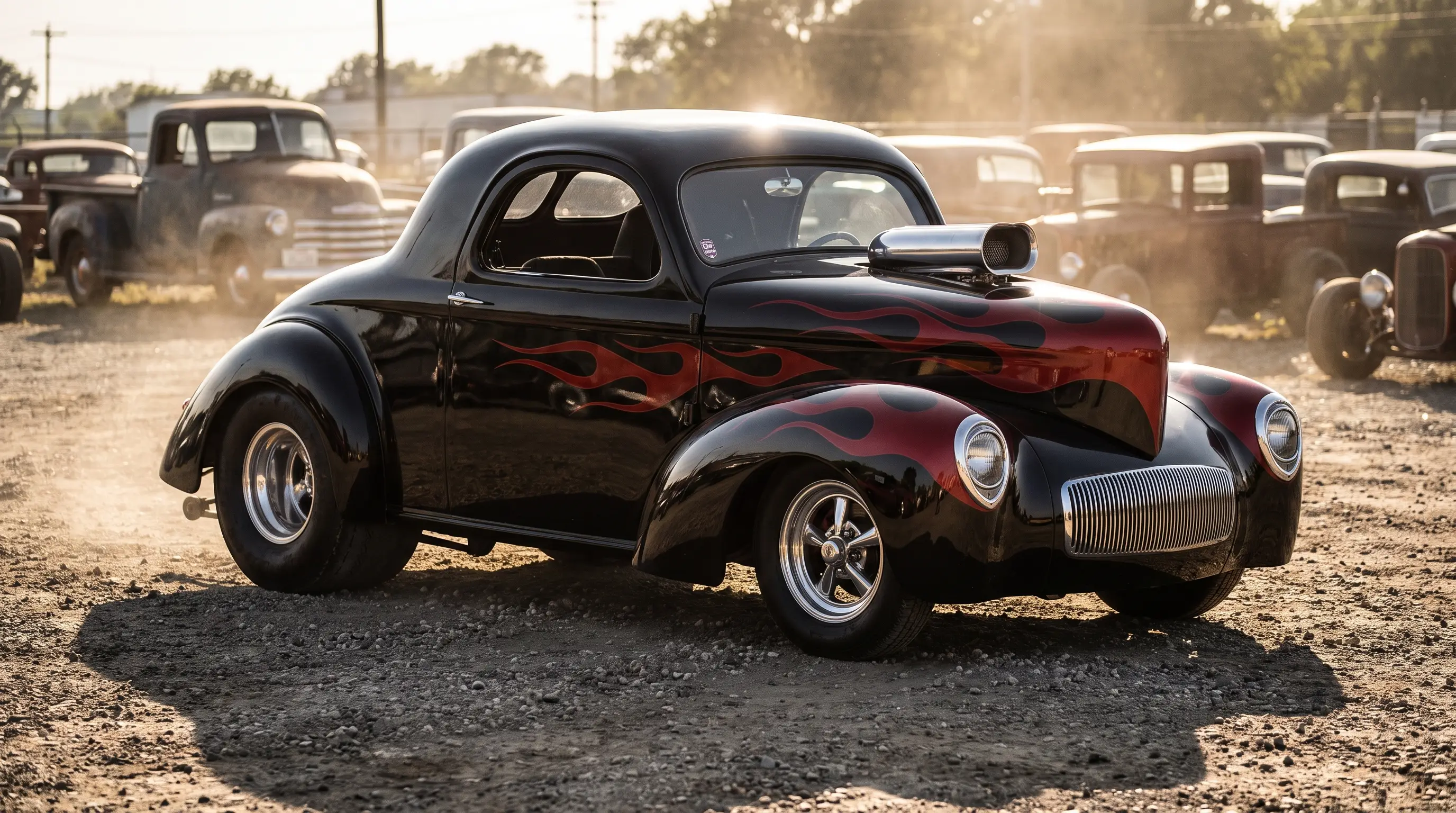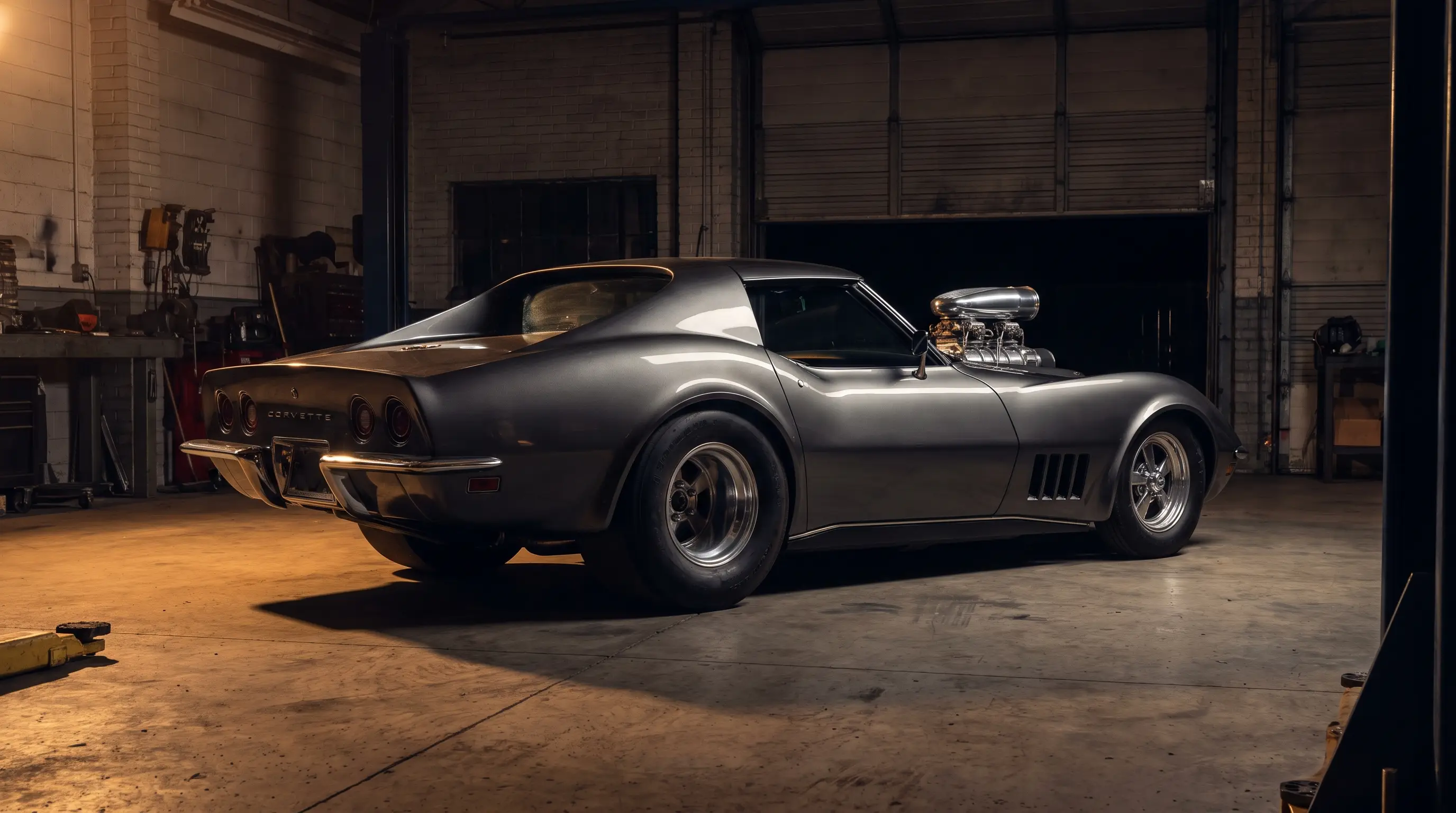
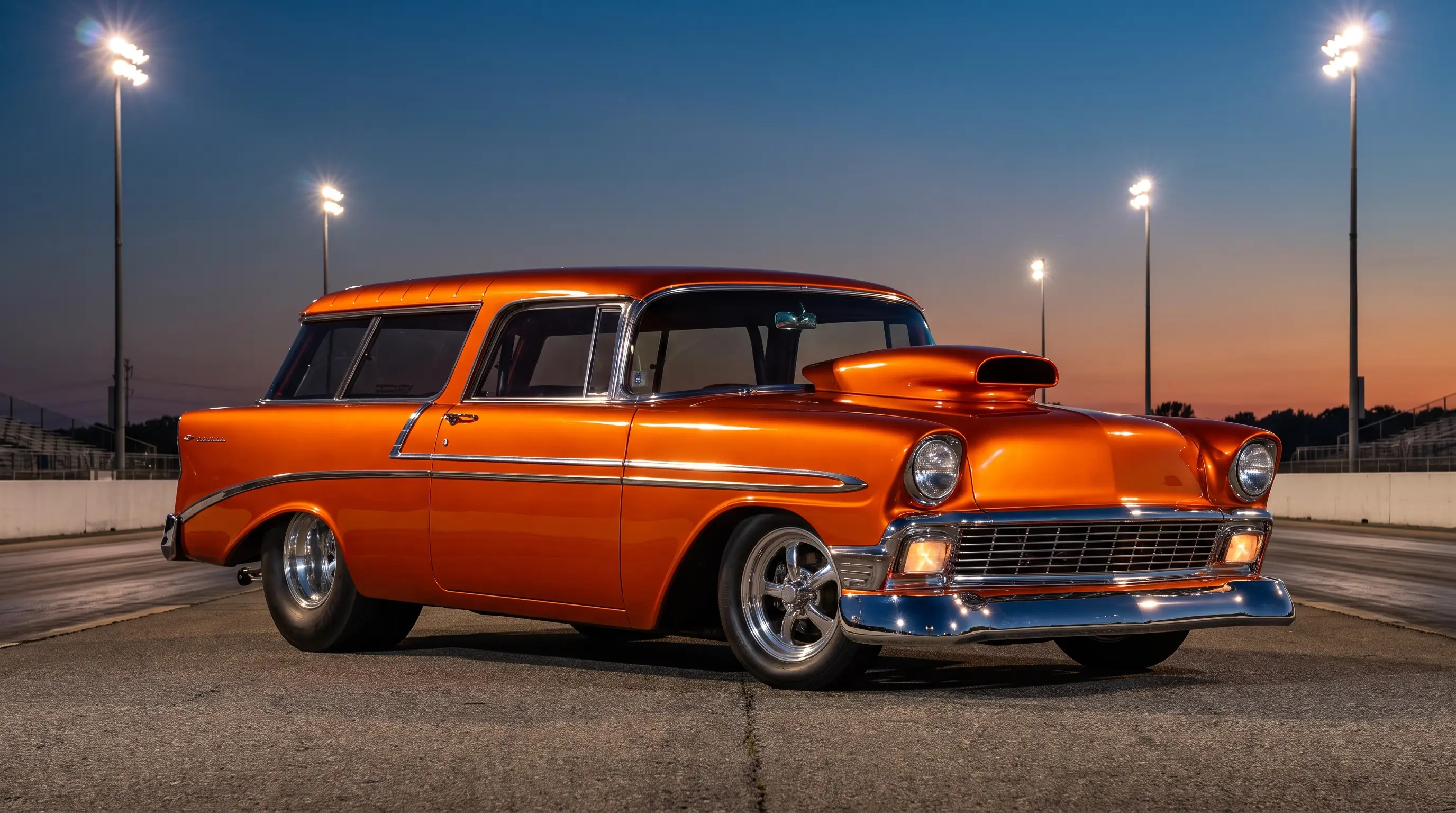
Nobody sets out to build a pro street station wagon. That is not how it works. You end up with a wagon in the shop because it was cheap, because the sedan version rusted out from under you, or because your uncle handed you the keys and said good luck. Then one day you look at that long, flat roofline and that big empty cargo area and you start thinking about how much tire you could hide back there. I have built two wagons in my career and both times it started as a joke and ended as a serious car.
Why a wagon makes an unlikely drag car
Station wagons were never meant to be fast. They were built to haul kids, groceries, and camping gear, which means most of them left the factory with soft suspension, a mild small block, and gearing meant for towing a boat, not for cutting a light. That is exactly why a wagon turned Pro Street feels so different from a Nova or a Chevelle wearing the same tires. The extra length and the boxy greenhouse change the whole visual proportion. A tubbed wagon with a blown big block sitting under a scooped hood looks almost wrong, in a good way, and that contrast is a big part of the appeal.
The Chevy Nomad and various Chevelle and Vega wagons showed up on the Pro Street scene through the 1980s, along with the occasional Ford Torino or Fairmont wagon. None of these were common builds, which is exactly why the ones that exist still get attention decades later.
What actually changes when you build one
The biggest headache on a wagon build is the rear structure. A two door sedan or coupe has a trunk floor you can cut into and rebuild around a narrowed rear end. A wagon has a full cargo floor tied into the roof rails and the tailgate opening, so tubbing the rear wheel tubs means dealing with more sheet metal and more structural bracing to keep the body from flexing. Builders who took shortcuts here ended up with wagons that cracked paint and popped welds within a season. The ones that lasted had extra subframe connectors and reinforced rear rails built in from the start.
| Detail | Typical Pro Street wagon build |
|---|---|
| Common donor cars | Chevelle wagon, Nomad, Vega wagon, Fairmont wagon |
| Rear structure challenge | Tailgate opening and roof rails reduce chassis stiffness |
| Typical fix | Boxed subframe connectors, reinforced rear rails |
| Common engines | Small block or big block Chevy, occasional blown setup |
| Era built | Mostly 1980s through early 1990s |
Parts you cannot just order
Anyone who has priced a wagon rear window seal knows the problem. These cars sold in much smaller numbers than the two door coupe versions of the same platform, so trim, glass, and interior parts dried up fast once the junkyards thinned out. A guy building a Chevelle coupe can find reproduction parts from a dozen catalogs. A guy building a wagon is calling around to swap meets and hoping somebody parted out a rust bucket twenty years ago and still has the tailgate hardware in a box.
The look these cars ended up with
A wagon that keeps its full glass area and roofline reads differently on the road than a coupe or sedan wearing the same drivetrain, and builders had to think about paint and graphics with that difference in mind. Long, unbroken side panels on a wagon gave sign painters and airbrush artists a much bigger canvas than a coupe door offered, and some of the more memorable wagon builds from the era used that space for elaborate scenes rather than simple flames or stripes. A wagon with a mural running the length of its rear quarter panel, paired with a set of slicks poking out from under a subtly tubbed rear, became its own kind of statement piece at shows through the 1980s.
Interior work mattered too, in a way it did not always on a coupe. Since a wagon's cargo area was still visible through the tailgate glass, some builders finished that space with the same care as the front seats, upholstering the cargo floor and side panels rather than leaving bare metal or a roll cage exposed. Others went the opposite direction and turned the whole rear section into a functional tool storage area for the strip, treating form and function as two entirely separate conversations happening in the same car.
Where the wagon crowd overlaps with everyone else
Wagon builders and truck builders talk to each other more than you might think, mostly because both groups deal with hauling body shapes that were never built for speed. If you want the full story on how the truck and oddball side of the movement got going, it runs on the same logic as the wagon builds. Somebody looked at a shape everybody else ignored and asked why not.
"A coupe gets you a nice looking car. A wagon gets you a conversation, because nobody expects it and everybody wants to know what is under the back."
- Mike Sullivan
What draws people to a wagon over anything else
I have asked more than one wagon owner why they picked this shape over an easier coupe project, and the answer is almost always some version of the same thing. A wagon surprises people in a way a coupe cannot anymore, since most show goers have seen a hundred tubbed Chevelles but maybe two or three wagons in their entire life. That rarity creates a different kind of satisfaction for the builder, less about fitting into an established look and more about proving a shape everyone dismissed could hold its own on the strip and on the show field at the same time.
Buying one now
Finished Pro Street wagons rarely sit on the market long, since there are so few of them to begin with. Most transactions happen through word of mouth at swap meets or club events rather than big auction houses. If you are hunting for one, it pays to check listings regularly and move fast when something legitimate shows up, since a real running example with documentation does not last. You can browse classic Pro Street car listings to see what is currently available and get a feel for realistic pricing before you commit to a purchase.
A wagon will never be the obvious choice for a Pro Street build, and that is the whole point. Every one of these cars on the road today exists because somebody decided the odd choice was the right one, and forty years later that decision still turns heads at every show it rolls into.