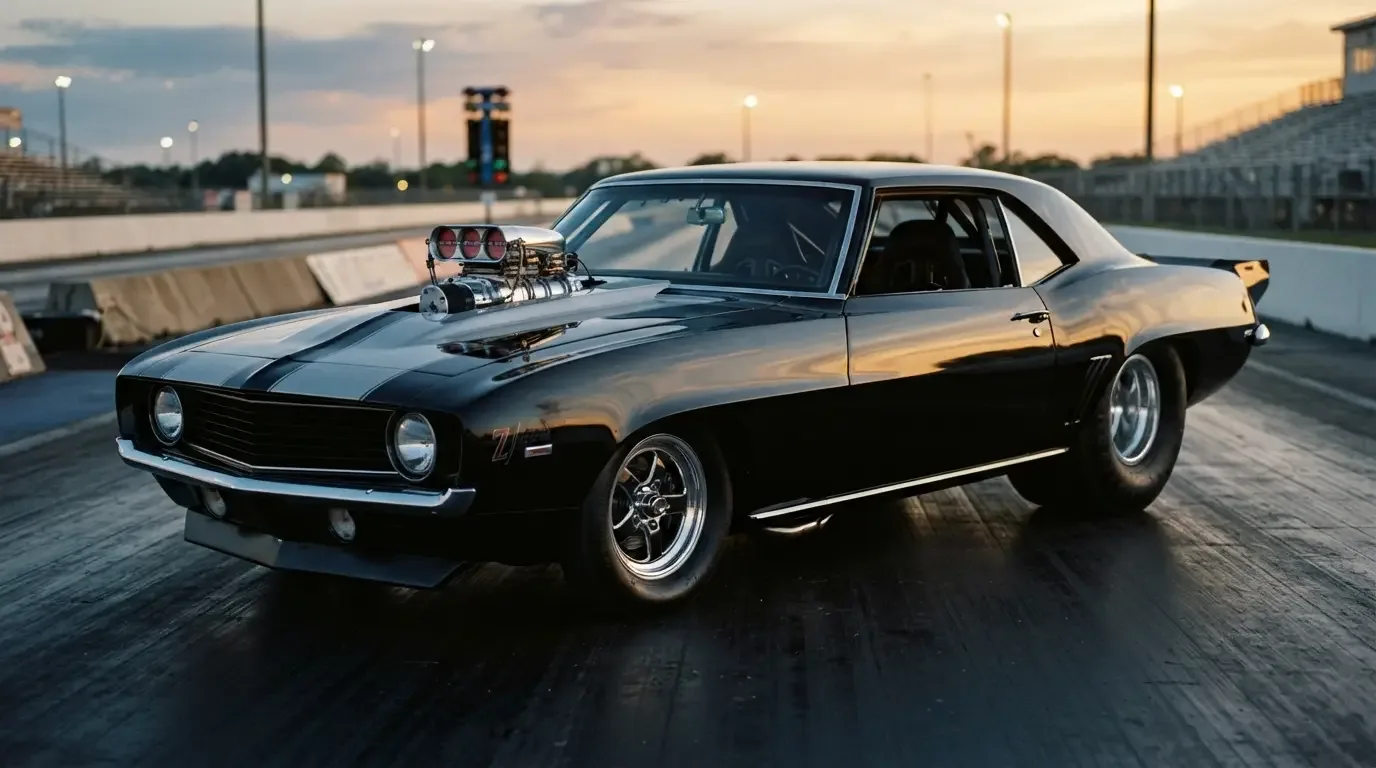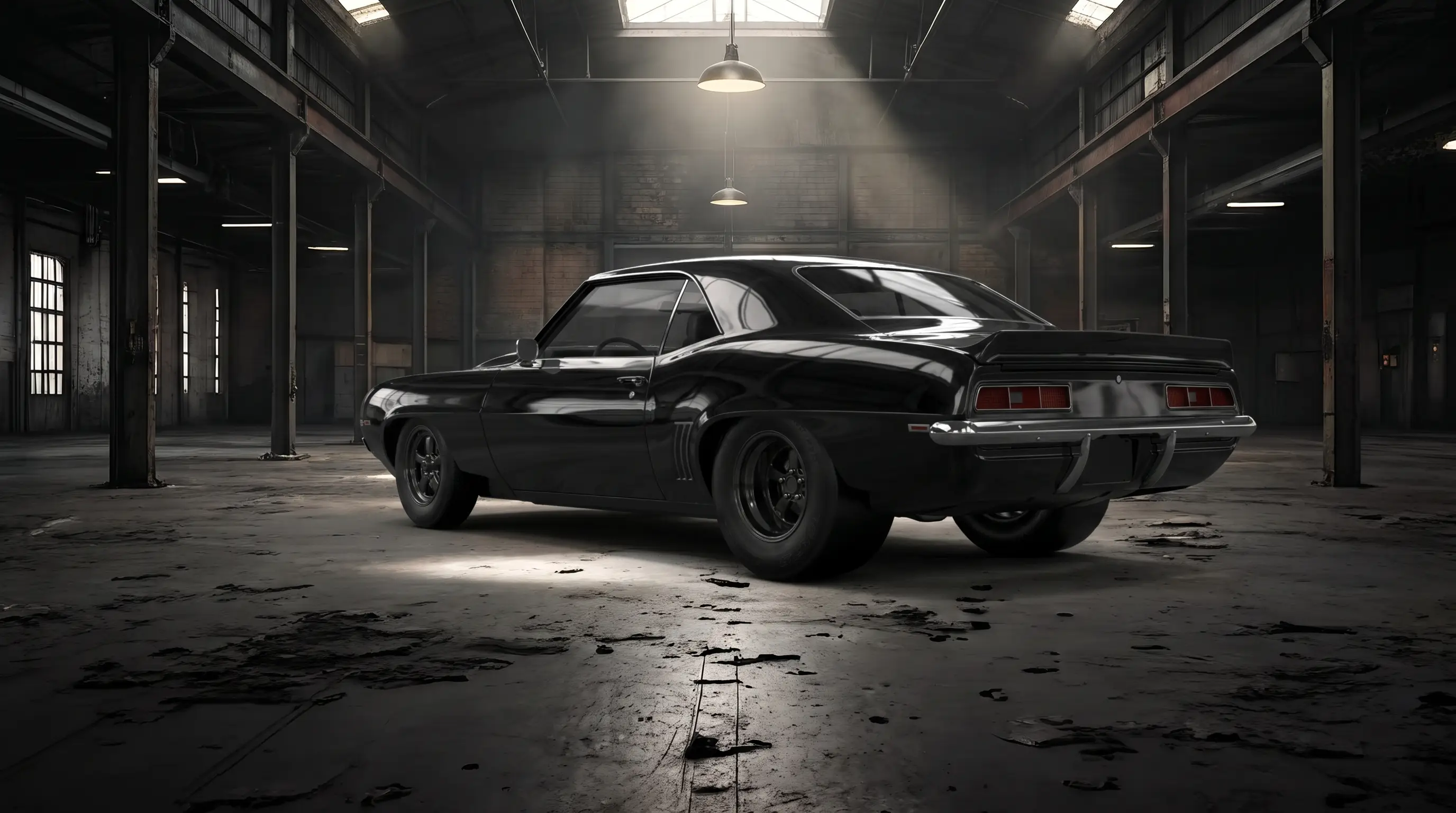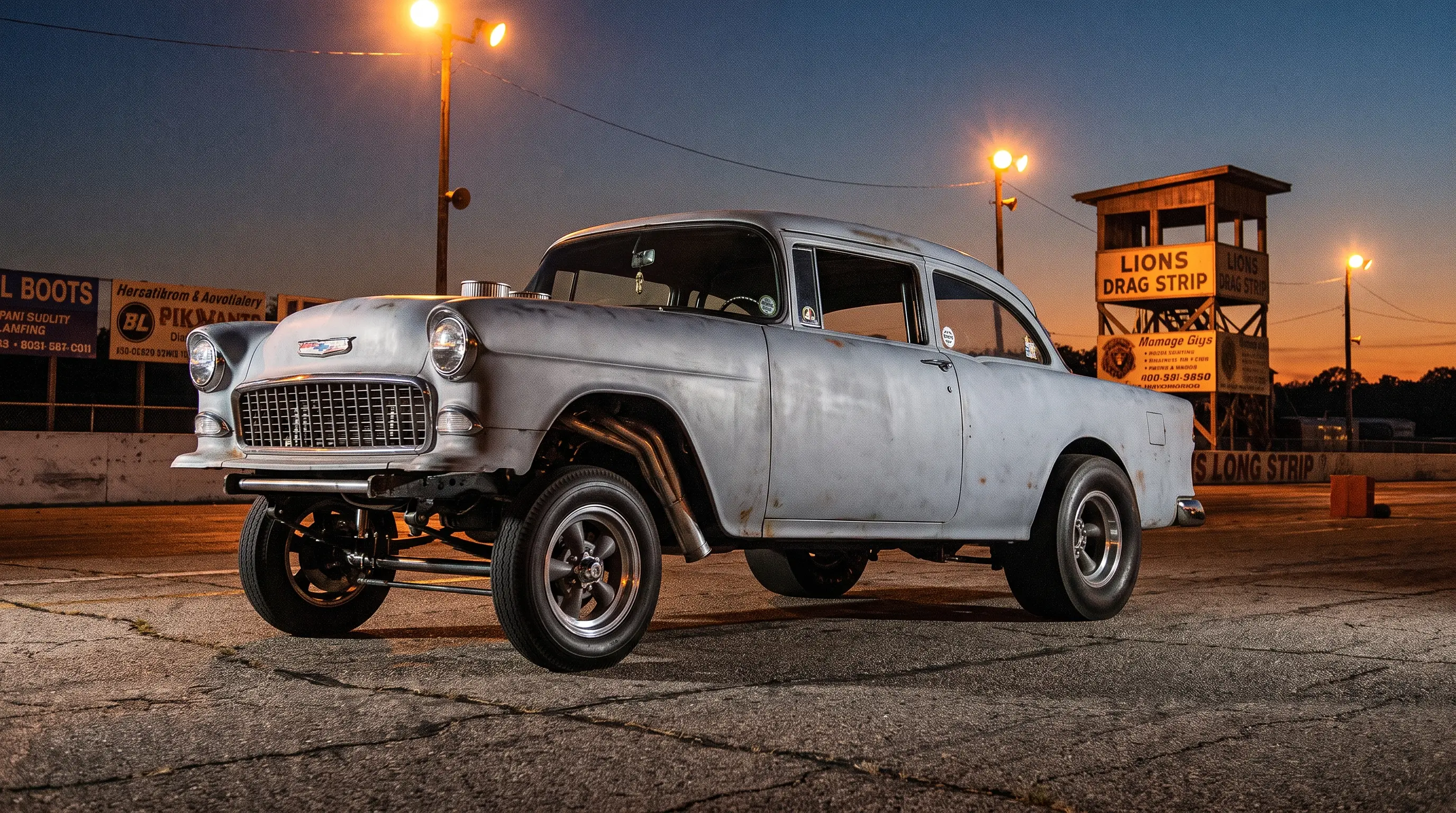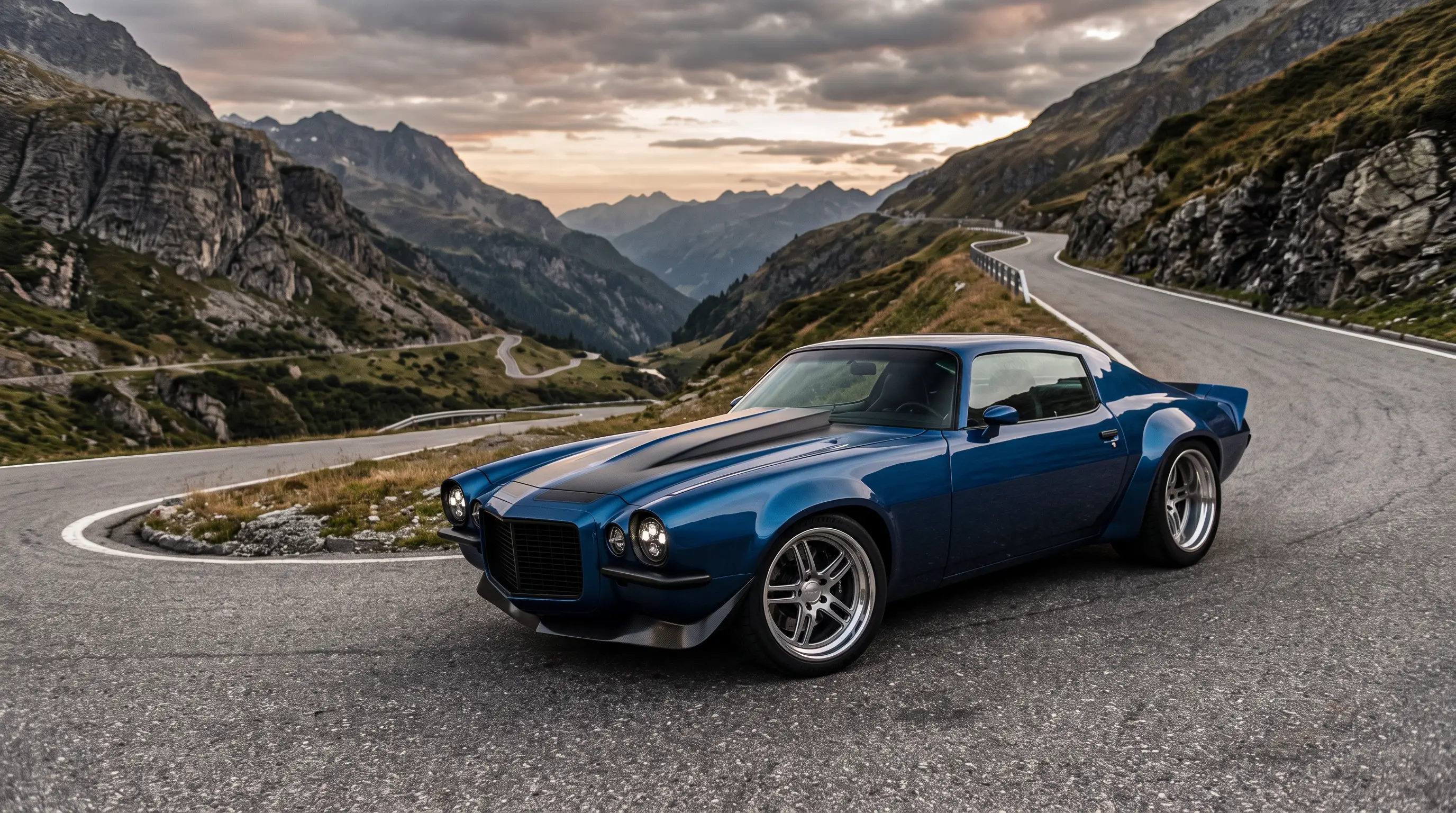
A friend of mine took his father's old Camaro to a car meet a few years back expecting the usual Pro Street crowd of tubbed rear ends and wide slicks. Instead he found himself parked next to a Nova on modern coilovers with disc brakes at all four corners, factory-style stance, and a driver who talked about corner-entry speed the way a drag racer talks about sixty-foot times, comparing notes on brake bias and tire compounds rather than tire width and launch technique. That was his introduction to Pro Touring, a movement that took the same muscle car bodies Pro Street made famous and pointed them at a completely different kind of driving.
What is Pro Touring, in plain terms
Pro Touring builds a classic muscle car, usually something from the 1960s or 70s, with modern suspension, brakes, and sometimes a modern engine, all in service of making the car handle and stop like something built decades later. The body stays close to stock in appearance, no tubbed wheel wells, no oversized rear tires, but everything underneath gets reworked with one goal: a car that can actually take a corner at speed and not just look fast standing still. The movement really picked up steam in the 1990s and 2000s as builders and magazines started documenting the approach as its own distinct category, separate from restoration and separate from drag-focused builds like Pro Street.
How it split from Pro Street in the first place
Both movements share a starting point, a factory muscle car nobody thought was finished the way it left the assembly line. Where they diverge is the target. Pro Street chased the quarter mile and built cars that looked the part with tubbed rears and huge tires. Pro Touring chased the road course and race track, and a wide slick sitting under a tubbed fender does a driver no favors when the goal is cornering grip and quick direction changes rather than straight-line traction. For the fuller account of how these two paths split from a shared origin, the pro street vs pro touring story lays out the whole timeline.
| Detail | Pro Touring | Pro Street |
|---|---|---|
| Primary goal | Handling, braking, road course capability | Straight-line drama and drag strip presence |
| Wheel wells | Stock dimensions, modern wheel and tire fitment | Tubbed, huge rear tire |
| Suspension focus | Coilovers, modern geometry, sway bars | Traction bars, ladder bars for launch |
| Era it took shape | 1990s through 2000s | Late 1970s through 1990s |
What a Pro Touring build actually prioritizes
Underneath a Pro Touring car you'll typically find modern rack-and-pinion steering swapped in for a factory recirculating-ball setup, disc brakes at all four corners often pulled from a much newer platform, and a suspension geometry reworked to reduce body roll and improve tire contact through a corner. The wheels tend to run larger diameters than stock, wrapped in performance tires chosen for grip in multiple directions rather than pure straight-line traction. None of it announces itself the way a tubbed Pro Street rear end does. A Pro Touring car often looks nearly stock from across a parking lot, and that's very much the intent. The satisfaction comes later, once the car is actually moving through a corner and doing things a factory suspension from the 1960s was never designed to allow.
"The Pro Street guy wants you to see the tire before you see the car. The Pro Touring guy wants you to watch the car through a corner before you understand what you just saw."
- Patrick Walsh
The engine choices reflect the different priorities too
A Pro Street engine build chases peak power for a short burst, sometimes at the expense of driveability, since the car only has to perform for a few seconds at a time down the strip. A Pro Touring build usually chases a broader power band and dependable cooling, because the engine has to work hard and consistently across an entire road course session or a long mountain drive rather than a single quarter mile. That difference shows up in camshaft choice, cooling system capacity, and even how the exhaust is routed, since a Pro Touring car needs to manage heat under sustained load in a way a drag-focused build rarely has to consider. Neither engine combination is better in an absolute sense. Each one is built precisely for the job its car is meant to do.
Why the two movements still get lumped together
Both start with the same donor cars, both draw from the same well of muscle car nostalgia, and both attract builders who grew up idolizing the same golden era of American performance. That shared DNA is exactly why newcomers mix them up, especially when a Pro Touring build still runs a mildly aggressive stance or a modern engine swap that echoes the horsepower ambitions Pro Street made famous. The tell is always in the wheel wells and the tire. Wide and tubbed points to Pro Street. Sized for grip and cornering, tucked into a stock-looking fender, points to Pro Touring. If you're chasing the roots of either movement, the full story on where Pro Street began is a useful companion piece.
The interior tells the same story as the suspension
Sit inside a well-built Pro Touring car and the differences from a Pro Street build show up immediately. Modern bucket seats with real bolstering for cornering support, a smaller diameter steering wheel for quicker inputs, gauges that track oil pressure and coolant temperature the way a track car needs rather than the way a cruise night car wants to look. A Pro Street interior tends toward drag strip minimalism, stripped for weight and built around a single straight-line run. A Pro Touring interior is built for a driver who's going to sit in that seat through dozens of corners in a row, sometimes for an entire afternoon on a road course, and it shows in every detail from the pedal spacing to the way the shifter falls to hand.
Which build matches how you actually want to drive
If the appeal is a straight-line spectacle and a direct link to drag strip culture from the movement's golden years, Pro Street remains the more authentic path for anyone chasing that specific history. If the appeal is a classic car that can genuinely hold its own on a mountain road or a track day without looking like anything unusual in the parking lot beforehand, Pro Touring rewards that instinct instead. Either direction starts from the same pool of muscle car platforms, so if you're browsing rather than building, classic Pro Street cars on the market is a solid place to compare what's actually available before deciding which philosophy fits your driving.