
Stance is the first thing your eye reads on a hot rod, before you clock the paint or the engine. A good one looks fast standing still. It sits nose-down, tail up, like it is leaning into a launch it never quite makes. Get it right and a plain roadster looks mean. Get it wrong and even a clean build looks like a parts car on the wrong springs. Rake is not a bolt-on. It is the sum of ride height, axle choice, and tire size working together, and it is the cheapest way to ruin or rescue the whole look.
Car Features
7 min read
Rake and Stance: Why Hot Rods Sit That Way
Nose-down rake is the first thing your eye reads on a hot rod. Here is how tires, ride height, and the front axle build the look, and how to get stance right.
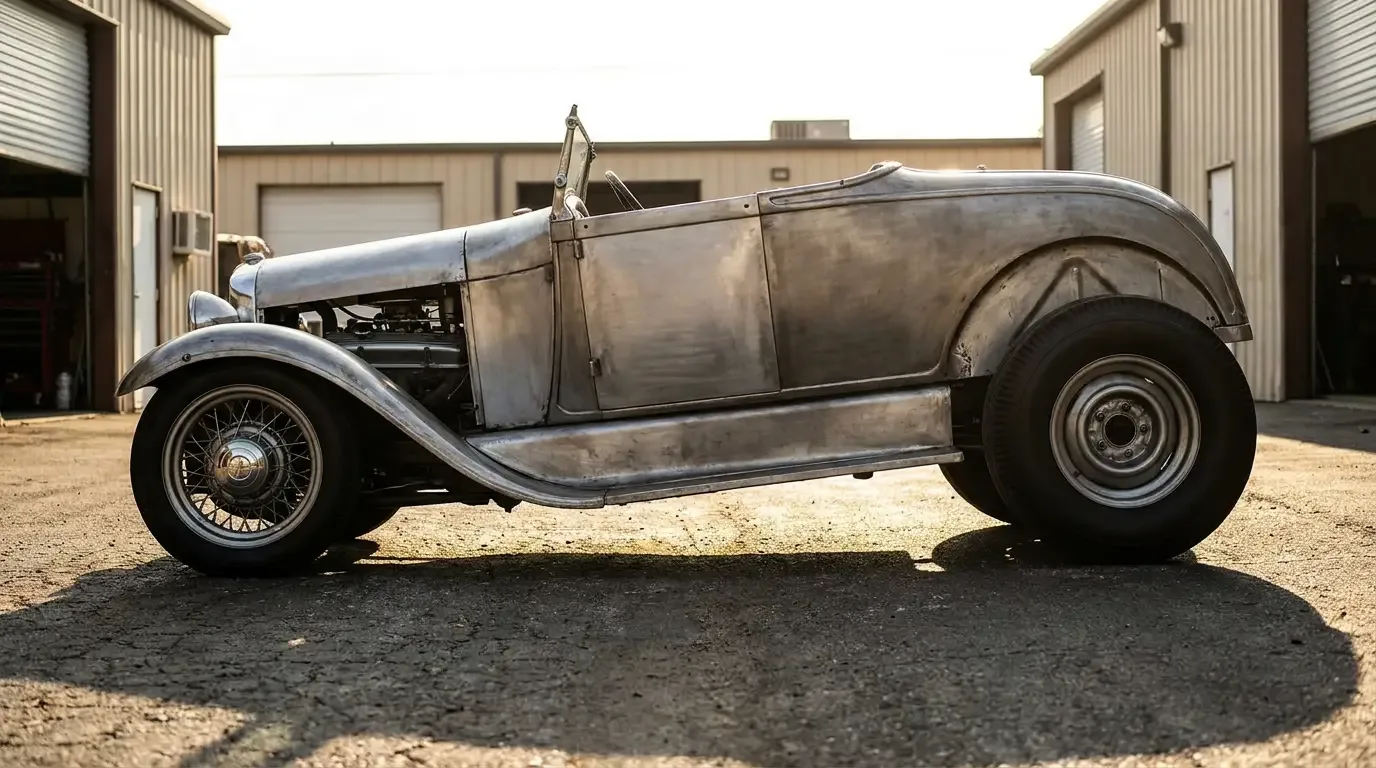
What rake actually is
Rake is the difference in ride height between the front and rear of the car, measured off the same reference, usually the frame rails or the rockers. Positive rake, the one everybody wants, means the front sits lower than the rear. The car points its nose at the ground. Negative rake, front higher than rear, reads as wrong to almost every hot rodder, because it looks like the car is squatting to do a burnout it cannot finish, or worse, like a grandpa cruiser with soft rear springs.
The number people throw around is a couple of inches of drop from back to front, though it depends entirely on the body and wheelbase. A long, low '32 wants less rake than a tall, short-wheelbase Model A, because the Model A has more height to play with up top. Rake is proportional, not absolute. You are not chasing a measurement, you are chasing a line. Stand back thirty feet, look at the beltline and the rockers, and see whether the car looks like it is moving. That is the only gauge that matters.
The big-and-little tire combo
Nothing builds stance faster than the tire package, and the traditional answer is big-and-little. Small tires up front, big tires out back. A tall rear tire lifts the back of the car. A short front tire drops the nose. You get rake for free before you touch a spring, and you get the classic hot rod silhouette that goes back to the gasser and drag days.
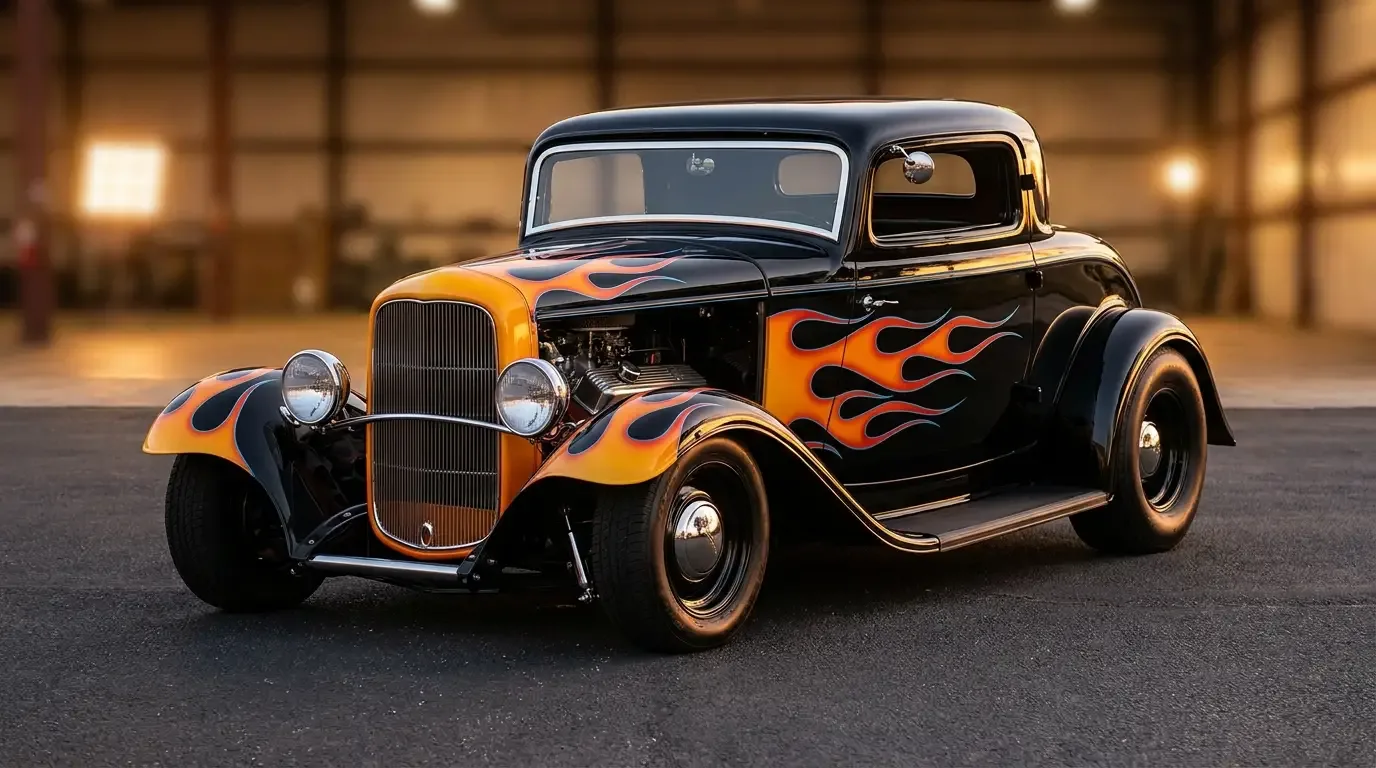
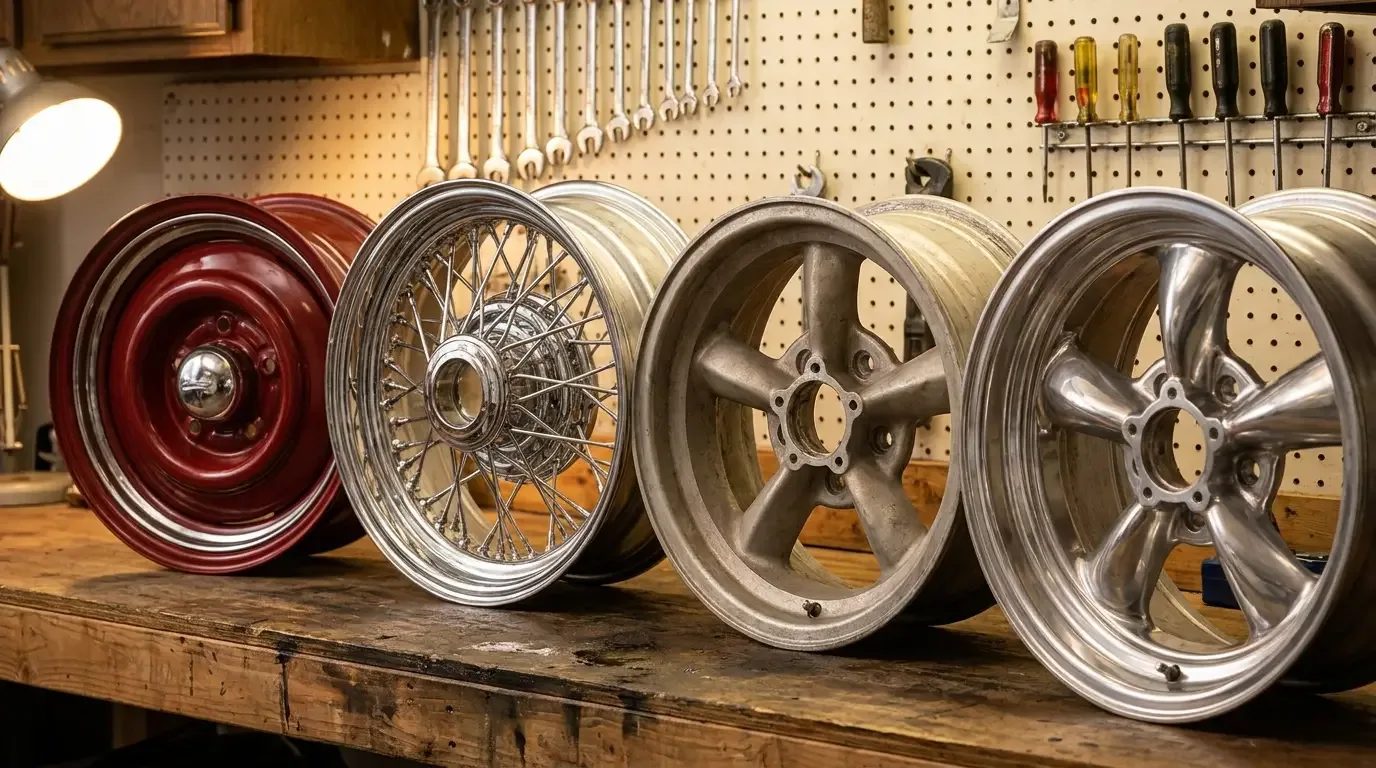
The logic was never only about looks. Skinny front tires cut weight and rolling resistance where you did not need traction, and a tall rear tire put more rubber and a taller gear on the drive wheels. Function drove the shape, and then the shape outlived the function. Wheel diameter and tire sidewall both feed into this. A 15-inch front with a short sidewall and a 16 or 17-inch rear with a tall sidewall is a common recipe. Choosing the rims and rubber is half the stance battle, and it ties directly into the period-correct wheel choices you see on traditional builds. If you are still sorting your rim and tire package, start with the wheel styles that suit the era, because the right hot rod flames and paint mean nothing sitting on the wrong wheels.
| Position | Typical rim diameter | Sidewall / profile | Effect on stance |
|---|---|---|---|
| Front | 15 in | Short, skinny | Drops the nose, lightens the front |
| Rear | 16–17 in | Tall, wide | Lifts the tail, fills the rear arch |
How ride height and the front axle build the look
Tires start the rake. The chassis finishes it. On a traditional front-axle car you have a few levers, and each one changes the stance in a different way. Dropping the front axle is the classic move. A dropped axle, whether a genuine dropped forging or a period dropped-and-filled beam, lowers the front of the car without messing with the suspension geometry the way a spring hack would. It is the honest way to get the nose down.
- Dropped front axle. Lowers the front cleanly, keeps the wheel where it belongs in the arch, and is the traditional route to nose-down rake.
- Spring choice and de-arching. A flatter front spring drops ride height, but push it too far and you run out of suspension travel and the car rides like a brick.
- Rear ride height. Spring perch location, shackle length, and rear tire diameter set how high the tail sits. This is where you tune the amount of rake once the front is where you want it.
- Z-ing or channeling. Bigger structural moves that drop the body over the frame change the whole ride height, and they interact with rake, so plan them together, not one at a time.
The mistake I see most often is people chasing height with one lever and ignoring the rest. They slam the front on a de-arched spring, leave the rear tall on stock rubber, and end up with too much rake and a front end that has no travel. Or they go the other way and drop the rear to clear a fender, killing the rake entirely. Ride height, axle, and tire size are one system. Move one and the other two have to answer.
"I tell guys to mock the whole car up on the tires it will actually run before they cut a single spring. Stance is a conversation between the front axle and the back tire, and if you only listen to one of them, the car ends up talking nonsense."
Jim Vasquez
Getting the stance right
Getting stance right is mostly patience and a tape measure, plus the willingness to roll the car outside and look at it from across the lot. Set your rear ride height first, using the rear tire you are committed to. Then bring the front down to meet it until the line looks right. Do it in that order and you stop fighting yourself.
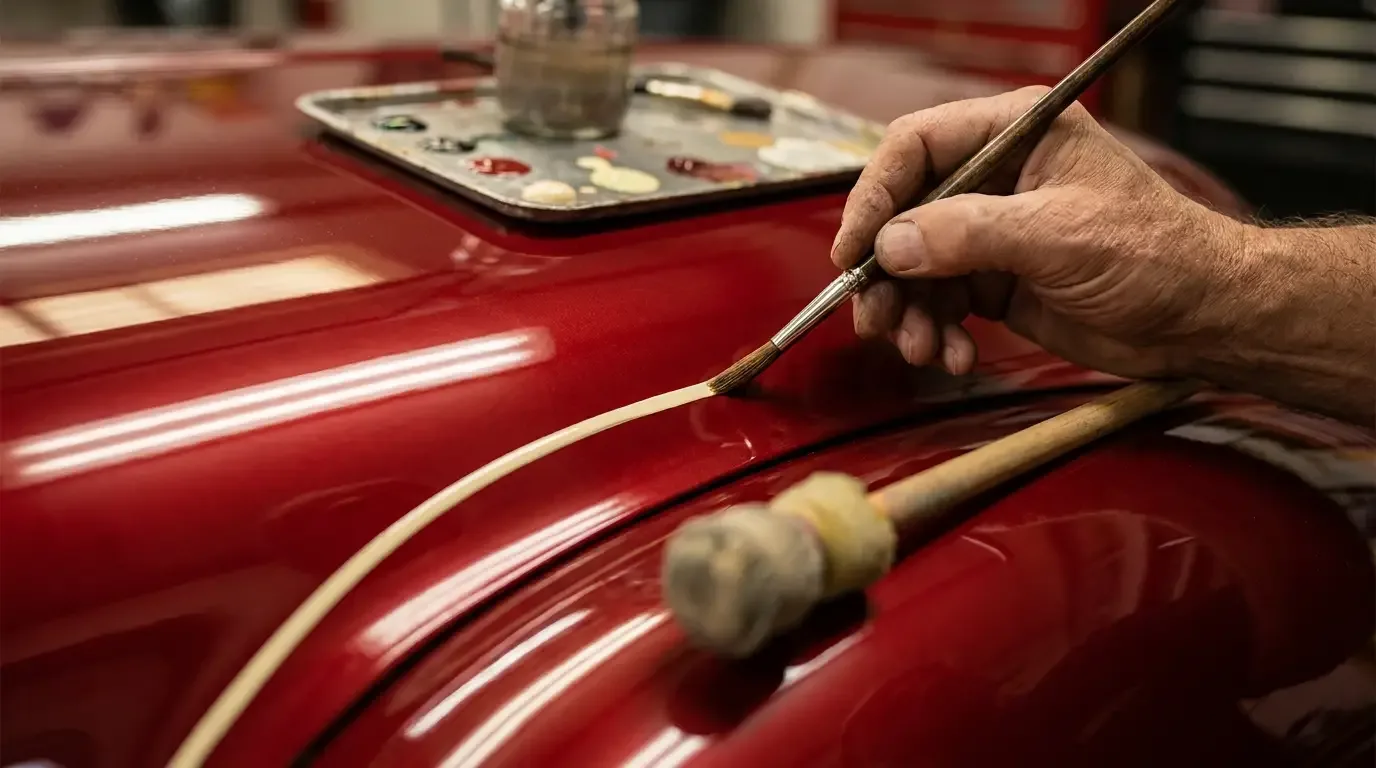
There is a line between low and undriveable, and the good builders live right on it. You want the nose down far enough to read as aggressive, the tail up far enough to carry the rake, and enough travel left that the car does not scrape its belly pan on every dip. Wheels, tires, axle, and springs all pull on that line at once. When people ask me why one A-bone looks killer and the identical car down the row looks off, it is almost always stance, and it is almost always because somebody solved the height problem in one place instead of across the whole car. If you want to see how the rest of the visual package hangs together, from the line work to the finish, the Pinstriping and the Kustom Line Artists side of the craft leans on a car that already sits right underneath it.
Sources and notes
- Period hot-rod and custom-car press, contemporary coverage of dry lakes and drag-strip car setups.
- Traditional chassis and front-axle references on dropped axles, spring de-arching, and ride-height practice.
- Builder interviews and show-record observation on wheel and tire packages and stance conventions.
Related Reading
Have a
Classic Car
for Sale?
Reach thousands of serious classic car collectors across the US.
Sell It Here →
Are You a Classic Car Dealer?
List your full inventory and connect with targeted classic car buyers.
Join as a Dealer →

About the author
Jim Vasquez
Southern California hot rod and custom car builder with roots in the traditional kustom kulture scene.




Comments
Be the first to comment on this article.