
The question shows up at every auction preview and every barn find: do you keep it original, or do you build a restomod? On paper it looks like taste. In practice it is a financial decision with a long tail, and the numbers do not always point the way people expect. A numbers-matching original and a well-built restomod are two different assets. One trades on scarcity and provenance. The other trades on how it drives and how it was built. Confuse the two and you can erase a lot of money.
Car Features
7 min read
Restomod vs Numbers-Matching Original
Numbers-matching original or restomod? Two different assets, two different buyers. Here is when originality is sacred and when a restomod adds value.
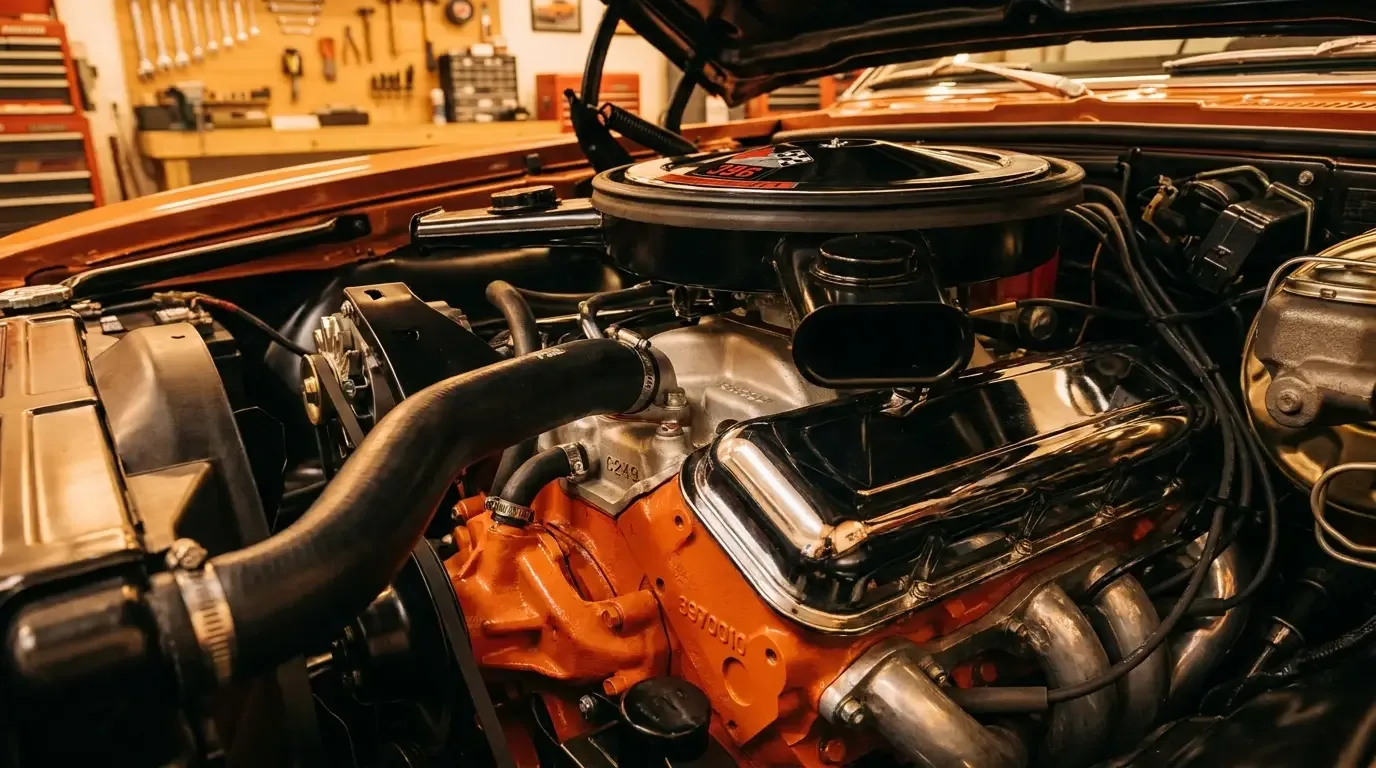
Before we talk value, it helps to be clear on the categories. If the term is fuzzy, start with what is a restomod, then come back here for the money side.
What "numbers-matching" actually protects
Numbers-matching means the major components, engine block, transmission, sometimes rear axle, carry the casting numbers and date codes that correspond to that specific VIN. On desirable cars, this is the difference between a real one and a tribute. For high-demand muscle and sports cars, a documented numbers-matching drivetrain can account for a meaningful share of the total value, and losing it can knock a car down substantially versus an otherwise identical example. Our seller's guide to matching numbers value puts rough figures on that premium.
The premium is not uniform. It concentrates on cars where originality is scarce and demand is deep: top-tier muscle (think documented big-block ponycars), early Corvettes, air-cooled 911s, and homologation specials. On a common six-cylinder coupe with a huge survival rate, "numbers-matching" is a nice line in the ad and little more. The market pays for originality in proportion to how rare and how sought-after that specific configuration is.
When originality is sacred
There is a class of cars where you should not touch the drivetrain, full stop. These are the cars whose entire value case rests on being unmolested. Low-production, documented, historically significant, or already trading well into six figures. Cutting one of these to fit a modern crate engine does not add value. It removes the one thing a collector was paying for.
- Documented rare trims and one-year-only configurations where survivors are counted in the hundreds.
- Cars with racing or ownership history that a registry can verify.
- Original-paint, low-mileage survivors, the "you can only restore it once, but original is original forever" cases.
- Anything already valued primarily as an investment-grade collectible rather than a driver.
The rule of thumb: if the car is rarer than the modern parts you would bolt into it, keep it original. Reversibility helps but rarely restores full value once the matching block is gone.
"I tell clients to run the math before the emotion. If a stock, documented example trades for more than a comparable restomod, you are not building value, you are spending it. On a rare car, originality is the asset. On a common one, the driving experience is."
David Mercer
When a restomod makes more sense
Flip the situation. Take a car that is charming but mechanically ordinary, produced in large numbers, with a survival rate high enough that no single example is scarce. Here, factory-correct originality earns almost no premium, and the stock drivetrain is often the weakest part of the ownership experience. This is restomod territory. A modern engine, disc brakes, and a usable interior turn a fussy weekend car into something you actually drive, and buyers pay for that usability.
The economics only work when the build is done to a high standard and the base car was not itself valuable. A clean, well-engineered restomod on a common platform can sell for well above what the same car would bring in stock condition, sometimes multiples of the donor's value, though almost never above the very top original examples of a genuinely rare model. If you are weighing whether the spend returns, the deeper analysis lives in Is a Restomod Worth It.
| Factor | Numbers-matching original | Restomod |
|---|---|---|
| Value driver | Scarcity, provenance, documentation | Build quality, drivability, components |
| Best base car | Rare, documented, historically significant | Common, plentiful, mechanically dated |
| Buyer pool | Collectors, marque purists, investors | Drivers, enthusiasts, event-goers |
| Value ceiling | Can be very high on scarce models | Capped by build quality and taste |
| Reversibility | Preserve to protect value | Not a factor; car is already modified |
What the market is telling us
Two things are true at once right now. Blue-chip original cars, the documented rare ones, remain strong because they cannot be reproduced. At the same time, restomods have moved from a niche to a mainstream auction category, with the best builds pulling strong money because a younger set of buyers wants vintage looks with modern reliability. That does not mean every restomod appreciates. It means the ceiling for a great one has risen, while the floor for a mediocre one is still soft.
The honest read: a restomod's value tracks its build, not a factory spec sheet, so a no-story restomod is worth what the parts and labor plus a well-known builder's name will support, and no more. An original car's value tracks scarcity and documentation, which is why a shabby but honest survivor can out-trade a shiny modified one. If you are shopping, compare completed sales of both types before you commit, and browse current restomods for sale to see where finished builds actually land.
The bottom line for your car
There is no universal answer, only a per-car one. Pull comparable sales for both the stock and modified versions of your exact model. If original commands a clear premium and the car is documented, preserve it. If the stock version is common and the drivetrain is the weak link, a quality restomod can add value and, more importantly, add usability. The mistake is treating the two as interchangeable. They are different assets with different buyers, and the market prices them accordingly.
Sources and notes
- Collector-car auction records and completed-sale results for comparable original and modified examples.
- Marque registries and factory documentation references (build sheets, window stickers, certificates of authenticity) used to verify numbers-matching claims.
- Period and current specialist press coverage of the restomod market segment.
- Builder and dealer interviews on how provenance and build quality affect resale.
- Figures described as ranges or shares are directional and vary by model, condition, and documentation; verify against current comparable sales before transacting.
Related Reading
Have a
Classic Car
for Sale?
Reach thousands of serious classic car collectors across the US.
Sell It Here →
Are You a Classic Car Dealer?
List your full inventory and connect with targeted classic car buyers.
Join as a Dealer →

About the author
David Mercer
Classic car market analyst with two decades of experience tracking collector car valuations, auction results, and investment trends.

Comments (1)
S
Steve Macaluso
3 months ago
Great resource for someone new to this segment. Sent it to a friend who's been asking questions about getting into the hobby.