
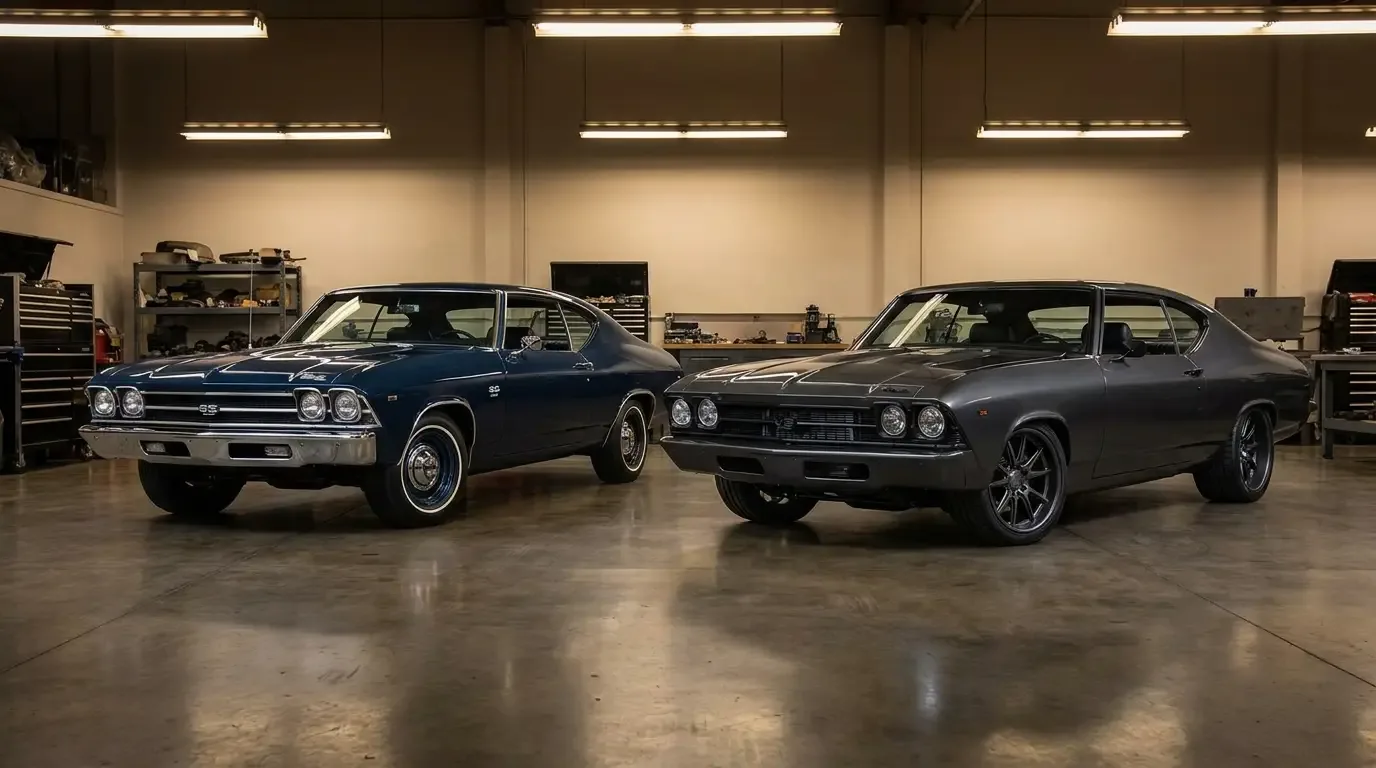
Ask ten people at a cars-and-coffee what a restomod is and you get ten answers, most of them wrong. Somebody points at a lowered '69 Camaro and calls it a restomod because it has big wheels. Somebody else points at a bone-stock '57 Bel Air with a modern stereo hidden in the glovebox and says the same thing. Neither one nailed it. A restomod is a specific idea, and once you understand the idea, you stop guessing and start seeing it clearly. The short version: a car that looks like it rolled out of the past and drives like it was built last week.
Car Features
9 min read
What Is a Restomod
Vintage looks, modern bones. What actually defines a restomod, and where the line sits versus a restoration and a hot rod.
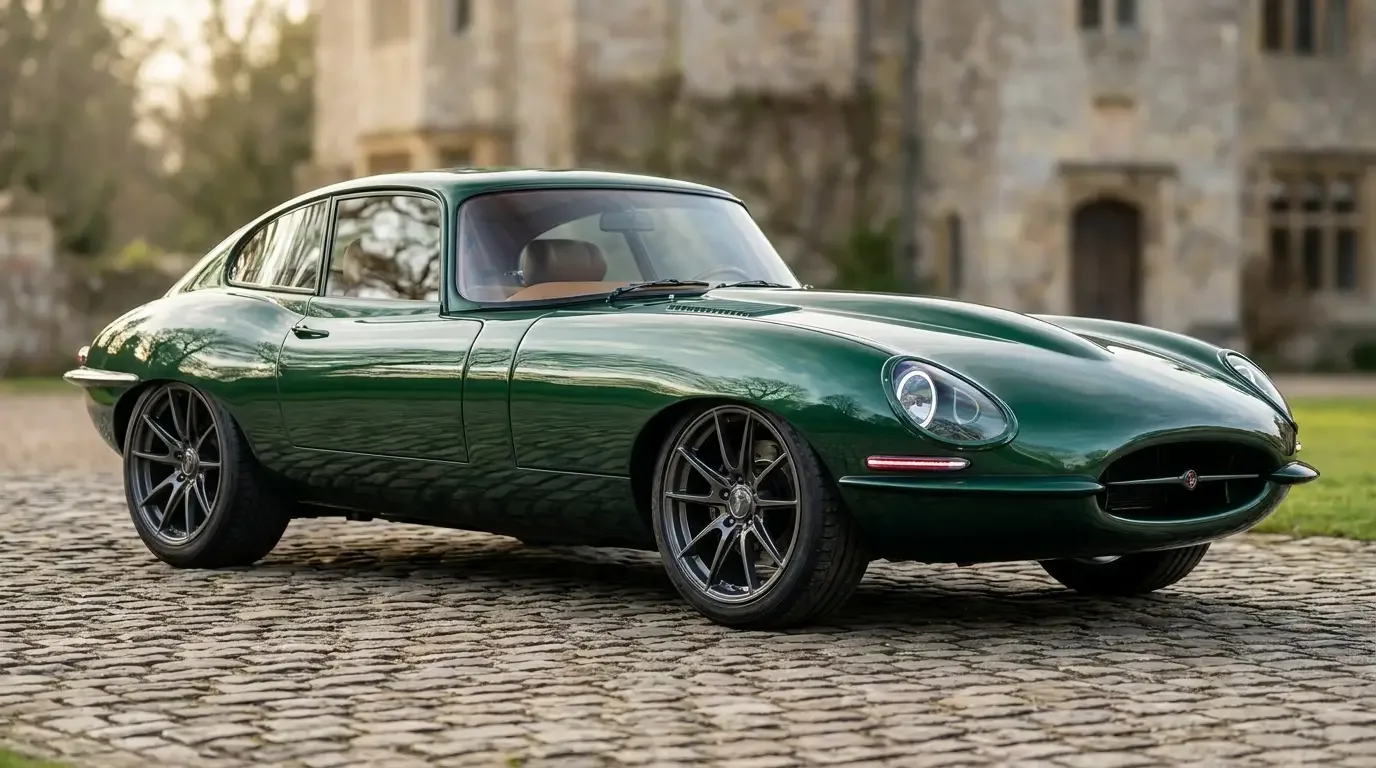
I have been building these cars for a long time, and the definition I use on the shop floor has not changed. Restomod means you keep the classic body and the classic silhouette, and you throw out almost everything you cannot see. The engine, the chassis, the brakes, the wiring, the climate control, the seats you actually sit in for four hours on a highway. All modern. The part your eye lands on stays vintage. That tension between old skin and new bones is the whole point, and it is where the good builds separate from the poser builds.
The philosophy: classic looks, modern guts
Every restomod is an argument about what you love. You love how the car looks. You do not love how it drove in 1966. Drum brakes that fade after two hard stops, a straight axle that skates over expansion joints, a carburetor that floods when it gets hot, no air conditioning in July. Those are the things people romanticize until they actually drive an unrestored original for a week. A restomod keeps the love and deletes the misery.
So the philosophy is honest about what a classic car really was. The styling from that era is genuinely hard to beat, the proportions, the chrome, the glass area, the way light moves across a fender. Nobody designs cars like that anymore. But the engineering underneath was of its time, and its time was sixty years ago. The restomod builder says: I will preserve the art and re-engineer the machine. That is not disrespect for the original. It is a different goal. If you want to understand where that goal came from and how the whole movement got started, that is the restomod story, and it is worth reading before you commit to a build.
What actually makes a build a restomod
Strip away the arguments and a restomod comes down to a handful of decisions. Here is the spec I hold a build to when someone asks whether their project qualifies.
| System | Original classic | True restomod |
|---|---|---|
| Body and styling | Period-correct | Kept largely stock-looking |
| Engine | Original or era-correct | Modern fuel-injected or crate motor |
| Transmission | 3 or 4-speed manual, 2-speed auto | Modern 5/6-speed or overdrive auto |
| Suspension | Leaf springs, straight axle | Coilovers, independent front, sometimes IRS |
| Brakes | Four-wheel drum | Four-wheel disc, often with a modern booster |
| Interior | Bench seat, AM radio, no A/C | Modern seats, A/C, digital gauges, sound insulation |
| Electrical | 6 or 12-volt, cloth harness | New harness, relays, sometimes CAN systems |
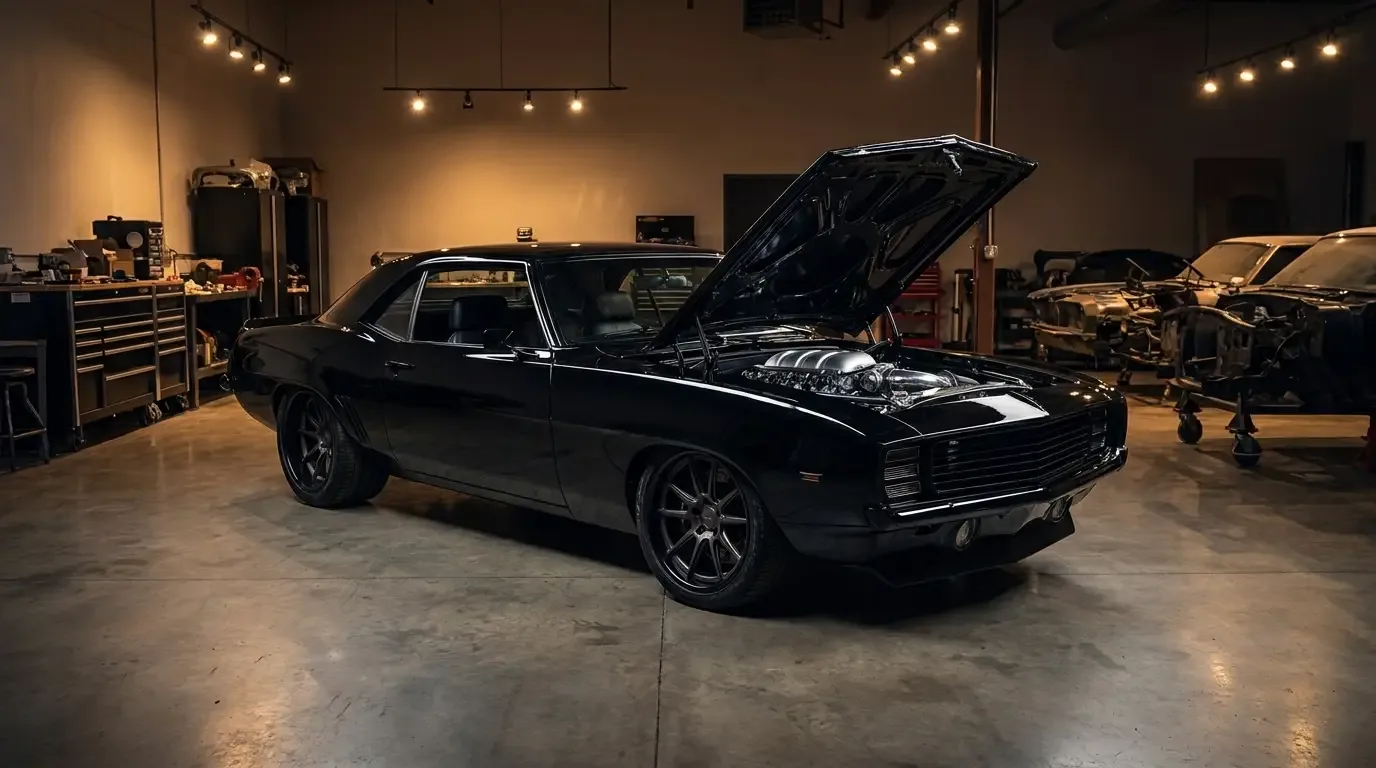
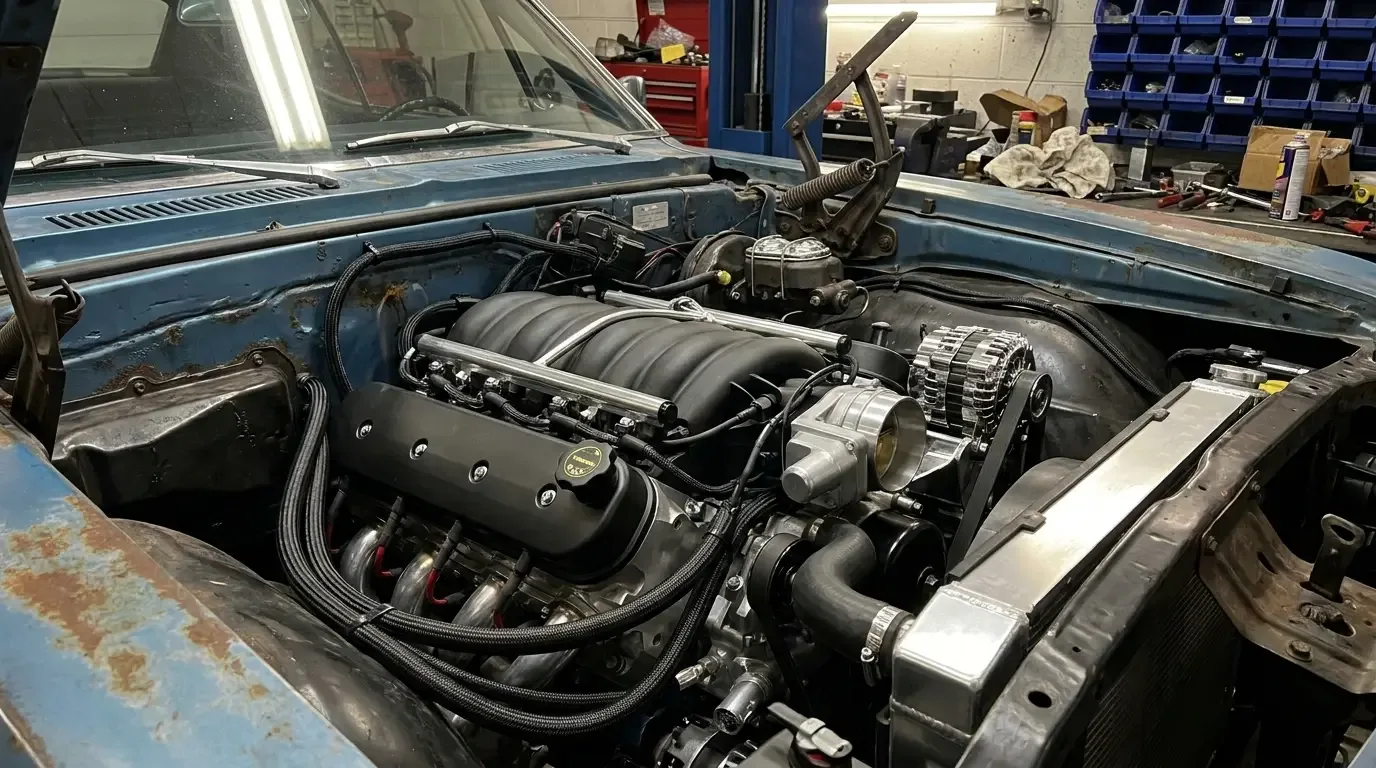
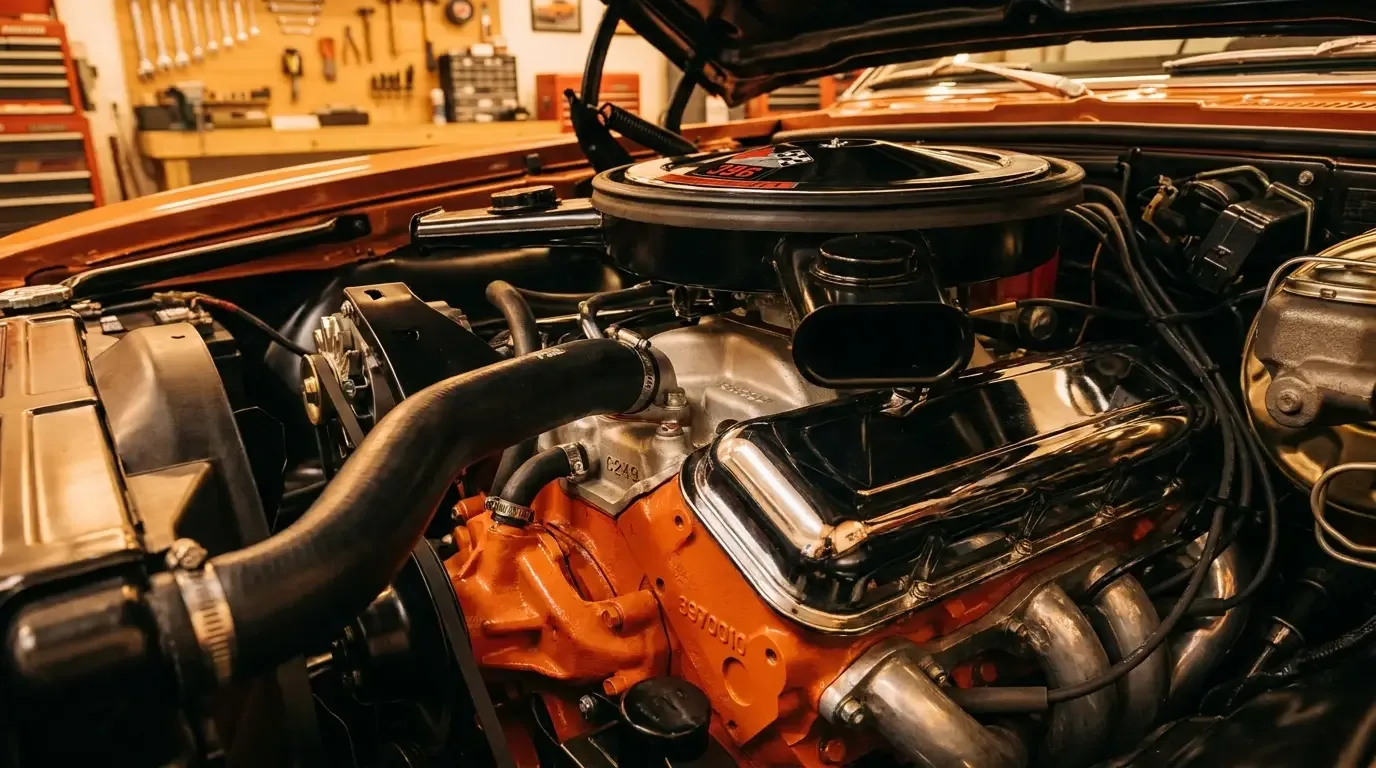
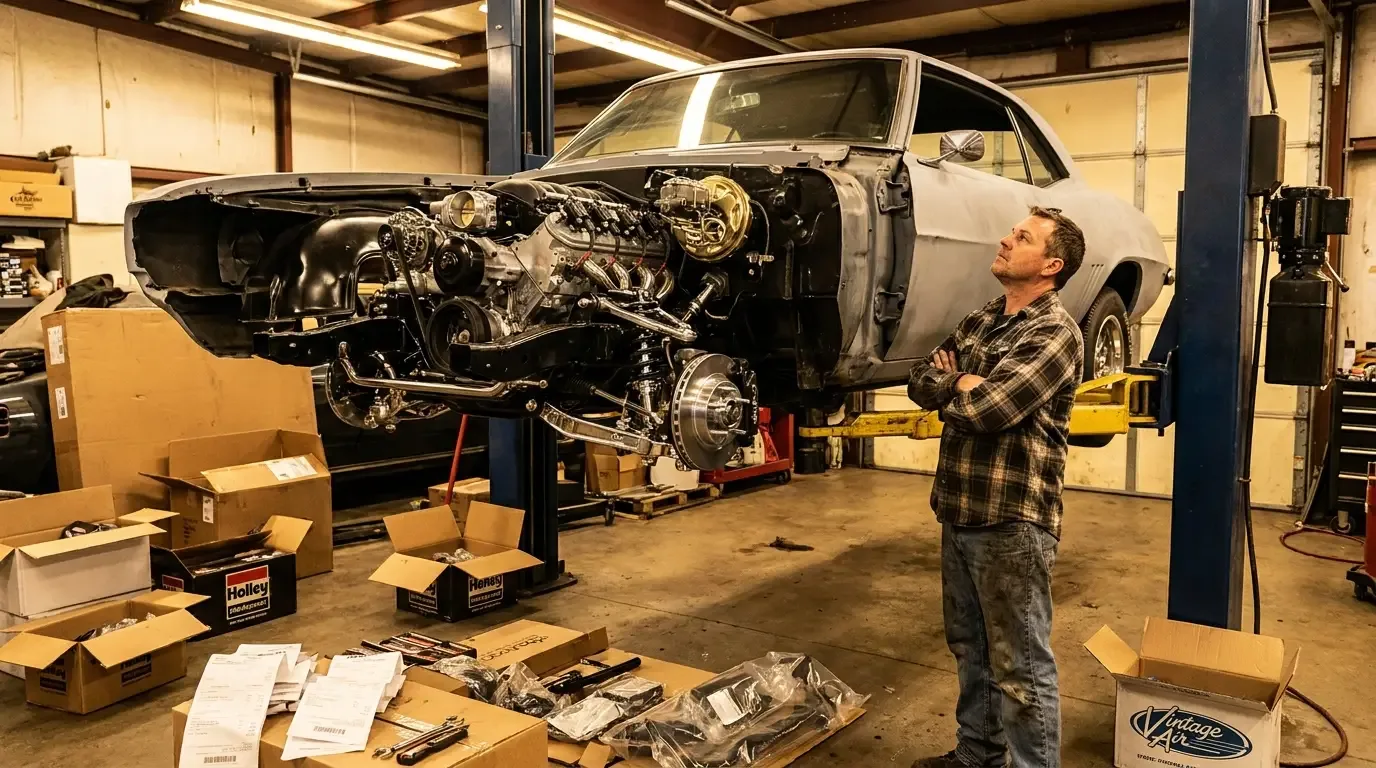
Notice the pattern. Anything you look at stays true to the era. Anything that determines how the car drives, stops, and treats your body gets replaced. A build does not have to hit every single row to earn the name, but it has to commit to the idea. Modern drivetrain and modern brakes at minimum. If it still has the original 350 and drum brakes and you just bolted on wheels and a sound system, that is a modified original, not a restomod. The heart transplant is the dividing line, and for most builds that starts with an engine swap that brings fuel injection, reliability, and real power into a body that never had it.
Where the line sits versus a restoration
This is the boundary people trip over most. A restoration and a restomod look like the same amount of work from across the parking lot. Both cars are shiny, both are done to a high standard, both cost real money. The difference is the goal, and the goals are opposites.
A numbers-matching restoration is a preservation project. The point is to return the car to exactly how it left the factory, right down to the correct date-coded parts, the factory paint code, the original engine block that matches the VIN. Correctness is the entire value. Change the wrong bolt and a judge at a concours takes points off. A restoration is a car you keep original because originality is finite and cannot be manufactured after the fact.
A restomod throws correctness out the window on purpose. Nobody restomodding a car cares whether the carburetor is date-coded, because there is no carburetor. That freedom is the appeal. You are not restoring the car, you are reimagining it. The two paths serve different owners and honestly different personalities. One person wants to own a rolling piece of history exactly as it was. The other wants a car they can drive across three states without a chase truck. Neither is wrong. They are just not the same thing, and calling a restoration a restomod, or the reverse, tells me you have not thought about what you actually want.
"People think the line between a restoration and a restomod is money or effort. It is not. It is intent. A restoration asks 'how was it,' a restomod asks 'how good can it be.' Answer that question first and half your build decisions make themselves."
Jim Vasquez
Where the line sits versus a hot rod
The other place people get confused is between a restomod and a hot rod, and I get why. Both take an old car and make it faster and better than stock. But the culture and the era are different, and the difference is real.
A traditional hot rod is rooted in pre-1948 iron, the Model A and the '32 Ford and that whole family, built in a period-correct or deliberately raw style. Chopped tops, exposed engines, patina left on purpose, a look that celebrates the garage-built outlaw feel of postwar California. A rat rod pushes that even further into the raw and unfinished. The whole aesthetic is about attitude and speed with the mechanicals proudly on display.
A restomod is the opposite temperament. It hides its modernity. The goal is a car that looks stock and clean from ten feet, so the shock comes when you hear a modern engine fire or watch it stop from 70 in a distance the original never could. Hot rods wear their modifications loud and proud. Restomods keep the secret under the sheet metal. There is a whole family of builds that live between these worlds, and understanding how a hot rod and a restomod differ in philosophy makes it obvious which one you are actually drawn to.
When it is done right
Anybody can bolt a modern engine into an old body. Doing it so the car feels like a coherent whole is the hard part, and it is what separates a build worth the money from an expensive parts collection. A restomod done right disappears into itself. Nothing looks bolted on. The modern seats fit the original interior lines. The A/C vents are integrated, not hanging under the dash like an afterthought. The wheel and tire package fills the arches the way the designer would have wanted if the technology existed. You get in, it starts on the first crank, it idles smooth, it stops straight, and the only thing that reminds you it is old is how good it looks.
- Proportions stay right. Wheels and stance suit the body instead of fighting it.
- Modern systems are hidden or integrated, never dangling or obvious.
- The drivetrain is sorted so the car is genuinely reliable, not just powerful on paper.
- The interior is a place you want to spend hours, quiet and comfortable, but still period in its look.
- The overall feel is one car, not a vintage shell with a modern car bolted underneath.
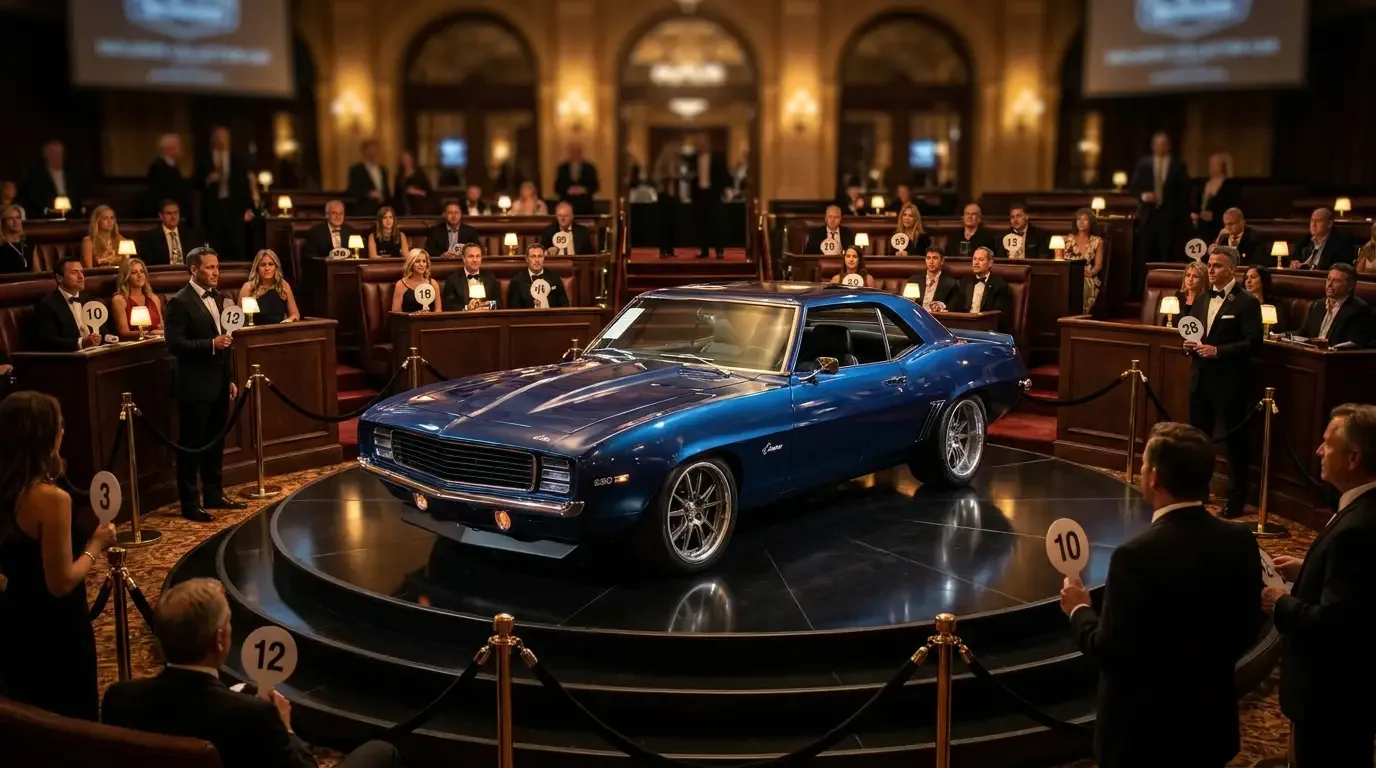
Done wrong, a restomod fights itself. The stance is off, the modern touches scream for attention, the build has ten thousand dollars of engine and no thought behind how it all works together. Done right, it is the best of both centuries in one car, and it is why the good ones hold their value and get chased at auction. If you want to see what the done-right versions look like on the open market, browse the classic restomods for sale and pay attention to which ones read as a single coherent vision. That coherence is the thing you are really paying for.
So, what is a restomod
Bring it back to the one sentence. A restomod is a classic car that keeps its vintage looks and swaps its vintage engineering for modern drivetrain, chassis, brakes, and comfort. It is not a numbers-matching restoration, because it does not care about factory correctness. It is not a traditional hot rod or rat rod, because it hides its modifications instead of flaunting them. It sits in its own lane, and that lane has become one of the most popular ways people enjoy old cars, precisely because it solves the one problem originals never could. You get the car you fell in love with, and it actually works. Get the intent straight first, keep the skin honest to the era, make the bones modern and coherent, and you have built a real one.
Sources and notes
- Period hot rod and street machine press covering the emergence of the restomod term and movement.
- Marque and engine reference material for original factory specifications versus modern replacements.
- Builder and shop interviews on drivetrain, chassis, and interior integration practices.
- Auction and collector-market records used to characterize how well-integrated builds are valued.
Related Reading
Have a
Classic Car
for Sale?
Reach thousands of serious classic car collectors across the US.
Sell It Here →
Are You a Classic Car Dealer?
List your full inventory and connect with targeted classic car buyers.
Join as a Dealer →
#restomod
#pro touring
#restomod vs restoration
#hot rod vs restomod
#what is a restomod
#classic car modification

About the author
Jim Vasquez
Southern California hot rod and custom car builder with roots in the traditional kustom kulture scene.




Comments (1)
R
Roy Sandoval
1 month ago
Took three years to find the right one. Patience is a genuine skill in this hobby and it pays off.