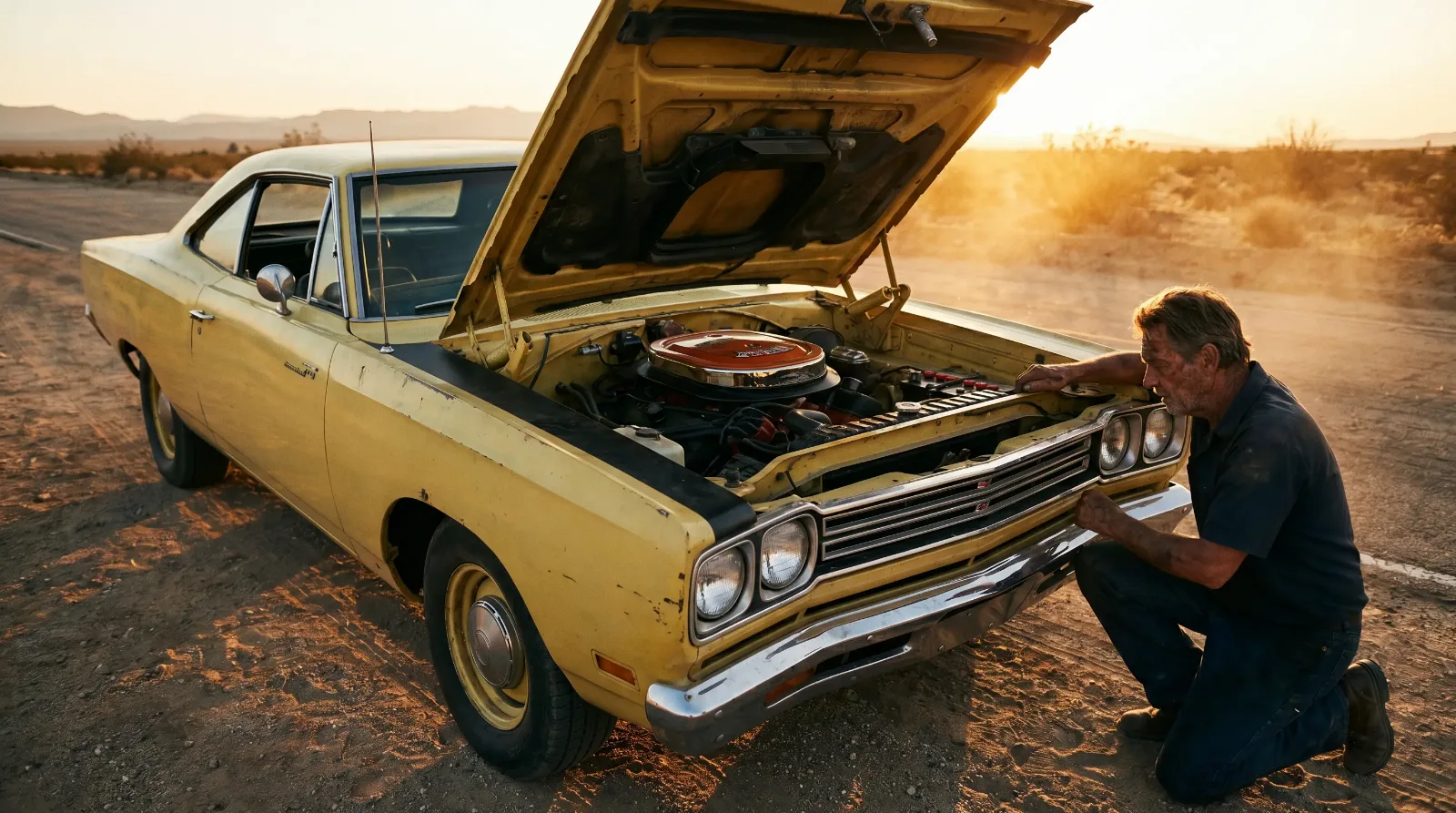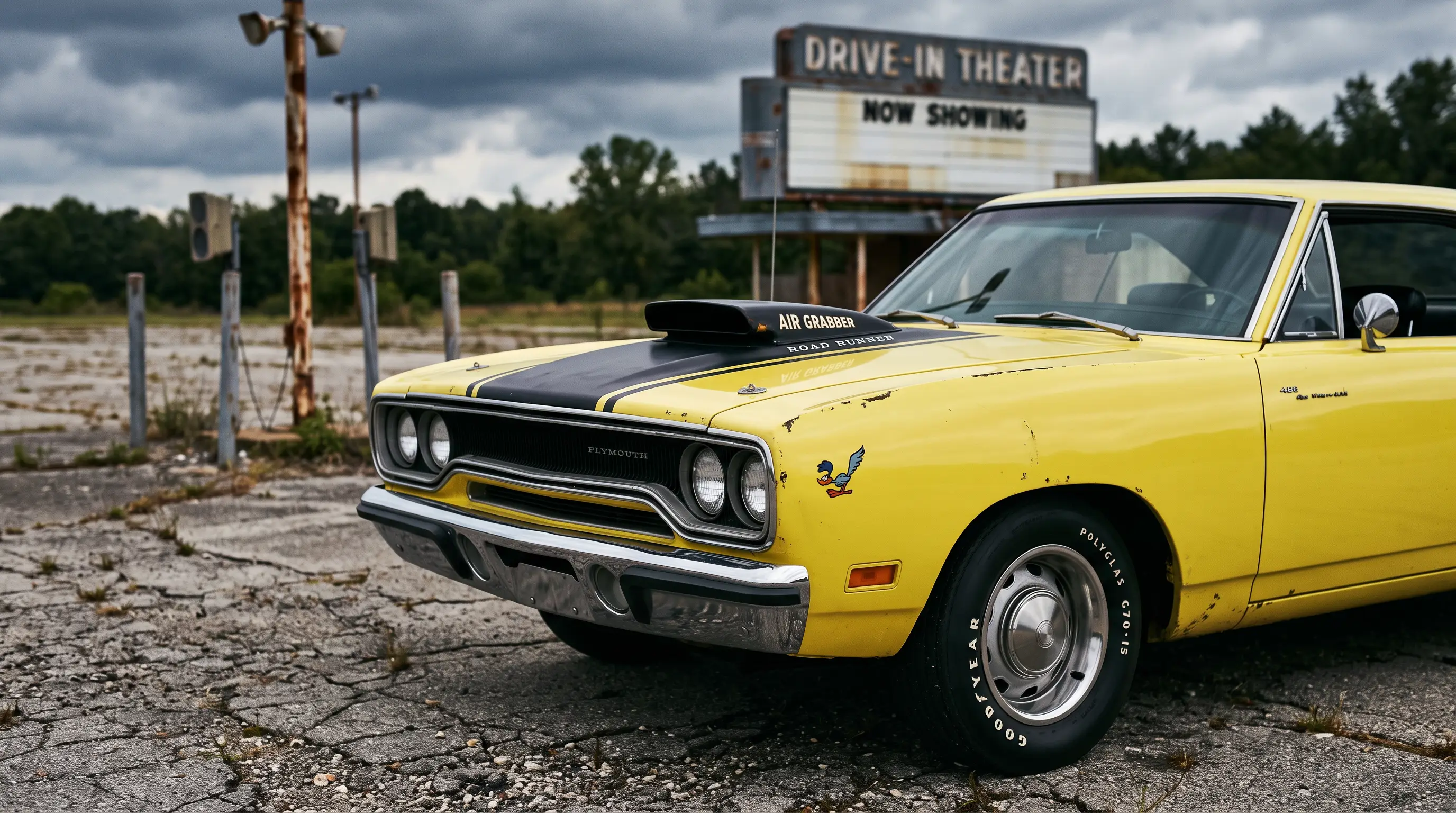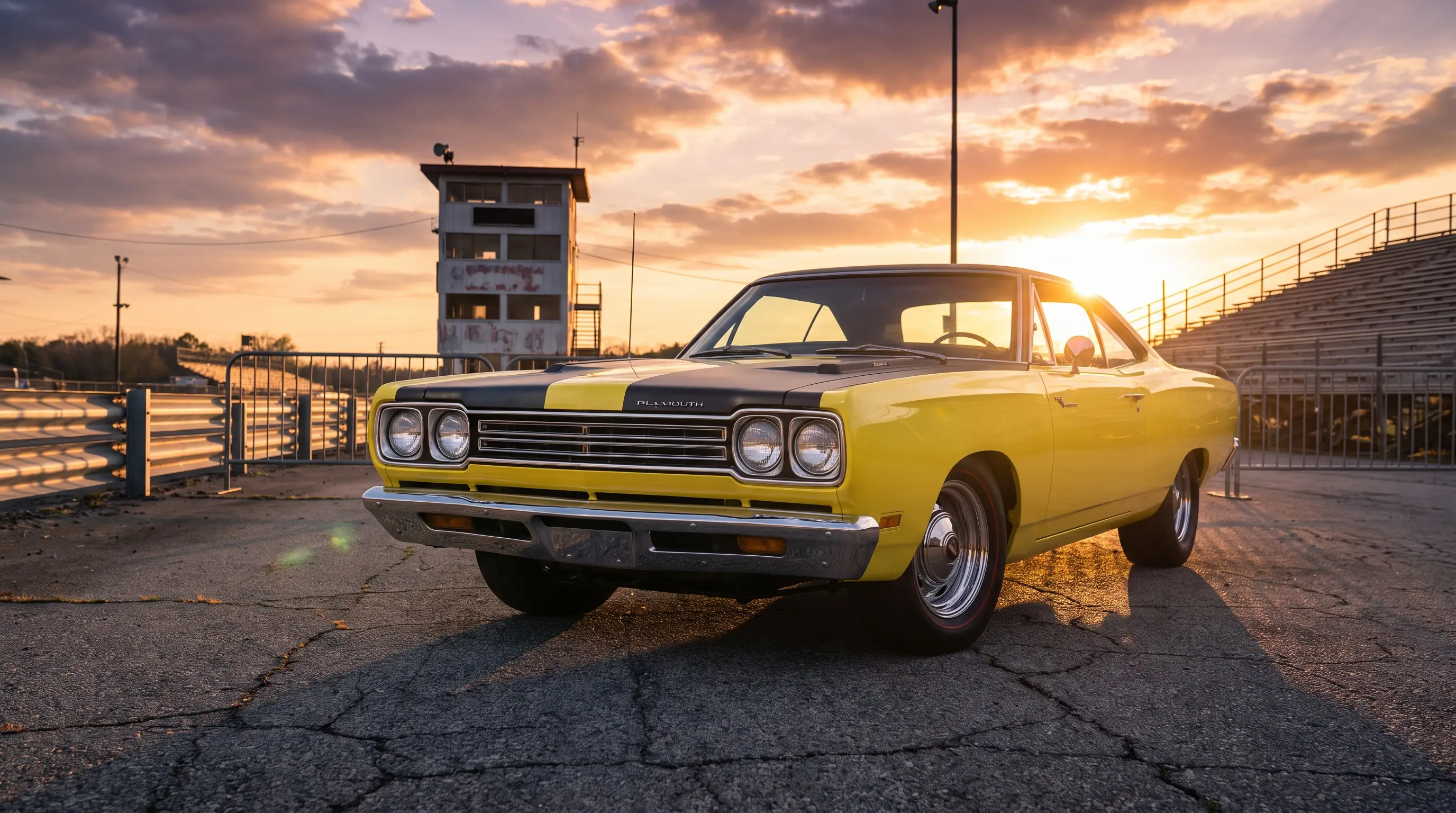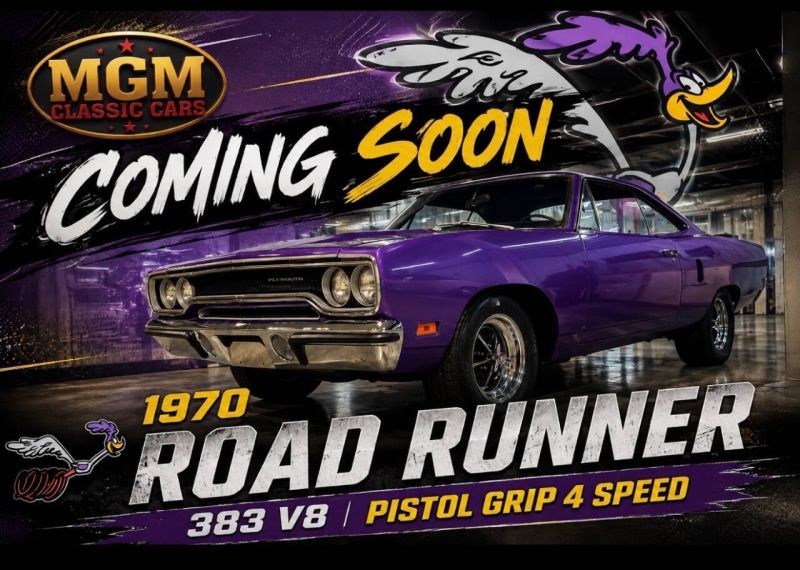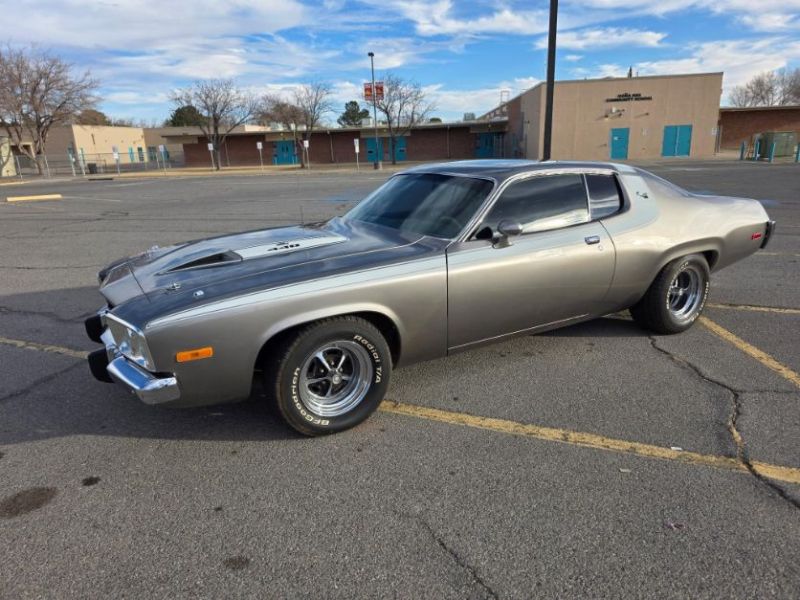
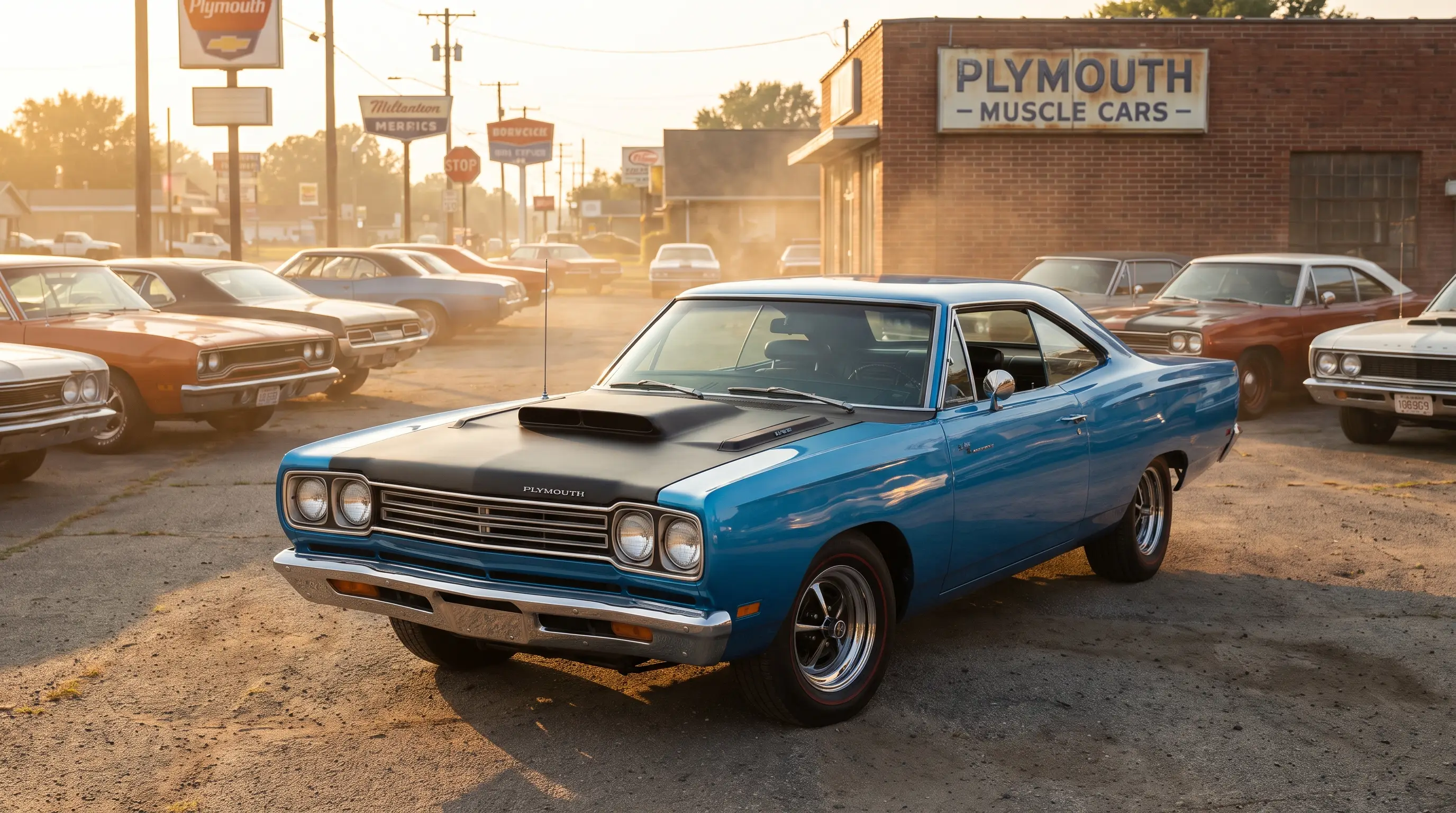
The Road Runner engine options list looks simple until you actually try to build a spreadsheet out of it. Plymouth's marketing pitch in 1968 was a single, honest sentence: a genuine muscle car for people who could not afford, or did not want to pay for, the trim and chrome that came bundled with a GTX. That pitch held for six model years, but the engine bay underneath it changed almost every single one of those years, and the changes tell you more about the muscle car market than any single spec sheet does.
1968: one engine, one philosophy
The first Road Runner shipped with a single standard engine, a 383 cubic inch V8 rated at 335 horsepower, breathing through heads borrowed from the 440 to wake it up over the standard 383's output in other Mopar applications. That is the whole point of the base engine strategy: give buyers real performance for a price close to a family sedan, then let the options list do the rest of the selling. The one factory option that mattered in year one was the 426 Hemi, rated at 425 horsepower on paper, a figure everyone in the industry understood was conservative for insurance purposes rather than accurate for the dyno.
Take rate on the Hemi Road Runner in 1968 was tiny, a few hundred cars out of tens of thousands built, because the Hemi option added a large percentage to the car's base price and required a stiffer suspension, bigger brakes, and a mandatory heavy-duty drivetrain to survive it. The base 383 outsold it by a wide margin for a simple reason: it did 90 percent of the job for a fraction of the cost, which was the entire premise of the car.
1969: the Six Barrel arrives
The 1969 model year is where the engine options got genuinely interesting. Plymouth introduced the 440 Six Barrel mid-year, a 440 cubic inch big block fed by three two-barrel carburetors on an Edelbrock aluminum intake, officially rated at 390 horsepower. That is a modest number on paper next to the Hemi's 425, but real-world testing routinely showed the 440 Six Barrel keeping pace with or beating Hemi cars in the quarter mile, largely because it was lighter over the front wheels and easier to launch consistently. If you want the full breakdown of how that engine came together and how it stacked up in period testing, read the background on the Six Barrel's development and reception.
This is the year the Road Runner engine options list stopped being a binary choice between "cheap and quick" and "expensive and quickest." The 440 Six Barrel split the difference, and it did so at a price point close enough to the base 383 that a meaningful share of performance buyers upgraded. That is the kind of decision an engineer respects: more power per dollar, not more power at any cost.
| Engine | Displacement | Rated horsepower | Carburetion | Years offered |
|---|---|---|---|---|
| 383 V8 (base) | 383 cu in | 335 hp | Single 4-barrel | 1968 to 1971 |
| 440 Six Barrel | 440 cu in | 390 hp | Triple 2-barrel | 1969 to 1971 |
| 426 Hemi | 426 cu in | 425 hp | Dual 4-barrel | 1968 to 1971 |
| 400 V8 | 400 cu in | 255 to 275 hp | 2 or 4-barrel | 1972 to 1974 |
| 440 V8 | 440 cu in | 225 to 280 hp | 4-barrel | 1971 to 1975 |
1972 and the compression drop
Every engineering story about early 1970s muscle cars eventually has to talk about compression ratios, and the Road Runner engine options are no exception. The 1972 model year brought a mandated drop to lower compression ratios across the board, aimed at running on lower-octane unleaded fuel, and Plymouth's SAE net horsepower ratings replaced the old gross figures the same year. The 400 cubic inch V8 that effectively replaced the 383 as the base engine that year was rated at 255 to 275 horsepower depending on carburetion, numbers that look like a collapse next to 1969 but are measured on a different, more honest scale. The real power loss was smaller than the number on paper suggests, though it was still a genuine loss, not just a measurement artifact.
The 426 Hemi did not survive into 1972 as a Road Runner option. Its final year in the lineup was 1971, and after that the 440 became the top available engine, still respectable but clearly operating in a different performance era than the car had launched into three years earlier.
The transmission and axle side of the equation
An engine option never existed in isolation on the order form. Each Road Runner engine came bundled with drivetrain requirements that shaped how the finished car actually performed, and ignoring that context is a common mistake buyers make when comparing cars purely by cubic inches. The 426 Hemi mandated a heavy-duty automatic or four-speed manual, a Dana 60 rear axle in most applications, and beefed-up suspension components to handle the extra weight and torque over the front wheels. The base 383 could be ordered with a much lighter-duty three-speed manual as standard, a genuine economy choice for buyers who wanted the engine's output without the drivetrain cost that came attached to the bigger options.
Axle ratio choices also shifted the character of a given engine option meaningfully. A Six Barrel car ordered with a numerically higher rear gear for drag strip work behaved differently from the same engine paired with a taller highway gear meant for comfortable cruising. None of this shows up cleanly in a simple horsepower comparison, which is exactly why a serious buyer needs to look at the whole broadcast sheet rather than fixating on the engine code alone.
Reading a build sheet with engine options in mind
For buyers trying to verify what engine actually left the factory in a given car, the fender tag and broadcast sheet remain the two most reliable documents, and neither one is optional if real money is on the line. The engine code stamped into the tag should match the casting numbers on the block itself, and the two should agree with the VIN's engine designation digit. Cars get engines swapped for a hundred legitimate reasons over fifty years, and a swapped engine does not make a car worthless. It does mean the seller needs to be honest about it, and the price needs to reflect it.
"People ask which Road Runner engine is 'the good one' like there's a single right answer. There isn't. The 383 is the honest answer, the Six Barrel is the smart answer, and the Hemi is the answer you give when the spreadsheet stops mattering to you."
- Emily Chen
The road runner engine options list, taken as a whole, is really a five-year case study in how a single platform can be tuned to hit wildly different price and performance targets without changing its identity. That range is exactly what makes shopping for one today interesting rather than repetitive, because a 1969 base car, a Six Barrel car, and a Hemi car are three genuinely different ownership experiences wearing the same body. If you want to see how that range shows up in current asking prices, browsing to find a classic Runner is the fastest way to compare what each engine option actually costs to own today, not just what it cost new.