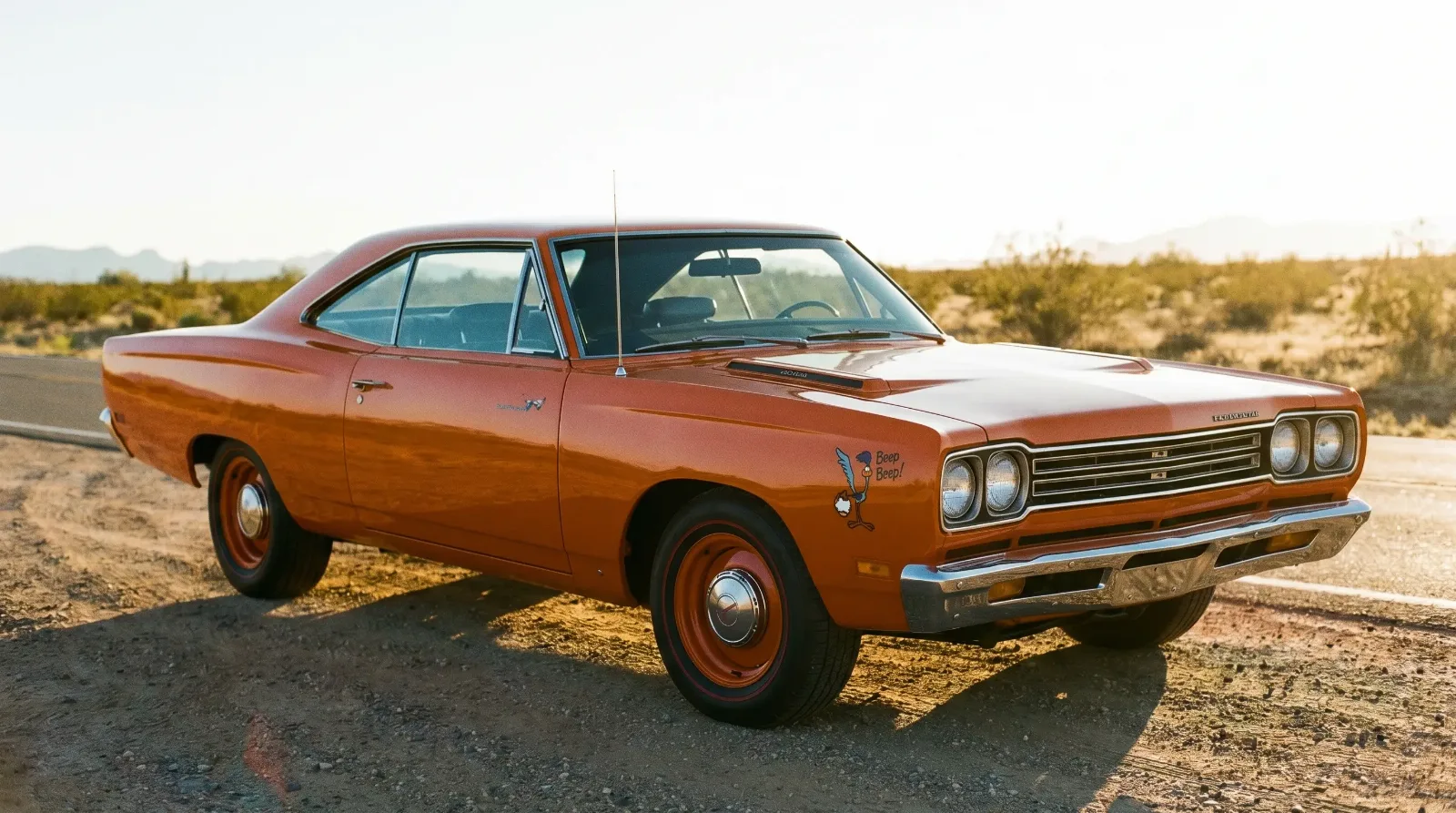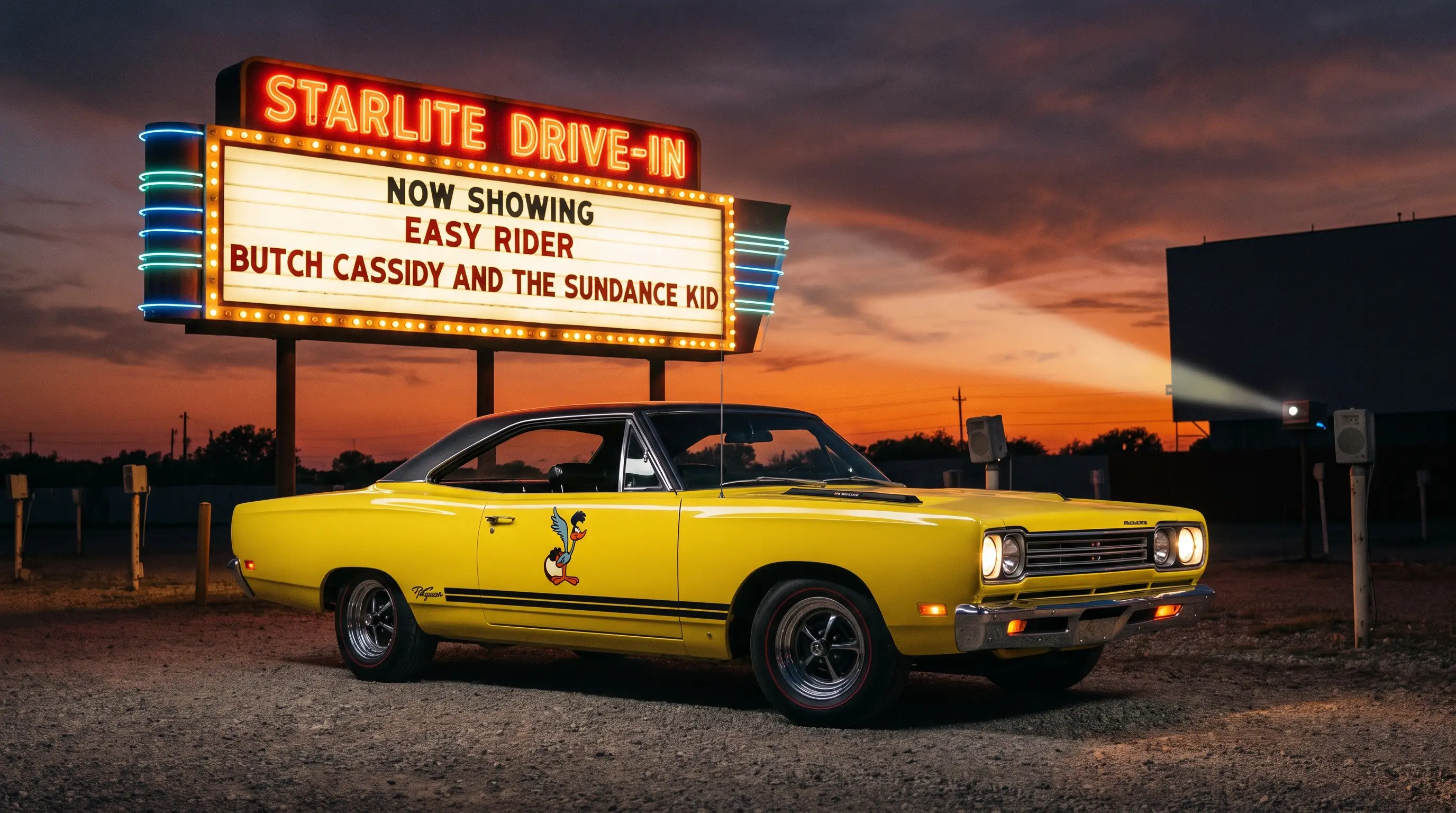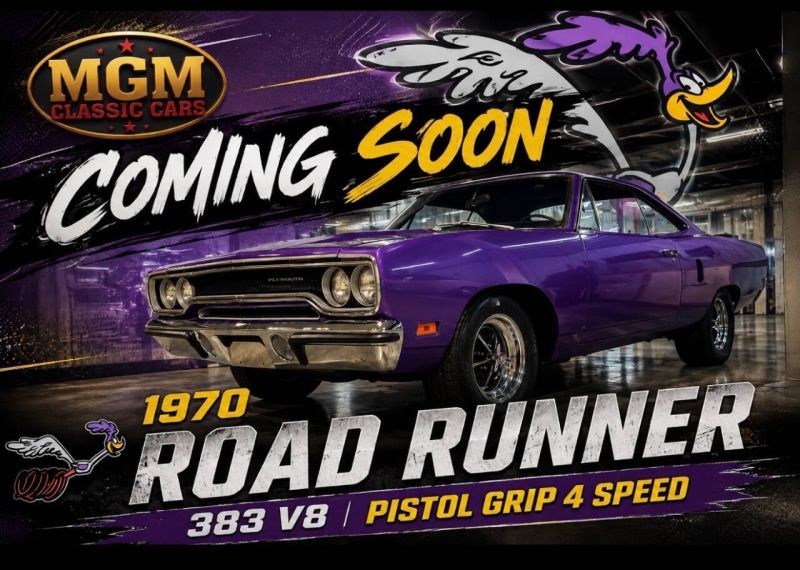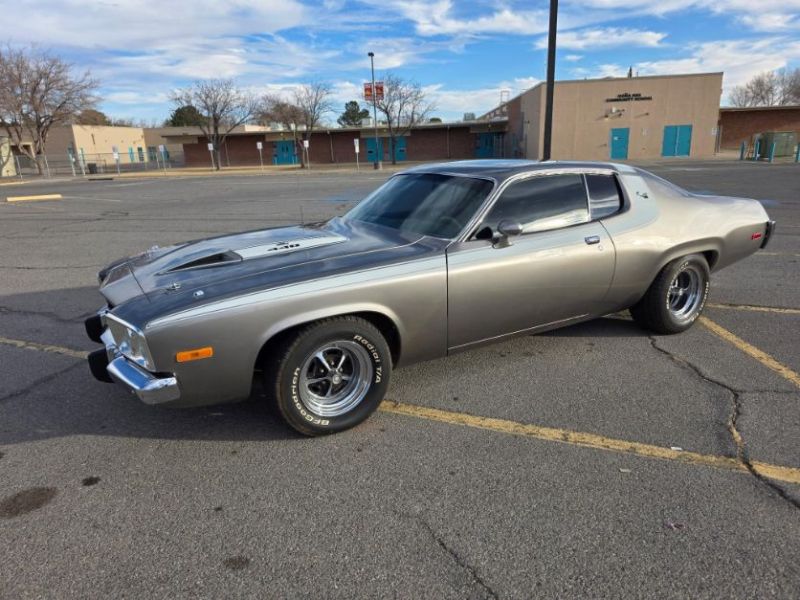
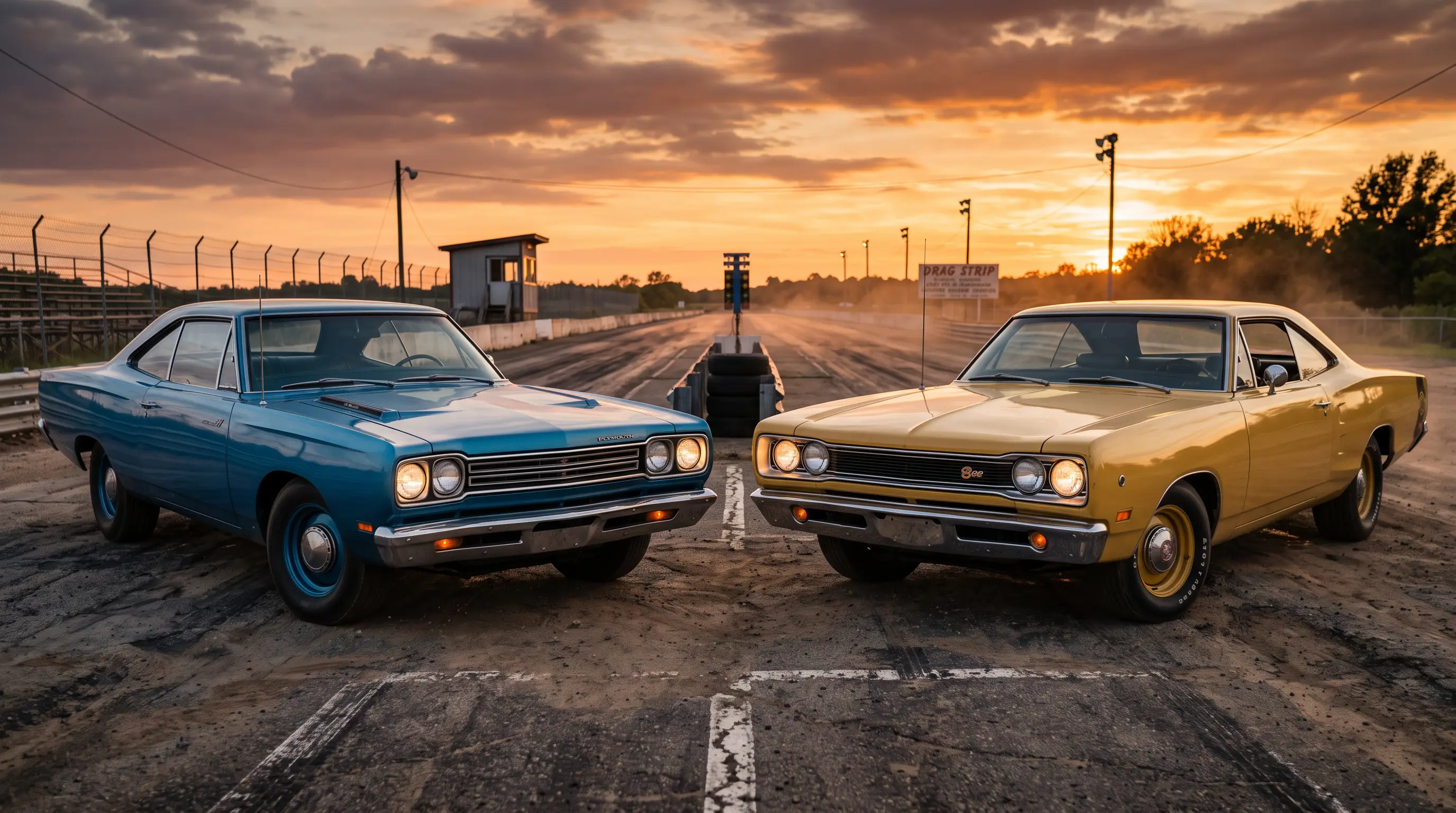
There is a version of the story where a Chrysler ad man sits in front of a television set in late 1966, half watching a Road Runner cartoon between meetings, and something clicks. Warner Bros. had been running the coyote-and-bird chase for years by then, and the joke never got old: the predator always loses, the bird always survives on speed alone. Plymouth bought the rights to the name and the "meep meep" horn for a reported fifty thousand dollars, and by the fall of 1967 the Plymouth Road Runner existed as a real car, not a cartoon. A year later, Dodge answered with its own animal, a cartoon bee stinging its way across ads and decklids on the Super Bee. The two cars came from the same corporate family and aimed at the same buyer, but they told two very different jokes.
A coyote, a cartoon, and an ad man's gamble
Plymouth's pitch was almost absurdly simple. Take the intermediate B-body platform, strip the trim, drop in a big-block engine, and sell it cheap. The genius was in the branding. Licensing an actual Warner Bros. cartoon character was unheard of in Detroit at the time, and it meant Plymouth could put a grinning, dust-cloud bird on the fender of a car that started under three thousand dollars. The horn that went "meep meep" was not a gimmick tacked on later. It was part of the pitch from day one, engineered by Chrysler with help from Warner Bros. sound designers so the car itself could tell the joke. Buyers got it immediately. Plymouth had projected sales in the low twenty thousands for 1968 and sold more than 44,000 Road Runners instead, a number that embarrassed the marketing department in the best possible way.
Dodge answers with a bee
Dodge did not have a cartoon license sitting on a shelf, so it built its own mascot from scratch. The Super Bee arrived for 1968 as a Coronet-based response, and the yellow and black bee logo did the same cultural work the Road Runner bird did: it turned a stripped-down muscle car into a character with a personality. The bee had teeth, wore boxing gloves in some ads, and generally postured as the scrappy underdog. Where the Road Runner leaned on an existing joke everyone already knew from Saturday morning television, the Super Bee had to build its own mythology from a blank page. It worked well enough to matter, but it never quite reached the cultural saturation of a bird that had been chasing a coyote across American living rooms for a decade already.
Same family, different mascot
What makes the rivalry interesting is that Plymouth and Dodge were not really competing so much as splitting the same customer base for the same corporation. Both cars rode on Chrysler's B-body platform, both could be ordered with the 383 or the 426 Hemi, and both existed because Chrysler's own dealers wanted a no-frills muscle car to sell against the Pontiac GTO and the Chevelle SS. The cartoon mascots were the differentiator, the thing that let a Plymouth dealer and a Dodge dealer down the street from each other both claim to have the fun one. Anyone curious about how the Road Runner side of that story actually got going should look at where this started, because the marketing decisions made in that first year shaped everything that followed on both sides of the rivalry.
| Detail | Plymouth Road Runner | Dodge Super Bee |
|---|---|---|
| Debut year | 1968 | 1968 |
| Platform | Belvedere B-body | Coronet B-body |
| Mascot origin | Licensed Warner Bros. cartoon character | Original in-house cartoon bee |
| Signature touch | Warner Bros. "meep meep" horn | Bee wing decal and boxing-glove ads |
| 1968 sales | 44,599 units | roughly 7,841 units |
Showroom rivals, racetrack cousins
On paper the two cars were close enough to be siblings wearing different jackets. Order sheets overlapped heavily, engine choices overlapped almost entirely, and a buyer cross-shopping a Road Runner against a Super Bee in 1969 was really choosing a mascot and a dealer relationship more than a fundamentally different machine. Drag strips did not care about the branding. A well-tuned 440 Six Barrel Road Runner and a Six Pack Super Bee ran close enough that bragging rights usually came down to the driver, not the badge. What separated them in the showroom was tone. The Road Runner sold itself as a joke everyone already knew, cheap and fast and a little bit cartoonish on purpose. The Super Bee sold itself as an underdog with something to prove, a newer character trying to earn the same affection with less of a head start.
"The bird won the popularity contest, but it wasn't really a fair fight. Wile E. Coyote had been losing to that Road Runner on television since before some of these buyers were born. Dodge had to invent that same recognition from scratch in about a year, and getting even close is its own kind of achievement."
- Nora Beckett
Two cartoons, one legacy
Neither car survived the muscle car era in its original form, but both left a mark that outlasted the ad campaigns that launched them. The Road Runner name came back more than once over the following decades, and the bird logo still shows up on reproduction parts, T-shirts, and restoration shop signs today. The Super Bee had quieter afterlives, revived briefly in later Dodge lineups and remembered fondly by owners who liked being the less obvious choice. Collectors now shop both nameplates for the same reasons buyers did in 1968 and 1969: real muscle, a story attached to the badge, and a personality the car does not have to explain. Anyone drawn to that particular mix of speed and cartoon charm can find a classic Runner for sale and decide for themselves which mascot earned its reputation.
What the rivalry actually proves
Strip away the cartoons and the two cars prove something simple about Detroit in the late 1960s: performance alone was not enough to move a stripped-down intermediate off the lot in the numbers Chrysler wanted. It took a character, a joke, something a seventeen-year-old could describe to a friend in one sentence. The Road Runner got there first and got there bigger, but the Super Bee's willingness to compete on the same terms, invented mascot against a licensed one, says as much about Dodge's confidence as it does about the car itself. Both machines still show up at the same cruise nights today, parked a few spots apart, still arguing the same argument their ad campaigns started more than half a century ago.
Talk to enough owners of either car and the same pattern comes up. Someone bought a Super Bee because their father had one, or because a Road Runner at the same price point felt too obvious, too much the car everyone already recognized on sight. Someone else bought the bird because that recognition was exactly the point, because pulling into a parking lot in a car that announces itself with a horn straight out of Saturday morning cartoons is half the fun of owning one. Neither answer is wrong. The rivalry was never really about which mascot was funnier. It was about which joke a buyer wanted to tell about themselves every time they turned the key, and Chrysler was smart enough in 1968 to make sure it could sell either punchline under its own roof.
Dodge answered the Road Runner with its own cartoon muscle car, covered in the Dodge Super Bee story.