
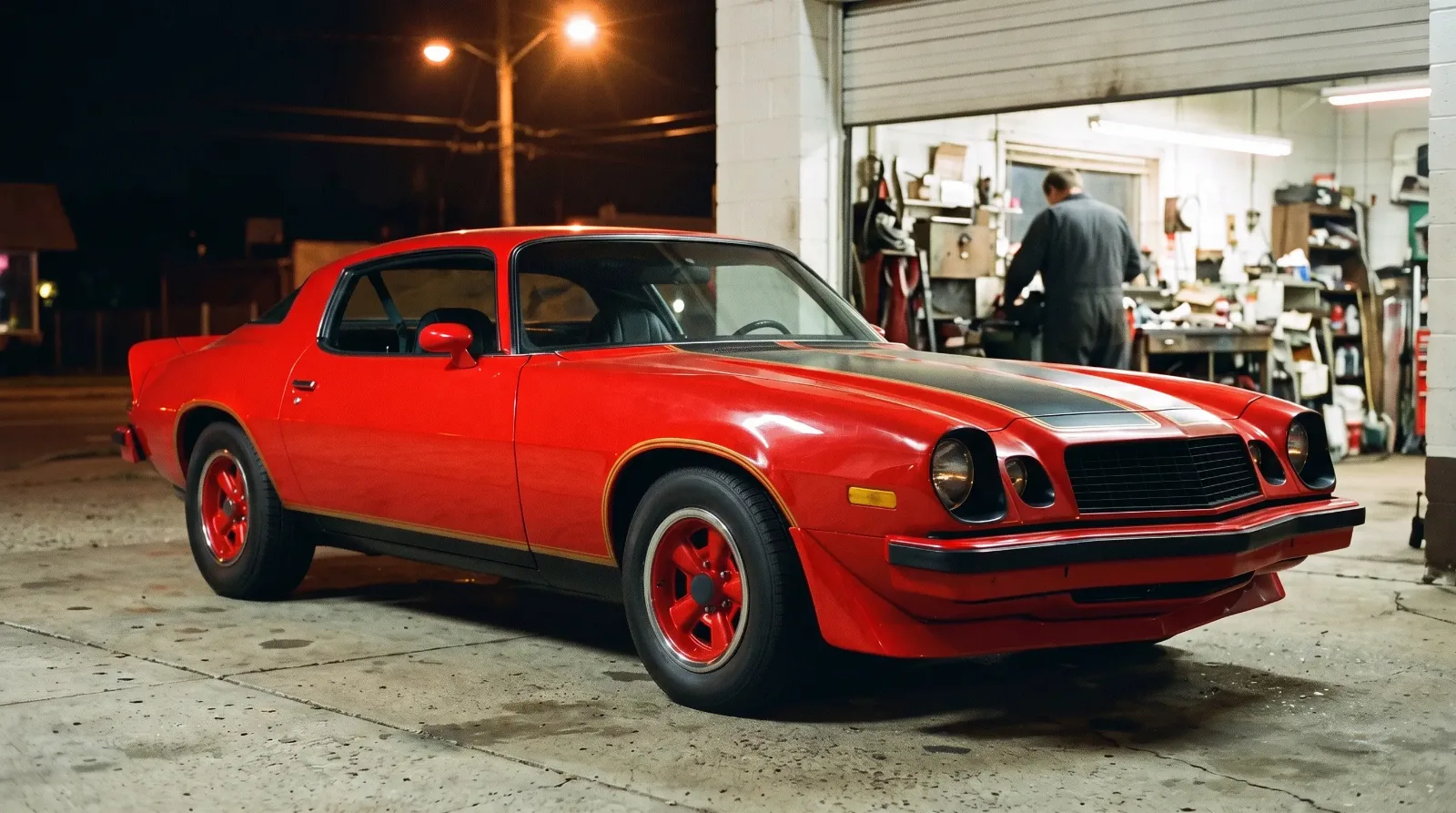
The 1975 Camaro had a top engine rated at 155 hp. That is the number people quote when they want to laugh at the smog era, and it is accurate. It is also not the whole story. The 1975 Camaro and its 1976 follow-up were slow, heavy-bumpered, and catalytic-converted, and Chevrolet still sold more of them each year than it had sold in 1973. This piece looks at what those two model years actually delivered: the engines, the equipment, the numbers, and what that means if one is sitting in front of you today with a price on the windshield.
Car Features
7 min read
The Smog-Era Camaro: What 1975 and 1976 Really Delivered
No Z28, a catalytic converter and 155 hp at best. The 1975 and 1976 Camaro still sold strongly. Here is what those smog-era cars delivered.
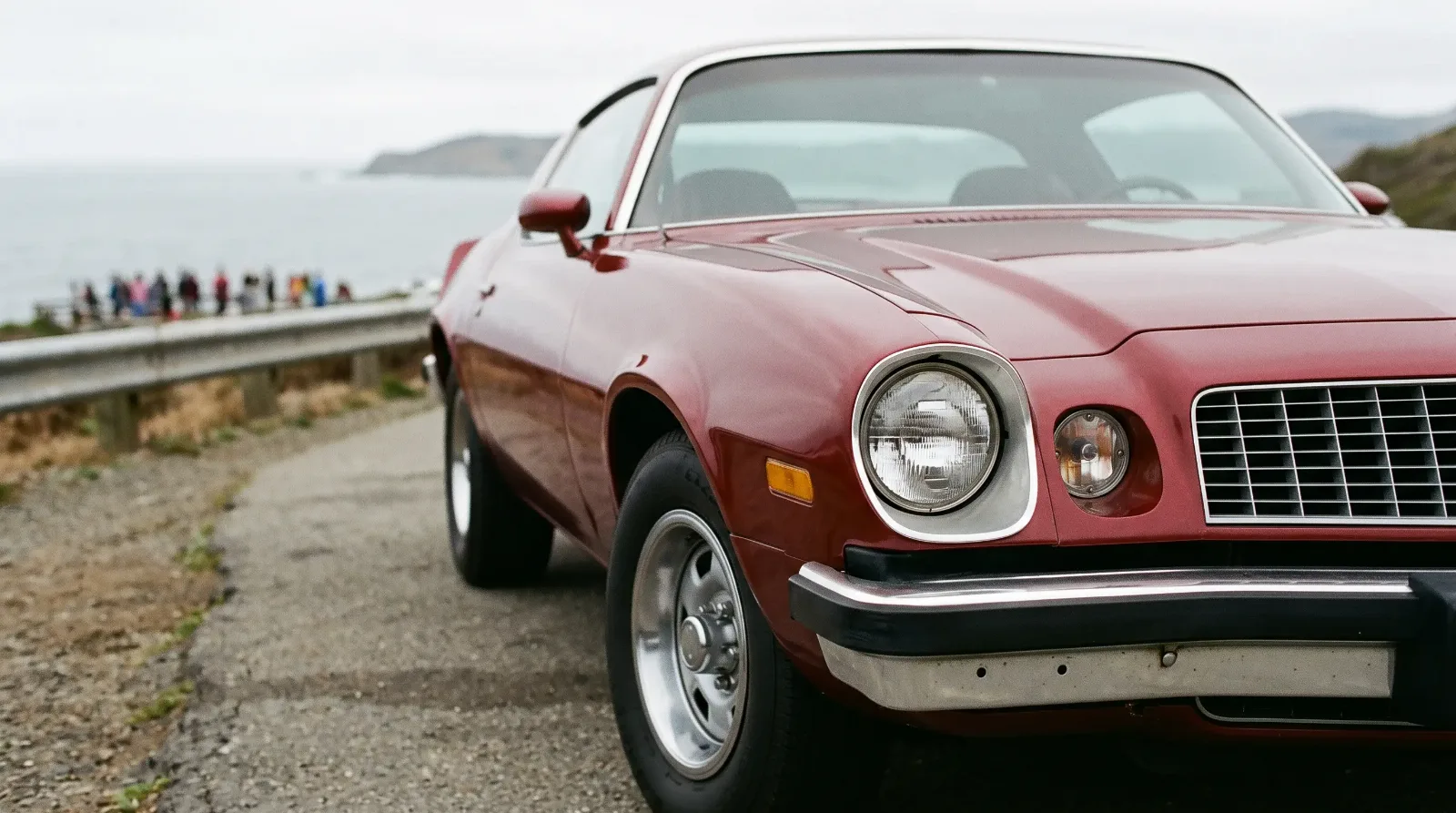
What happened to the 1975 Camaro under the hood
Start with what went away. The Z28 sold 13,802 copies in 1974, its best second-gen year to that point, with an L82 350 rated at 245 hp net. Chevrolet dropped it anyway. The stated reason was tight emission regulations. For 1975 and 1976 there was no Z28 at all.
Then came the hardware. For 1975, every US GM passenger car got a catalytic converter. The Camaro got one too. Its engine list shrank to three choices: a 250 cubic inch six at 105 hp, and two versions of the 350 V8 at 145 and 155 hp. Those are net ratings, measured with accessories and exhaust in place, so they are honest numbers. They are just small ones.
How small? The 155 hp 350 was the strongest Camaro engine of 1975. It made 90 fewer horsepower than the Z28 it replaced. No 1975 Camaro could match a 1974 Z28 on paper, and none tried.
| Model year | Engine | Rated output (net) |
|---|---|---|
| 1974 (Z28, for reference) | L82 350 V8 | 245 hp |
| 1975 | 250 six | 105 hp |
| 1975 | 350 V8, lower rating | 145 hp |
| 1975 | 350 V8, higher rating | 155 hp |
| 1976 | 250 six | 105 hp |
| 1976 | 305 V8 (new, standard on LT) | 140 hp |
| 1976 | 350 V8, four-barrel | 165 hp |
There was one quiet improvement. High Energy Ignition, which the 1974 Z28 had already used, became standard on every 1975 engine. No more points to file and gap. If you ever spent a Saturday with a feeler gauge and a dwell meter, you know that was worth something, even if it never showed up on a dyno sheet.
What 1975 gave you instead of horsepower
Chevrolet could not sell speed, so it sold comfort and looks. The 1975 car got a new wraparound rear window, which opened up the view out the back and changed the roof's profile. The Camaro emblem moved up above the grille. V8 cars got twin exhaust outlets, which looked the part even if the catalytic converter kept the sound polite.
The option list grew in a direction nobody would have predicted in 1969. Power door locks, cruise control and leather seats, in Dark Saddle or Dark Oxblood, all became available for 1975. The LT, the upscale trim, swapped its walnut-grain dash for bird's-eye maple. The Rally Sport name came back late in the model year as a paint and trim package. It did nothing for power. It did a lot for the parking lot.
Buyers responded. Chevrolet built 145,770 Camaros for 1975: 29,749 sixes and 116,021 V8s. That is a little under 1974's 151,008 but well ahead of the 96,751 built in 1973. Four out of five buyers still paid for a V8, slow or not. People wanted the shape and the sound of eight cylinders more than they wanted the numbers.
That is the irony of the period. Camaros were racing against the best drivers in the world while the street car topped out at 155 hp. The race cars and the showroom cars shared a name and a silhouette. Not much else.
1976: the 305 arrives and the buyers keep coming
The 1976 model year brought the first 305 V8 in a Camaro. It made 140 hp and became the standard engine on the LT. The 350 with a four-barrel carburetor moved up to 165 hp, the best figure of the two smog years and still 80 short of the 1974 Z28. The six stayed at 105 hp. Power brakes became standard on V8 cars, and a Landau vinyl top joined the options list. The LT got a brushed-aluminum rear panel.
Production jumped to 182,959: 38,047 sixes and 144,912 V8s. By model, Chevrolet built 114,683 Sport Coupes, 52,421 LTs and 15,855 Rally Sport coupes. An LT carried a price of $4,320, up from $3,715 in 1974. Two years of inflation and new equipment, and the car got more expensive while getting slower. Welcome to the 1970s.
Chevrolet's 1976 ad line was "Want a lift, America? '76 Camaro." That is a long way from the muscle-car pitch of a few years earlier. It was selling a mood, and the mood sold. The Camaro still trailed the Mustang that year, 182,959 to 187,567, but the gap was small.
"Everybody wants to talk about the 155 horsepower. Nobody wants to talk about the 145,000 people who bought one anyway. They weren't stupid. They wanted a good-looking car that started every morning, and that's what they got."
Mike Sullivan
The real pressure was coming from inside the building. Pontiac's Trans Am, the Camaro's corporate cousin, accounted for about 47,000 of roughly 110,000 Firebirds in 1976. Pontiac had kept a performance image alive through the smog years. Chevrolet's answer arrived in the spring of 1977, when the 1977½ Z28 comeback put a 185 hp LM1 350 back under a Z28 hood. For the wider picture of those twelve years, our second-gen story lays it all out.
Owning a 1975 or 1976 Camaro today
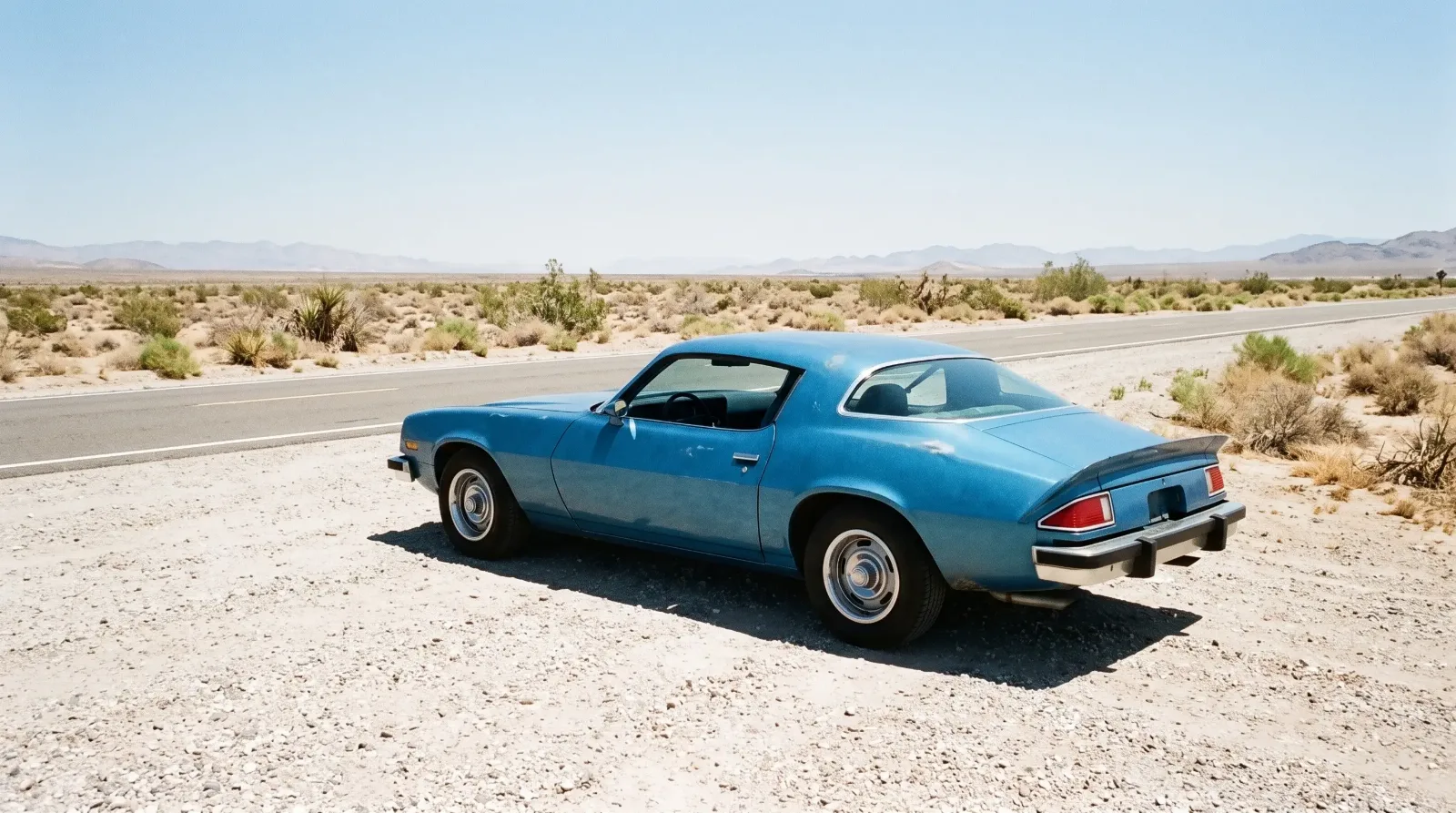
Here is the blunt version. Nobody buys a smog-era Camaro for the original engine's output. It never had any to speak of, and it will not grow some sitting in a garage. What these cars do have is the second-gen body, a lot of 1970s character, and no Z28 badge to pay extra for. That is the opportunity, and it comes with a trap.
The trap is the same one every second-gen owner faces: rust. These cars were daily drivers and most lived hard. A cheap 1976 with tired quarters and soft floors is not cheap once the metal work starts. Check it before you fall for the paint.
If you plan to keep it stock, enjoy it for what it is: a comfortable cruiser with a great profile and a polite exhaust note. If you plan to swap the engine, these are honest donor cars, and nobody will lecture you about destroying a 105 hp six. Just be straight with the next buyer about what it started as.
The 1975 and 1976 cars were the low point on the horsepower chart. They were not the low point in the showroom. Chevrolet sold more of them than it sold of the 1973s, and the 1976 total was better than any year since 1969. That says something about the Camaro's shape, and something about what buyers actually wanted. For how these years fit in from 1967 onward, there is the whole story.
Sources and notes
Related Reading
Have a
Chevrolet Camaro
for Sale?
Reach thousands of serious classic car collectors across the US.
Sell It Here →
Selling a classic? Here's how: sell my classic car
Are You a Classic Car Dealer?
List your full inventory and connect with targeted classic car buyers.
Join as a Dealer →

About the author
Mike Sullivan
Detroit-area muscle car enthusiast and restoration specialist with three decades of hands-on experience working on American iron.
Related Listings - Chevrolet Camaro




Comments
Be the first to comment on this article.