
Imagine a front parlor on a summer evening a century ago. The window is open, a lamp is lit, and somebody has propped a new piece of sheet music on the piano. The cover shows a little black Ford bouncing down a country road. The family gathers, picks out the tune, and sings about the car parked out by the barn. That is where most songs about Model T Fords lived: not on records or the radio, but on paper, in homes, played by whoever in the house could read music. They are small songs, mostly forgotten. They tell you a great deal about how people felt about the car they drove.
Car Features
8 min read
Songs About the Model T and the Early Ford
From a 1914 ode to an unstoppable Ford to the 1928 farewell to Lizzie: the sheet music songs about the Model T and what they said.
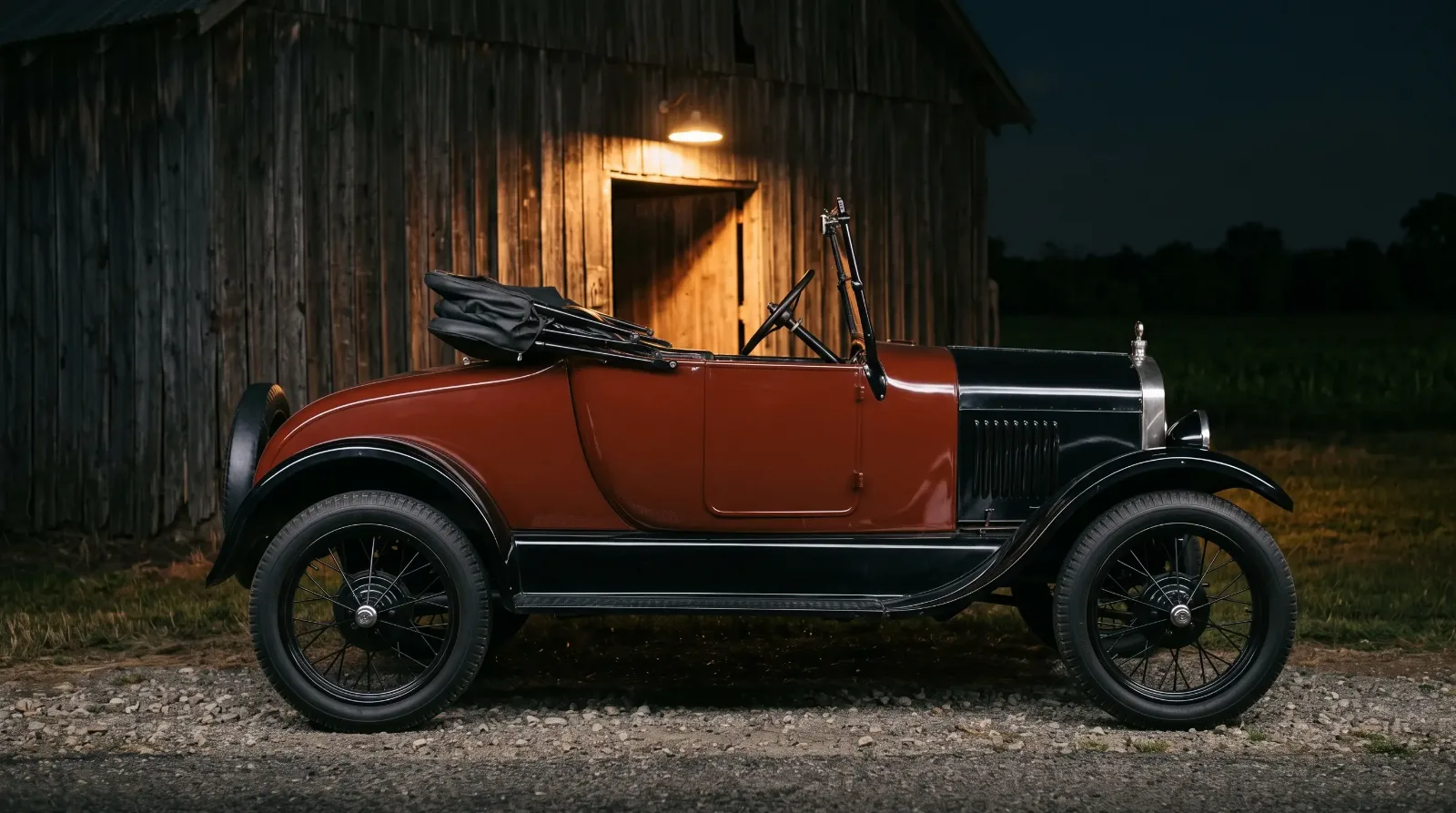
The Model T had a nickname long before it had a songbook, and the story of "tin lizzie" is its own puzzle; you can read more here. This piece follows the music: the handful of documented songs from 1914 to 1928, what they said, who wrote and printed them, and the quiet goodbye one of them sang when the Model A arrived.
How songs about Model T Fords began
Popular songs follow popular things. By 1918, half of all cars in America were Model Ts. A song about a Ford was a song about something nearly every listener had ridden in, borrowed, pushed out of a ditch or cursed on a cold morning. Songwriters did not need to explain the subject. They only needed a hook.
In the 1910s a new song reached the public on printed sheet music as much as anywhere, and topical songs went after whatever the country was talking about. The automobile was one of those topics, and the cheapest, most common automobile was the obvious one to sing about. The Henry Ford museum keeps a Ford and Model T Songs Collection, which tells you there were enough of these pieces to fill one.
The songs shared a tone with the jokes of the same years. They teased the car and admired it in the same verse. That double feeling, affection with a grin, runs through every title below.
| Song | Year | Writers | Publisher | What it says about the car |
|---|---|---|---|---|
| "The Little Ford Rambled Right Along" | 1914 | Music Byron Gay; lyrics C. R. Foster and Byron Gay | C. R. Foster Publishing Co., Los Angeles | The Model T as indestructible |
| "The Love Story of the Packard and the Ford" | 1915 | Music Harry Carroll; lyrics Harold R. Atteridge | Shapiro, Bernstein & Co., New York | The cheap car courted by a luxury make |
| "On the Old Back Seat of the Henry Ford" | 1916 | Music Lawrence Dillon; lyrics William A. Dillon | Witmark, New York | The Ford as a place for courting |
| "Henry's Made a Lady Out of Lizzie" | 1928 | Walter O'Keefe | De Sylva, Brown & Henderson, New York | The Model A replacing the tin lizzie |
"The Little Ford Rambled Right Along"
The earliest of the well-documented songs is from 1914. Byron Gay wrote the music, and the lyrics were by C. R. Foster and Gay together. It was published by C. R. Foster Publishing Co. of Los Angeles, a West Coast house rather than one of the big New York firms, and a copy survives at The Henry Ford.
The song's lyrics make the Model T sound indestructible. That was the heart of the car's reputation in 1914. It was light and tall and rattled on every rut, but it kept going where heavier machines bogged down. A song that let a family sing about their cheap car outlasting everything on the road was a song about pride as much as comedy.
The timing matters too. In 1914 the moving assembly line was new, Ford's prices were falling fast, and the Model T was turning from a novelty into furniture. People were beginning to own the car the way they owned a stove: without much thought, and with a lot of daily contact. Songs grow out of that kind of familiarity.
Courting, rivalry and the back seat
Two years later, the subject shifted from the road to the people in the car. "On the Old Back Seat of the Henry Ford," from 1916, had music by Lawrence Dillon and lyrics by William A. Dillon, and was published by Witmark of New York. The title alone carries the idea. The Ford had become a place where young people could be alone together, away from the porch and the parlor, and songwriters noticed.
"Look at the titles and you can see the car moving through people's lives. First it is a machine that will not quit. Then it is a back seat on a quiet road. Then, at the end, it is an old friend being given a new dress."
Nora Beckett
A third title from these years, "The Love Story of the Packard and the Ford," came out in 1915, with music by Harry Carroll and lyrics by Harold R. Atteridge, published by Shapiro, Bernstein & Co. of New York. The Henry Ford catalogues it as a comic song: a luxury Packard falls for the practical, low-cost Ford, and their marriage produces a family of Buicks. It was the same joke that set a Cadillac owner keeping a Ford in his toolbox, turned into a romance.
The Model T kept turning up in other entertainment of the period. Laurel and Hardy, in late silent shorts and early talkies, squashed, wrecked and sank Model Ts for laughs; the car's life in silent comedy is a story of its own. Like the songs, those films counted on an audience that knew exactly how a Model T behaved.
"Henry's Made a Lady Out of Lizzie" and the goodbye
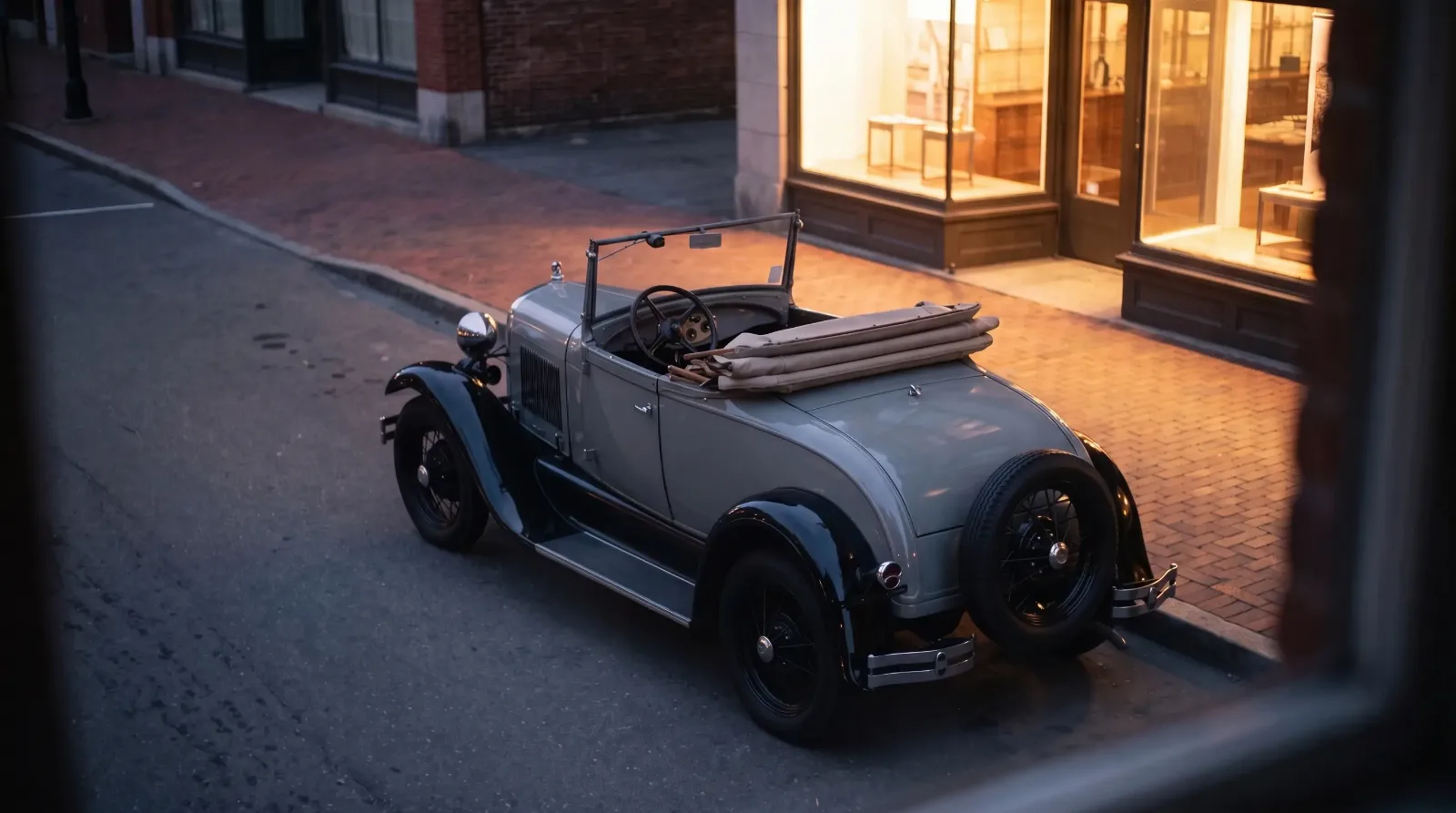
In May 1927 the Model T line ended after more than 15 million cars. The Model A was introduced on December 2, 1927. And in 1928, a song caught the moment in a single line of title: "Henry's Made a Lady Out of Lizzie."
Walter O'Keefe wrote it, and De Sylva, Brown & Henderson of New York published it, with cover art by Politzer. The joke is gentle and exact. Lizzie, the tin one, the rattling farm car of a thousand gags, had been cleaned up. The new Ford had a smoother body and a more polished look. Henry, in the song's telling, had taken the old girl and made her respectable.
Those ukulele chords are a small detail with a big story in them. A publisher printing chord boxes for the ukulele, an instrument for amateurs, plainly expected the song to be sung by ordinary people at home, on porches and at parties, not just by professionals. It was a song for the same people who had driven the old car.
There is something tender in it, too. The title does not mock the Model T. It retires her. After nearly two decades of being called a flivver (the other nickname, explained here) and a tin can, Lizzie got a send-off with a tune.
After the music stopped
The documented songs thin out once the Model A arrives, and there is a likely reason. A song about a car is often a song about its flaws, and the new Ford had fewer obvious ones to tease. The great age of Ford songs belongs to the T, and mostly to the years when it was everywhere.
The car did return in music much later, in a different form. In the 1960s the surf duo Jan and Dean sang "Bucket T," later recorded by The Who, about the stripped T-bucket hot rods that young builders made from old Model T bodies. By then the Lizzie of the parlor piano had become raw material for speed, a long way from a family singing around a lamp.
Today the original sheet music survives in museum collections and in the hands of private collectors. The covers are often the best part: period drawings of the car and its drivers, printed in color on cheap paper. Hold one and you are holding a piece of the car's life that no restorer can rebuild. The songs were never great art. They were something rarer: a record of how ordinary people felt, sung in their own front rooms.
Sources and notes
- The Henry Ford: "The Little Ford Rambled Right Along" sheet music, 1914
- The Henry Ford: "The Love Story of the Packard and the Ford" sheet music, 1915
- The Henry Ford: "Henry's Made a Lady Out of Lizzie" sheet music, 1928
- The Henry Ford: Advertising the Model T
- uDiscover Music: The Who's Ready Steady Who EP and "Bucket T"
Related Reading
Have a
Ford Model T
for Sale?
Reach thousands of serious classic car collectors across the US.
Sell It Here →
Selling a classic? Here's how: sell my classic car
Are You a Classic Car Dealer?
List your full inventory and connect with targeted classic car buyers.
Join as a Dealer →

About the author
Nora Beckett
Automotive features writer and photographer who tells the human stories behind the cars, from show fields to cross-country road trips.
Related Listings - Ford Model T
Comments
Be the first to comment on this article.