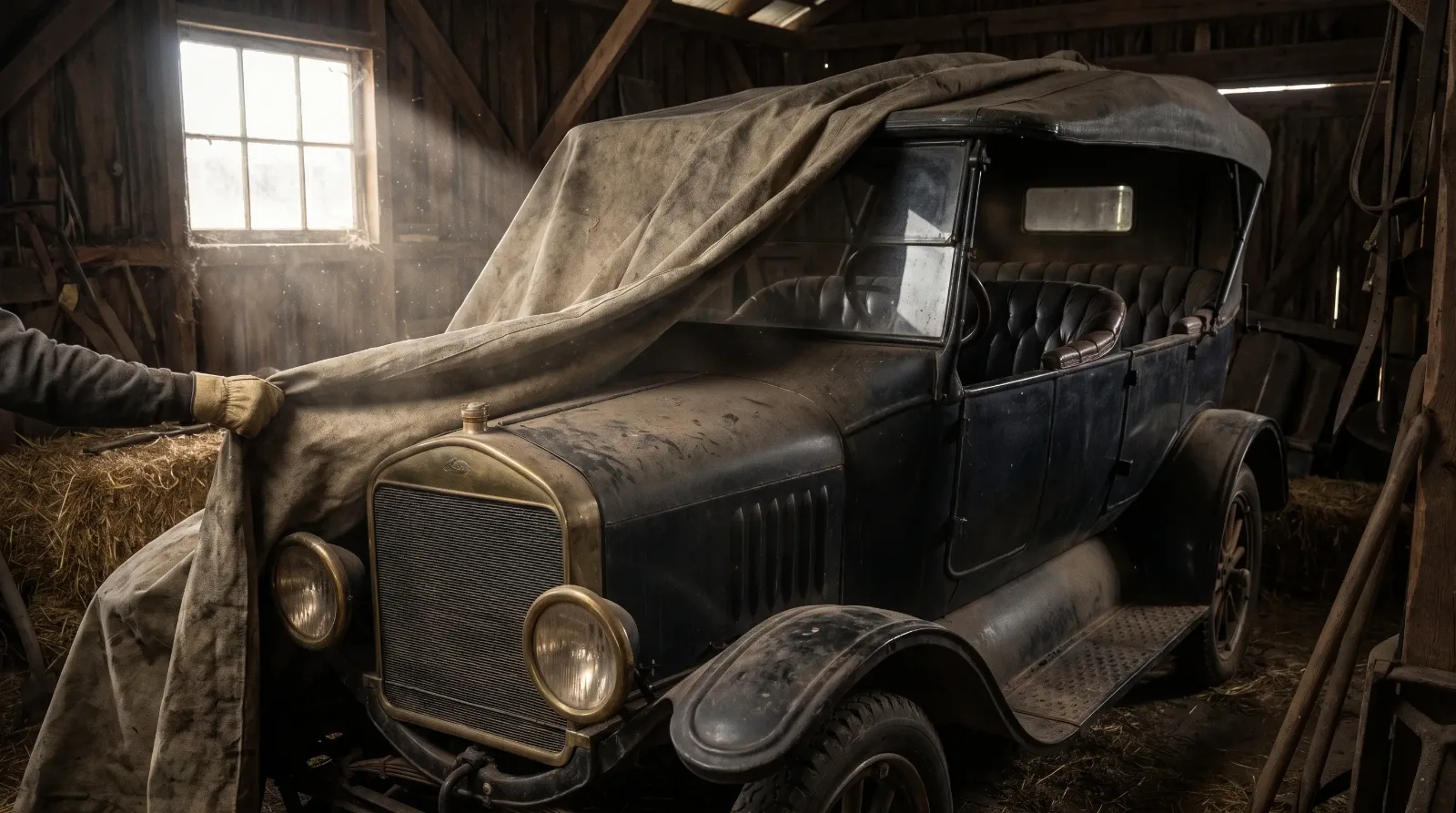
There is a barn outside a small town in Ohio where a man kept his grandfather's touring car for thirty years, covered in a canvas tarp, believing that covering it was the same thing as protecting it. When he finally pulled the tarp back to sell the car, the tarp itself had trapped decades of condensation against the paint, and rust had crept up from the floorboards in a pattern that traced exactly where moisture had nowhere to go. He had done everything he thought was right. He just had the wrong idea of what protection actually means.
Storage is not about hiding a car from the world. It is about controlling the small, slow forces, moisture, temperature swings, stagnant air, that do more damage over ten quiet years than most owners do driving one.
Moisture is the real enemy, not exposure
People worry about dust and sunlight, and those matter, but moisture is what actually eats a car from the inside. Humidity that fluctuates through a season condenses inside hollow body sections, inside the frame, under carpet and padding nobody thinks to check. That trapped moisture sits against bare metal in places a visual inspection will never catch, and by the time rust shows through a painted surface, it has usually been working underneath for years.
A stable relative humidity, somewhere in the range most conservators recommend for organic and metal materials together, does more to prevent corrosion than any single product you could apply to the car itself. Consistency matters more than any particular number. A space that swings from damp to dry and back again stresses both the metal and the paint film sitting on top of it.
What a good storage space actually looks like
The ideal space is dry, ventilated without being drafty, and out of direct sunlight. A concrete floor should be sealed or have a vapor barrier underneath the car, since bare concrete wicks ground moisture upward and holds it right against the underside of a vehicle sitting still for months at a time. Airflow matters too. A sealed, unventilated space traps whatever moisture is already present and gives it nowhere to go, which is exactly the mistake that tarp in Ohio made in miniature.
If a climate-controlled building is not available, a breathable car cover, one designed to let moisture escape rather than trap it against the paint, is a meaningful improvement over a plastic tarp or an old canvas sheet that was never made for this purpose. The difference between a cover that breathes and one that does not is the difference between protection and a slow, invisible problem.
He thought the tarp was doing the car a kindness. It was doing the opposite the entire time, and neither of them knew it until it was too late to matter.
The small habits that prevent the big problems
A car in long-term storage still needs periodic attention, even if it never turns a wheel. Fluids left stagnant for years can separate or draw moisture themselves, which is worth checking on a schedule rather than assuming everything is fine because the car looks the same as when it went in. Tires left in one position for extended periods develop flat spots, and rotating or lifting the car periodically prevents that stress from becoming permanent. A battery left connected and untended will eventually leak and corrode terminals and anything nearby, so disconnecting it, or using a proper low-amperage maintainer, is a small habit that prevents a much bigger cleanup later.
"The cars that come out of storage looking untouched are never the ones that were simply forgotten. They're the ones somebody checked on quietly, every season, without making a project of it."
— Nora Beckett
What sits underneath matters as much as what's around it
A wheeled dolly or a set of jack stands placed correctly changes what the tires and suspension experience over years of stillness, but what actually sits beneath the car matters just as much. Bare earth floors hold moisture close to the ground and release it slowly upward, right into the underside of anything parked there for long stretches. Even a garage floor that looks perfectly dry to the eye can be pulling moisture up from below in ways a visual check will never reveal.
A simple vapor barrier, even something as basic as heavy plastic sheeting under the car with proper edges sealed, interrupts that upward moisture path far more effectively than most owners expect from something so inexpensive. It is one of those small, unglamorous choices that quietly does more protective work than an owner chasing a more visible fix would ever guess.
Pest control belongs on this list too, and it gets overlooked constantly. Rodents nesting inside a stored car do real damage beyond the obvious mess, chewing wiring insulation, nesting in upholstery, and leaving droppings that are corrosive to metal surfaces over time. A few simple deterrents, checked periodically rather than set once and forgotten, prevent a whole separate category of storage damage that has nothing to do with moisture at all.
What thirty years actually teaches you
The Ohio car survived, eventually, though the restoration cost far more than proper storage would have. Its story is not unusual. Most rust damage found on cars pulled from long storage did not happen because someone drove them hard for decades. It happened quietly, in a space someone believed was safe, because safety was never really about keeping a car covered. It was always about keeping the air around it dry and moving.
Getting the storage environment right is only part of keeping one of these cars alive over the long term. the storing vintage cars long term guide covers the fuller picture of what preservation actually protects, and why it matters to a car's story as much as its structure. And when parts do eventually need replacing, no amount of good storage prevents that entirely, read on for where to find them without compromising what the car actually is.
Sources and notes
- CarCapsule - preventing rust during long-term classic car storage
- Munters: climate control for classic car storage
- Cotes - protecting classic cars from corrosion, rust and mould
- Progressive: classic car storage tips
- Extra Space Storage - preparing a classic car for long-term storage
- Wick Buildings: storing classic cars