People ask me all the time how you find parts for a car that hasn't been in production for ninety years. Truth is, it's less mysterious than folks think, but it's also not something you solve with one phone call. It's a network you build over years, and once you've built it, parts have a way of finding you almost as often as you go finding them.
Start with the clubs, not the internet
I know that sounds old-fashioned in a world where everybody searches online first, but the marque and model clubs built around these cars are still where the real knowledge lives. Members have spent decades cataloging suppliers, tracking down NOS stock, and figuring out which reproduction parts are actually worth buying versus which ones just look right in a catalog photo. A good club newsletter or forum will save you more wasted money than any general search ever will, because the people posting there have already made the expensive mistakes so you don't have to.
Join before you need anything specific. The relationships you build asking basic questions early are the same relationships that get you a phone call when somebody's cleaning out a garage and finds a box of exactly the part you've been hunting for two years.
New old stock, reproduction, and fabrication, know the difference
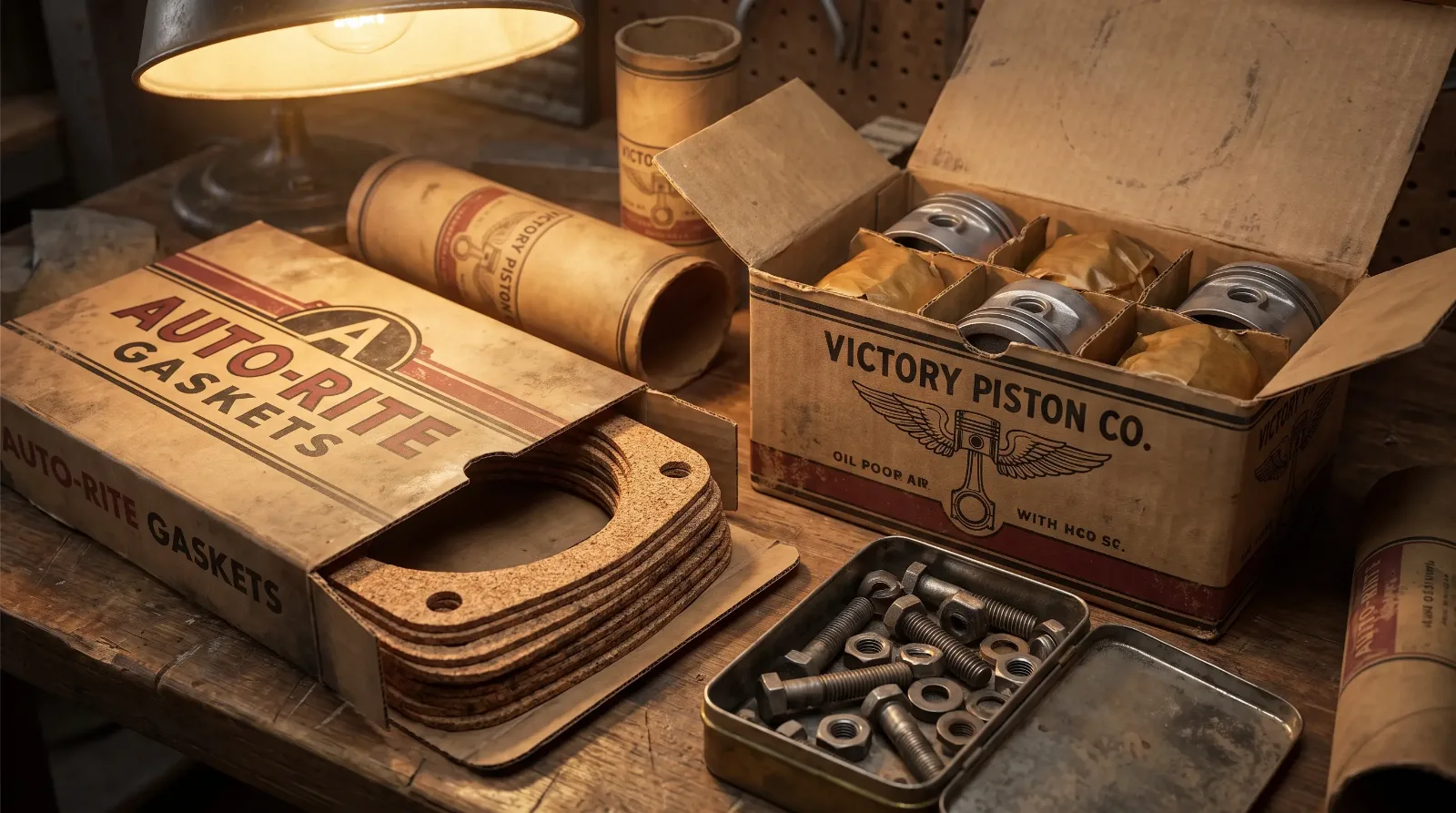
New old stock, meaning original factory parts that were made decades ago and never installed, is the gold standard when you can find it, but it's finite and it's getting scarcer every year as existing stock gets used up. Reproduction parts have improved enormously over the last couple decades, and for high-demand items on popular models, a well-made reproduction can be functionally and visually indistinguishable from original. The trouble is quality varies a lot between suppliers, so ask around in the clubs before trusting a reproduction part you haven't seen anyone else vouch for.
When neither NOS nor reproduction exists, which happens more often than you'd think on lower-production makes, fabrication is the remaining option. A good machinist or fabricator working from an original part as a pattern can reproduce almost anything given enough time and budget. It's the most expensive route, but sometimes it's the only route, and it's worth building a relationship with a shop that has experience on cars this old rather than a general repair shop that's never seen a part like yours.
"I've watched fellas pay three times what a part was worth because they panicked and bought the first thing they found online. Slow down, ask the club first, and half the time somebody already knows exactly where to point you."
— Gary Nowak
Swap meets still matter more than people admit
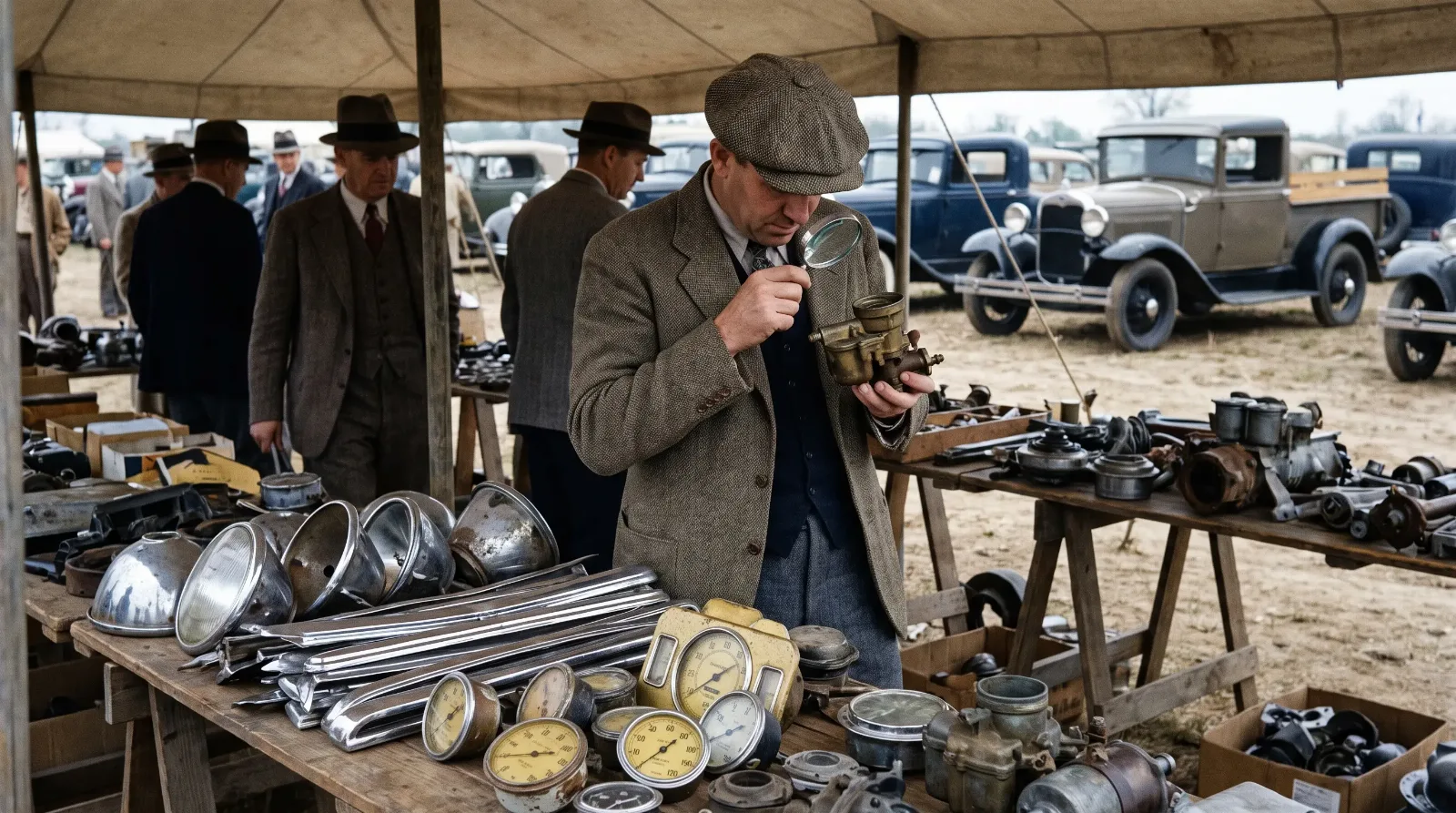
Online marketplaces have their place, but there's still nothing quite like walking a swap meet with a part in your hand, comparing it against what's on a table, and talking directly to somebody who's been dealing in this stuff for forty years. You learn things at a swap meet you'd never learn from a listing photo, like how a part actually feels, whether the casting matches what you remember from the original, little details that separate a correct part from one that's close but wrong.
The big national meets draw sellers who specialize in specific makes and eras, and it's worth planning a trip around one if you're chasing something particular rather than hoping it turns up locally.
| Source | Best for | Trade-off |
|---|---|---|
| Marque and model clubs | Knowledge, referrals, member-to-member sales | Takes time to build relationships |
| New old stock | True originality | Scarce, often expensive when found |
| Reproduction suppliers | Common wear items on popular models | Quality varies by supplier |
| Custom fabrication | Rare or unique parts with no other source | Highest cost, longest lead time |
Don't overlook the specialty suppliers
Beyond the clubs and the swap meets, there's a smaller world of specialty suppliers who focus on one make, one era, or even one specific system, like carburetors or electrical components, across several related makes. These folks aren't always easy to find through a general search since a lot of them still run their business the old way, mail order catalogs and a phone number rather than a slick website. Club referrals are usually how you find them, which loops back to why I put the clubs first on this list. Once you know one good specialty supplier, they'll often know two or three more covering parts of the car they don't handle themselves. Sourcing is really one piece of the broader valuation and restoration picture, since what you can find, and prove, feeds straight into what a car is worth.
Patience is the real skill here
The biggest mistake I see is impatience. Somebody needs a part, they want it now, and they end up overpaying for something wrong just to feel like the project is moving. The owners who end up with the most correct, best-documented cars are almost always the ones who were willing to wait a year or two for the right part rather than settling for the first thing available.
Once you understand how parts sourcing actually works, it changes how you think about a project's timeline entirely; keep reading for how to confirm a part or a whole car is actually what it claims to be, which matters just as much as finding the part in the first place. For the fuller context on why this era's cars generate this kind of dedicated parts hunting in the first place, the full pre-war story covers what made these cars worth chasing parts for in the first place. And if you're closer to buying a finished example than chasing parts for a project, pre-war classics for sale is worth a look.