
Malcolm Durham built a name for himself in a Chevelle before most of the country had figured out that the intermediate could hang with anything on a quarter-mile strip. Racing out of Washington, D.C. in a car he called the Strip Blazer, Durham became one of the sport's most respected Super Stock competitors at a time when NHRA's classification rules were still catching up to what these cars could actually do straight off the assembly line, and he did it as one of the few Black drivers competing at that level in the sport's early years. That's the kind of story the Chevelle's drag racing history is full of once you go looking for it: not just factory horsepower ratings, but the people who took those numbers and turned them into a career.
Car Features
6 min read
Super Stock Drag Racing Chevelles
From Malcolm Durham's Strip Blazer to the SS396's L78 big-block, how the Chevelle became a genuine NHRA Super Stock threat in the 1960s.
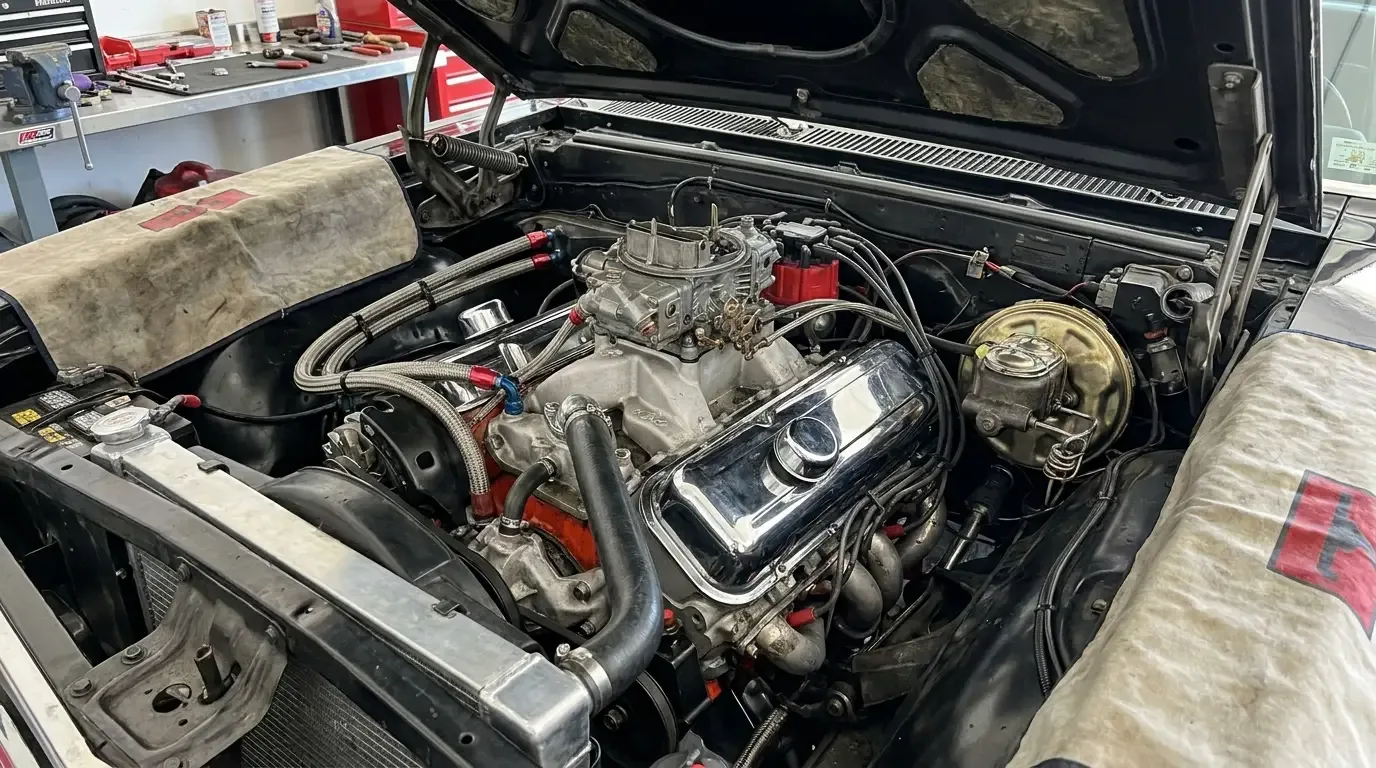
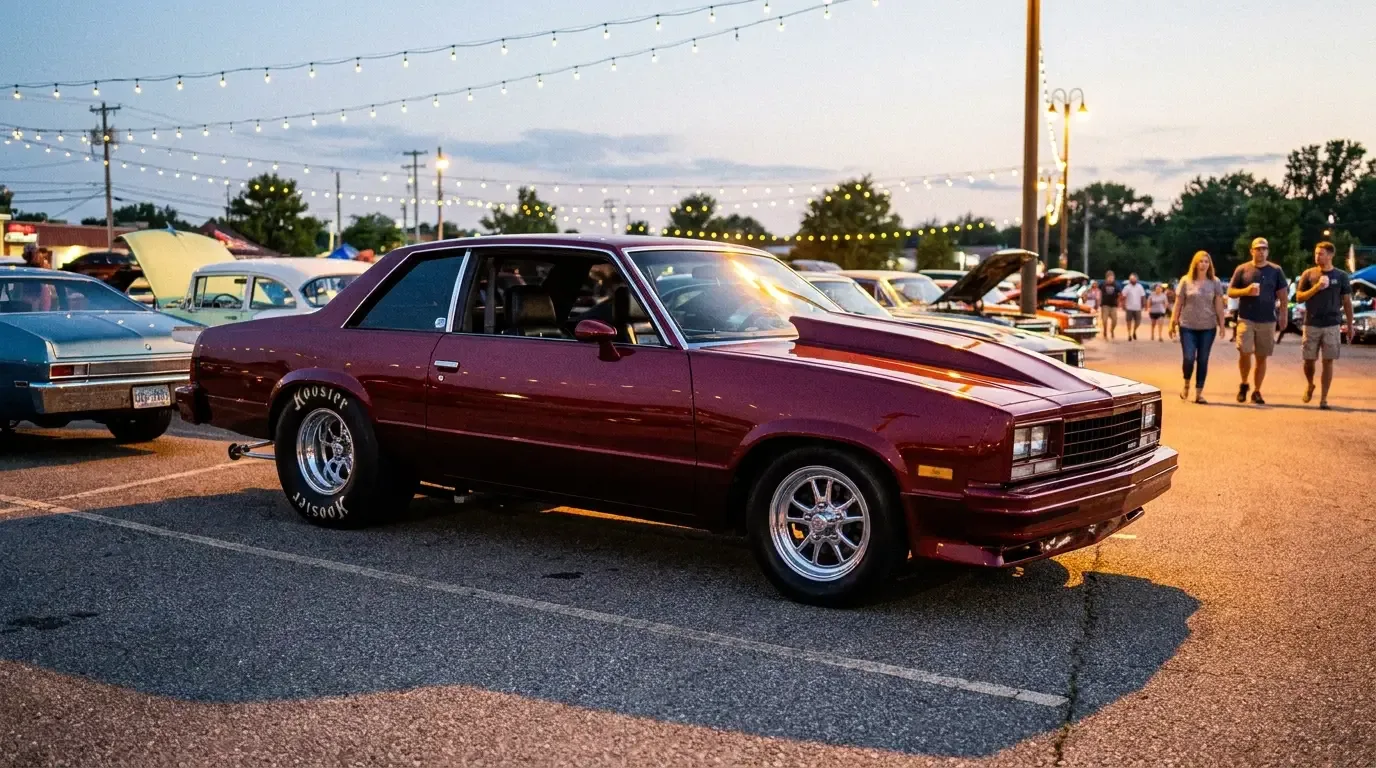
The Super Stock story starts with the same basic fact that made the Chevelle work in NASCAR: it was lighter than the full-size Chevrolet it shared engines with, and at the drag strip, weight is the whole conversation. Bolt a big-block into a car that weighs several hundred pounds less than the full-size equivalent, and you've got a genuinely dangerous package for NHRA's Super Stock classes, which sorted cars by factory-rated horsepower against curb weight rather than by raw engine size alone.
The SS396 opens the door
The 1965 Z16 package, a limited-production Chevelle built around the 396 cubic inch big-block, showed what the platform could do once a serious engine went under the hood, and the SS396 that followed for 1966 put that same big-block within reach of a much wider group of buyers. The L78-code 396, rated at 375 horsepower, the same factory rating carried over from the 1965 Z16's 396, became the engine of choice for Chevelle racers looking to compete in NHRA's Super Stock ranks, and the combination of that power with the car's comparatively light weight put it right in the mix against Mopar's 426 Hemi cars and Ford's 427-powered entries.
Class rules in this era were a moving target. NHRA adjusted Super Stock breakdowns almost every season to keep any one combination from dominating outright, which meant teams were constantly recalculating whether their Chevelle fit better in one classification or another depending on how the numbers shook out. That kind of rules chess is as much a part of the Chevelle's drag racing legacy as the actual quarter-mile times, and it's a thread that runs through the Chevelle's racing legacy well beyond just the drag strip.
What a Super Stock Chevelle actually needed
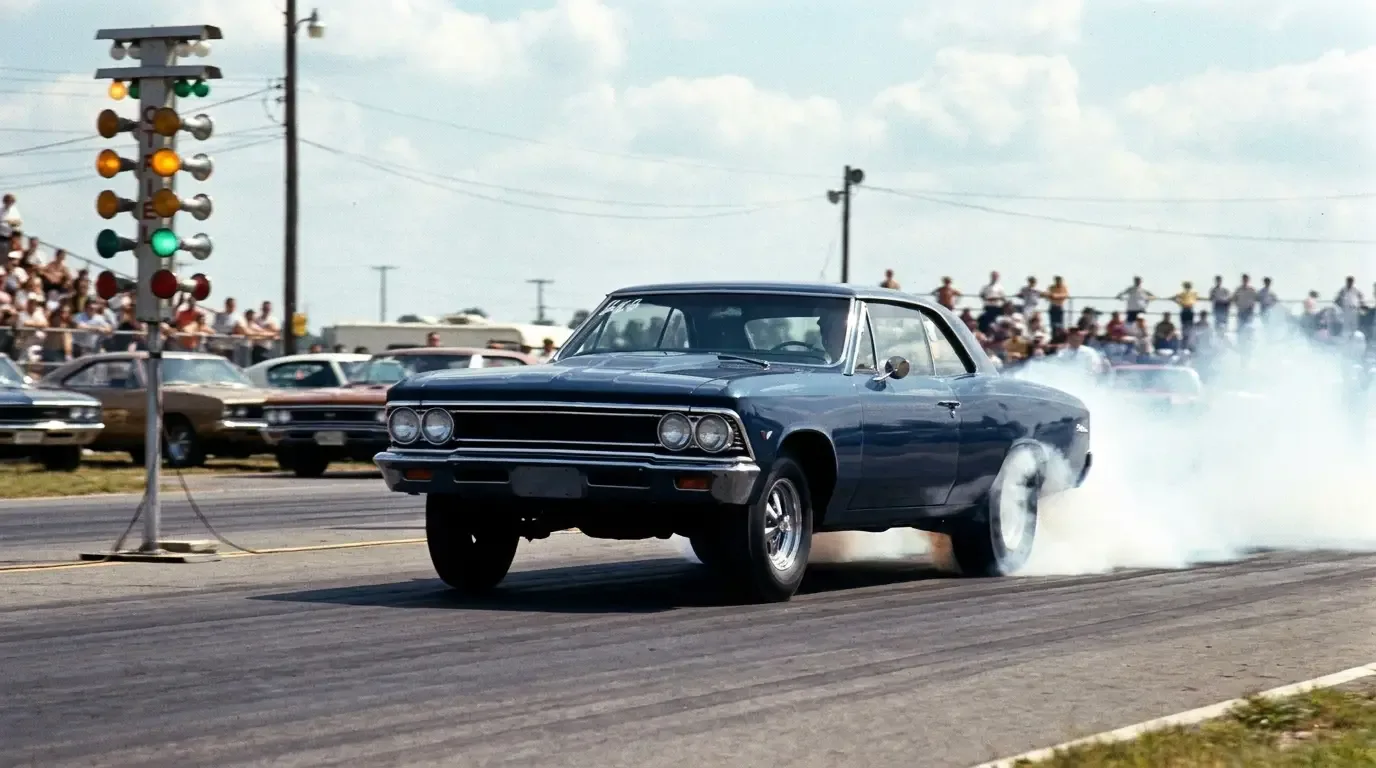
A car built for NHRA Super Stock competition wasn't just a showroom SS396 with slicks bolted on. Serious competitors went through the drivetrain looking for anything that could be lightened, blueprinted, or optimized within the class rules, since Super Stock racing rewarded a car built as close to the class weight break as legally possible without crossing into a harder field. Suspension setup mattered too. Getting weight transfer right off the line, with the right combination of traction bars and rear spring preload, was often the difference between a car that hooked hard and one that spun its tires away at the exact moment it needed grip most.
🔧 Inspection Priorities
- Engine authenticity. A genuine L78-code big-block Chevelle carries specific casting numbers and date codes. Cars claiming Super Stock heritage but running a later-production or mismatched block deserve close scrutiny before you trust the history.
- Weight-reduction modifications. Period Super Stock builds often show evidence of lightened interior trim, thinner glass, or deleted sound deadening. These modifications, done correctly for the era, are a strong sign of genuine competition history.
- Rear suspension and traction hardware. Traction bars, altered spring rates, and reinforced rear frame sections are common on real drag-built Chevelles. Their absence on a car with a claimed racing pedigree is worth questioning.
| Model year | Big-block option | NHRA relevance |
|---|---|---|
| 1965 | Z16 package, 396 cubic inch big-block | Limited production, early proof of concept |
| 1966-1967 | SS396, L78-code 396 big-block | Widely available, strong Super Stock presence |
| 1970 | SS454, LS6-rated big-block | Street-focused, though drag-built examples exist |
Durham wasn't racing alone out there. A whole community of independent Chevelle racers built and campaigned their own cars through the late 1960s, running local strips and national events with equipment they maintained themselves, often on a fraction of what factory-backed Mopar and Ford teams had to spend. That grassroots persistence is a big part of why Super Stock-spec Chevelles still carry real weight in the collector market today, and why the surviving genuine examples command serious respect from people who know what it took to build and campaign one.
"The guys who ran these cars weren't chasing a magazine cover. They were chasing a class win at a regional strip on a Saturday night, against equipment that in some cases cost twice what they had to spend. That's a tougher fight than anything a factory backing could smooth over."
Patrick Walsh
From the strip to the street
By the early 1970s, the line between a purpose-built Super Stock Chevelle and a heavily modified street car had started to blur, as builders took what they'd learned on the strip and applied it to cars meant to be driven home afterward. That crossover culture, part race car and part daily driver, became its own distinct chapter in the Chevelle's story, one built around a completely different set of priorities than pure quarter-mile performance. It's covered next, where the Chevelle's drag racing roots collide with street culture in a way that's still very much alive today. Continue with next: Chevelle Pro Street Culture.
What holds all of this together, from Durham's Strip Blazer to the backyard racers running their own SS396 at the local strip on a Saturday night, is that the Chevelle never needed a factory racing department to be fast. The car was light enough and the big-block options strong enough that anyone with the mechanical know-how and the patience to sort out the details could build something genuinely competitive. That accessibility is a big part of why Super Stock Chevelles still turn up at vintage drag events today, run by people who care more about the car's history than its resale value.
Sources and notes
Related Reading
Have a
Chevrolet Chevelle
for Sale?
Reach thousands of serious classic car collectors across the US.
Sell It Here →
Are You a Classic Car Dealer?
List your full inventory and connect with targeted classic car buyers.
Join as a Dealer →

About the author
Patrick Walsh
Automotive journalist covering classic car shows, events, and the enthusiast community across North America.
Related Listings - Chevrolet Chevelle
Comments
Be the first to comment on this article.