
The 1957 Thunderbird two seater is the car Ford should have built in 1955, and the company more or less admitted as much by fixing, in a single model year, nearly every functional complaint the first two Thunderbirds had accumulated. It is also the last of the two-seat cars, which gives it a finality that shapes how collectors and researchers treat it today, distinct from either of its predecessors.
Car Features
6 min read
The 1957 Thunderbird: The Last and Best Two-Seater
The 1957 Thunderbird two seater fixed every lingering flaw from the first two model years and then Ford retired the format entirely.
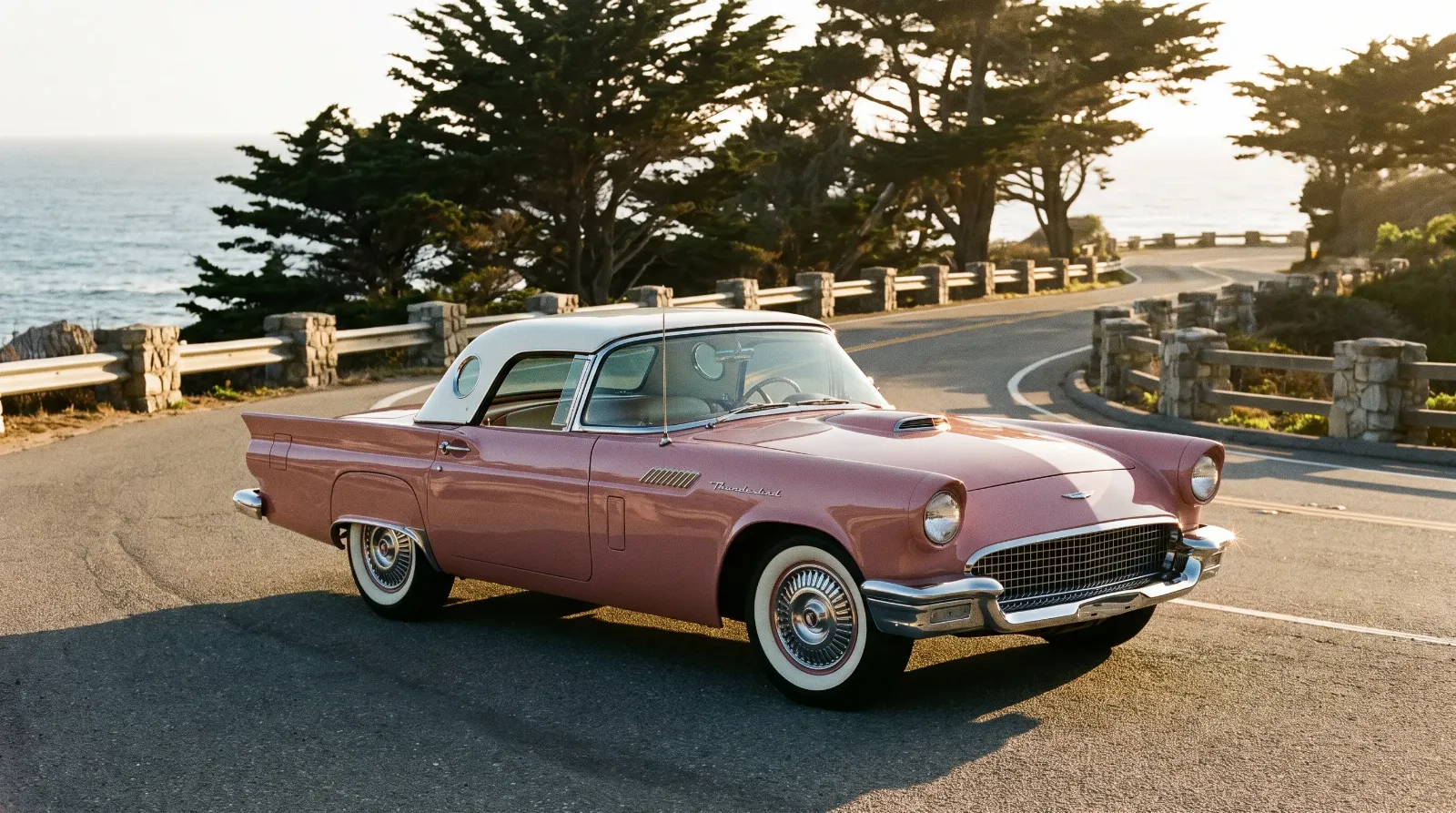
A longer body solves the trunk problem for good
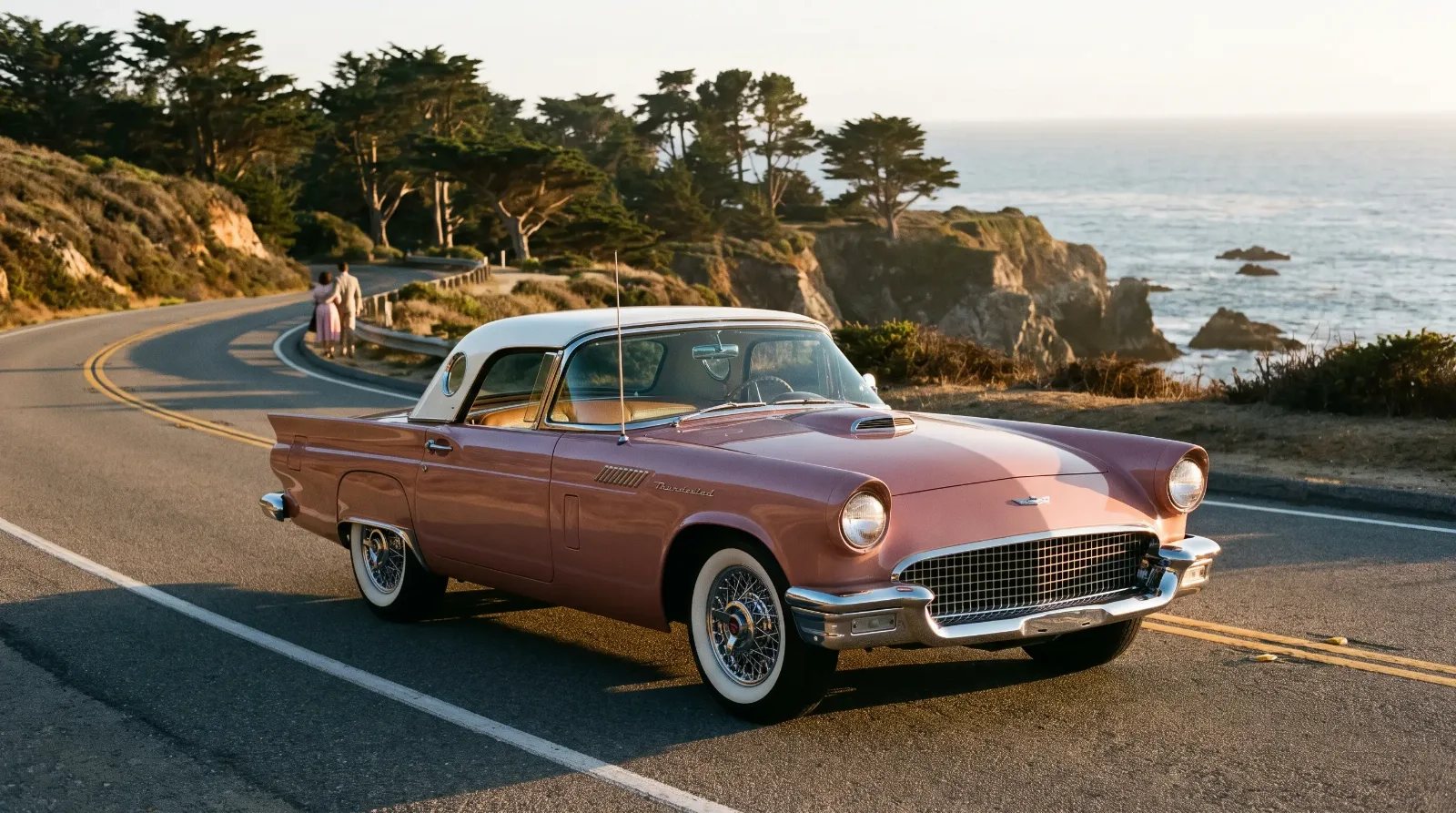
Ford's 1956 fix for the trunk-space complaint, the exterior continental spare tire kit, worked but introduced its own handling and parking tradeoffs. For 1957, Ford addressed the root cause instead of patching around it, extending the rear deck by roughly eight inches and moving the spare tire back inside the trunk where it belonged. The longer rear end also gave the 1957 car its more resolved, purposeful profile, with larger tailfins and a wider rear bumper and taillight assembly that replaced the fussier continental-kit arrangement entirely.
The redesign was not purely functional. Ford's stylists used the extra length to give the 1957 Thunderbird a lower, longer stance than either the 1955 or 1956 cars, with a revised grille, larger front bumper guards, and restyled fender trim. Contemporary reviewers treated the changes as the car finally catching up to its own ambitions, a two-seater that no longer needed a bolted-on accessory to solve a packaging problem the original design had never fully worked out.
The engine lineup that made 1957 the fastest two-seater
Ford offered the 1957 Thunderbird with its 312 cubic inch V8 as standard equipment, rated at 245 horsepower with a single four-barrel carburetor. Above that sat the optional E-code, a dual-quad version of the same 312 rated at 270 horsepower and built in roughly 1,300 to 1,500 cars that year, and the supercharged F-code, which used a McCulloch/Paxton centrifugal supercharger to reach a factory-rated 300 horsepower. Ford and Paxton historians have documented only around 211 to 212 F-code cars across the model year's two production phases, making the 1957 Thunderbird the most powerful of the three two-seat model years by a wide margin, a gap large enough that period buyers cross-shopping a supercharged 1957 against a base 1955 car were effectively looking at two different classes of automobile. That supercharged option remains one of the most sought-after variants in the entire two-seat run, prized by collectors specifically because so few were built and documented survivors are rare.
| Spec | 1957 Thunderbird |
|---|---|
| Standard engine | 312 cubic inch V8, 245 hp |
| Top factory option | Supercharged F-code V8, 300 hp |
| Body change | Rear deck lengthened, spare tire moved back inside trunk |
| Production | 21,380 units |
Reading a 1957 for originality
Production reached 21,380 units for 1957, the highest total of the three two-seat model years, itself a signal that Ford had finally resolved most of the friction points that had limited earlier demand. That higher production number means more surviving cars today than either 1955 or 1956, but it also means more variation in trim, engine, and options to sort through when authenticating a specific example. Casting numbers on 312 and F-code blocks, body tag codes reflecting the extended rear deck, and Motorola or Fordomatic build codes on the data plate all follow conventions specific to 1957, distinct enough from the earlier two years that a researcher can typically confirm model year from component details alone, without relying on the seller's word.
The supercharged F-code cars in particular attract close scrutiny, since their rarity and value make them a frequent target for cars retrofitted with later or non-original superchargers to command a higher price. Verifying an F-code Thunderbird requires matching the supercharger casting, the specific carburetor setup, and the block casting number against Ford's documented F-code production, a level of diligence that separates a serious purchase from a costly mistake.
"The 1957 car reads like Ford finally exhaling. Every awkward compromise from the first two years gets resolved here, and then the company walked away from the format entirely. That combination, a resolved design retired at its peak, is why this specific year commands the attention it does."
- Sarah Whitfield
Interior, color, and the details that separate a good car from a great one
Ford expanded the color palette again for 1957, adding several new exterior shades alongside carryover colors from 1956, and introduced revised interior trim combinations that took advantage of the longer body's slightly reworked seating position. Two-tone paint remained available, and Ford paired specific dash and steering wheel color combinations with certain exterior colors as recommended factory pairings, though as in prior years buyers could special order outside those pairings through their dealer.
Interior appointments on a well-optioned 1957 car could include leather upholstery, a tachometer, and a Dial-O-Matic power seat that could be programmed to a memorized position, features that read as remarkably advanced for a mid-1950s American car and that continue to impress people encountering an original example for the first time. These options also mean that a fully loaded 1957 Thunderbird, correctly documented, commands a real premium over a base car, since period buyers who checked every box on the order form were a distinct minority even within Thunderbird's already limited production run.
Judges and appraisers evaluating a 1957 car for originality pay close attention to whether these higher-end options are period-correct to the specific build, since retrofitting a tachometer or power seat from a parts car onto a base example is a documented practice in the restoration world that can mislead buyers who do not check casting and build codes against the data plate.
The last two-seater and what came after
Ford ended two-seat Thunderbird production after the 1957 model year and moved to a four-seat personal luxury format for 1958, a shift that multiplied sales volume but permanently changed what the Thunderbird nameplate meant. That transition is why 1957 carries such weight in Thunderbird history: it is not simply the best-resolved version of the original idea, it is the last version of that idea Ford ever built, and no later Thunderbird, however successful, was ever built again as a pure two-seater. You can read more on the 1957 ford thunderbird for a full account of how the two-seat design reached this final form, and the earlier piece on where this started covers the broader Thunderbird story beyond just the two-seat years.
Because 1957 combines the highest production, the strongest factory performance options, and the finality of being the last two-seater, documented examples remain consistently in demand. If you are researching current market activity or looking to add one to a collection, classic Thunderbirds on the market gives a current view of how 1957 examples are priced against their 1955 and 1956 counterparts, particularly for supercharged and fully optioned cars where documentation, not just condition, drives the price a serious buyer is willing to pay.
Sources and notes
Related Reading
Have a
Ford Thunderbird
for Sale?
Reach thousands of serious classic car collectors across the US.
Sell It Here →
Are You a Classic Car Dealer?
List your full inventory and connect with targeted classic car buyers.
Join as a Dealer →
#Ford history
#classic ford
#ford thunderbird
#two-seat thunderbird
#1957 thunderbird
#supercharged Thunderbird

About the author
Sarah Whitfield
Third-generation classic car collector specializing in pre-war American and European coachbuilt automobiles. Researcher and concours enthusiast.
Related Listings - Ford Thunderbird




Comments (1)
B
Bill Cassidy
3 weeks ago
Appreciate the honest take on condition grades. Too many sellers call a driver-quality car 'show quality' and it wastes everyone's time.