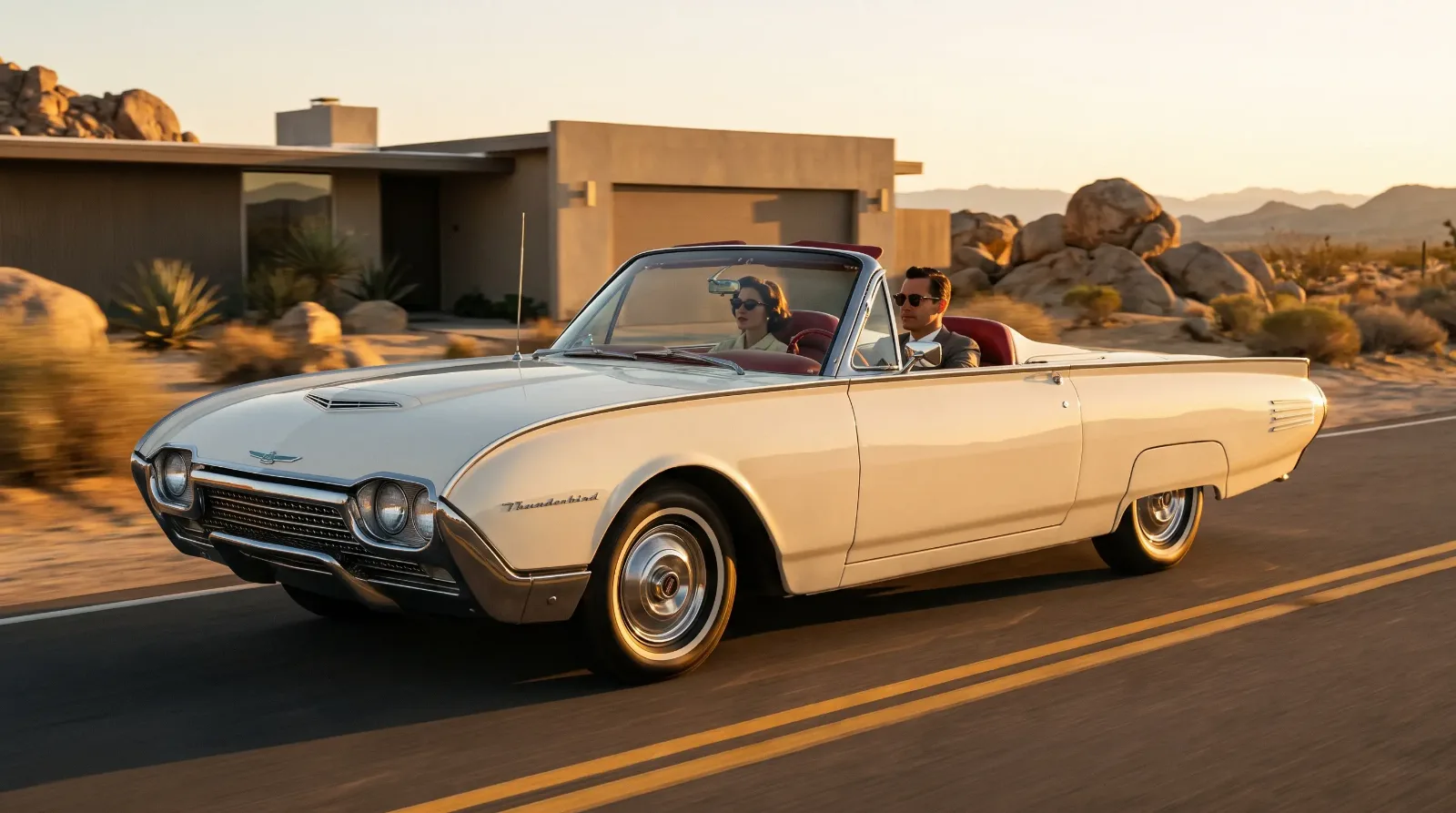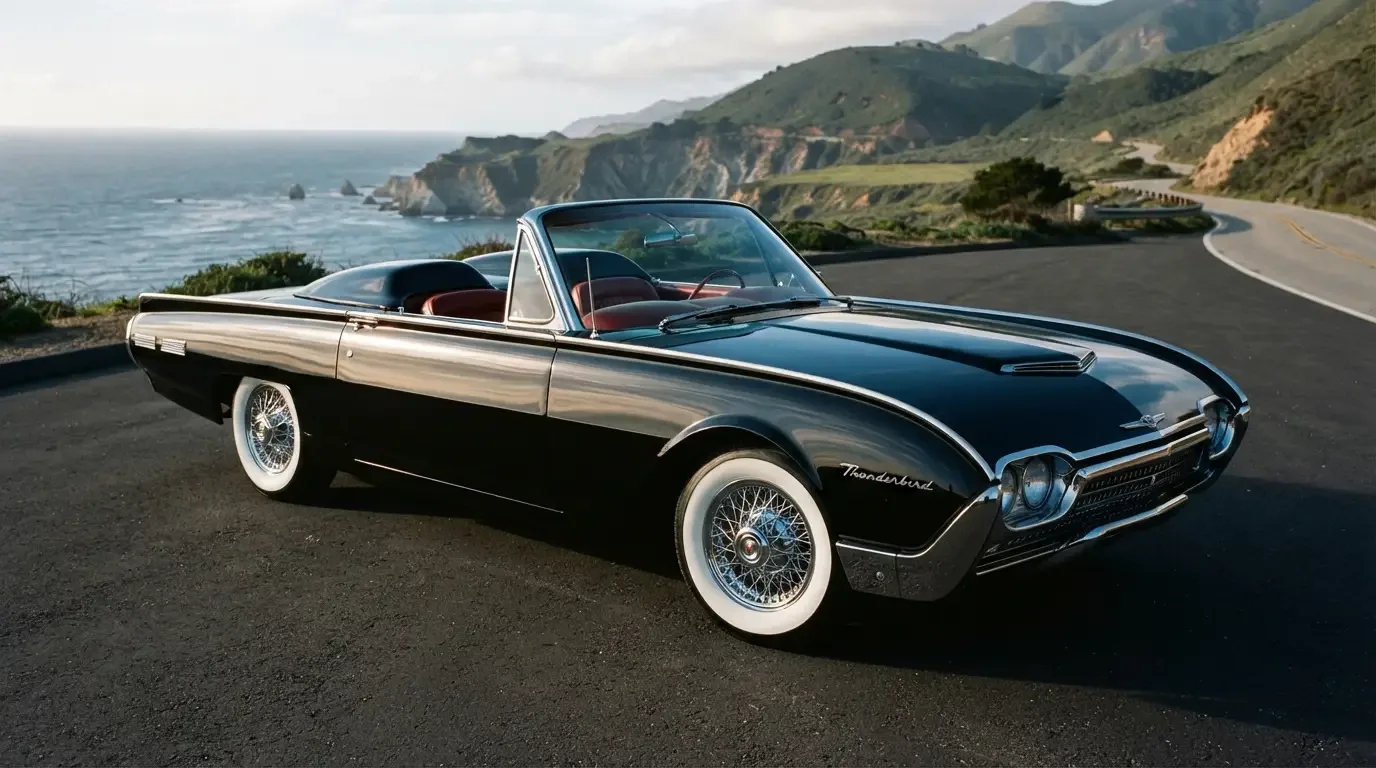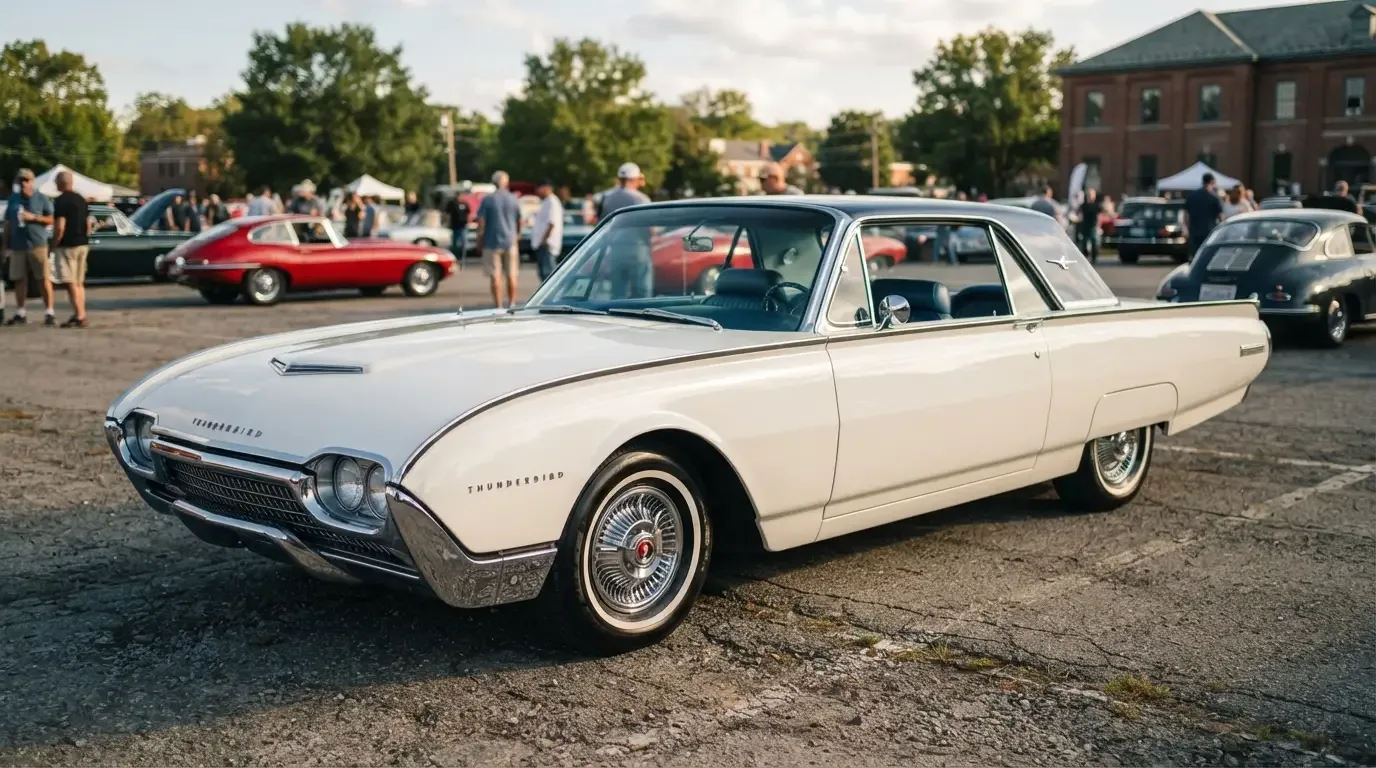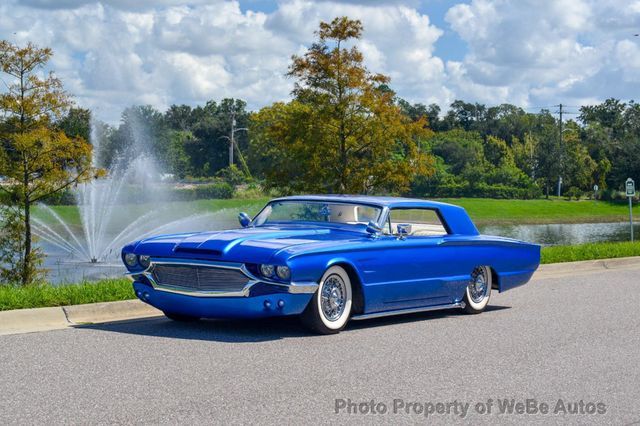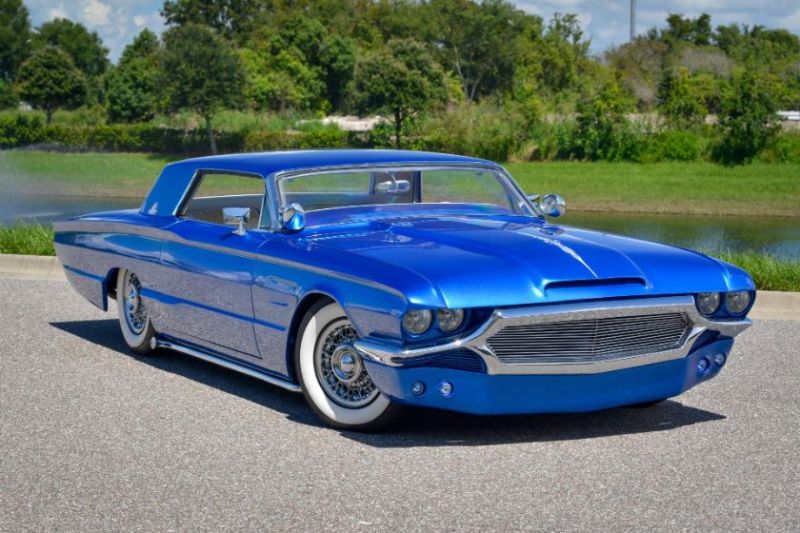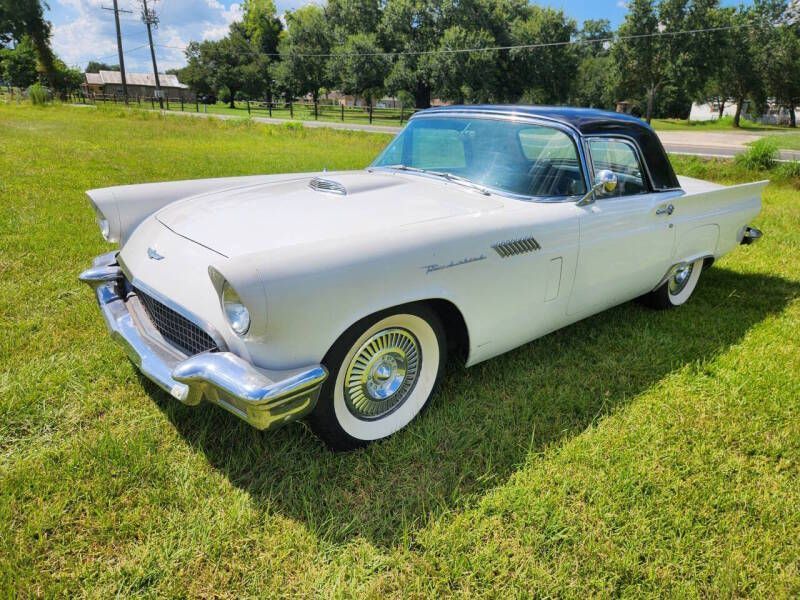
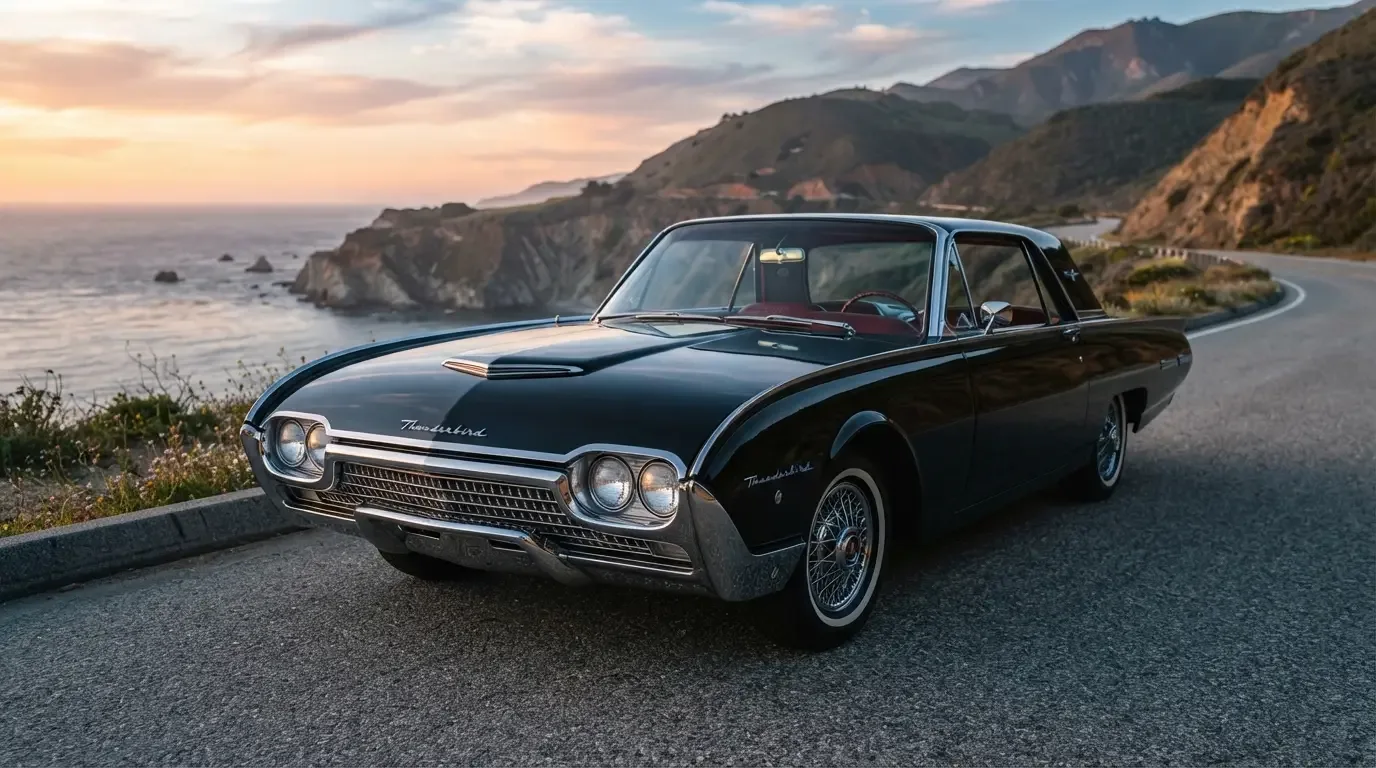
Ford's product planners had a problem in the fall of 1960. The two-seat dream was long gone, the boxy Square Bird had sold well enough, and now the division needed something that looked like nothing else on the road for 1961. What they produced was the 1961 Thunderbird redesign, a car so thoroughly reshaped around jet and missile imagery that collectors still call it the Bullet Bird. The name was not a factory term. It came later, from owners and writers who could not look at the tapered nose and circular taillights without thinking of a rocket standing on a launch pad.
The design brief for 1961 was different from anything Ford had tried with the Thunderbird line before. Instead of evolving the previous body, the team under Bill Boyer started fresh with a unibody structure and a shape built entirely around circles and points. The grille narrowed to a projectile-shaped prow. The rear deck carried four round taillights stacked in pairs, a motif borrowed loosely from Ford's earlier show cars. Every body line pulled the eye toward the front and rear points, which is exactly what the stylists wanted. This was industrial optimism rendered in sheet metal, built during a period when Americans read about orbital flights in the morning paper and expected their cars to look like they belonged in the same conversation.
A new platform under the skin
The 1961 Thunderbird sat on a completely new unibody chassis, shorter in wheelbase than the outgoing Square Bird by about two inches but wider in track. Ford's engineers used the opportunity to stiffen the structure considerably, which paid off in a quieter, more controlled ride than the 1958 through 1960 cars had offered. Front suspension carried over the coil-spring independent layout Ford had used since 1955, tuned softer for a more isolated highway feel. The frame rails integrated into the body rather than bolting beneath it, a construction method Ford would keep refining through the decade.
Under the hood, Ford offered a single engine for 1961: a 390 cubic inch FE-series V8 rated at 300 horsepower with a four-barrel carburetor, paired exclusively with a three-speed Cruise-O-Matic automatic transmission. There was no manual gearbox option and no six-cylinder alternative. Ford wanted the Thunderbird positioned as an effortless personal luxury car, not a performance machine you rowed through gears yourself, and the driveline lineup reflected that decision cleanly.
Body styles and the swing-away debut
Two body styles carried the 1961 lineup at launch: a pillared hardtop coupe and a convertible, both riding the same 113 inch wheelbase. The convertible used a fully automatic power top that folded beneath a hinged rear deck lid, a mechanism Ford had refined since introducing it on the 1957 Skyliner retractable hardtop. New for this generation was the swing-away steering wheel option, which pivoted roughly 18 inches toward the passenger side when the transmission was in park, making entry and exit easier for drivers in an era of full-length dresses and narrow parking spaces. It debuted as a $25.10 option on the 1961 car, became standard equipment for 1962, and Ford kept it standard on the Thunderbird all the way through the 1966 model year, making it one of the most talked-about features of the entire generation.
Interior and the personal luxury pitch
Inside, Ford leaned hard into the personal luxury positioning that had defined the Thunderbird since 1958. Bucket seats came standard front and rear in the hardtop, a rare configuration for the era that reinforced the idea of the Thunderbird as a car for two couples rather than a family hauler. A wide center console ran between the front seats, housing the shifter and a full instrument cluster that wrapped around the driver in a shallow half circle. Chrome trim was generous but not excessive by 1961 standards, restrained compared to the ornamentation Detroit had favored just a few years earlier.
Ford's dealers used the styling story aggressively in showroom materials, framing the car as the thinking driver's alternative to a Cadillac or Lincoln at a lower price point. It worked. Sales for the 1961 model year climbed past 73,000 units, a healthy improvement over 1960 and proof that the space-age redesign had connected with buyers who wanted something that looked forward rather than backward.
"The 1961 car is the moment the Thunderbird stopped chasing the two-seater's ghost and started selling a completely different idea, a jet-age cruiser for people who wanted to be seen arriving somewhere."
- Tom Ramirez
How it fits the wider story
The 1961 redesign did not appear out of nowhere. It followed directly from the changes Ford had been making since the two-seat Thunderbird ended production, and readers who want the full arc from 1955 onward should look at our 1961 ford thunderbird history for the complete picture of how the Bullet Bird came together. The 1962 model year would keep this basic shape but add a fastback Sports Roadster variant with wire wheels and a tonneau cover, and there is a related story covering exactly how that variant came about and why it remains one of the rarest Thunderbirds from the era.
What makes the 1961 model significant in retrospect is how completely it reset expectations for what a Thunderbird should look like. The Square Bird had been handsome in a conservative way. The Bullet Bird was a statement, and Ford's own annual reports from the period credited the styling change with drawing new buyers into Ford dealerships who had never previously considered the model. Collectors today still separate 1961 to 1963 Thunderbirds from every other generation specifically because of this shape, and values reflect that recognition. A well-documented 1961 hardtop or convertible in original condition draws serious interest at auction specifically because the design remains instantly identifiable more than sixty years later.
Ford's production records for 1961 show 62,535 hardtops built alongside 10,516 convertibles, giving the hardtop a roughly six-to-one edge in volume that surprises some newer collectors who assume the convertible was always the more common survivor. Paint and trim codes from this era followed Ford's standard body tag system, stamped on the driver's door hinge pillar, and verifying those codes against factory build sheets remains one of the more reliable ways to confirm an unmolested original car versus a later repaint or retrim.
Anyone shopping this generation today benefits from understanding just how much changed between 1961 and 1963 within what looks like a single continuous shape. Trim details, engine options, and interior treatments shifted year to year even though the basic silhouette held steady. Buyers who want to see what is currently available can check Thunderbirds for sale now to get a sense of current market pricing and condition across the generation.
Why the shape still matters
Six decades on, the 1961 Thunderbird redesign reads less like a marketing exercise and more like a genuine artifact of its moment. It arrived during a narrow window when American industrial design fully embraced aerospace imagery without irony, and Ford committed to that vision across every panel rather than tacking on a few chrome fins. That commitment is exactly why the Bullet Bird generation still photographs so well and still draws crowds at concours events, and why collectors continue treating 1961 through 1963 cars as a distinct, desirable chapter within the broader Thunderbird story.