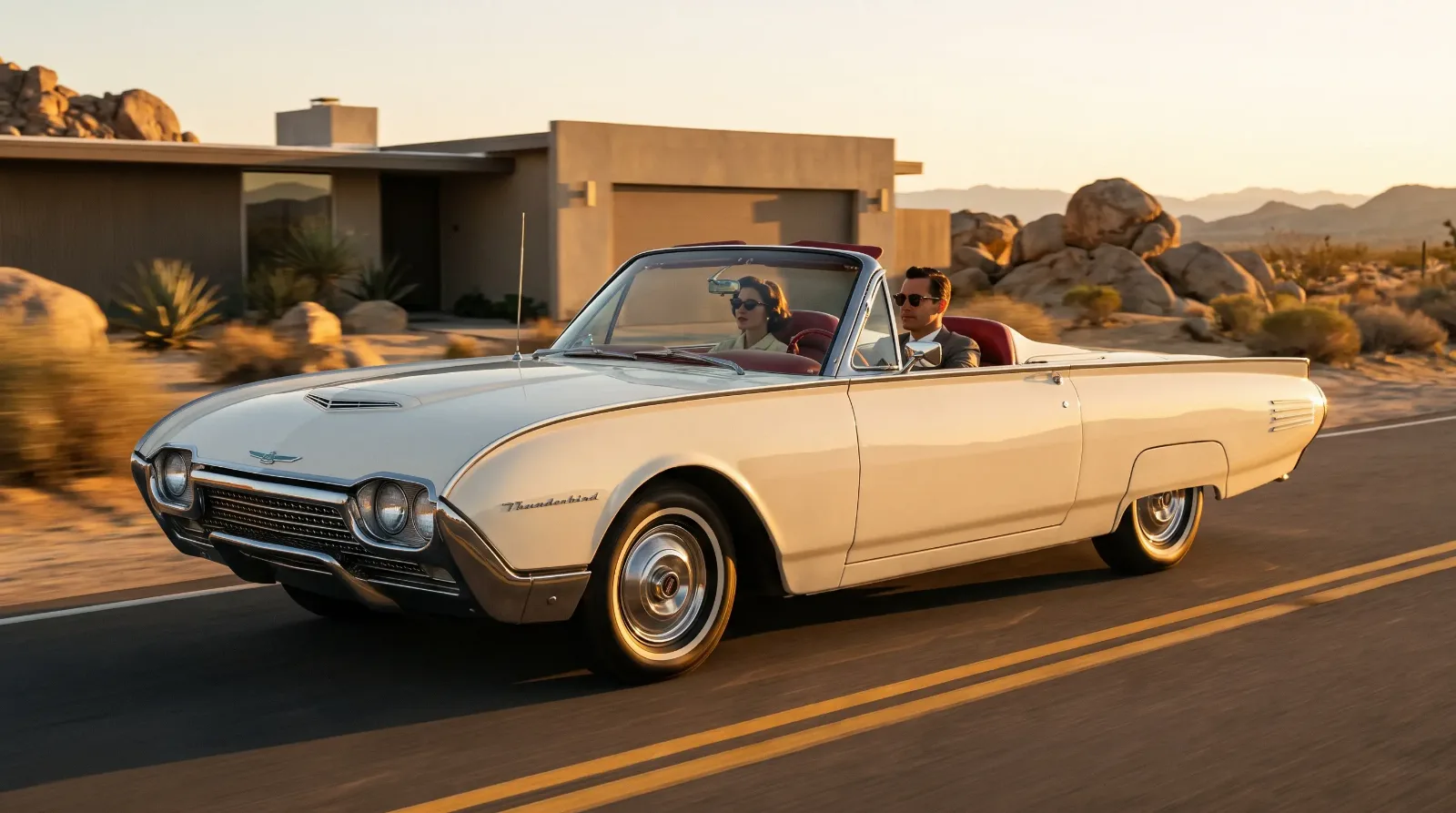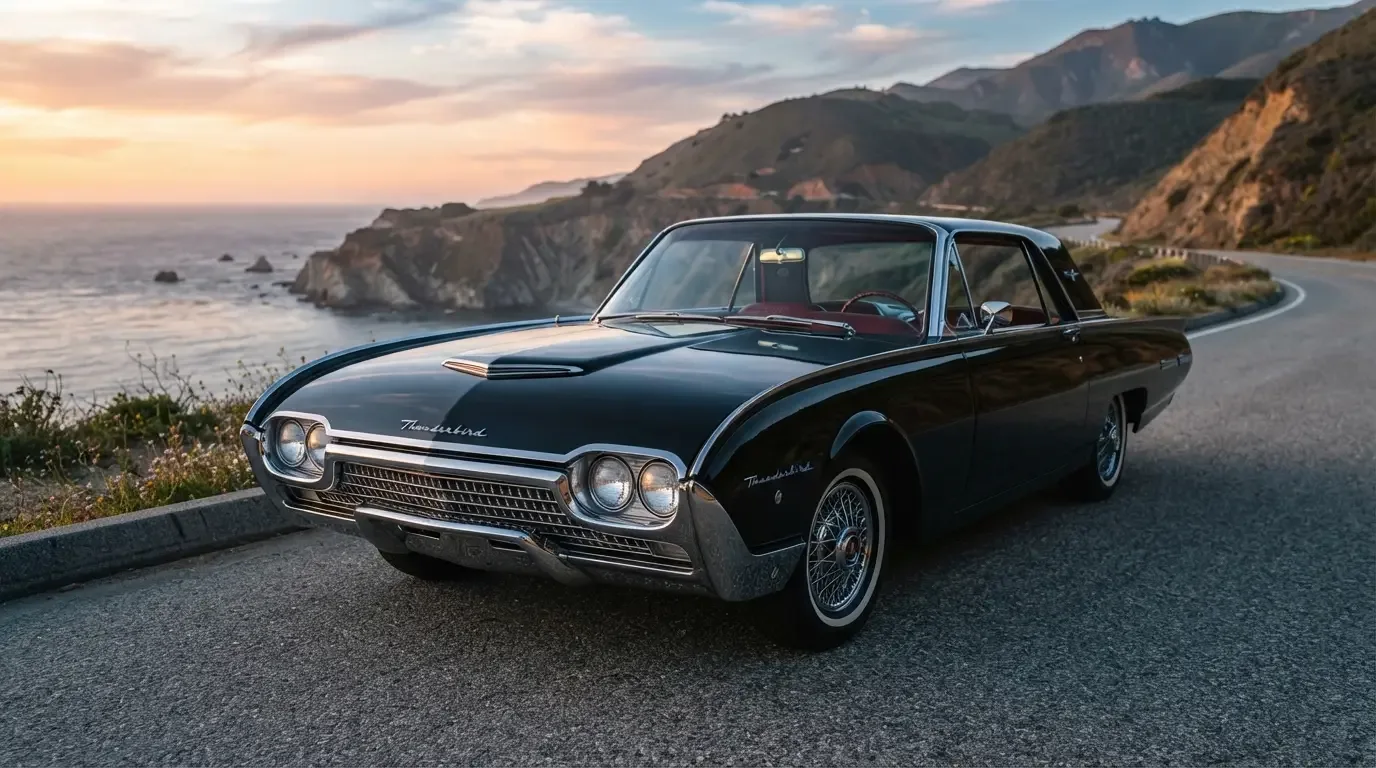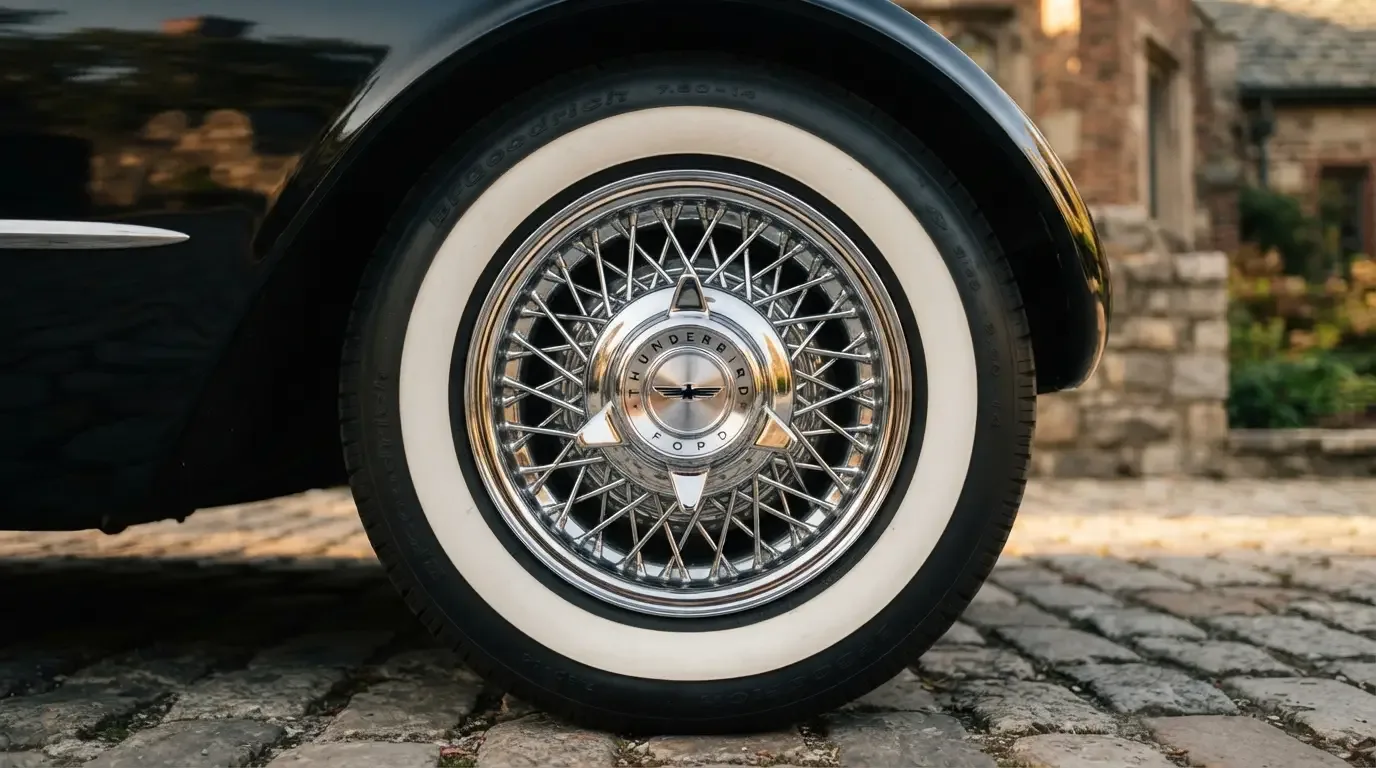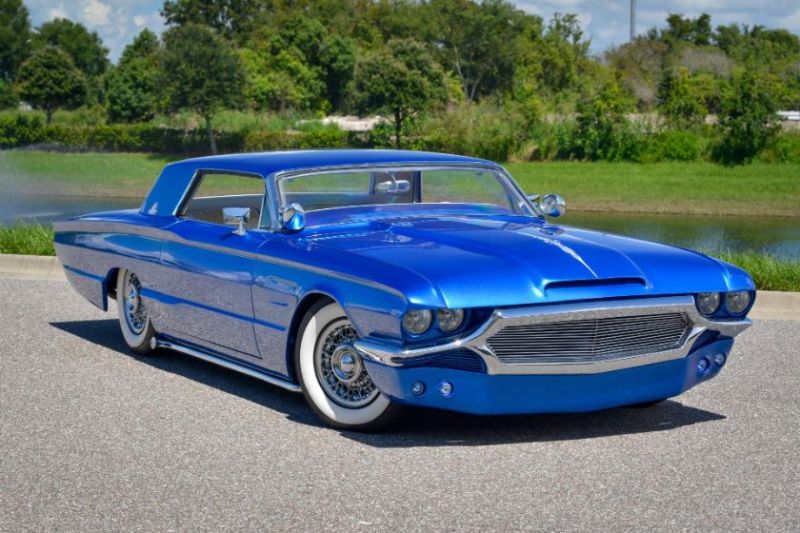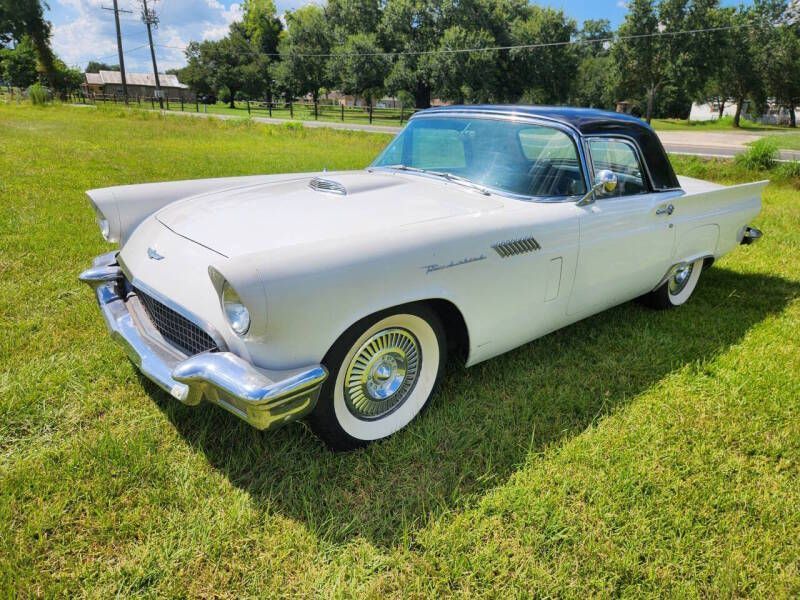
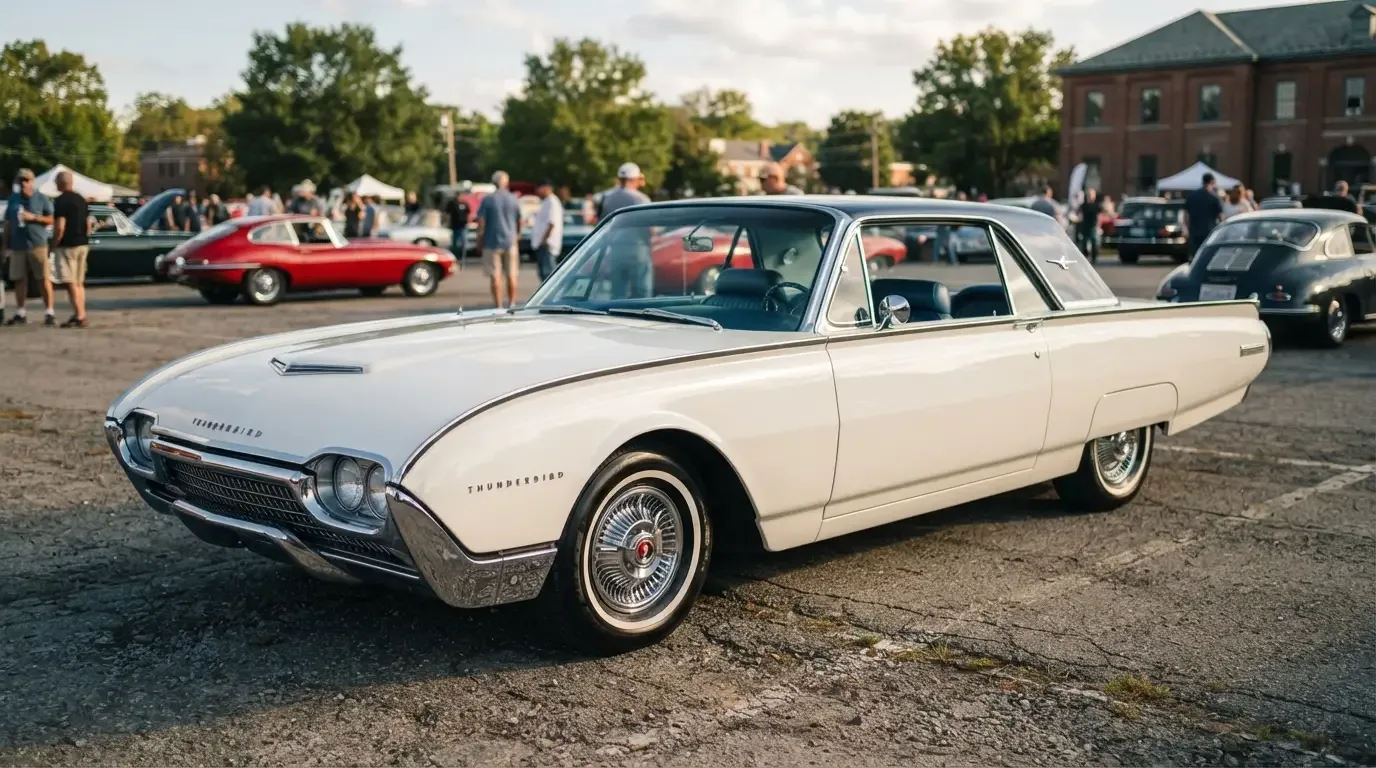
Auction results for Bullet Bird Thunderbirds have been remarkably consistent over the past several seasons, which tells you something useful before you even look at a specific car. This is not a segment prone to wild speculative spikes, and 1962 thunderbird value has moved in a predictable, condition-driven pattern rather than the boom-and-correction cycles you see in more speculative corners of the collector market. That predictability is either good news or bad news depending on what you are shopping for. If you want appreciation potential, temper your expectations. If you want a known quantity with defensible pricing logic, this generation delivers exactly that.
Where the numbers actually land
Standard hardtop and Landau examples in solid, driver-quality condition have been trading roughly in the $18,000 to $30,000 range at public auction over recent seasons, with well-documented, low-mileage cars pushing toward the upper end and project cars needing full mechanical and cosmetic work settling well below it. Hagerty's own tracking puts the median #2 condition value for this generation in the low-to-mid $30,000s as of this year, down from a peak closer to $46,000 a couple seasons back. Convertibles command a real premium over hardtops at comparable condition levels, driven almost entirely by the automatic top mechanism's complexity and the smaller number that survive with it fully functional, though exactly how large that premium runs shifts season to season.
The real outlier in this generation is the Sports Roadster. Its combination of low original production, the wire wheel and tonneau package, and genuine documented rarity puts clean, numbers-matching examples well into six figures at the top end, with Hagerty pricing a top-condition 1963 Sports Roadster carrying the M-code Tri-Power engine at roughly $133,000. That is a gap from the standard convertible that has only widened as buyers have become more educated about what distinguishes a real Sports Roadster from a standard convertible dressed up to look like one. That price gap is not sentiment. It reflects a verifiable difference in original production volume and the difficulty of confirming authenticity after six decades.
What actually moves the number on a specific car
Condition matters more than most sellers want to admit, and I mean specific, documented condition rather than the general "excellent" that shows up in half the listings I review. A car with a professional, documented restoration commands more than an equally nice-looking car with an undocumented one, because buyers at this level are paying for confidence as much as appearance. Matching numbers on the engine and a clean, verifiable title history add a real premium too, typically enough to justify walking away from an otherwise similar car that cannot back up its claims with paperwork.
Engine configuration is the other lever worth understanding. A standard Z-code 390 car and an M-code Tri-Power car can look nearly identical from the outside, but the M-code commands a meaningful premium purely on rarity, in the range of $15,000 or more on a convertible according to Hagerty's own tracking, assuming the engine is verifiably original to the car rather than swapped in later from a donor vehicle. I have seen sellers ask M-code prices for cars with a Tri-Power intake bolted onto a standard block, and that gap between claim and documentation is exactly where buyers get burned if they do not check the numbers themselves before agreeing to a price.
| Configuration | Approximate value range |
|---|---|
| Hardtop, driver quality | roughly $15,000 to $25,000 |
| Hardtop, documented restoration | roughly $25,000 to $34,000 |
| Convertible, driver quality | roughly $20,000 to $32,000 |
| Convertible, documented restoration | roughly $32,000 to $48,000 |
| Sports Roadster, documented and original | roughly $80,000 and up, topping six figures for M-code cars in top condition |
Those ranges shift with the season and with the specific auction house running the sale, and any single hammer price should be read as a data point rather than a verdict. What holds steady across multiple seasons of results is the relative spread between body styles, hardtop cheapest, convertible meaningfully more, Sports Roadster in a different category entirely. That spread has not compressed or inverted in recent cycles, which is exactly the kind of consistency that makes a market segment easier to underwrite a purchase decision against.
My actual buy or no-buy read
For a buyer who wants a Bullet Bird as a driver and long-term hold rather than a speculative flip, a well-documented hardtop or Landau in the middle of the price range represents solid value right now. You are not buying appreciation potential in the way you might with a more speculative muscle car segment, but you are buying a known, stable asset with a car that is genuinely enjoyable to own and drive, and that combination is worth something even if the spreadsheet does not show explosive upside.
I would not recommend a convertible or Sports Roadster purchase to anyone unwilling to pay for proper mechanical documentation up front, because the premium these variants command depends entirely on verified authenticity, and an undocumented example at a documented price is a bad trade no matter how good the car looks in photographs. Get a pre-purchase inspection from someone who knows this specific generation, confirm the engine code against the VIN, and do not take a seller's word on rarity claims without paperwork to back it up.
"The Bullet Bird market rewards patience and documentation over speed. Buyers who rush into an undocumented convertible almost always pay a premium for a story they can't actually verify."
- David Mercer
Reading the market context correctly
Broader collector car market conditions have been relatively favorable for well-documented postwar American classics over the past few seasons, and Bullet Bird Thunderbirds have benefited from that stability without becoming the kind of headline-grabbing lot that draws speculative bidding wars. That is a feature, not a bug, for buyers focused on long-term ownership rather than short-term flipping. For the whole picture on how this generation's styling and engineering shaped what collectors value about it today, that context makes the pricing patterns discussed here easier to interpret correctly.
If you are ready to start shopping, go in with your numbers already in hand rather than negotiating from a seller's asking price alone. Anyone looking to find a classic Thunderbird in this generation should treat documentation, not condition photos, as the first filter for any car that looks like a serious candidate. The photos tell you what the car looks like today. The paperwork tells you whether the price actually holds up.
One more thing worth factoring into any purchase decision: carrying costs on a car in this generation are not trivial, and buyers who focus entirely on the purchase price often underestimate what ongoing maintenance, insurance, and storage add to the real cost of ownership over a multi-year hold. None of that changes my basic read on the segment, but it does mean the buyer who runs the full numbers, not just the sticker price, ends up with a much more accurate picture of whether a specific car makes financial sense for their situation. Budget for those costs before you bid, not after, and the eventual ownership experience matches the number you actually agreed to pay rather than the smaller one printed on the auction slip.
Sources and notes
- Hagerty Insider: The 1961-63 Thunderbird Is an Underappreciated Mid-Century Masterpiece
- Hagerty Valuation Tools: 1962 Ford Thunderbird
- Hagerty Valuation Tools: 1963 Ford Thunderbird
- Conceptcarz: Auction Results and Sales Data for 1963 Ford Thunderbird
- Curbside Classic: 1962 Ford Thunderbird, Let's Talk About the Sports Roadster
- Wikipedia: Ford Thunderbird (third generation)