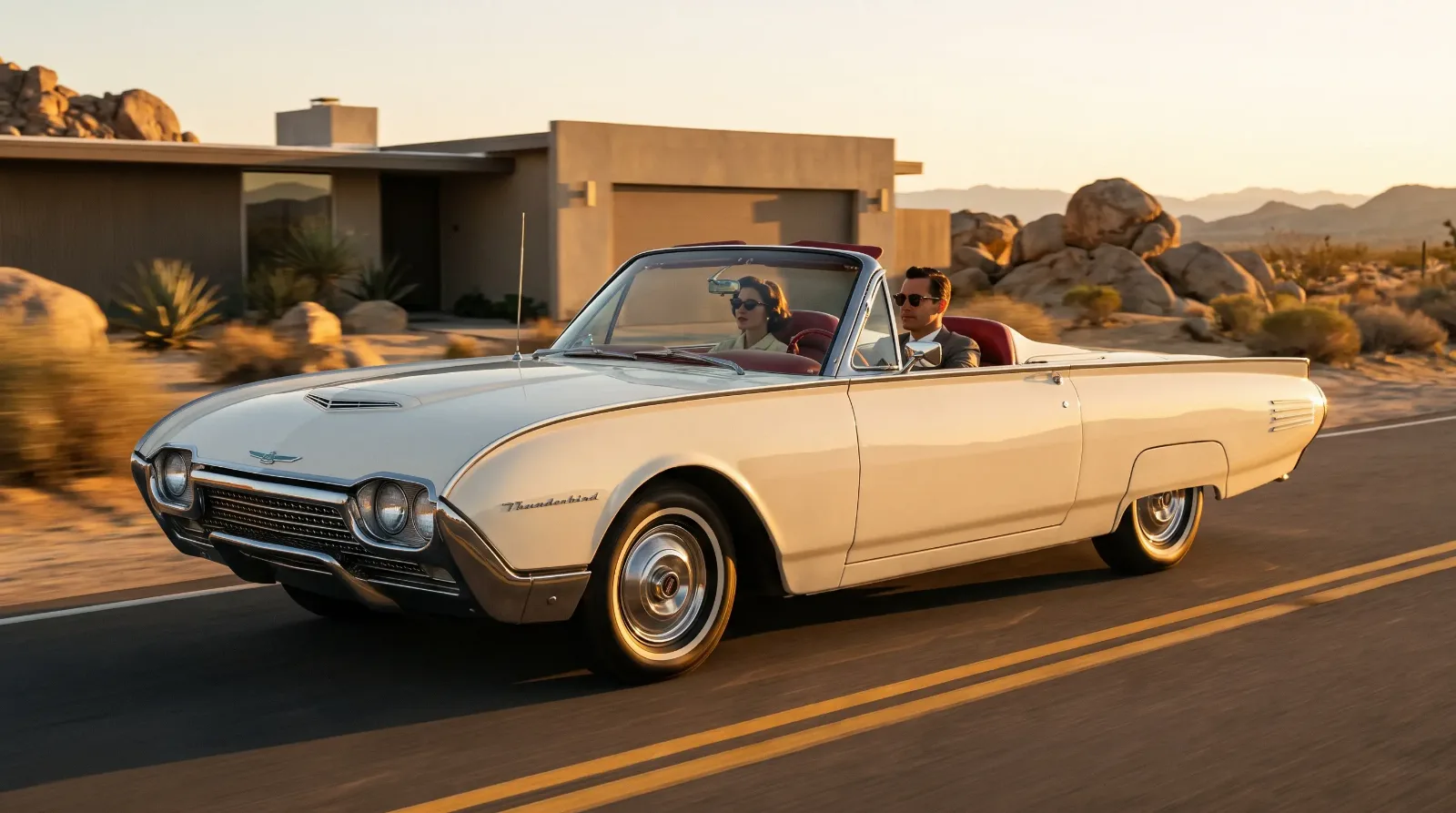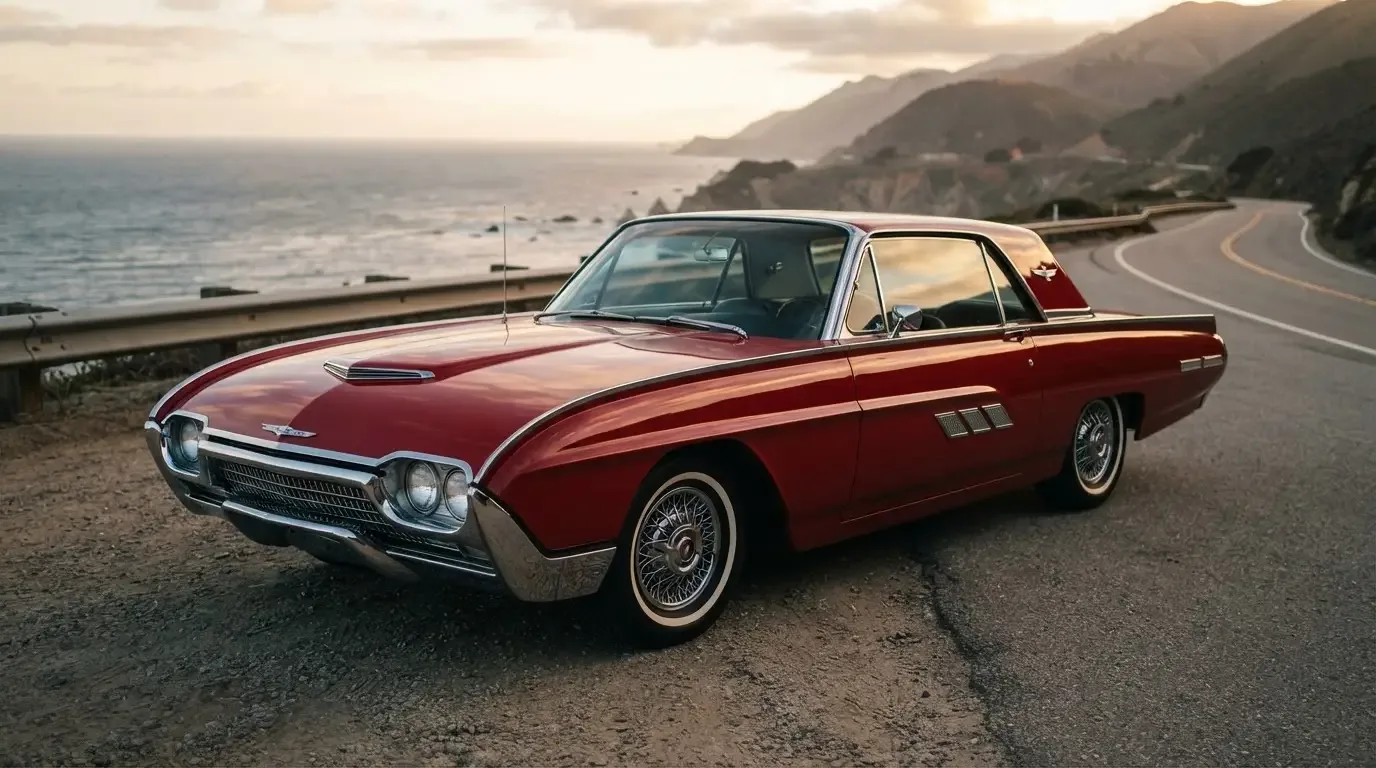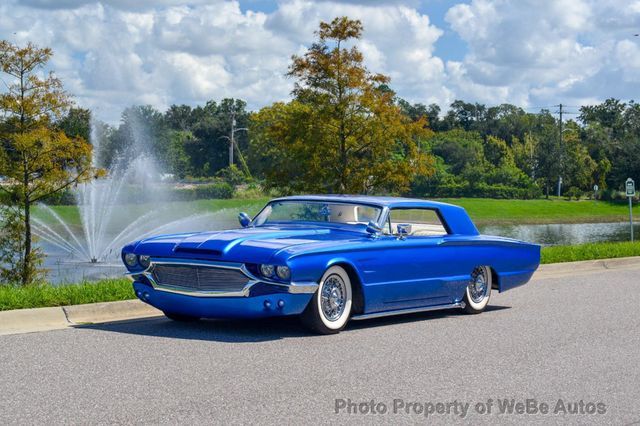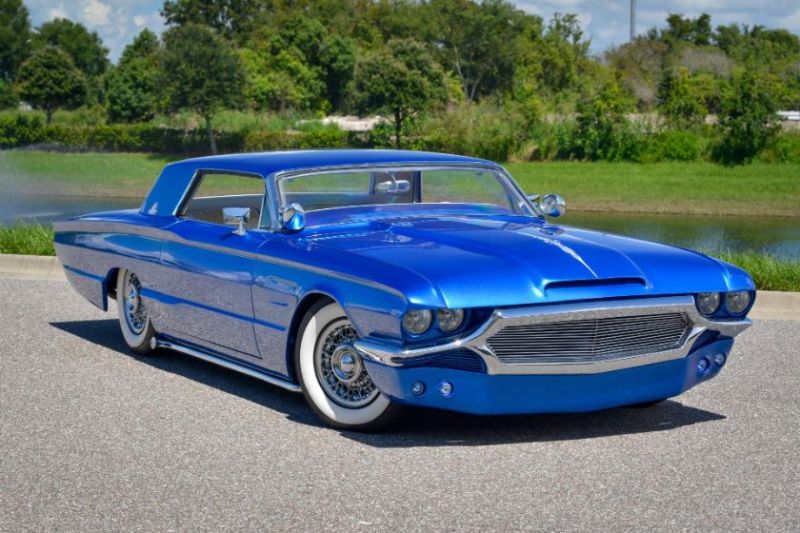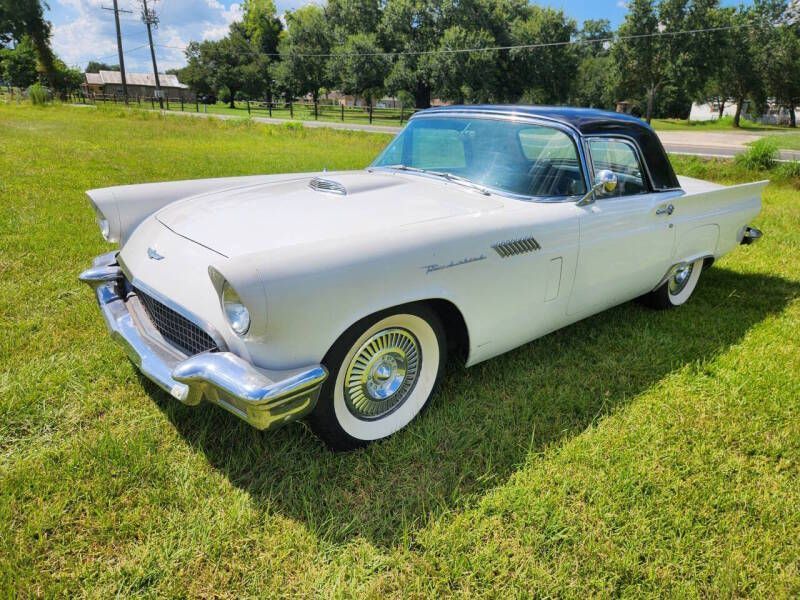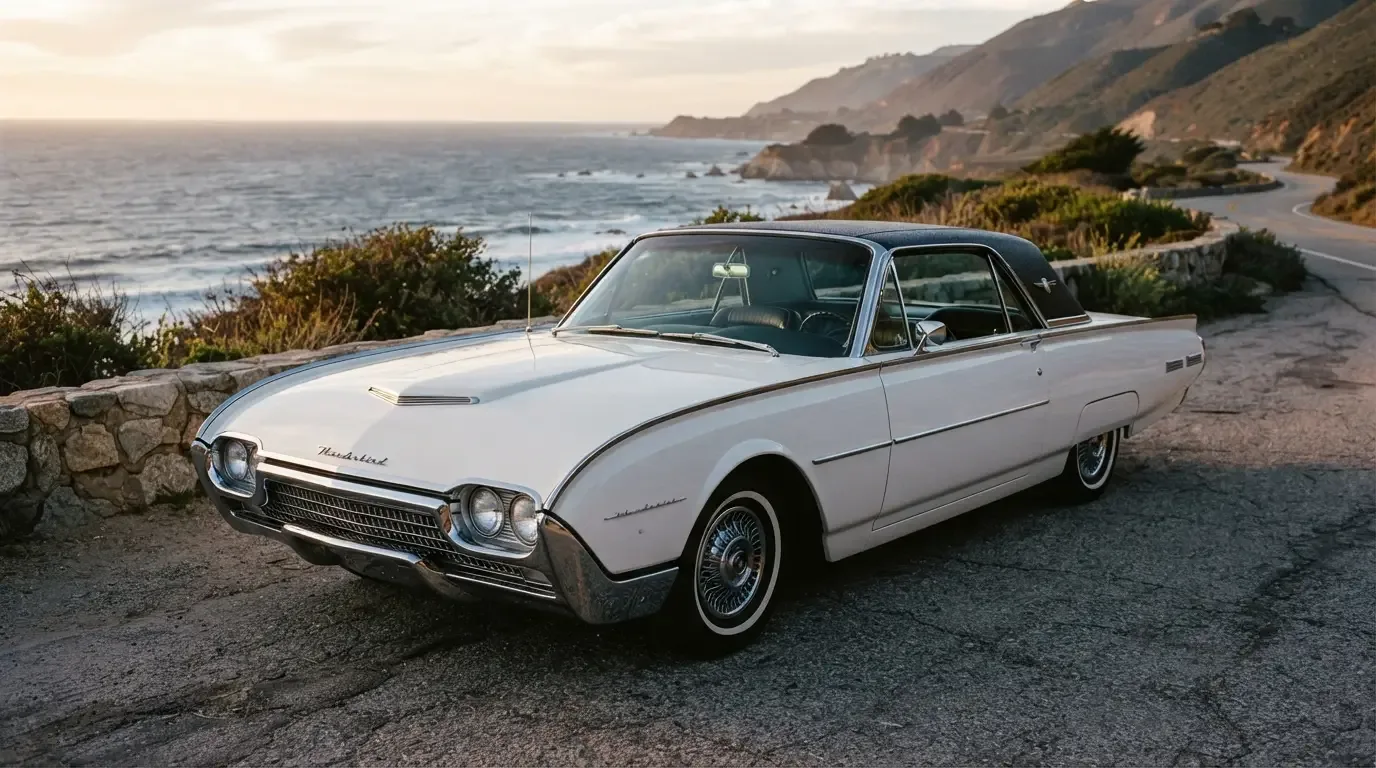
The 1962 Ford Thunderbird kept the same basic Bullet Bird shape Ford had introduced the year before, but it quietly added one detail that would outlast almost every other trim decision the company made that decade: a vinyl-covered roof with a narrow chrome S-shaped bar mounted on the C-pillar, badged Landau. It looked simple, almost like an afterthought compared to the tonneau-covered Sports Roadster introduced the same year, but the Landau roof proved so popular with buyers that Ford kept some version of it available on the Thunderbird for most of the model's remaining production life.
What actually changed for 1962
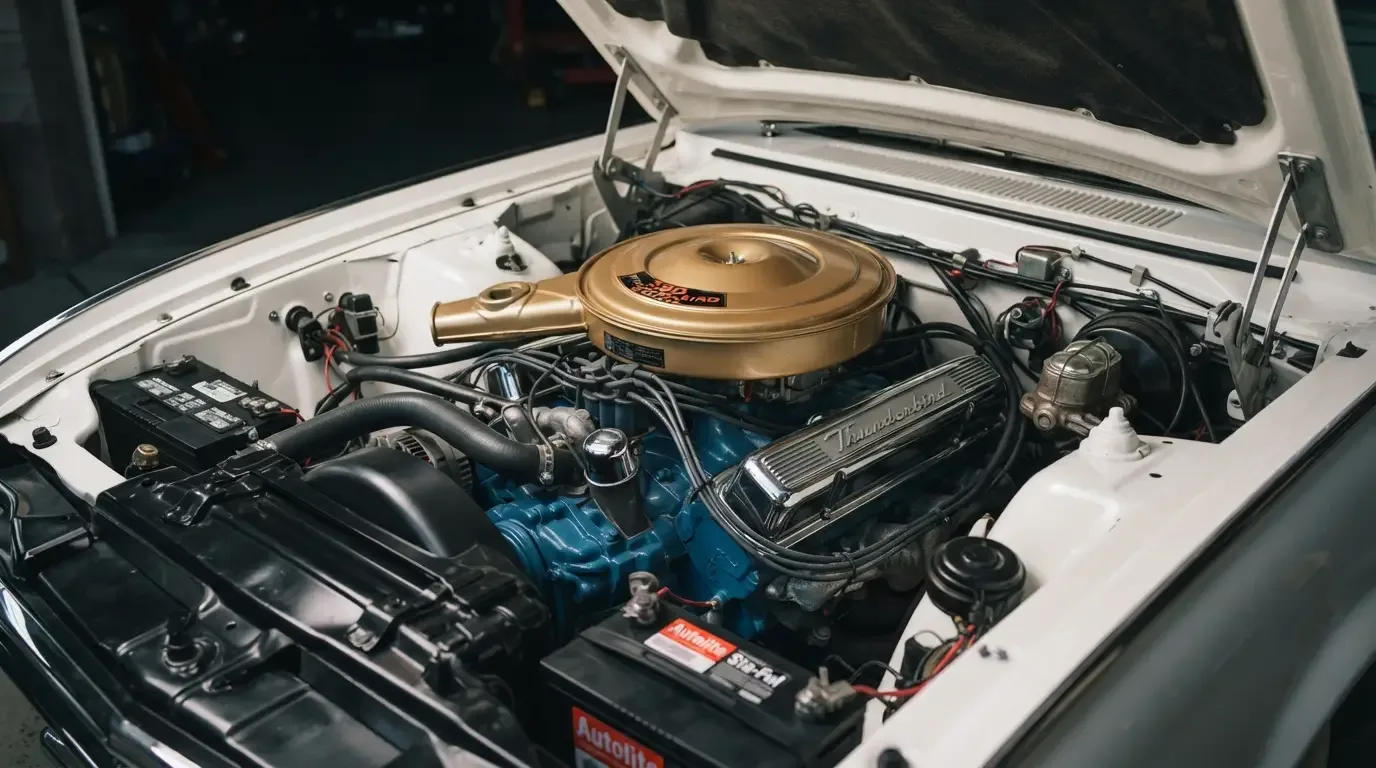
Mechanically, the 1962 Thunderbird carried over most of the 1961 car's engineering, including the unibody structure and the 390 cubic inch FE V8 as the standard engine. The real news for 1962 was the expansion of the model lineup itself. Ford added a third body style for the first time since the redesign, the Landau hardtop, joining the standard hardtop and convertible that had carried the line in 1961. The Landau added a padded or vinyl-covered roof section over the rear seating area along with those distinctive S-bar irons on each C-pillar, a styling cue borrowed from horse-drawn carriage design that automakers of the period used repeatedly to suggest formality and craftsmanship.
Buyers who wanted genuine performance also got a new option for 1962: the M-code 390 with three two-barrel carburetors, sometimes called the Tri-Power or 390 Special, offered alongside the debut of the Sports Roadster package. This engine was not exclusive to the Sports Roadster, though it is most associated with that model. Of the 120 M-code Sports Roadsters built for 1962, roughly 26 M-code hardtops are commonly cited as having left the factory with the same triple-carburetor engine, making the total M-code production for the year a small fraction of the Thunderbird's overall output.
Why the S-bar mattered to buyers
The chrome S-bar on the Landau's C-pillar was purely decorative, serving no structural purpose whatsoever, and it did not stop Ford from making it one of the most recognizable design signatures of the entire early 1960s Thunderbird lineup. It signaled a formal roof treatment at a glance from across a parking lot, and it let Ford charge a premium for what was, mechanically, an identical car to the standard hardtop underneath the vinyl. Buyers responded well enough that Ford brought the Landau nameplate back for the redesigned 1964 generation and kept it in the lineup, in one form or another, well into the 1970s.
Interior and trim for 1962
Inside, the 1962 Thunderbird carried forward the bucket-seat, center-console layout that had defined the 1961 car, with modest trim revisions and available color combinations that shifted slightly from the prior year. Ford's dealers continued marketing the Thunderbird as a step above the standard Ford lineup and priced accordingly, positioning the Landau specifically as the most formal, least sporting option among the three available body styles. It was, in effect, the Thunderbird for buyers who liked the Bullet Bird's shape but wanted their car to read as dignified rather than aggressive.
Ford's brochure copy for the Landau leaned heavily on words like distinguished and formal, language pitched deliberately at buyers who might have otherwise looked at a Lincoln Continental or a well-equipped Buick Electra. The vinyl roof material itself came in a handful of color choices that Ford coordinated against the exterior paint options, and getting that pairing correct matters today to anyone restoring a Landau back to its factory-original appearance, since mismatched roof and body colors are a common giveaway of a car that has been repainted or re-topped without reference to its original build sheet.
Production and market position
Total 1962 Thunderbird production climbed over the 1961 figures, helped by the expanded three-body-style lineup giving buyers more reasons to choose the model over cross-shopped alternatives from Buick, Oldsmobile, or Chrysler. The Landau hardtop quickly became one of the more common body styles within the generation, which today means Landau examples are generally easier to find than Sports Roadsters but still represent a distinct, collectible variant with their own dedicated following among Thunderbird owners' clubs.
That relative abundance works in a buyer's favor today. Because Ford built the Landau in meaningfully higher volume than the Sports Roadster, a shopper with a specific color combination or optional equipment list in mind has a realistic chance of finding it, something that is simply not true for the rarer roadster variant. Prices reflect that availability too, with well-kept Landaus generally trading below Sports Roadster values while still commanding a premium over a bare-bones standard hardtop from the same model year.
"The Landau roof did not change a single mechanical spec on the car, and it still became one of the most requested options Ford offered on the Thunderbird for the next fifteen years. That tells you something about how much styling alone could move buyers in this era."
- Tom Ramirez
Where 1962 fits in the Bullet Bird story
Understanding the 1962 model really requires understanding what came before it. The entire Bullet Bird generation began with the completely redesigned 1961 Thunderbird, and readers who want the full context on the unibody chassis, the single-engine lineup, and the styling language that carried through 1963 should look at where this started before diving deeper into individual model-year changes like the Landau's debut.
The Landau roof, the expanded body style lineup, and the optional Tri-Power engine together make the 1962 model year a genuinely important chapter within the three-year Bullet Bird run, not simply a placeholder between the dramatic 1961 launch and the final 1963 cars. Collectors researching this generation should treat 1962 as its own distinct model year with its own documentation quirks, rather than assuming everything from 1961 through 1963 was mechanically identical.
It is worth remembering, too, that 1962 arrived at a moment when Ford's competitors were watching the Thunderbird closely, since the personal luxury segment it had effectively created was proving lucrative enough to draw serious attention from Buick, Oldsmobile, and eventually Chrysler's own entries into similar territory. Expanding the lineup with the Landau and the Sports Roadster in the same model year was Ford's way of covering more ground within that segment before rivals could establish their own footholds, a competitive response as much as a styling decision.
Buyers interested in a 1962 Thunderbird, whether a Landau, standard hardtop, or one of the rarer Sports Roadsters, should verify body style, engine code, and trim level carefully against any available documentation before committing to a purchase, since values vary meaningfully across these variants despite their shared underlying platform. Readers ready to compare what is actually available can browse classic Thunderbird for sale listings to see current pricing and condition across the generation.