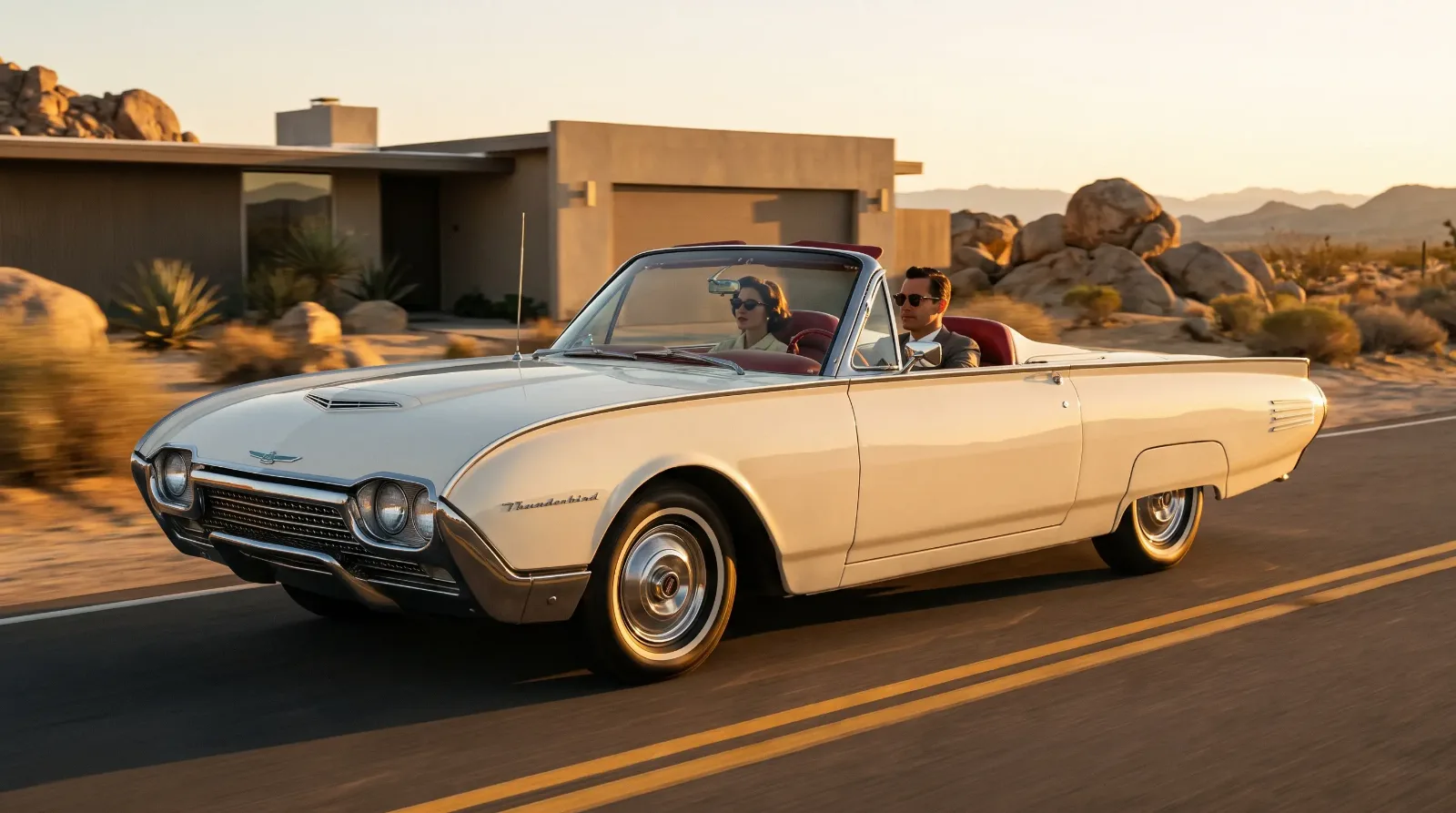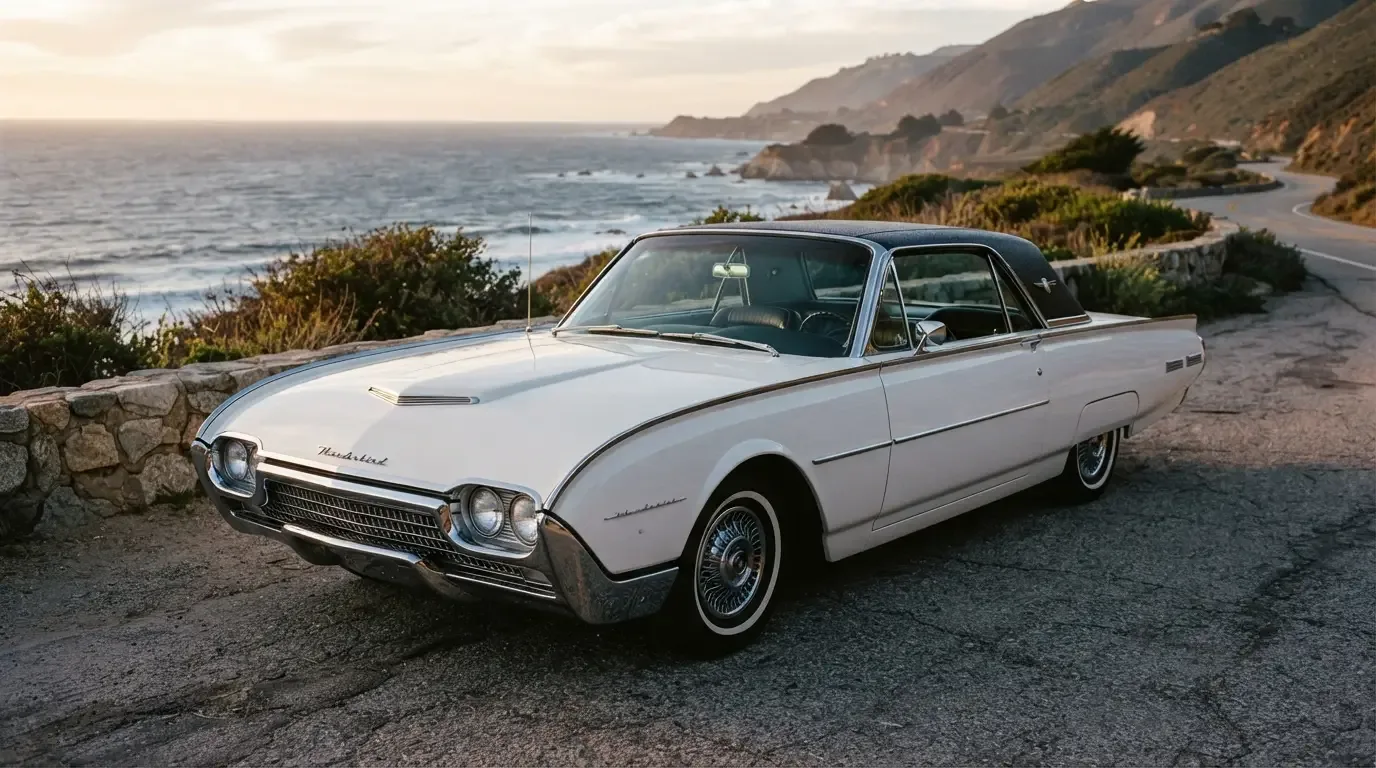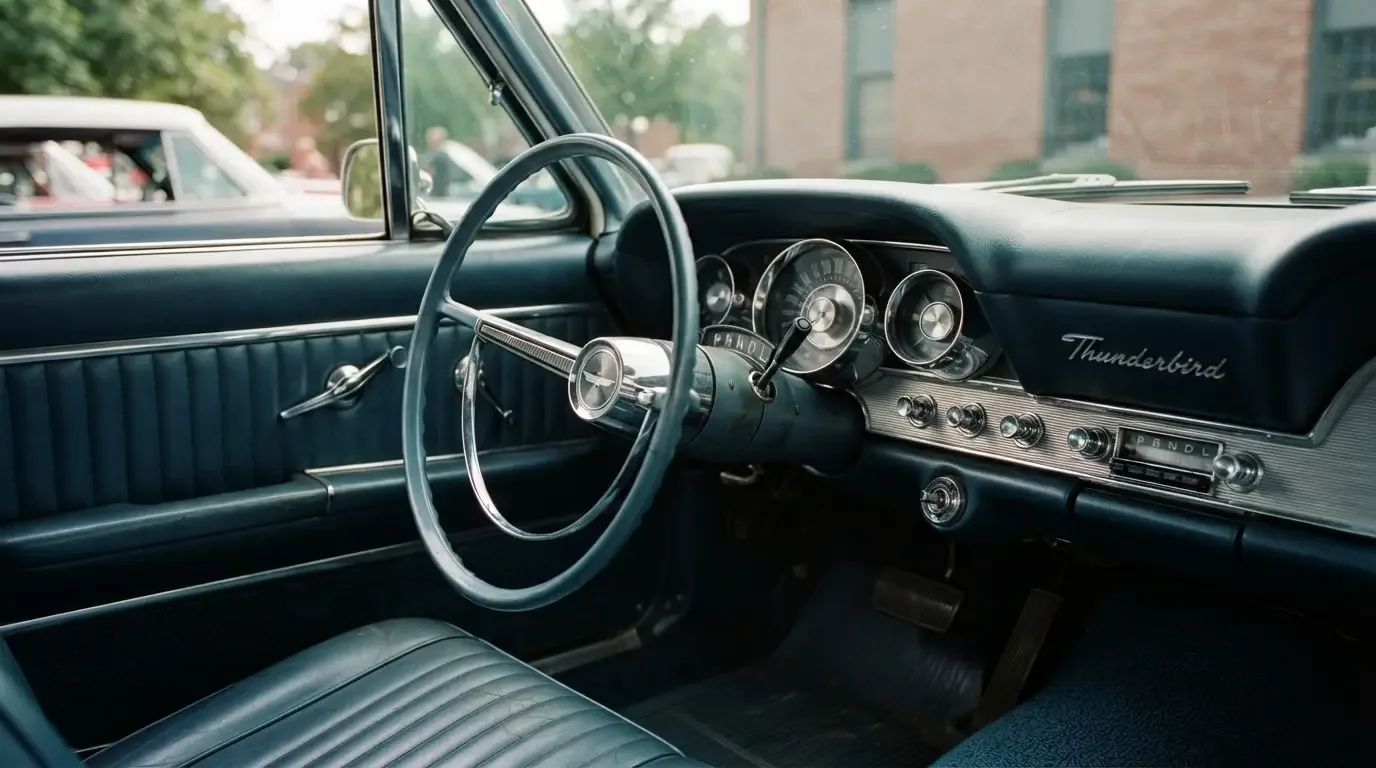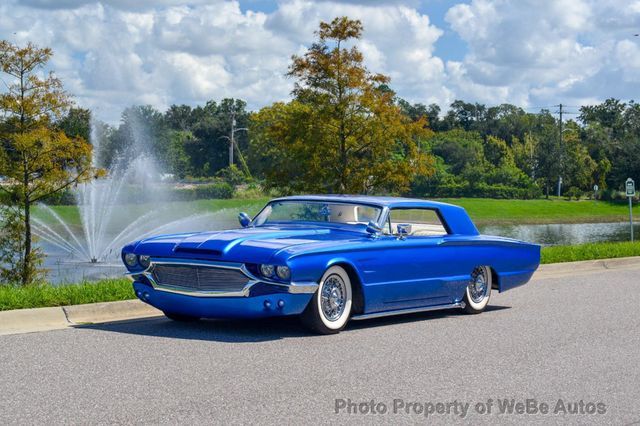
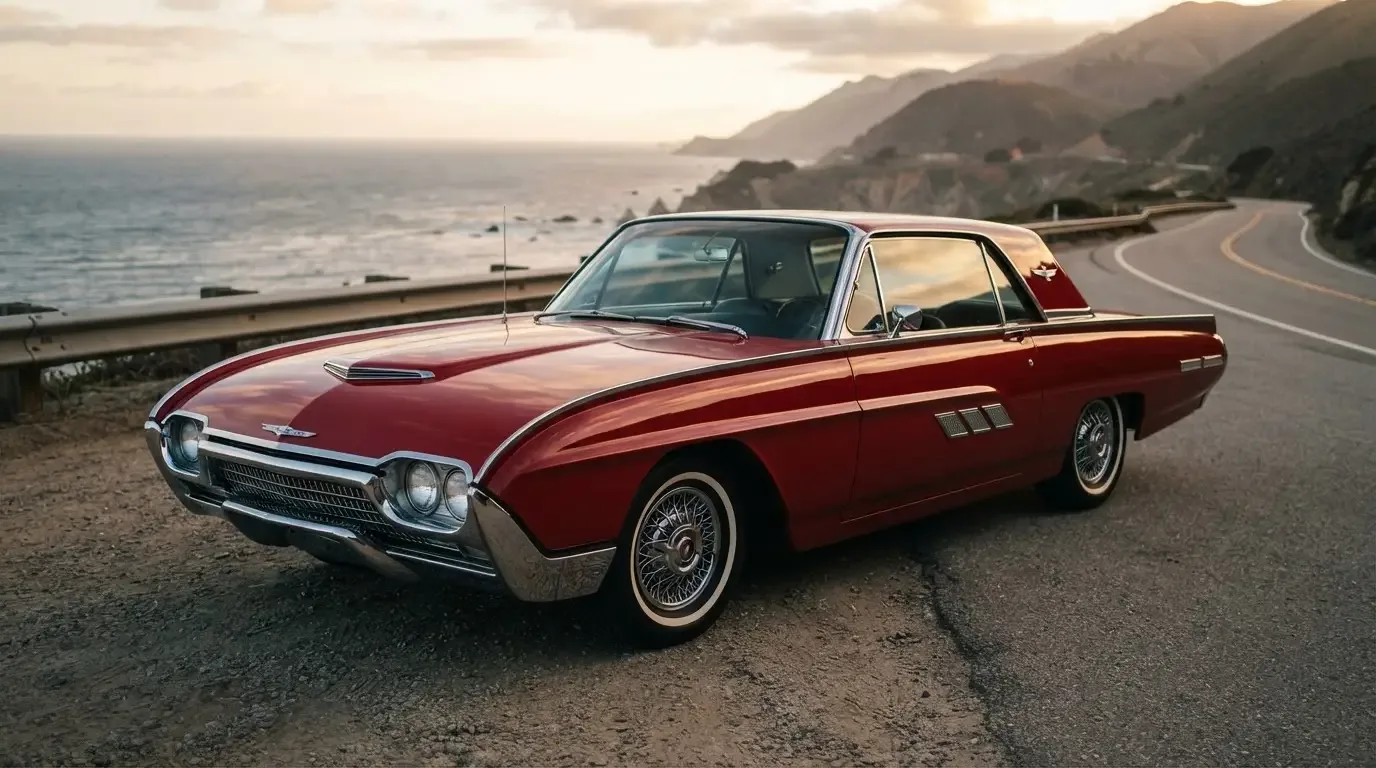
The 1963 Ford Thunderbird closed out the Bullet Bird generation quietly, without the fanfare that had greeted the completely redesigned 1961 car or the new body styles introduced for 1962. As a historical artifact, though, the 1963 model deserves careful attention on its own terms, because it represents the final, most refined expression of a design language Ford was about to abandon entirely for the boxier, longer 1964 generation that followed.
A final year of steady refinement
Ford made no dramatic mechanical changes to the Thunderbird for 1963. The unibody chassis, the 390 cubic inch FE V8, and the three-speed Cruise-O-Matic transmission all carried forward essentially unaltered from the previous two model years. This continuity was deliberate. By 1963, Ford's product planners were already deep into development of the next-generation Thunderbird for 1964, and the outgoing platform received only the modest trim and detail revisions typical of a car in its final production year rather than any substantial engineering investment.
Exterior trim saw the most visible updates, with revised side sculpting and a simplified grille treatment that distinguished the 1963 car from its 1961 and 1962 siblings at a glance for anyone familiar with the details. The three body styles established in 1962 continued: the standard hardtop, the Landau hardtop with its vinyl roof and S-bar trim, and the convertible. The Sports Roadster tonneau and wire wheel package also remained available for 1963, its second and final year on the market before Ford discontinued it entirely.
The M-code engine's final appearance
The optional M-code 390 with three two-barrel carburetors, introduced alongside the Sports Roadster in 1962, remained available through 1963 as well, offered across the wider lineup rather than restricted solely to the roadster package. This was the last year Ford paired the Thunderbird nameplate with a triple-carburetor engine option; the 1964 redesign moved to a different engine strategy entirely, eventually introducing the 428 cubic inch V8 later in that generation's run. Collectors researching engine codes on a 1963 car should treat the M-code designation with the same documentation rigor applied to any earlier Bullet Bird example, cross-referencing casting numbers against the body tag rather than relying on seller claims alone.
Production figures and what they suggest
Ford's total 1963 Thunderbird production came in modestly below the 1962 figures, a pattern consistent with a car entering its final year on an aging platform while buyers with an eye on the calendar anticipated the redesigned model coming for 1964. This is a common pattern across the American auto industry generally: outgoing platforms in their last model year typically see a production dip as dealers and customers alike look ahead to what is coming next, and the 1963 Thunderbird's sales figures reflect exactly that seasonal industry rhythm rather than any decline in the car's underlying appeal.
Body style production followed the same distribution pattern established in 1962, with the standard hardtop remaining the volume leader, the Landau capturing a solid share of buyers who wanted the formal roof treatment, and the convertible and Sports Roadster occupying smaller, more specialized slices of total output. That distribution matters today because it directly shapes what survives. A shopper hunting for a standard 1963 hardtop will have an easier search than one chasing a 1963 Sports Roadster, simply because Ford built so many fewer of the latter to begin with.
"Treat a 1963 Thunderbird as the final, most sorted version of a three-year design experiment, not as a lesser afterthought to 1961. Ford had three years to work out the rough edges on this platform, and the 1963 cars show it."
- Sarah Whitfield
Collectibility and what sets 1963 apart
Among period Thunderbird collectors, the 1963 model occupies an interesting position. It lacks the historical significance of being the debut year like 1961, and it lacks the novelty of introducing new body styles like 1962 did with the Landau and Sports Roadster. What it offers instead is the most mature, thoroughly developed version of the Bullet Bird's mechanical and trim package, along with the rarity that comes from being the final year before a complete platform change. Original, well-documented 1963 examples, particularly Sports Roadsters in their last year of availability, command serious attention from collectors specifically because of that closing-chapter status.
Documentation carries particular weight with 1963 cars precisely because the changes distinguishing them from 1962 models are subtle rather than dramatic. Where a 1961 Thunderbird announces its identity through the launch-year redesign and a 1962 declares itself through the Landau roof or Sports Roadster tonneau, a 1963 car's distinguishing features live in smaller details, the revised grille, the side trim, the final-year anniversary editions. A buyer without a trained eye can easily mistake a well-kept 1962 for a 1963 or vice versa, which makes body tag verification and correct build documentation especially important when shopping this specific model year.
Understanding the full arc
None of the 1963 model's details make complete sense without understanding the redesign that created this generation in the first place. The unibody chassis, the styling language, and the single-engine strategy Ford committed to in 1961 all shaped what the 1963 car ultimately became after two years of incremental refinement. Readers who want the full story of how the Bullet Bird generation began should read that piece alongside this one to understand 1963 as the conclusion of a three-year arc rather than an isolated model year.
For anyone assembling a collection or simply researching the generation's final expression, comparing an original 1963 example against earlier model years is genuinely instructive, since the accumulated trim and detail changes across three years add up to a noticeably different ownership experience even though the fundamental platform never changed. Buyers ready to see what is currently available can browse classic Thunderbird listings to compare condition and documentation across the full range of Bullet Bird model years, including 1963 examples specifically.
The 1963 Thunderbird did not need to shout. It closed out a three-year design experiment that had already proven itself commercially and culturally, and it did so with the kind of quiet competence that only comes from a platform Ford's engineers had thoroughly sorted out by its final season. That, as much as any single spec sheet number, is what makes the 1963 model worth studying on its own terms rather than treating it as simply the last of the Bullet Birds.
For collectors weighing which model year within this generation to pursue, the 1963 argument comes down to maturity and closure. A 1961 offers the launch-year story and the boldest first impression, a 1962 offers the widest choice of body styles and options, and a 1963 offers a platform that had three full years of production refinement behind it, wrapped in the final and arguably most subtly resolved version of the Bullet Bird's exterior detailing. None of those three arguments is wrong, and the right answer genuinely depends on what a given collector values most.