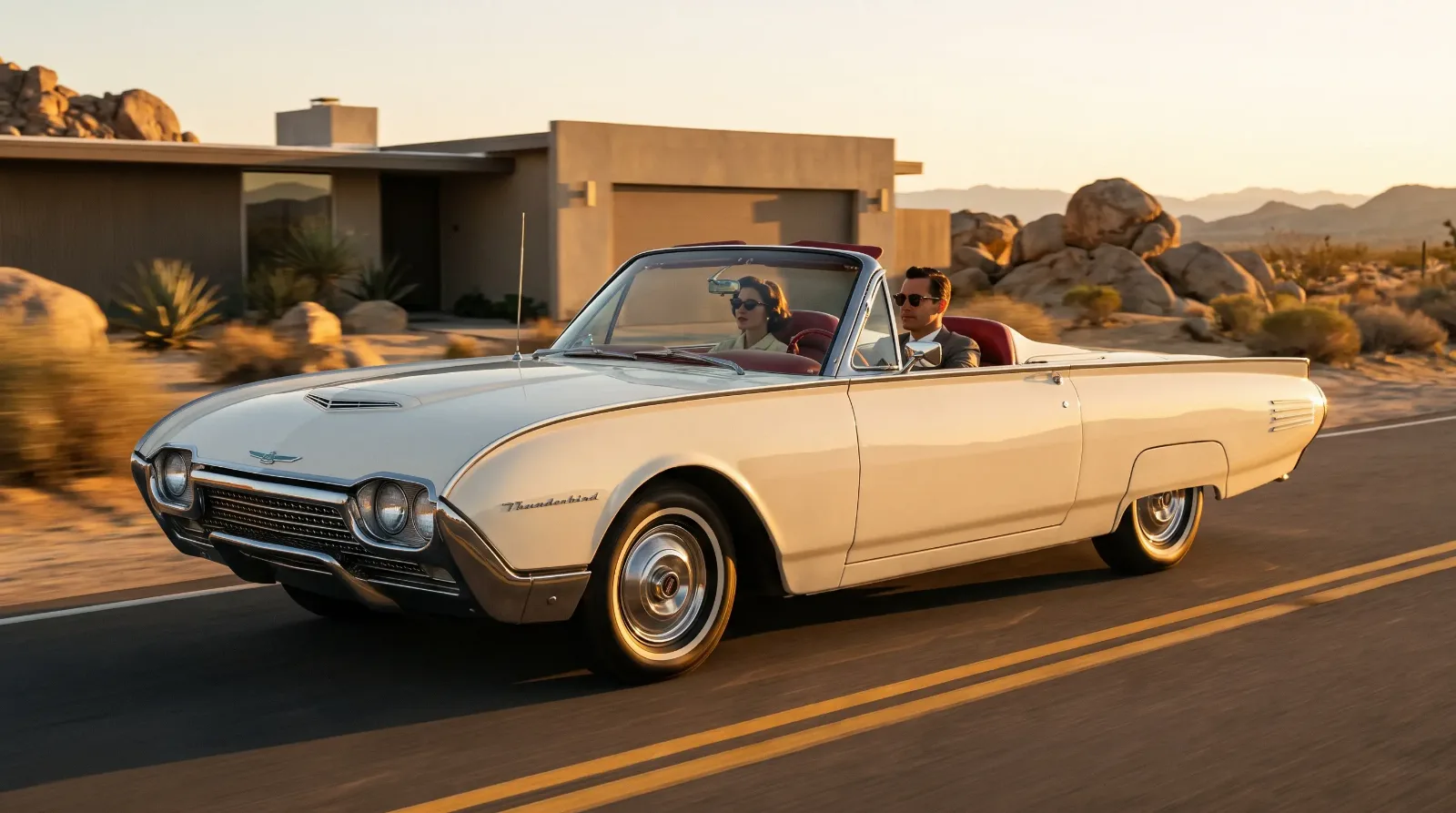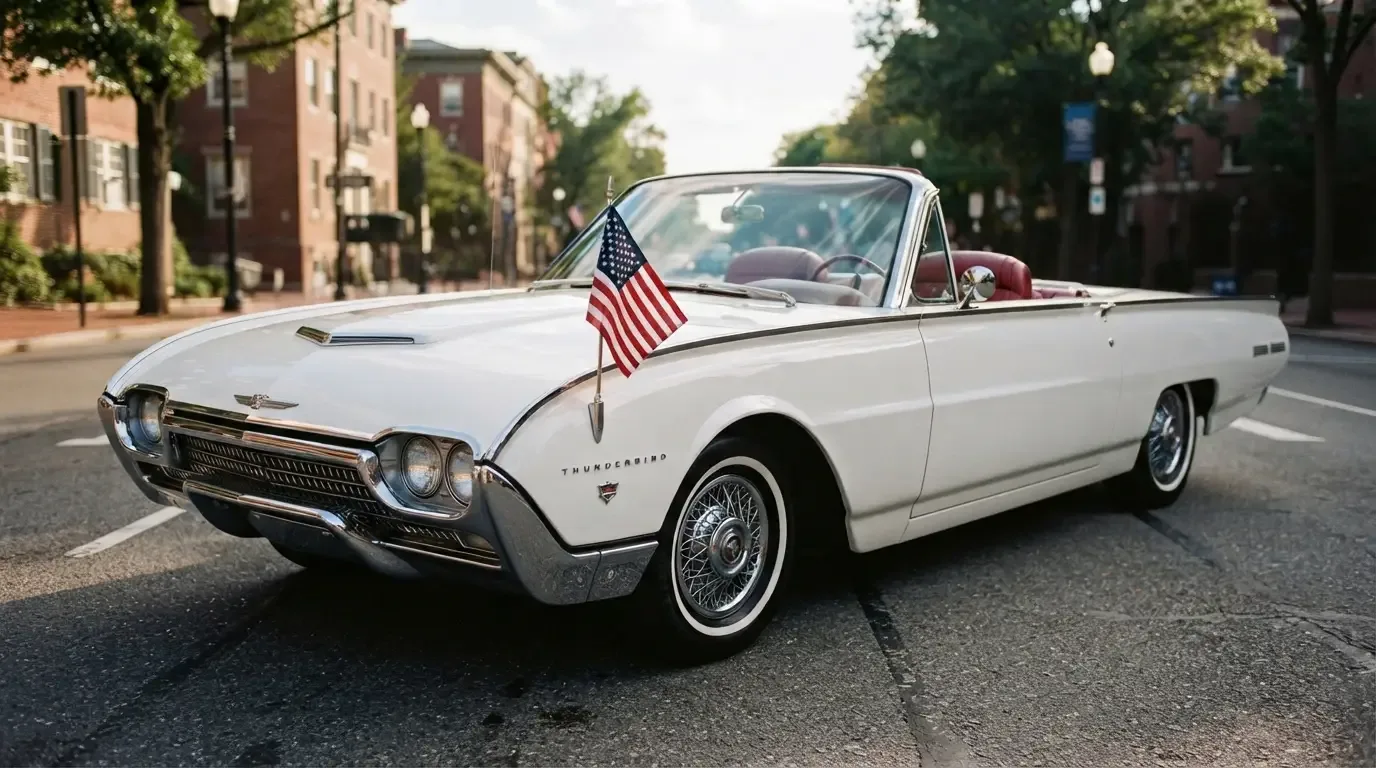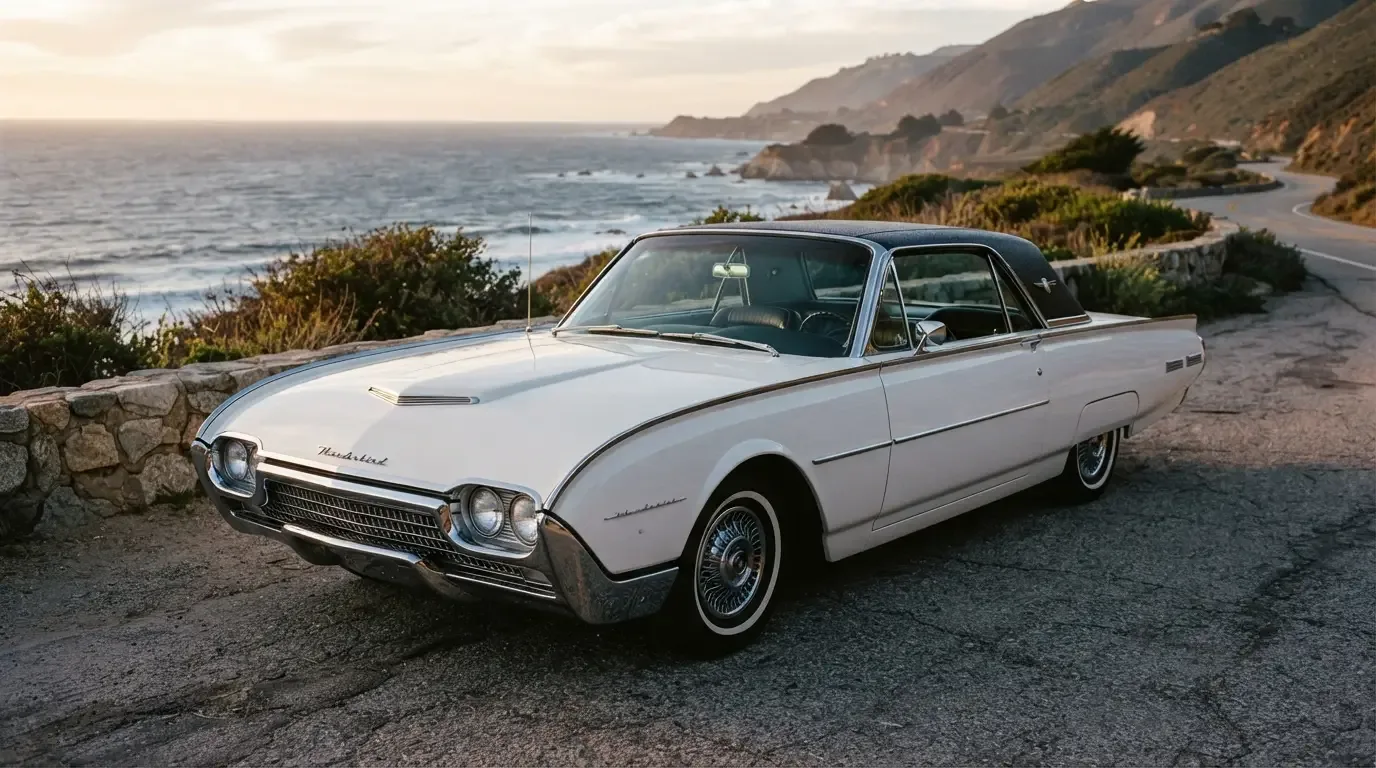
Ford made exactly one engine decision for the 1961 Thunderbird, and it turned out to be the right one. Every 1961 Thunderbird 390 that left the factory carried the same FE-series 390 cubic inch V8, rated at 300 horsepower with a single four-barrel carburetor, backed exclusively by a three-speed Cruise-O-Matic automatic. No six-cylinder option existed. No manual transmission was offered. If you wanted a Thunderbird that year, you got the 390, full stop, and that simplicity tells you something honest about what Ford believed this car was for.
What the FE architecture actually offered
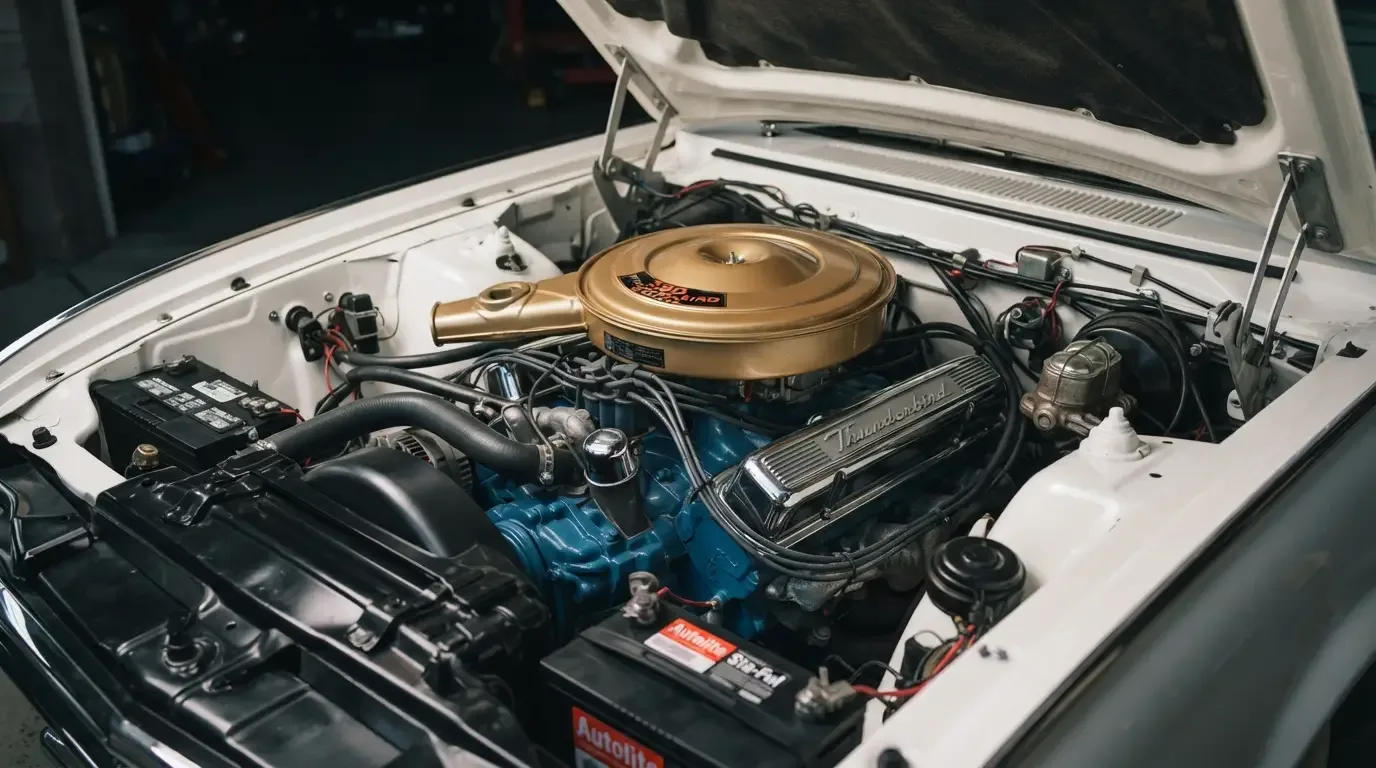
The FE series was still relatively new in 1961, having debuted for the 1958 model year as Ford's answer to the growing horsepower race among American manufacturers. At 390 cubic inches, the Thunderbird's version sat in the middle of the FE family's displacement range, built with a thin-wall casting process that kept weight reasonable for a cast iron block of that size. Bore and stroke measured 4.05 by 3.78 inches, a combination that favored torque delivery over high-rpm breathing, which suited a car built for effortless highway cruising rather than stoplight drag racing. Compression ratio sat at 9.6:1, reasonable for the premium fuel widely available at the time and not aggressive enough to demand constant attention to detonation.
Rated output was 300 horsepower at 4,600 rpm and 427 lb-ft of torque at 2,800 rpm, numbers that read modestly by later muscle-car standards but were entirely competitive for a personal luxury car in 1961. The torque peak arriving at just 2,800 rpm mattered more to actual owners than the horsepower figure ever did, since it meant the Cruise-O-Matic could shift early and keep the engine loafing at low rpm during normal driving, which is exactly the kind of relaxed character Ford was selling with this generation.
Reliability, in practice
The 390 earned a reasonably solid reputation for durability, though it was not without known weak points that a systematic buyer should understand before shopping one today. Valve seat wear on early FE engines running on the leaded fuel of the period was generally not a problem then, but decades later, unleaded conversion work becomes relevant for anyone planning to drive the car regularly rather than trailer it to shows. Cooling system capacity was adequate for the era's traffic conditions but can feel marginal in modern stop-and-go driving with air conditioning running, something worth budgeting for if a prospective buyer plans real-world use rather than occasional Sunday drives.
Why Ford skipped the Tri-Power option here
Some readers familiar with the later Sports Roadster's optional triple two-barrel carburetor setup sometimes assume the standard 1961 Thunderbird offered something similar. It did not. The M-code triple-carburetor 390 arrived with the 1962 model year alongside the Sports Roadster package, not with the 1961 launch. Every 1961 Thunderbird ran the single four-barrel configuration, which is a distinction worth getting right, since engine-code confusion between model years is one of the more common mistakes made when researching or shopping this generation.
The decision to hold off on a higher-output engine option for the launch year fits a pattern Ford followed elsewhere with this redesign. The 1961 model was, in almost every respect, a car about refining the driving experience rather than chasing outright performance figures, and a single well-sorted engine option let Ford's assembly lines run without the added complexity of managing multiple carburetor configurations and their associated parts inventories. That simplicity carried real manufacturing benefits even if it meant enthusiasts had to wait an extra model year for a genuinely quicker factory option.
What this means for buyers today
A matching-numbers 390 with correct casting numbers and date codes adds real, quantifiable value to any 1961 Thunderbird, particularly given how many of these engines have been swapped, rebuilt with non-original parts, or replaced outright over sixty-plus years of ownership. Verifying the engine against the body tag and any surviving build documentation is not optional diligence, it is the single highest-value check a buyer can make before writing a check. Casting numbers on the block, cylinder heads, and intake manifold should all correspond to 1961 production, and a seller who cannot produce documentation or point to verifiable casting dates should prompt real skepticism rather than a shrug.
"A 300 horsepower rating from 1961 does not mean what 300 horsepower means today, but the torque curve on this engine is honestly still pleasant to drive, and that is not something I say about every engine from this period."
- Emily Chen
The engine within the broader redesign
The 390's simplicity as a single-option engine only makes sense in the context of the larger design decisions Ford made for the completely redesigned 1961 model, a car built around a new unibody chassis and a styling language nicknamed the Bullet Bird almost immediately by owners and writers. For readers who have not yet worked through that full redesign story, there is a lot more context available in more on the 1961 ford thunderbird, which covers the styling, chassis, and market reception in detail.
It also helps to understand how the Thunderbird got to this point at all. The nameplate had already gone through the original two-seat era and the boxier Square Bird generation before the 1961 redesign arrived, and readers curious about that earlier history can find where this started for the complete origin story of the model line.
Understanding the 390's place within that longer history also explains why the engine feels the way it does from behind the wheel. Ford was not building a sports car in 1961, whatever the aggressive taillight styling might suggest at a glance. The company was building a comfortable, confident cruiser for buyers who wanted presence without fuss, and an engine tuned for smooth low-rpm torque delivery rather than a screaming top end fits that brief exactly. Judged against that actual design intent rather than against later muscle car benchmarks, the 390 does precisely what Ford wanted it to do, and that alignment between engineering intent and daily-driving reality is exactly why so many original owners kept their Thunderbirds for years rather than trading them in after a single season, and why the 390 still earns respect from people who actually drive these cars regularly rather than simply admire them at a show.
Buyers evaluating 1961 Thunderbirds today should treat the engine as a checklist item rather than an afterthought, since a correct, well-documented 390 changes both the asking price and the long-term ownership experience considerably compared to a car with an unverified or replaced engine. Anyone ready to start comparing actual inventory can browse classic Thunderbirds on the market to see current condition and pricing across the generation before settling on a specific car to pursue.