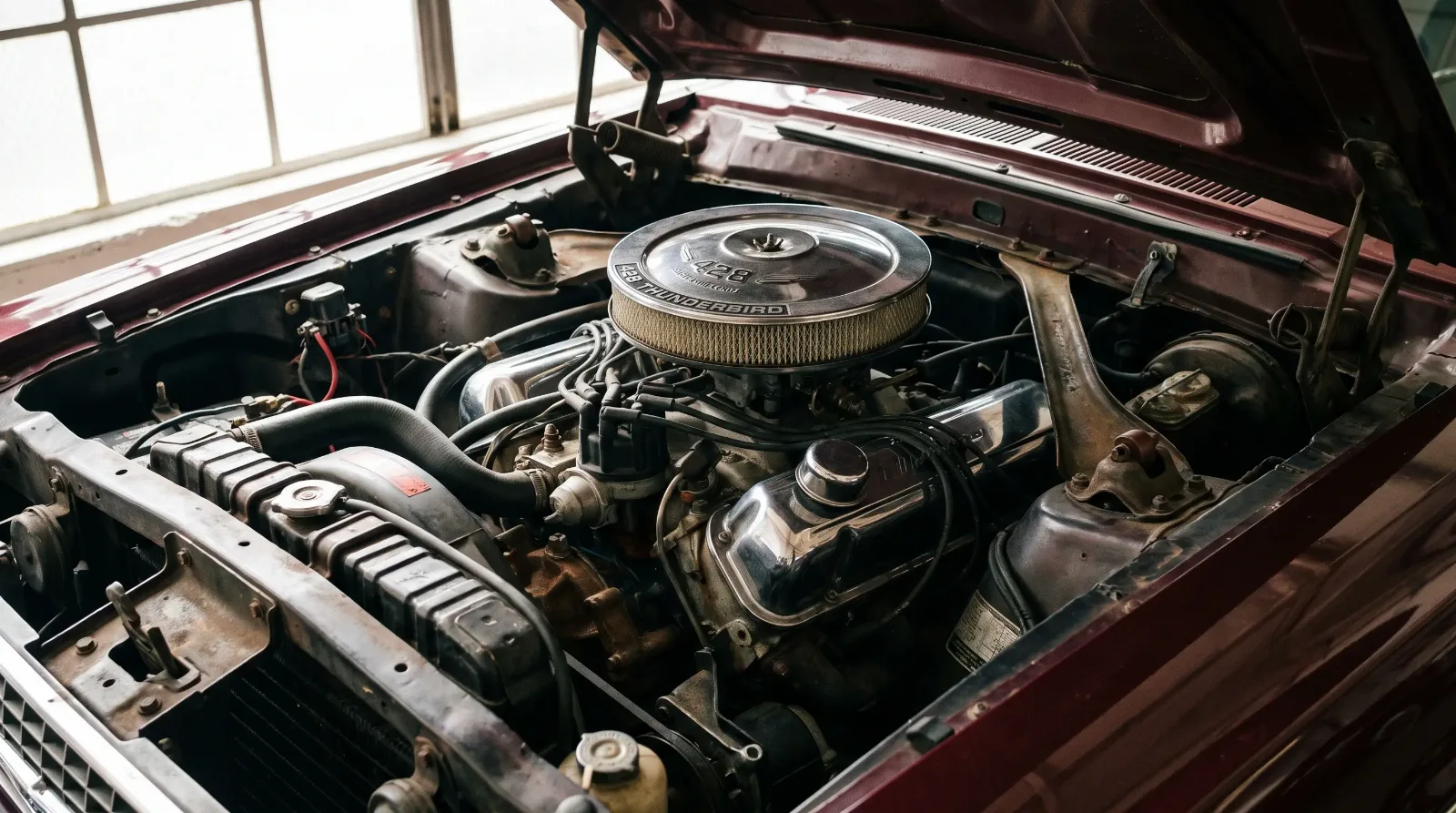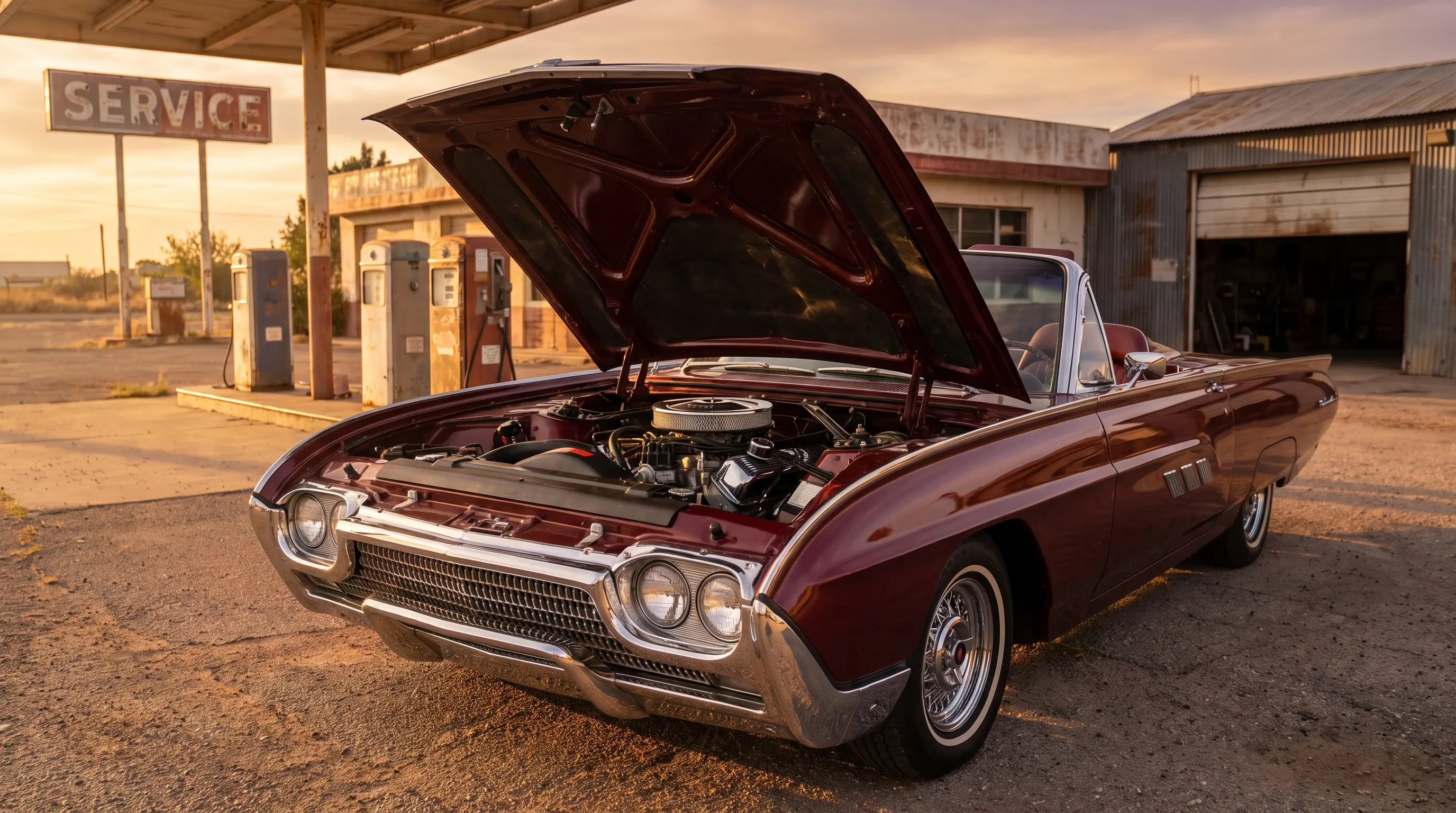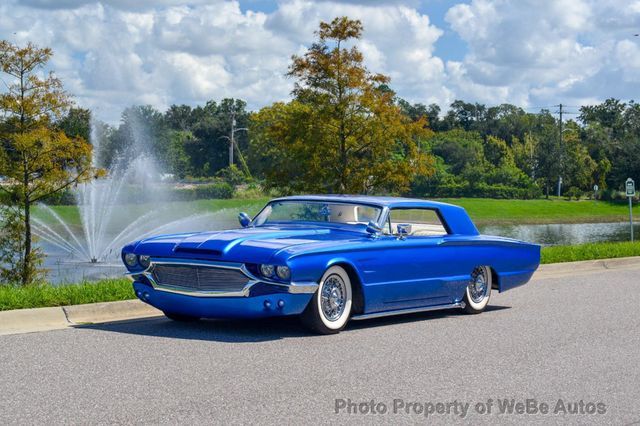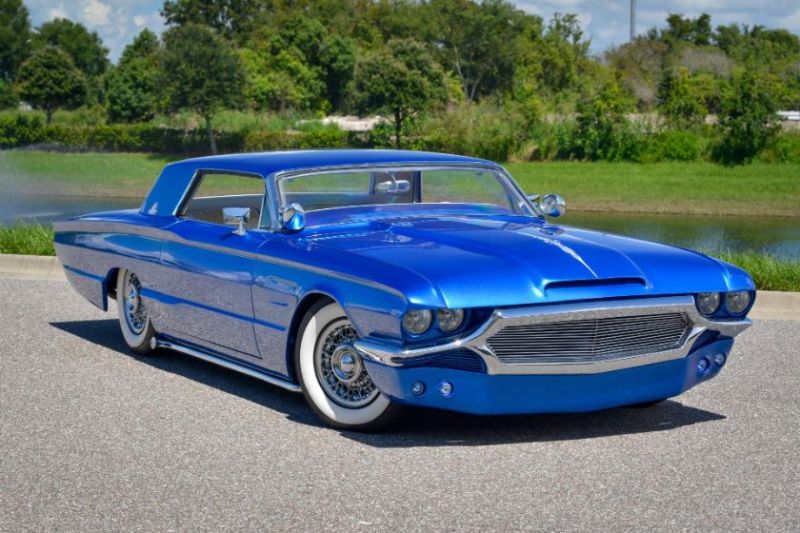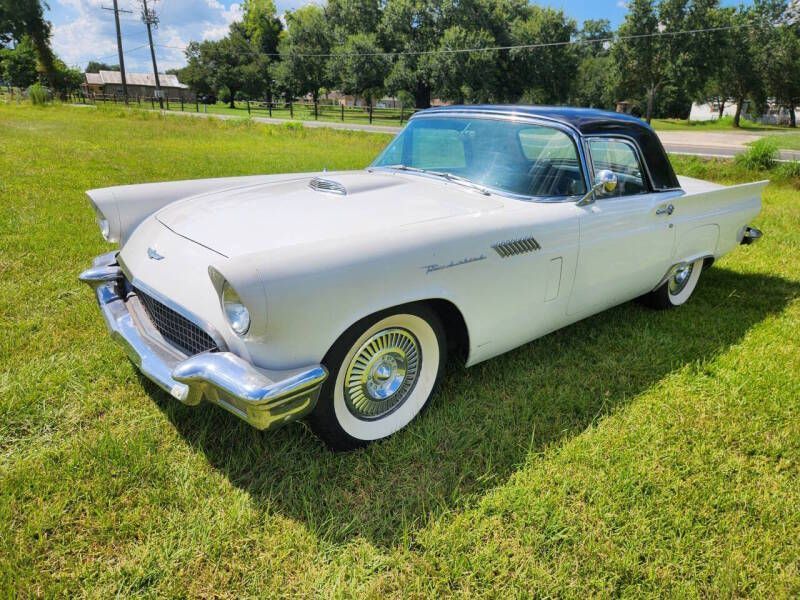
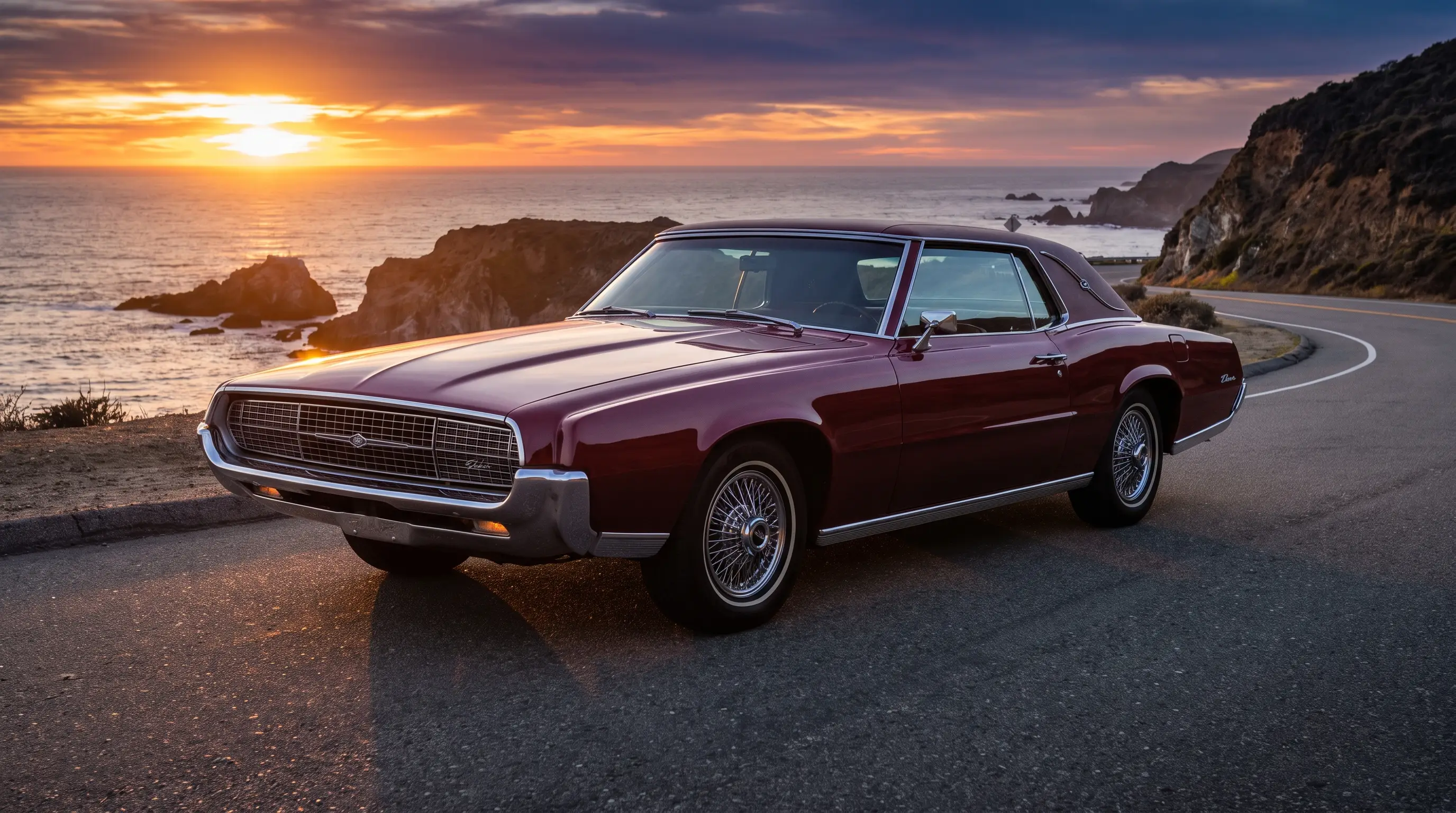
By the closing years of the "Flair Bird" generation, Ford had stopped being shy about displacement. The thunderbird 428 arrived as the range-topping optional engine for the 1966 Thunderbird, a 428 cubic inch member of the FE big block family rated at 345 horsepower, and it stayed on the order sheet as the big-block choice into the early years of the redesigned four-door "Glamour Bird" generation before Ford replaced it entirely with the new 385-series 429. It was never the only engine you could get. It was the one you chose if the standard 390 did not feel like enough car.
From optional performance engine to phased-out big block
The 428 was not a new invention for 1966. Ford had introduced the 428 cubic inch FE in 1966 as a step between the 390 and the specialized 427 competition engine, aimed at buyers who wanted genuine highway torque and effortless passing power without the tighter tolerances and rougher manners of the race-bred 427. In full-size Fords, the 428 was an option, and the same was true in the Thunderbird. The standard 1966 and 1967 Thunderbird engine remained the 390, rated at 315 horsepower, with the 428 available as the step-up choice. When the redesigned four-door "Glamour Bird" generation launched for 1967, generally distinguished by its addition of a suicide-door four-door Landau alongside the familiar two-door hardtop and convertible, the 428 continued as the optional big block for a time before Ford phased it out in favor of the new 429 Thunder Jet, which took over as the Thunderbird's standard engine starting with the 1968 model year and was the only engine offered by 1969. That progression reflected where the Thunderbird had positioned itself by the late 1960s, a genuinely large, heavy personal luxury coupe that needed real torque just to move its own weight with any authority.
What made the 428 the right engine for this generation
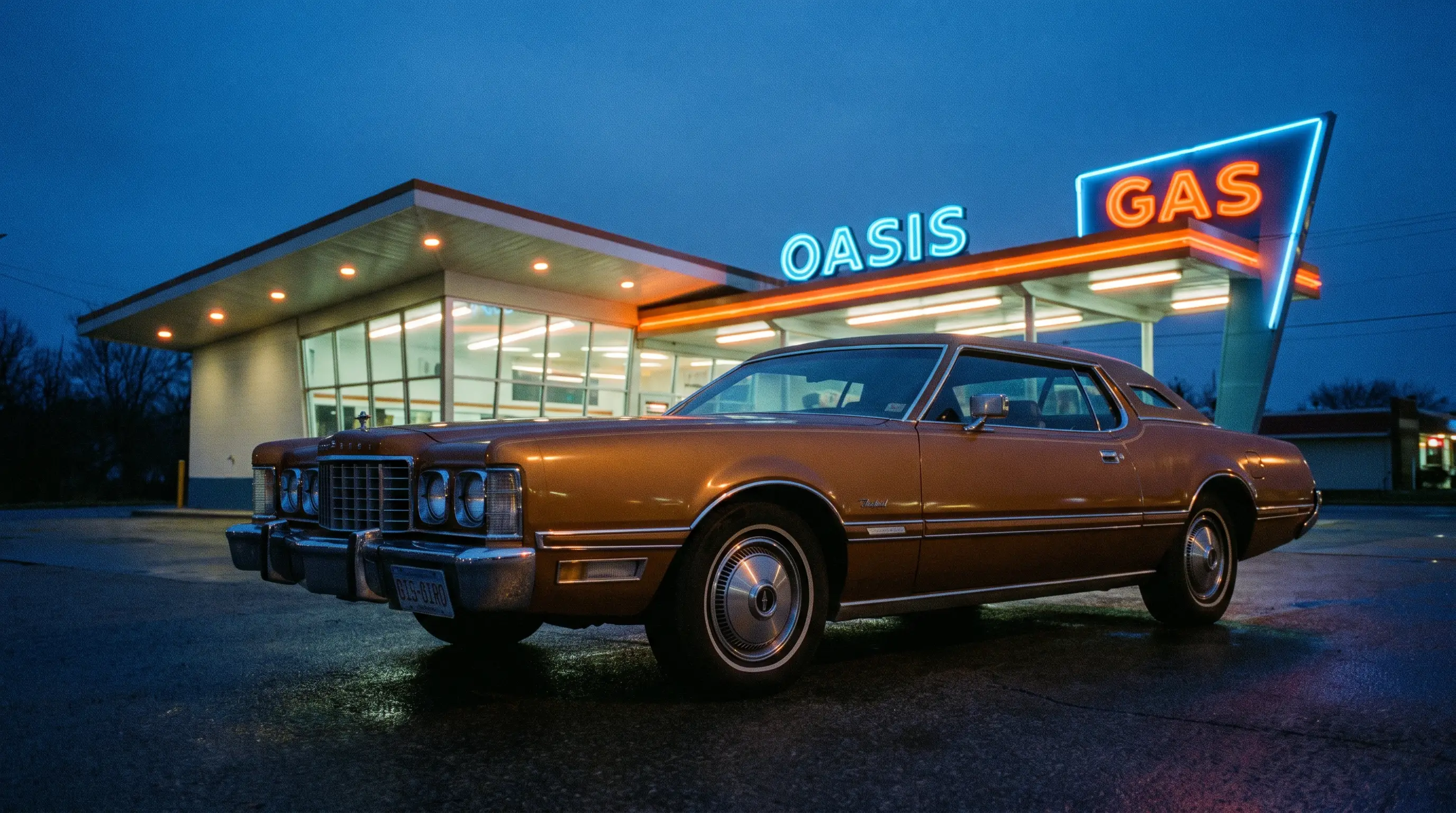
The 1967 through 1971 Thunderbird grew considerably in both size and weight compared to earlier generations, and for the first time the lineup included a four-door model with rear-hinged suicide doors alongside the traditional two-door hardtop and convertible. A car this size demanded an engine built for low-rpm torque rather than high-revving excitement, and the 428 delivered exactly that in the model years it was offered. Peak torque arrived low in the rev range, which matched the Thunderbird's automatic-only transmission lineup and its buyers' expectations of effortless, quiet acceleration rather than a sporting driving experience. The engine's cast iron block and heads, generous bearing sizing, and relatively low state of tune compared to performance FE variants also meant it was built for a long service life under normal driving, not for weekend abuse.
Ownership realities for a 428 Thunderbird
A 428-powered Thunderbird from this generation is a heavier, more relaxed driving experience than the earlier 390 cars, and that is a feature rather than a flaw for anyone shopping this generation specifically for cruising comfort. Fuel economy was never a strength of any FE big block, and it is worth setting expectations accordingly before buying one for regular use. Parts availability remains solid thanks to the FE family's long production run and its use across multiple Ford model lines through the late 1960s, though 428-specific internal components can be pricier than common 390 parts simply because fewer 428s were built overall relative to the mainstream 390.
| Spec | 1966-1968 Thunderbird 428 |
|---|---|
| Displacement | 428 cubic inches (7.0L) |
| Output | 345 hp (SAE gross) |
| Engine family | Ford FE big block |
| Transmission | Automatic only |
| Availability | Optional big block over the standard 390, phased out for the 429 by 1969 |
The 428 sits at the far end of a story that started with a much smaller engine entirely. For the full arc from the original Thunderbird's Y-block through this big-block era, more on the ford thunderbird engine covers every generation in sequence, and it is worth understanding where this started if you want the full context for how far the car had grown by 1967.
"The 428 was the engine you paid extra for when the standard 390 felt like it was working too hard. It was never a performance flex so much as an answer to a genuinely bigger, heavier car."
- Emily Chen
Life behind the wheel of a 428 Thunderbird
Climbing into a 1966 through 1968 Thunderbird ordered with the 428 after driving one of the earlier Bullet Bird cars makes the shift in priorities obvious immediately. The cabin is quieter, the ride is softer, and the 428 pulls with a deep, unhurried confidence that never feels like it is straining, even carrying the added weight of the four-door model's extra structure and hardware. Ford tuned the throttle response and automatic transmission shift points for smoothness rather than sportiness, reinforcing that this generation was built to compete with Lincoln and Cadillac on comfort terms rather than to chase muscle car buyers on the street. The 428 makes that comfort possible simply by never running out of torque regardless of load or grade.
The four-door Thunderbird and its engine demands
The 1967 introduction of a four-door Thunderbird with rear-hinged doors was a genuine departure for the model, and it added real weight over the standard two-door hardtop and convertible body styles. That extra mass is part of why buyers who wanted the four-door often stepped up to the optional 428 rather than sticking with the standard 390, since the bigger engine's torque output suited the heaviest configuration better. Ford eventually simplified the decision for buyers entirely by dropping both the 390 and 428 in favor of a single standard 429 starting in 1968, a small but real efficiency gain for dealers and service departments that mattered as Ford's product lineup grew more complex through the late 1960s.
Comparing the 428 to what came before it
Set the 428 next to the earlier 390 and the difference in mission becomes clear even though both belong to the same FE family. The 390 was the strong, capable standard engine matched to the Thunderbird body throughout the 1960s, offered alongside a genuinely quicker Tri-Power option in the earlier Bullet Bird years for buyers who wanted more. The 428 arrived as the big-block step-up option rather than a replacement, because Ford had not yet decided to sell this generation of Thunderbird purely on size and presence rather than a menu of performance tiers, a shift that only became complete once the 429 took over as the sole engine. That shift says as much about where the American car market was heading in the late 1960s as it does about the Thunderbird specifically, with buyers increasingly drawn to bigger, more imposing personal luxury coupes rather than nimbler sporting variants.
What to look for when buying
Convertible and hardtop examples from this generation tend to draw the strongest collector interest, while the four-door model, despite its historical significance as a genuine styling departure, generally trades at a discount relative to the two-door body styles. That valuation gap has less to do with the 428 itself, since every body style shared the identical engine, and more to do with broader collector preference for the sportier two-door silhouette over the practicality-focused sedan. Buyers specifically interested in the four-door for its rarity and its unusual place in Thunderbird history should treat that discount as an opportunity rather than a warning sign, provided the car itself is sound.
Verifying an original 428 in a Flair Bird or early Glamour Bird era Thunderbird follows the same logic as verifying any FE big block. Check the engine tag against the VIN, look for consistent casting date codes, and ask about maintenance history, particularly cooling system service, since these cars run hot in modern traffic conditions even when everything is working correctly. Because the 428 was an option rather than the only engine offered, confirming that a given car was actually ordered with it, rather than a standard 390 that was later swapped, matters more here than with the later 429-only cars. If you are ready to look at real inventory, browse classic Thunderbirds on the market and pay close attention to how each seller documents cooling system condition, since that is the single most common issue on a well-used 428.