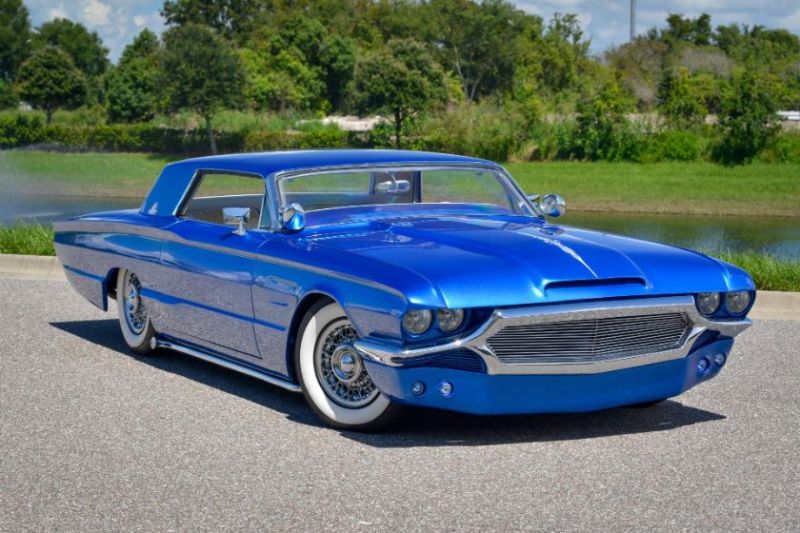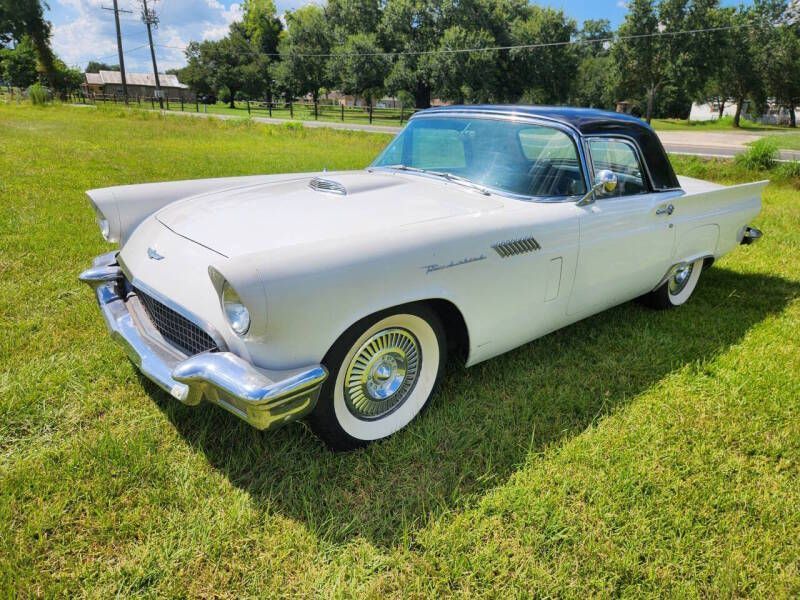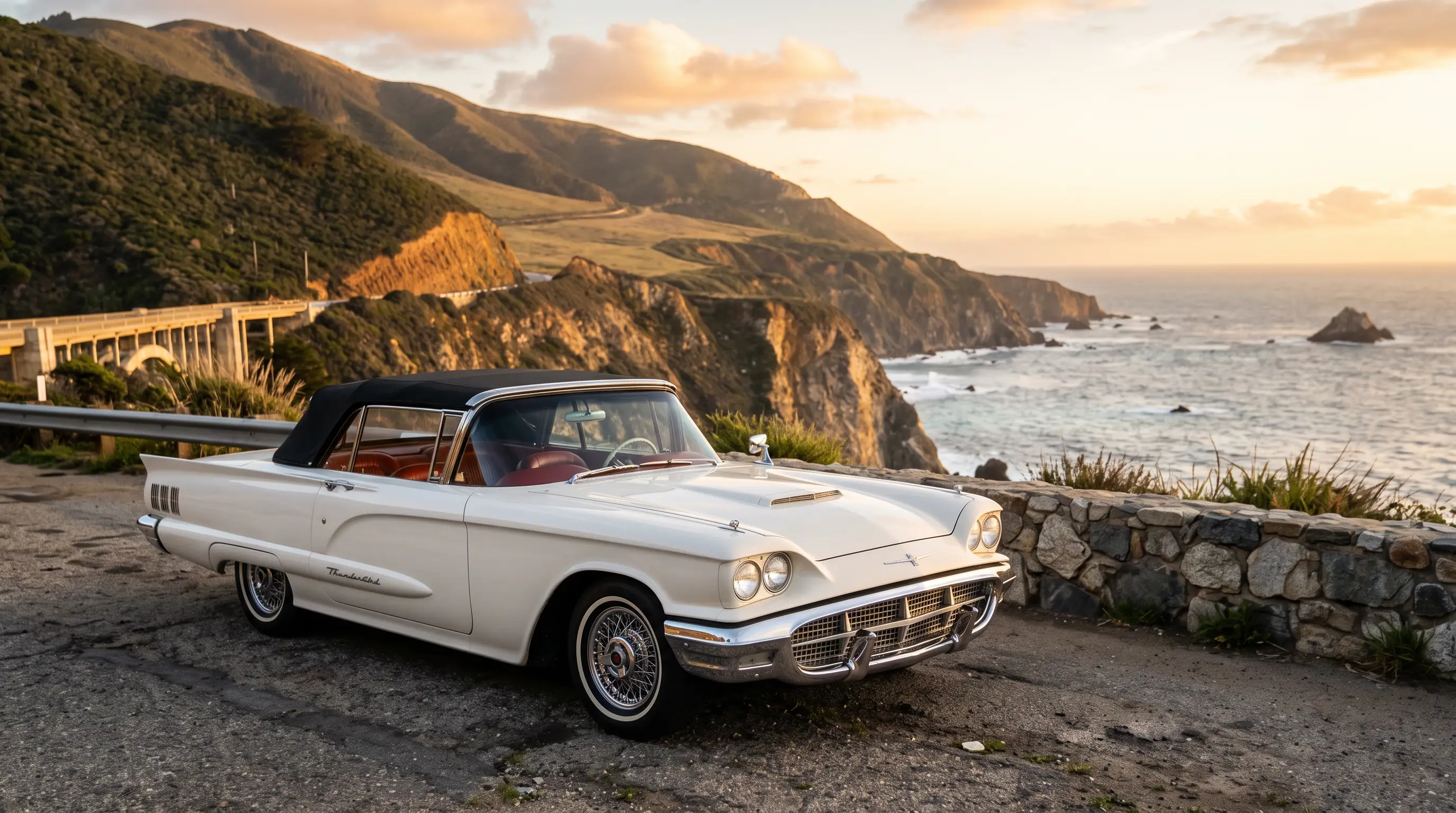
Plenty of cars from the 1950s and 1960s claim American icon status now, mostly because enough time has passed that anything chrome-covered and old starts to look mythic. The Ford Thunderbird earned the label more honestly than most. It did not become a thunderbird american icon by accident or by nostalgia alone. It earned the reputation across four separate body styles and nearly twenty five years by consistently representing something specific about American life at each stage: postwar optimism, suburban prosperity, and eventually a slightly overripe version of luxury that the country was starting to question by the mid-1970s. Few cars track the national mood that precisely for that long.
1955: optimism you could buy
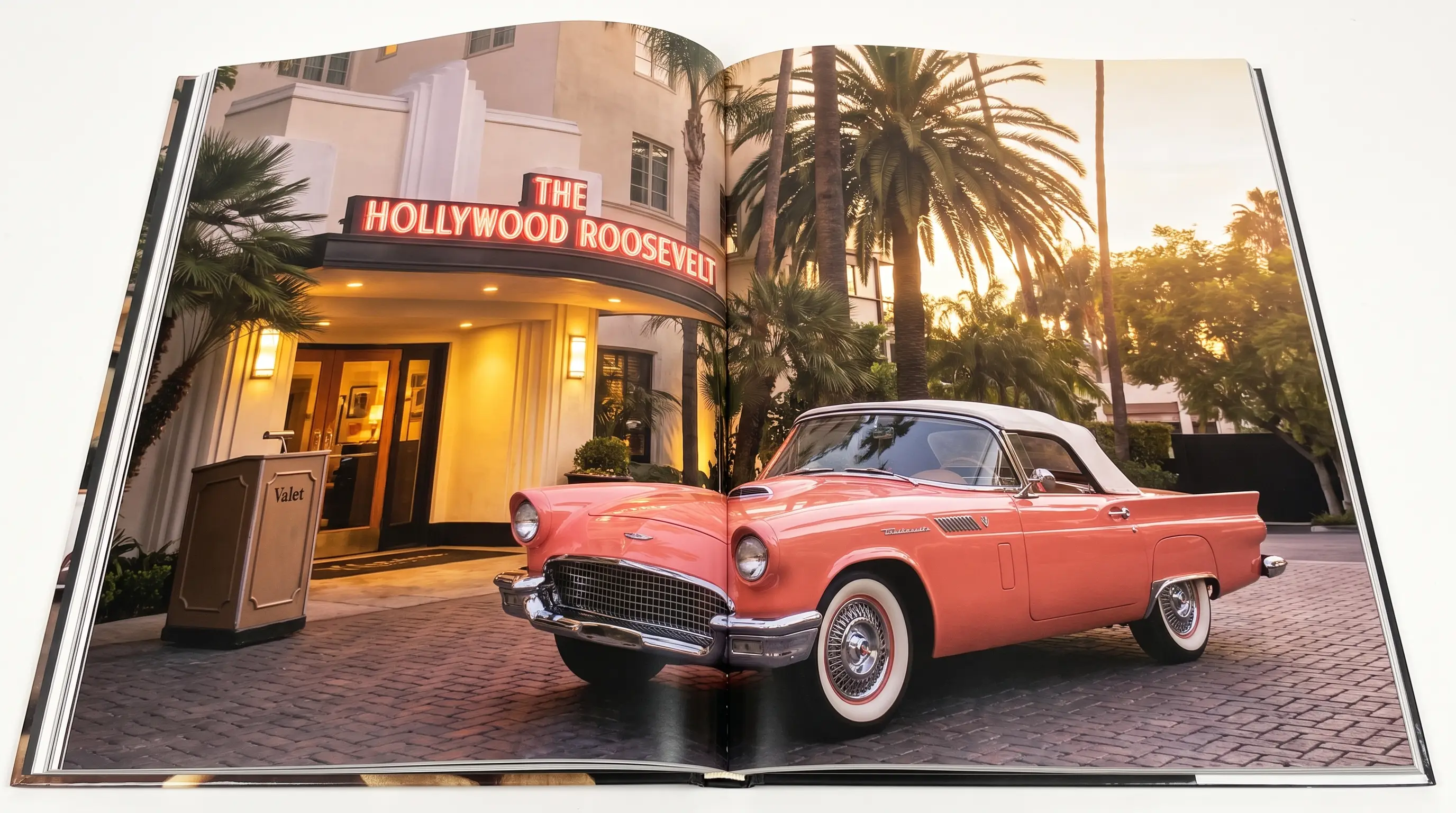
The original two-seat Thunderbird arrived at a moment when American manufacturing confidence was near its peak. The country had spent a decade rebuilding from war footing into consumer abundance, and Detroit was racing to prove it could build something purely for pleasure, not just utility. The Thunderbird answered that challenge directly. It was compact, expensive, and entirely unnecessary in any practical sense, which was exactly the point. Owning one said the postwar promise had actually arrived for you personally, not just for the country in the abstract. That message landed. Ford outsold its intended direct rival within the two-seater's first full year on the market, a result that surprised even some of Ford's own executives given how narrowly the car had been conceived.
What made the achievement more notable is that Ford had built the two-seater as a relatively low-volume specialty item, never expecting it to compete directly on raw sales numbers with more mainstream offerings. Beating a dedicated sports car on its own turf, with a car that was never marketed primarily as a sports car in the first place, said something about how well the personal luxury pitch resonated with a buyer who wanted glamour without giving up comfort entirely. That balance, glamour with comfort rather than glamour instead of comfort, became a defining thread across every later generation of the car.
The Squarebird brings the icon home to the suburbs
By 1958, the country's optimism had shifted address, from downtown showrooms to suburban driveways, and the Thunderbird moved with it. The four-seat Squarebird traded the original's two-person exclusivity for something a growing suburban family could actually use, without losing the personal luxury positioning that had made the nameplate desirable in the first place. This is arguably the moment the car crossed from successful product into genuine cultural fixture. It appeared in family photographs, in television backgrounds, in the kind of casual cultural presence that only happens when a huge number of ordinary households, not just wealthy early adopters, have one parked out front.
That transition from rare specialty item to widely recognized suburban fixture happened faster for the Thunderbird than it did for most comparable personal luxury nameplates of the era, and it happened without the car losing the sense of occasion that had defined the original two-seater. Ford's designers managed to make a larger, more practical car still feel like an event to own, which is a harder balancing act than it sounds and one that plenty of later competitors failed to pull off nearly as well.
The Bullet Bird years and a nation looking upward
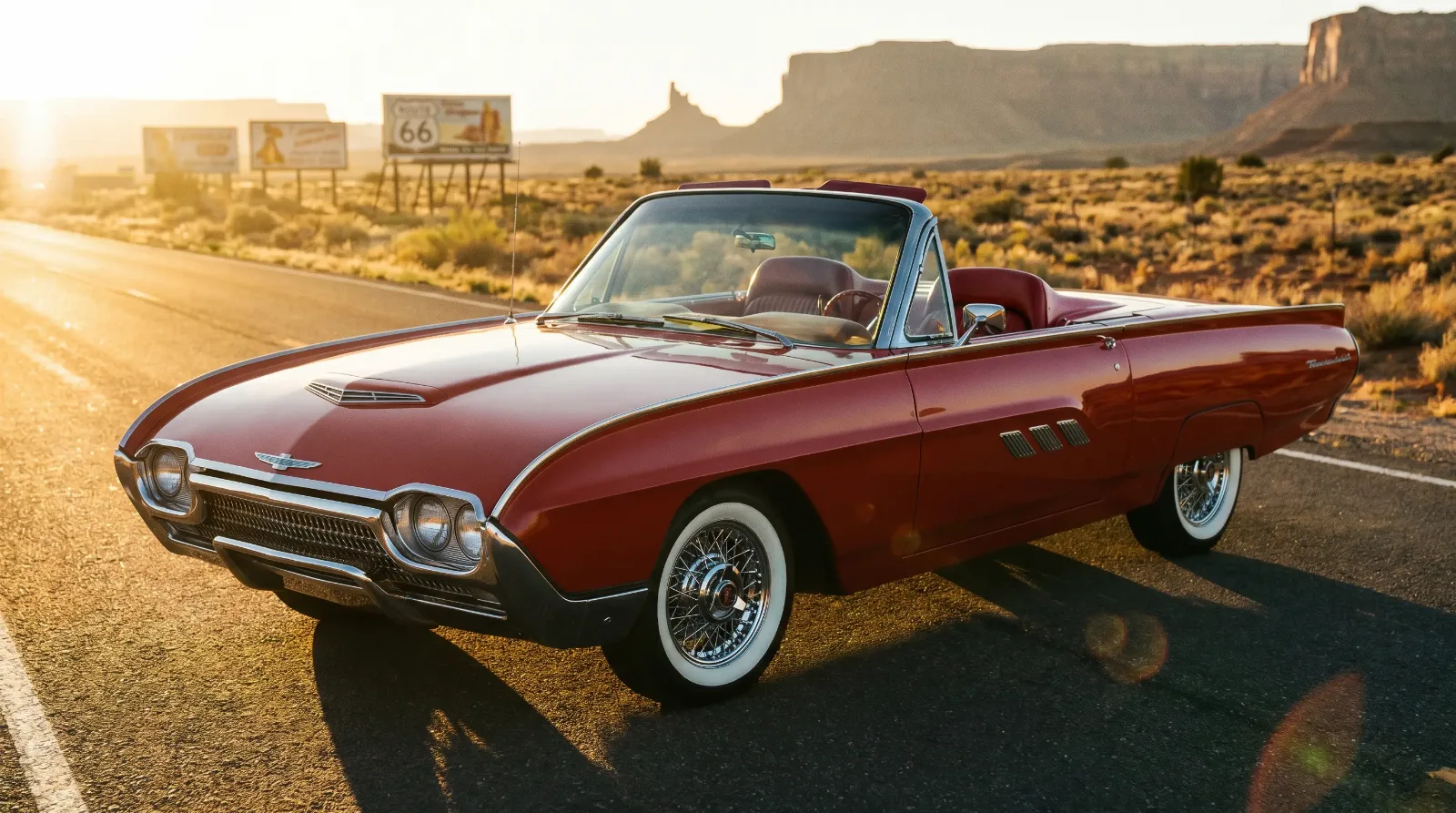
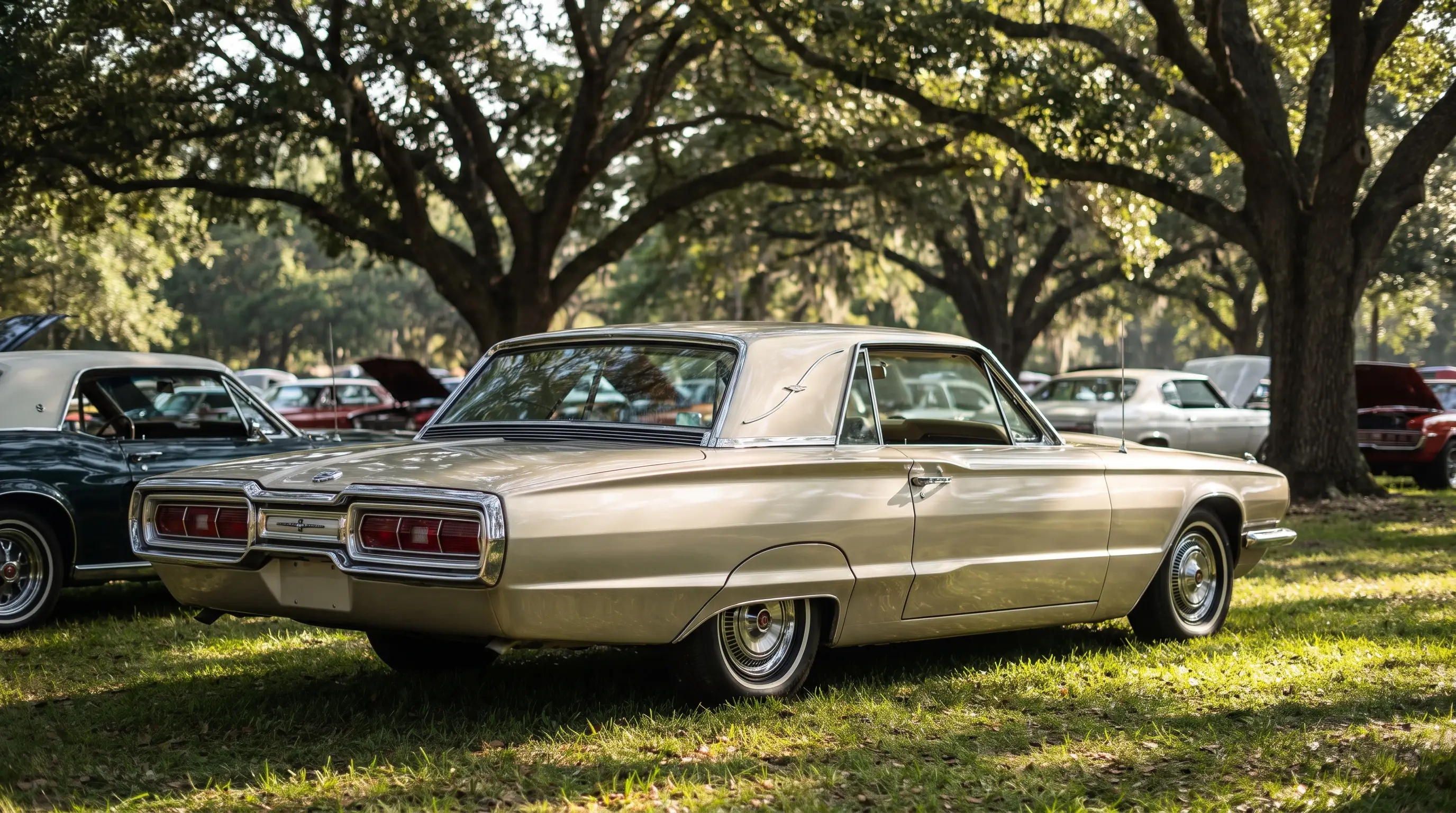
The early sixties Bullet Bird generation coincided with America's fixation on space travel, and the car's styling leaned into that mood without apology. Rocket-inspired taillights, a dashboard laid out with an almost cockpit-like sensibility, and advertising copy that borrowed liberally from space-age vocabulary all positioned the Thunderbird as a car for a country that had just watched itself put men in orbit and was already imagining further than that. It is a distinctly American moment captured in sheet metal, confident, forward-looking, occasionally a little overreaching in its ambitions, much like the country's space program itself during those same years.
"You can trace American self-image decade by decade just by looking at Thunderbird changes. Confident and lean in 1955. Comfortable and suburban by 1960. Big and a little unsure of itself by 1975. The car kept telling on the country whether it meant to or not."
- Patrick Walsh
Personal luxury and a more complicated decade
By the early seventies, the Thunderbird had grown considerably larger and leaned hard into formal, chrome-heavy personal luxury styling, competing directly with Cadillac and Lincoln in a category that valued size and presence above nearly everything else. This is the least fashionable chapter of the car's icon status today among enthusiasts who prefer the leaner earlier generations, but it is arguably the most honest reflection of where American taste actually stood during those years. The country was working through an energy crisis, a recession, and a general loss of the postwar confidence that had defined the Thunderbird's earliest advertising, and the car's continued popularity through that stretch says something real about what buyers still wanted even as circumstances made bigger, thirstier cars harder to justify.
The full arc of that transformation, generation by generation, gets a more detailed treatment in our complete history of how the Thunderbird built and maintained its reputation across the whole classic era.
What earns the icon label
There is a useful comparison to be made with contemporaries that faded faster. Several rival personal luxury nameplates launched in the same general period as the Thunderbird enjoyed a strong initial reception before losing definition within a decade or two, their styling and positioning drifting without a clear thread connecting one generation to the next. The Thunderbird avoided that fate largely by staying disciplined about what the name was supposed to mean, even while the specific execution changed dramatically. Buyers in 1976 understood roughly what a Thunderbird represented in the same intuitive way buyers in 1956 had, even though the two cars barely resembled each other mechanically or visually.
Cultural icon status gets handed out too casually to most old cars now, but the Thunderbird's claim holds up under real scrutiny because the car changed so dramatically alongside the country while somehow keeping its core promise intact: this is what arrival looks like, whatever decade you happen to be shopping in. Few nameplates manage that kind of sustained relevance across four genuinely different products wearing the same badge, a fact that becomes clearer the more directly you compare surviving examples from opposite ends of the production run side by side. If that history has you curious about owning a piece of it, you can browse browse classic Thunderbird listings and see which chapter of the story speaks to you most, the lean 1955 original, the suburban Squarebird, the space-age Bullet Bird, or the big personal luxury coupes of the seventies. Each one tells a genuinely different story about the same country at a different moment.