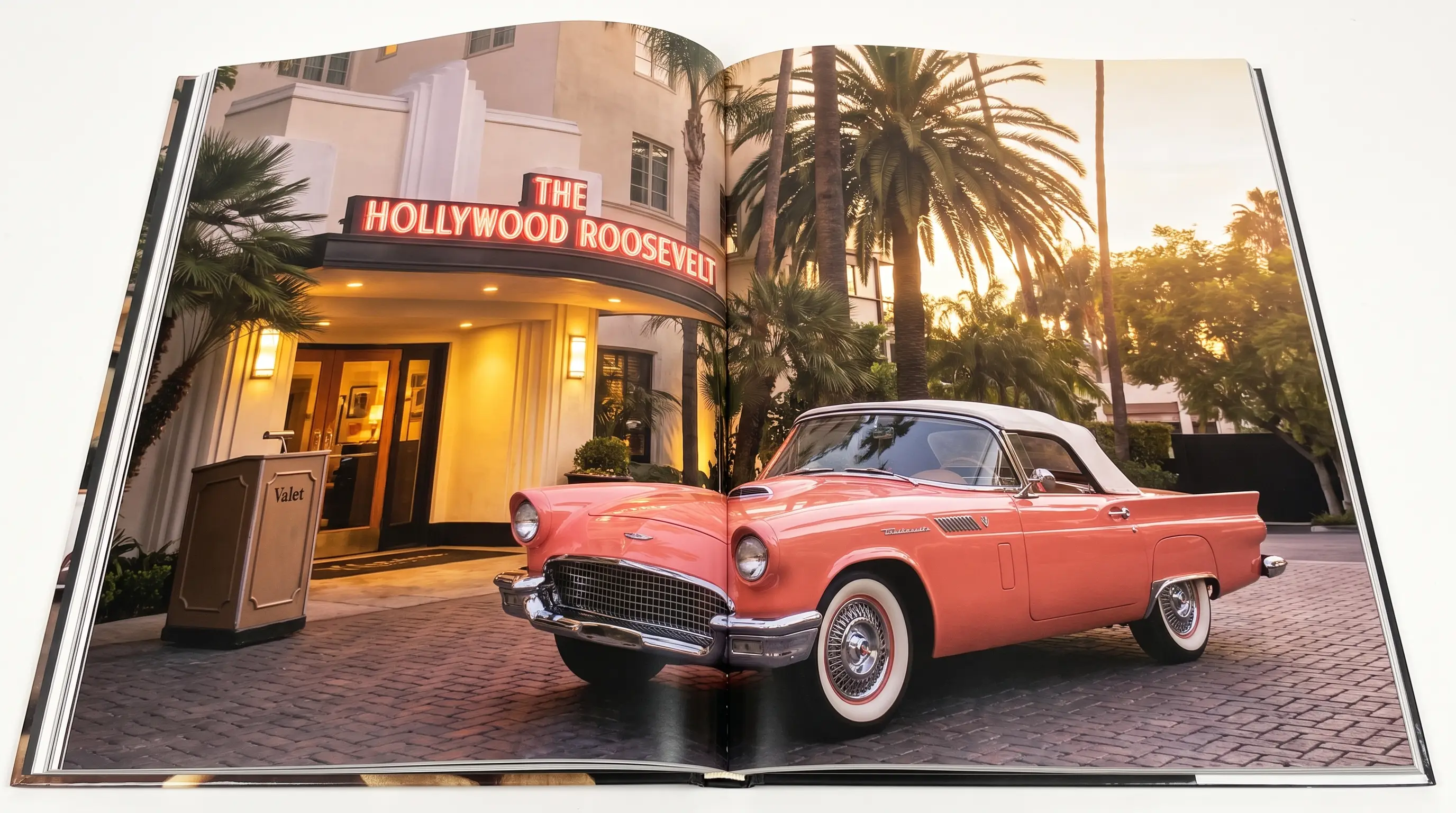
By 1956, Marilyn Monroe was arguably the most photographed woman in America, and the car she chose to be photographed in mattered. The Marilyn Monroe Thunderbird connection is one of the more durable pieces of celebrity car lore from the decade, and unlike a lot of Hollywood ownership stories that get exaggerated with retelling, this one holds up reasonably well against the available record. She owned a Thunderbird from the model's first full production year, a car that fit her public image with an ease that few pairings of star and automobile manage.
Why the two-seater suited her image
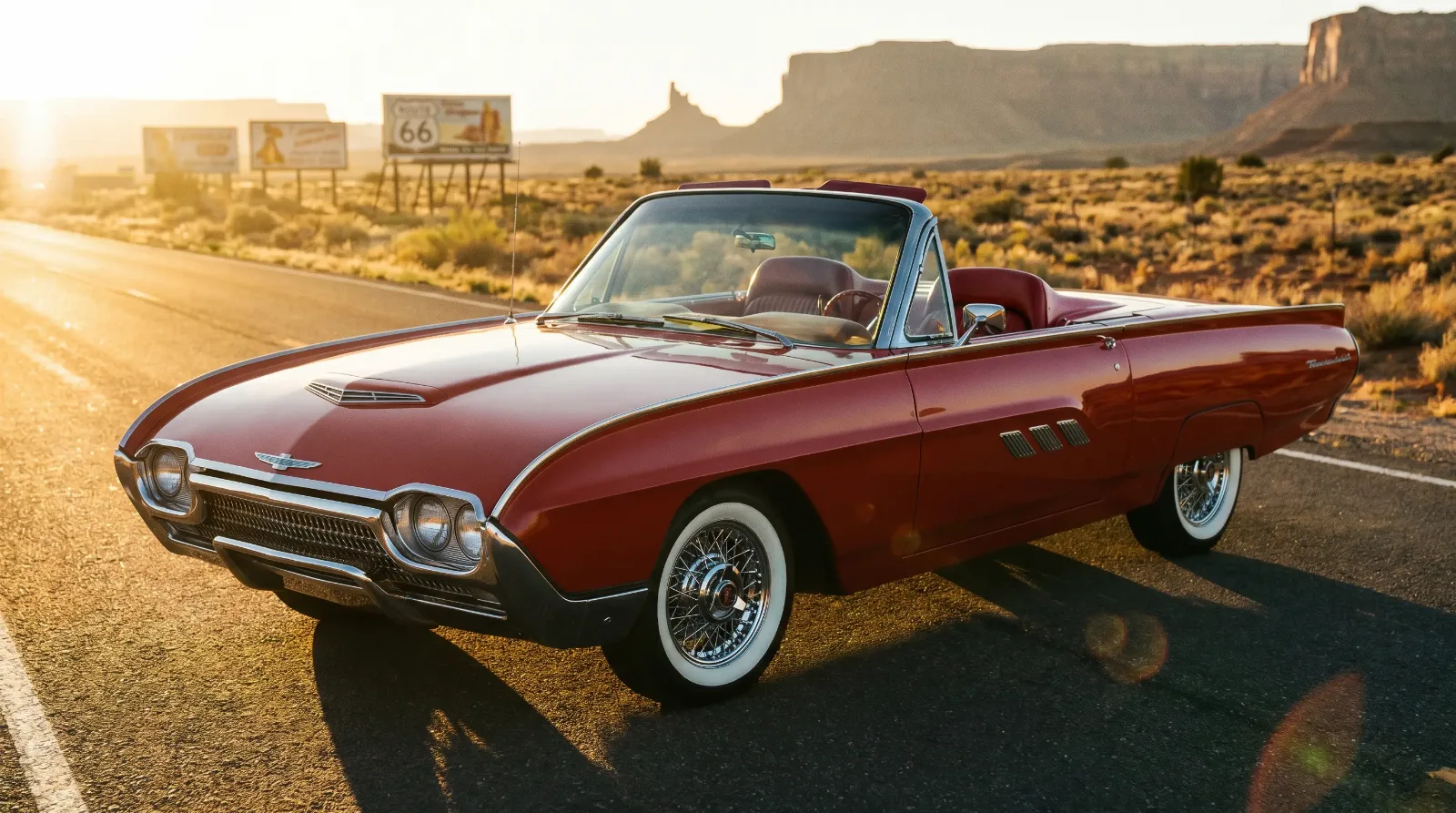
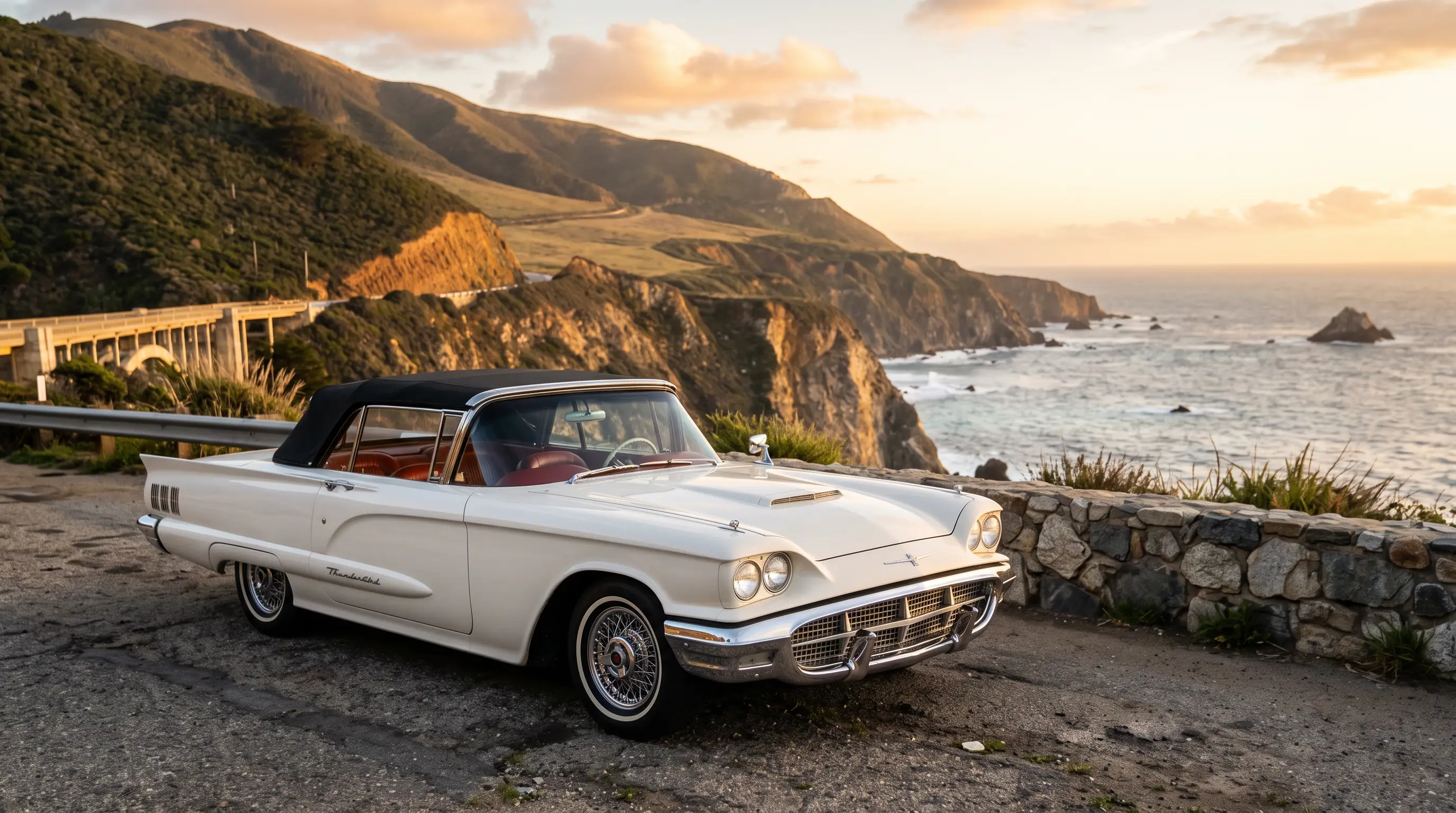
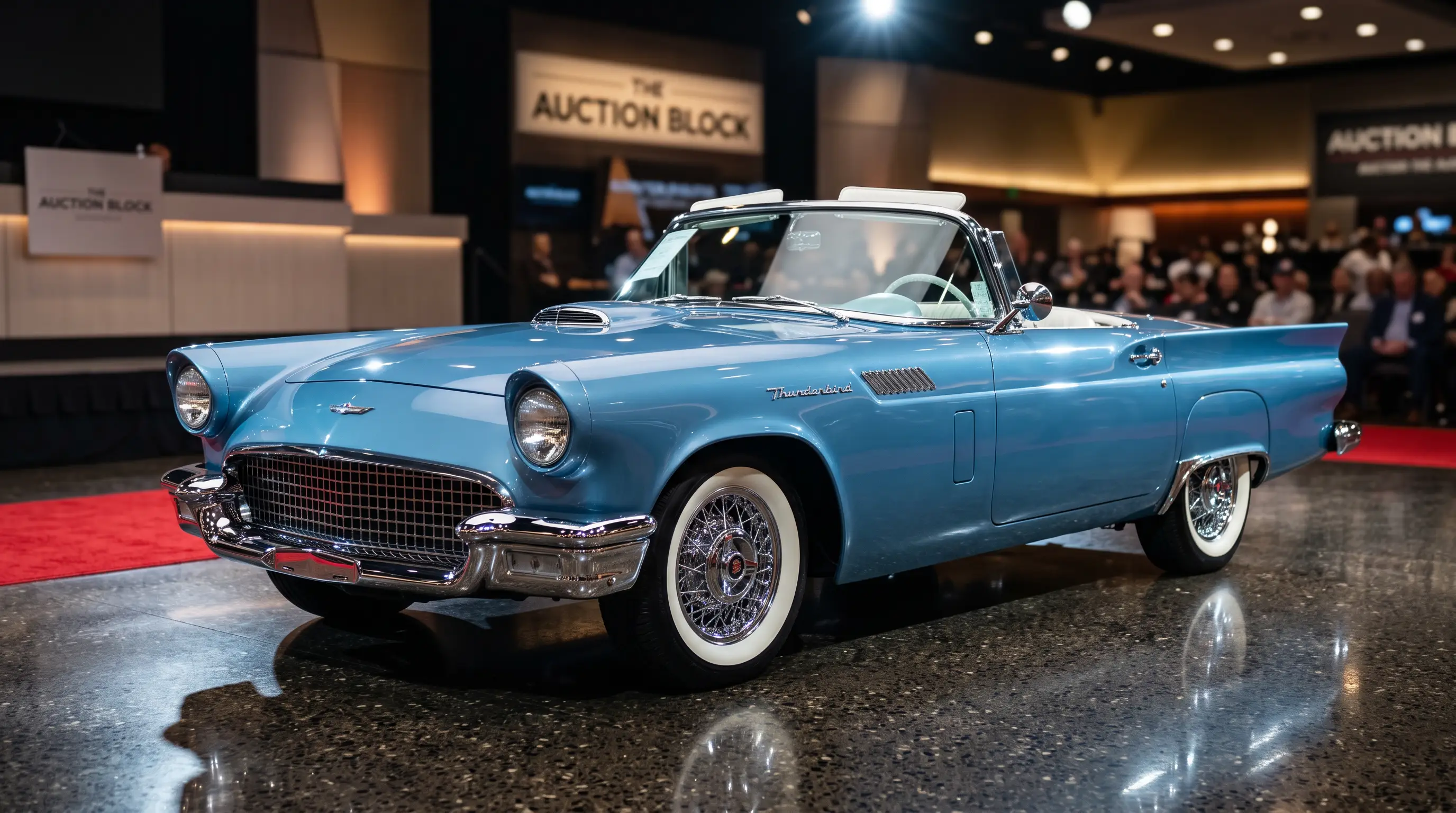
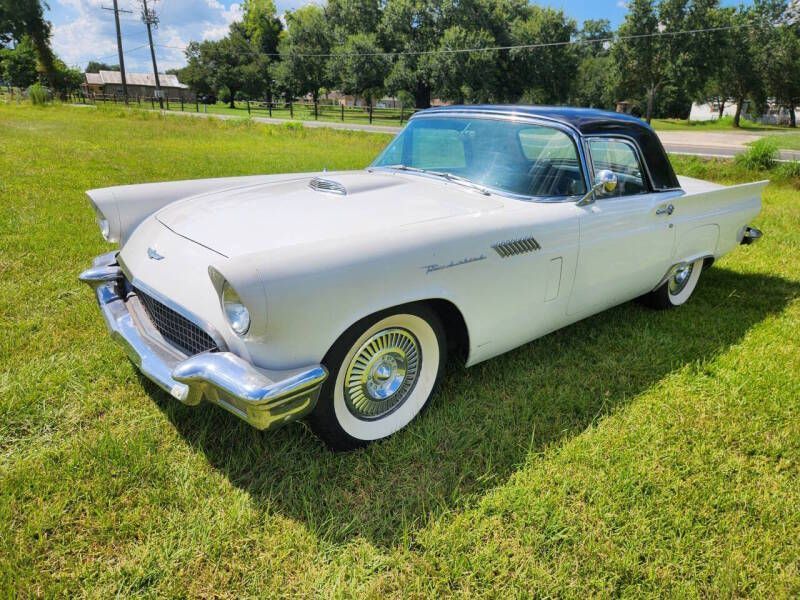
The 1956 Thunderbird was, by design, a car for exactly the kind of attention Monroe attracted everywhere she went. It was small, expensive, and visually striking, a convertible with a detachable hardtop that photographed beautifully whether the top was up or down. Ford had built the car specifically to project glamour rather than practicality, and Monroe's public persona at the time was built on almost exactly the same formula: striking, a little unattainable, unmistakably modern. The pairing did not need explanation in period photographs. It simply looked correct in a way that a more mainstream sedan or a bulkier convertible would not have.
Her ownership came during a stretch when she was becoming one of the defining faces of American film, and photographers of the era found the car a useful prop precisely because it required no context. Readers already understood what a Thunderbird represented by 1956, thanks to a marketing push covered in more detail elsewhere in this magazine, so a photograph of Monroe beside one communicated status instantly, without a caption doing any of the work.
The timing lines up neatly with her career trajectory as well. By 1956 Monroe had already appeared in a string of major studio productions and was working to establish more creative control over her own image, a project that eventually led her to form an independent production company. A car like the Thunderbird fit that self-directed image-building effort well. It was not something a studio had dressed her in for a scene. It read, at least in the photographs that circulated, as a personal choice, which mattered to a star increasingly focused on being seen as more than a studio product.
Separating documented fact from decades of embellishment
Celebrity car ownership stories tend to accumulate detail over the decades the way any good piece of folklore does, and the Monroe Thunderbird story is no exception. Specific claims about exact colors, exact dates of purchase, or precise chains of subsequent ownership vary considerably between different retellings, and some of the more specific details repeated online cannot be traced back to a solid contemporary source. What can be said with reasonable confidence is that she was photographed with a Thunderbird from this era on multiple occasions and that the association between Monroe and the model became fixed in the public imagination during her lifetime, not invented retroactively by later marketing. One specific car has a documented paper trail: a Raven Black 1956 Thunderbird convertible that Monroe's business partner and photographer Milton Greene purchased from Westport Motors in Westport, Connecticut, on December 20, 1955, under her Marilyn Monroe Productions banner, then gave to her as a Christmas gift. That car later passed to John Strasberg, son of her acting coach Lee Strasberg, and eventually sold at a 2018 Julien's auction for roughly $490,000. Other specific claims about additional cars, exact dates, or subsequent chains of ownership should still be treated with appropriate caution until traced to a primary source.
This is a common problem with celebrity provenance generally, and it is worth naming plainly rather than glossing over for the sake of a cleaner story. Auction catalogs and dealer listings occasionally attach a famous name to a car with thinner documentation than the sale price would suggest, counting on buyers not to press too hard on the paper trail. A serious researcher, or a serious buyer, treats any celebrity ownership claim the same way regardless of how appealing the story is: worth pursuing, but worth verifying against period photographs, title records, or contemporary press coverage before it factors meaningfully into a purchase decision.
"The Monroe connection did more for Thunderbird glamour than any single ad campaign Ford ran that decade. Photographs travel further than brochures, and hers traveled about as far as a photograph could in 1956."
- Patrick Walsh
Part of a larger pattern of famous ownership
Monroe was not the only recognizable face drawn to the early Thunderbird, and her ownership fits into a broader pattern that continued across the car's entire production history, one explored more fully in ford thunderbird history history. What makes her case stand out from the wider list is simply the scale of her fame relative to nearly everyone else associated with the car during the classic era. Few owners, before or since, generated the sheer photographic volume that Monroe did during the years she was most visible in American culture, and that volume is a large part of why this particular ownership story outlasted so many others from the same period.
It is worth remembering, too, that Monroe's ownership predates almost every other celebrity Thunderbird connection that followed over the next two decades. She was not joining an established trend when she was photographed with hers. She was, in a real sense, helping establish it, at a moment when the two-seat car itself was barely a year or two into production and still building its own reputation. That order of events, an already-famous star adopting a brand-new, unproven model, is part of what gives her ownership story more staying power than later examples where a star simply bought into an already-established glamour car.
Why the story still resonates
There is also something worth noting about why this particular pairing endures when so many other celebrity car stories from the same decade have faded from memory entirely. Monroe's broader cultural footprint has only grown in the decades since her death, and any documented detail from her life, however small, tends to attract renewed attention with each passing generation of new fans discovering her films and photographs for the first time. The Thunderbird gets pulled along in that current, benefiting from an association that has aged better than almost anything else tied to her public image from that period.
Nearly seventy years later, the Marilyn Monroe Thunderbird story remains one of the most requested pieces of trivia among people researching the car's early history, and it continues to influence how collectors and auction houses talk about celebrity provenance generally. A documented or credibly rumored connection to a figure like Monroe still moves interest, and sometimes price, on cars from this era, a pattern worth comparing against other notable sales if you want to read a related story on the most expensive Thunderbirds ever brought to auction. For anyone drawn to the era her ownership helped define, it is worth taking a look at Thunderbirds for sale now to see how many of those original two-seat cars, or their later four-seat successors, remain available for a new owner today.
Sources and notes
- The cars of Marilyn Monroe, 60 years after her death - Hagerty Media
- Is Marilyn Monroe's '56 Ford Thunderbird worth $500,000? - Hagerty Media
- The Marilyn Monroe 1956 Ford Thunderbird - Julien's Auctions
- Ford Thunderbird (first generation) - Wikipedia
- Little Bird: The 1955-1957 Ford Thunderbird - Ate Up With Motor