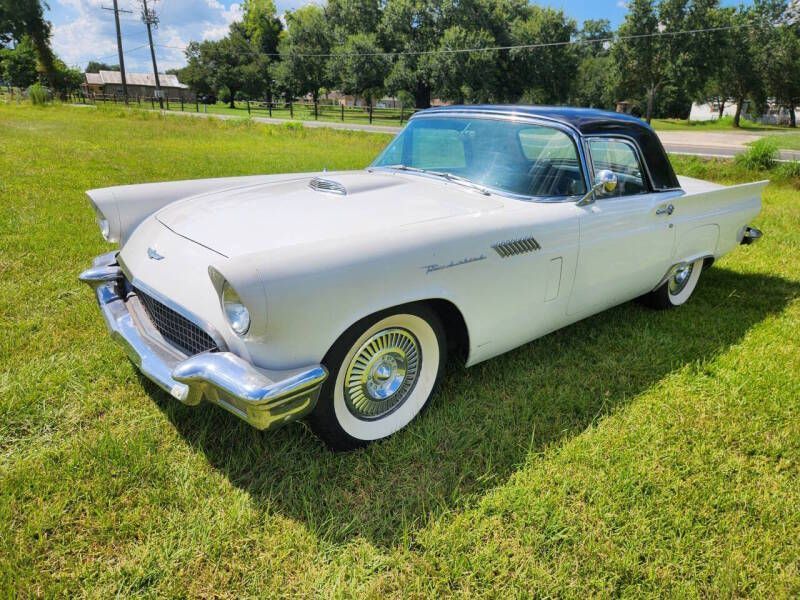
I met a man at a swap meet in 1994 who could tell you the trim code on a 1957 Thunderbird from thirty feet away, before he had read the badge, just from the shape of the reflection off the paint. He was not showing off. He had spent twenty years around a vintage Thunderbird club chapter, and that kind of knowledge just accumulates when you spend enough Saturday mornings under the same hoods with the same people. That is really what these clubs are, once you strip away the newsletters and the judging sheets. They are a place where knowledge like that gets passed down before it disappears with the person who has it.
How the clubs got started
Thunderbird-specific clubs began forming in earnest once the two-seat cars had aged enough to be considered collectible rather than merely used, roughly the late 1960s and into the seventies, right around the time the earliest examples were turning into something closer to antiques than daily transportation. Owners of the increasingly scarce 1955 through 1957 models found each other through car show circuits and classified ads in hobbyist magazines, comparing notes on parts sources that had already started drying up. What started as loose regional gatherings solidified over the following decade into organized national clubs with real structure: dues, newsletters, judging standards, regional chapters that met monthly whether the weather cooperated or not.
The timing mattered. Getting organized while original owners, dealership mechanics, and Ford engineers from the fifties and sixties were still around to answer questions meant these clubs captured firsthand knowledge that would have been lost within another generation. A lot of what collectors now consider settled fact about early Thunderbird production, obscure trim variations, running changes mid-model-year, dealer-installed options, came from those early club members doing the unglamorous work of interviewing people who had actually built or sold the cars.
I remember one member, gone now, who used to bring a battered spiral notebook to every meeting for a solid decade, transcribing whatever a visiting retired dealer or mechanic could remember about a specific production quirk. Nobody thought much of it at the time. Twenty years later, that notebook, eventually typed up and shared informally among a few chapters, became one of the more trusted references for a handful of obscure early running changes that never made it into any factory service manual. That is the unglamorous version of how a lot of this hobby's settled knowledge actually got built.
What a meeting actually looks like
Walk into a chapter meeting today and you will find less romance and more logistics than the swap meet stories suggest, at least at first. There is a business portion, treasury reports, upcoming show schedules, the occasional debate over judging criteria that can run longer than anyone intended. But give it twenty minutes and the real value of the club shows up in the side conversations. Someone is hunting a specific interior panel for a 1960 model and another member happens to know a supplier three states away who has one sitting on a shelf. Someone else is trying to date a car's original paint against a partial build sheet and three people at the table start comparing notes on how Ford's paint codes shifted mid-decade.
None of that gets written down officially most of the time. It just gets passed person to person, the way it always has in this hobby, and the club structure is really just a mechanism for making sure the right people end up in the same room often enough for that transfer to happen.
Newer members sometimes arrive expecting a strict hierarchy, the club veterans guarding their knowledge the way some hobbies work, and they are usually pleasantly surprised to find the opposite. Most longtime members are eager to talk, sometimes more eager than a newcomer expects, because sharing what they know is a large part of why they stay involved decades after buying their first car. The reputation for gatekeeping that some corners of the collector world have earned rarely applies here, at least not at the chapter level where most of the actual work gets done.
"Nobody joins a Thunderbird club for the newsletter. They join because the guy two chairs down knows something about your car that you cannot find written down anywhere, and he is happy to tell you over coffee."
- Wayne Coburn
Documentation as the real product
I have watched more than one restoration get saved from a costly mistake because someone pulled a decades-old registry entry that confirmed a car's original color code before the owner committed to repainting it something else entirely based on a faded memory or a mismatched swatch. That kind of quiet intervention rarely makes it into any official club history, but it happens constantly, chapter meeting after chapter meeting, and it is arguably worth more to the hobby than every trophy handed out at every judged show combined.
Here is the part that surprises people who assume clubs are mostly about show trophies. The lasting contribution of most vintage Thunderbird clubs is not the judging circuit at all. It is the paper trail: registries, technical bulletins, oral history interviews with former Ford employees conducted decades ago before those sources were gone for good. That documentation now underpins a huge share of what current owners, restorers, and appraisers rely on when they are trying to verify whether a car is original, correctly restored, or quietly modified in ways that affect its value. A judging trophy fades from memory within a few years. A well-kept registry entry outlives the car's next three owners.
That broader documentation effort connects to the Thunderbird's cultural story in general, covered at more length in the full story of how the car built its reputation across two and a half decades of production.
Why it still matters to join one
If you own a classic Thunderbird, or you are thinking about buying one, the club world is worth taking seriously even if you never show up to a single judged event. The people who know the most about your specific car, its quirks, its correct parts, its history within a particular region, are more likely to be sitting in a folding chair at a chapter meeting than posting on a forum. That kind of knowledge does not transfer well through a screen. It transfers over a shared table, usually with coffee involved, and usually from someone who has been doing this a lot longer than you have. If you are still shopping for the car itself, you can browse classic Thunderbird for sale listings in the meantime, but do yourself a favor and find your local club before you buy. It will save you money and mistakes in roughly equal measure.