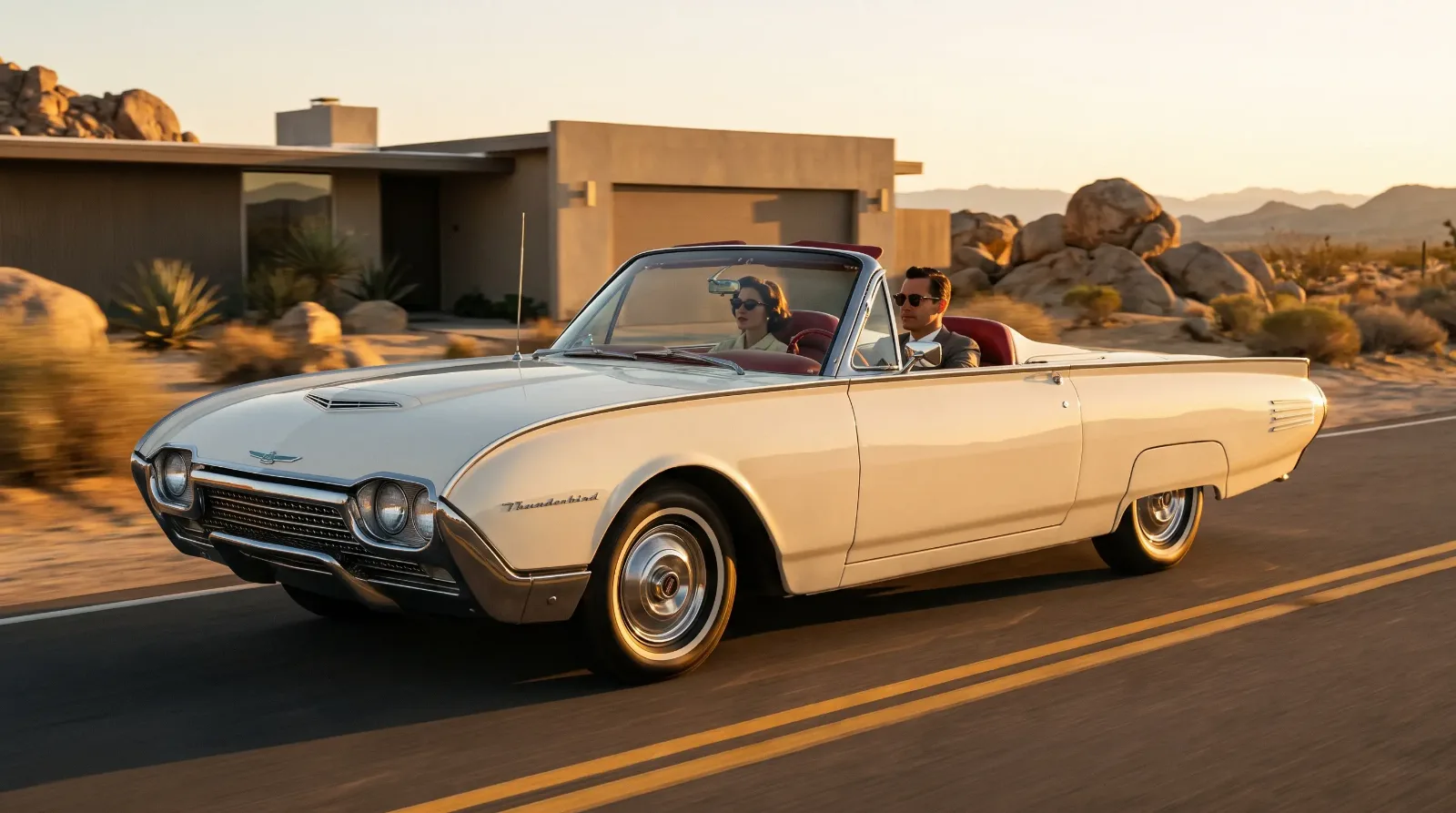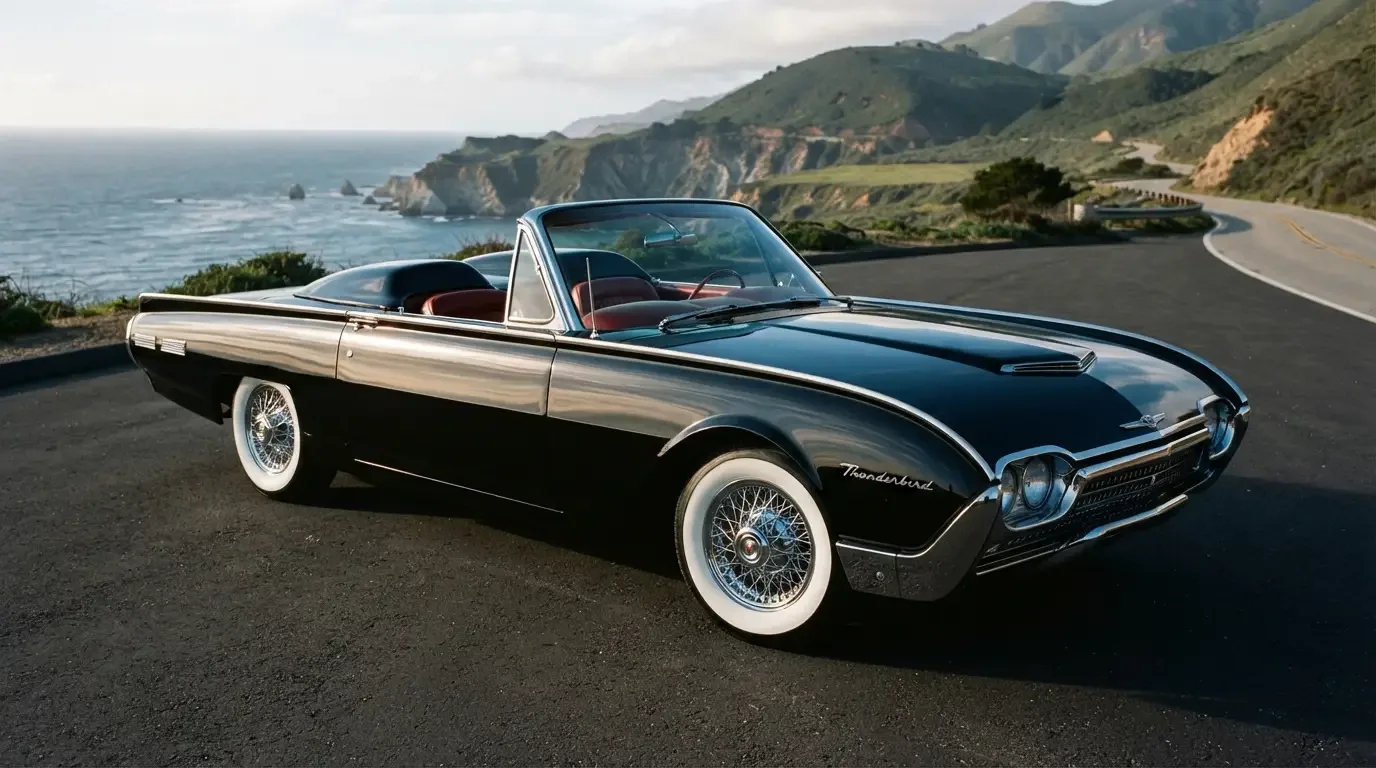
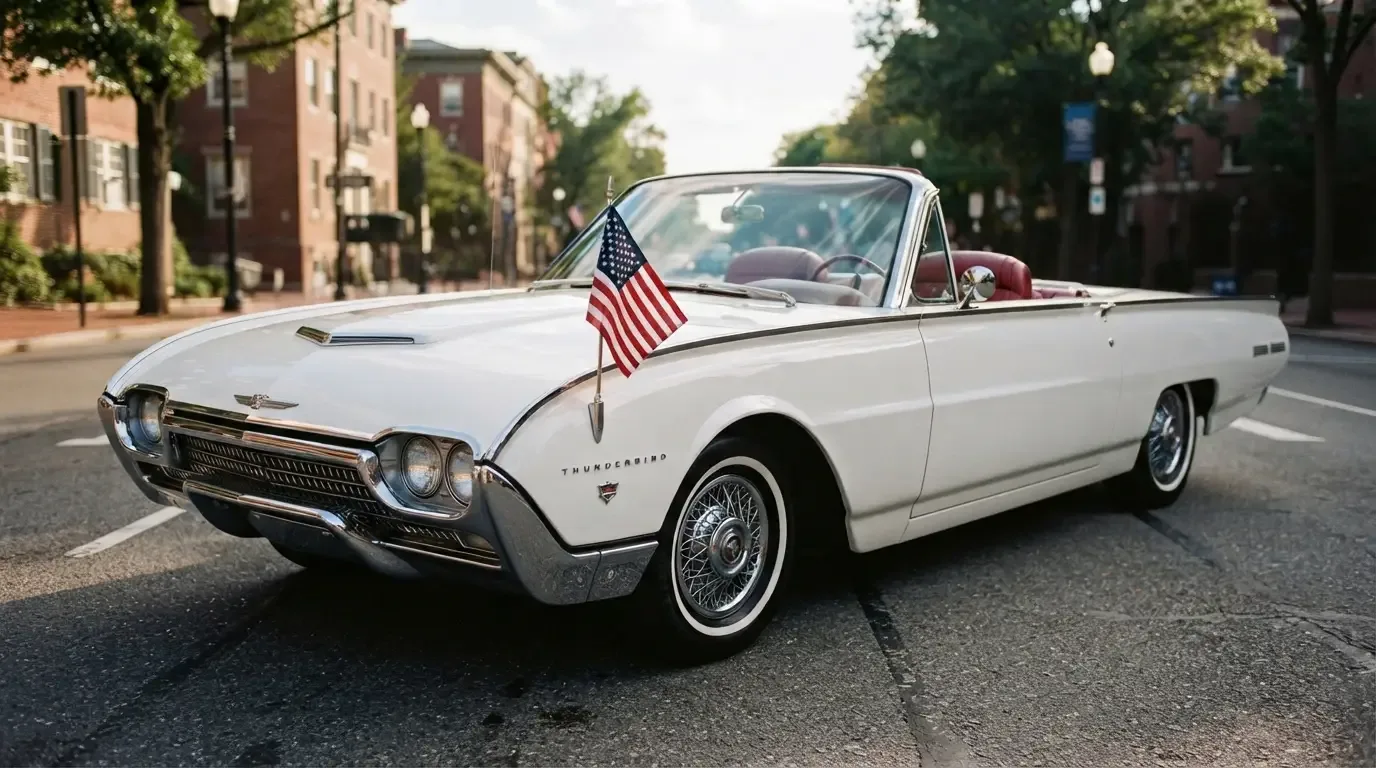
On January 20, 1961, a fleet of white Ford Thunderbirds rolled through Washington D.C. carrying dignitaries to John F. Kennedy's inauguration, and the image did more for the newly redesigned Bullet Bird than any print advertisement Ford could have bought. The 1961 Thunderbird Kennedy inaugural connection was not an accident. Ford arranged it deliberately, loaning a fleet of specially trimmed Thunderbirds to the inaugural committee at a moment when the brand-new styling needed exactly this kind of visibility to prove it belonged among the country's most photographed events.
Why Ford wanted the inauguration
Ford had just launched the completely redesigned 1961 Thunderbird a few months earlier, moving away from the boxier Square Bird toward the pointed, circular-taillight shape that collectors now call the Bullet Bird. The company needed a public stage that would put the new design in front of the entire country at once, and a presidential inauguration delivered exactly that kind of attention. Automakers had courted political visibility before, but the Kennedy inauguration arrived at a moment when television coverage of Washington ceremonies was becoming genuinely national in scope, which made the opportunity far more valuable than it would have been even five years earlier.
Ford supplied 50 specially trimmed 1961 Thunderbird convertibles for the occasion, finished in Mahogany Metallic paint with white convertible tops and light pearl beige vinyl interiors, along with special badges and insignia marking them as part of the official inaugural fleet. The cars carried members of the inaugural parade and official party, including foreign dignitaries and members of the Kennedy family, through the streets of the capital, visible to the crowds lining the route and to the television audience watching from home, a combination no single dealership promotion could ever match.
The cultural moment behind the choice
Kennedy's inauguration carried a specific symbolic weight that lined up neatly with what Ford was trying to say about the redesigned Thunderbird. The new administration presented itself as youthful, forward-looking, and tied to the era's fascination with space exploration and technological progress. The Bullet Bird's entire design language, the pointed nose, the missile-inspired taillights, the unapologetically modern unibody structure, spoke the same visual language as the political moment surrounding it. Whether Ford's marketing department planned that alignment with full intention or simply got lucky with timing, the effect on public perception was the same either way.
What happened to the inaugural cars
Tracking the exact fate of the individual Thunderbirds used in the 1961 inaugural fleet is difficult work, the kind of research project that keeps marque historians occupied for years. Most inaugural-service vehicles from this era were returned to Ford or sold through normal dealer channels afterward, often without documentation connecting them back to the ceremony itself. A handful of cars with credible provenance tying them to the inauguration have surfaced at auction over the decades, and when they do, that documented history adds a meaningful premium beyond what a standard 1961 convertible would command. Buyers considering any car marketed with inaugural provenance should demand real paperwork, photographs, or period press coverage rather than family lore, since the story is compelling enough that it invites exaggeration.
Ford was not alone among manufacturers courting political visibility during this period, though the Thunderbird's involvement stands out because the timing lined up so precisely with the model's own redesign. Other inaugurations before and after 1961 saw various manufacturers supply vehicles for parade duty, official transportation, or press events, and most of those arrangements faded from public memory within a few years. The Thunderbird's case is different mainly because the styling itself carried enough symbolic weight, jet-age and forward-looking, that the pairing with a young, forward-looking administration stuck in the public imagination longer than a typical corporate loan of vehicles usually would.
How this fits the bigger Bullet Bird picture
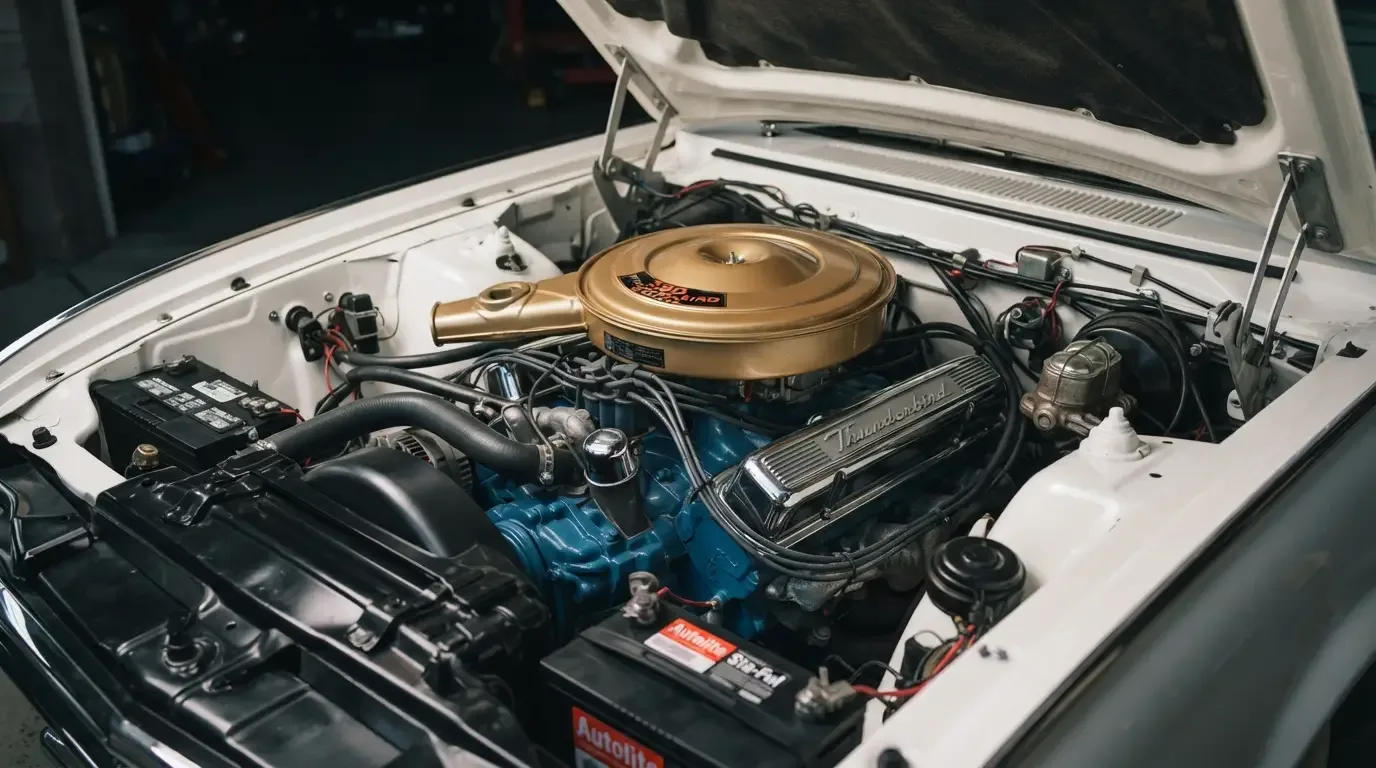
The inaugural fleet is really a footnote within a much larger 1961 story, one that includes the complete unibody redesign, the debut of the swing-away steering wheel, and the single-engine lineup built around the 390 cubic inch V8. Readers who want the full context behind why the 1961 Thunderbird looked and drove the way it did should read the background on the redesign itself before diving deeper into moments like the inauguration appearance. That 390 engine deserves its own attention too, since it was the only powerplant Ford offered that year, and our piece on the engine itself is worth a look too for anyone trying to understand what powered these cars.
"Ford did not need to buy an ad to tell America the Thunderbird had changed. They just needed the cameras pointed at Pennsylvania Avenue for one afternoon."
- Tom Ramirez
Documentation matters more with a car tied to a famous event than almost anywhere else in the hobby. Ford's own factory records rarely note special-use assignments like inaugural service directly, which means most of what collectors know about specific inaugural cars comes from period newspaper photography, dealer correspondence, and the recollections of people who worked the event. This is painstaking research, and it means a claimed inaugural Thunderbird without a documented paper trail should be treated skeptically no matter how good the story sounds at a car show.
For collectors more interested in owning a well-documented example of the 1961 generation generally, without needing the added complexity of inaugural provenance, the current market offers plenty of options. Buyers can shop classic Thunderbird listings to see what genuine, clearly documented cars from this era are trading for right now, which gives a useful baseline before chasing anything with a more elaborate backstory attached.
A small moment, a lasting image
The Kennedy inaugural fleet lasted a single afternoon in the life of the 1961 Thunderbird, but the photographs from that day have outlived nearly every contemporary advertisement Ford ran for the car. It remains one of the clearest examples in American automotive history of a design and a political moment arriving at exactly the right time to reinforce each other, and it is a large part of why the Bullet Bird generation still carries such strong cultural recognition more than sixty years later.
Marque historians still return to this single, brief episode when explaining why the 1961 Thunderbird occupies such an outsized place in American car culture relative to its actual sales figures. Plenty of 1961 vehicles sold in larger numbers and vanished from public memory almost entirely. The Thunderbird's association with a single, widely photographed afternoon in Washington helped cement its place in the broader cultural record in a way that raw production numbers alone never could have managed, and that lasting visibility is part of why the car remains so collectible today.
Sources and notes
- The Iconic Thunderbird Convertibles of JFK's 1961 Inaugural Parade - Classic Industries
- 50 Special Topless Ford Thunderbirds for JFK - Gary Crossley Ford
- Ford Thunderbird (third generation) - Wikipedia
- JFK's Ultra-Limited-Edition Thunderbird Convertibles - Tops Online
- The West Wing Wheels: John F. Kennedy - The News Wheel