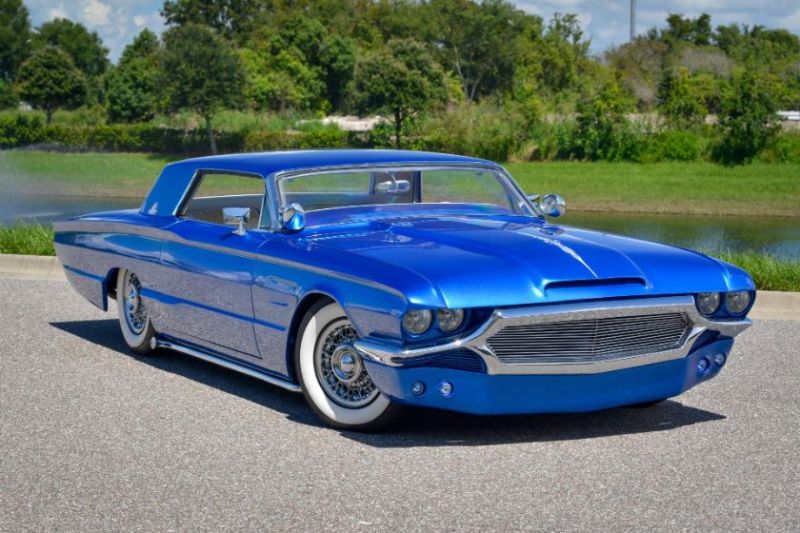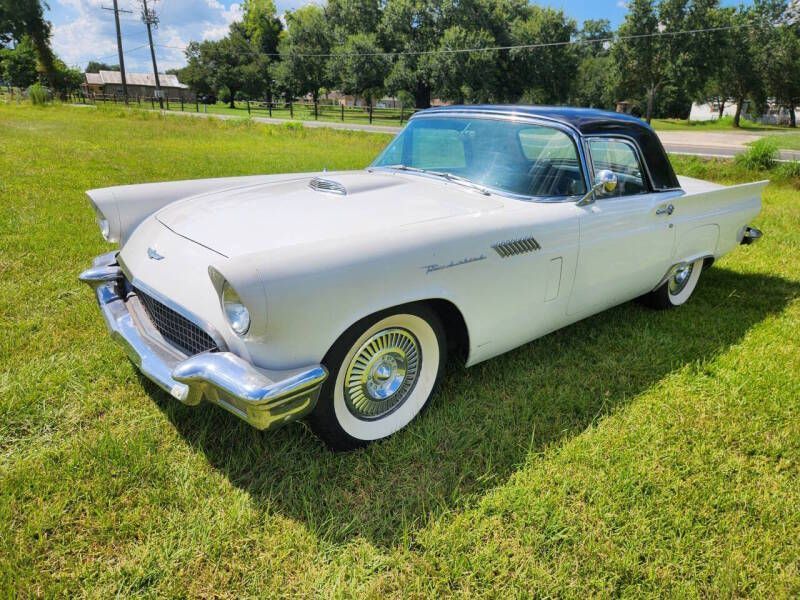
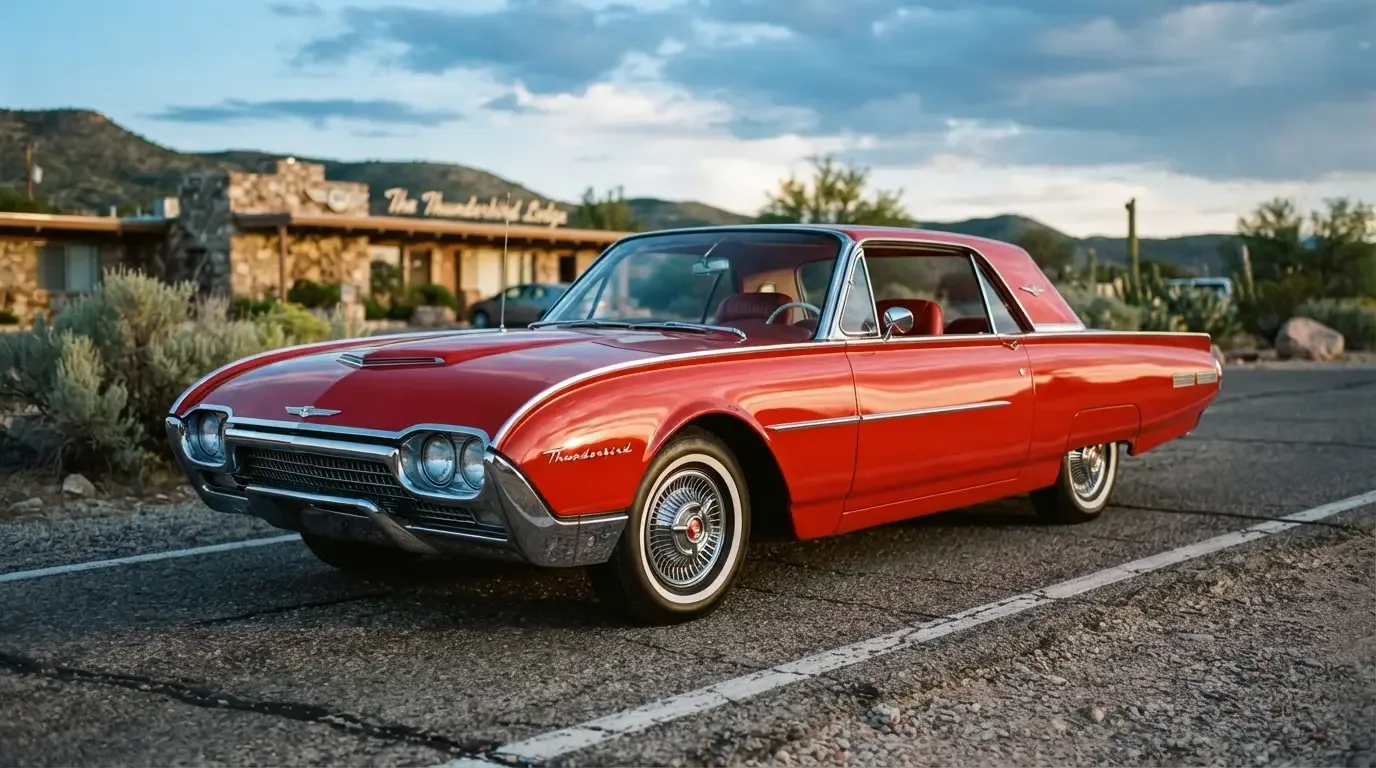
My grandmother kept one photograph from 1961 in a drawer she rarely opened, a faded color print of her and my grandfather standing beside a Thunderbird the color of a robin's egg on a spring morning. She could never remember the paint code, only that the dealer had called it something poetic and that it made the car look, in her words, like it belonged to the sky rather than the road. That is the thing about 1961 Thunderbird colors. They were never just paint. They were a mood Ford was selling alongside the horsepower and the swing-away steering wheel, and six decades later people still remember them the way my grandmother did, as a feeling more than a formula.
A palette built for a jet age
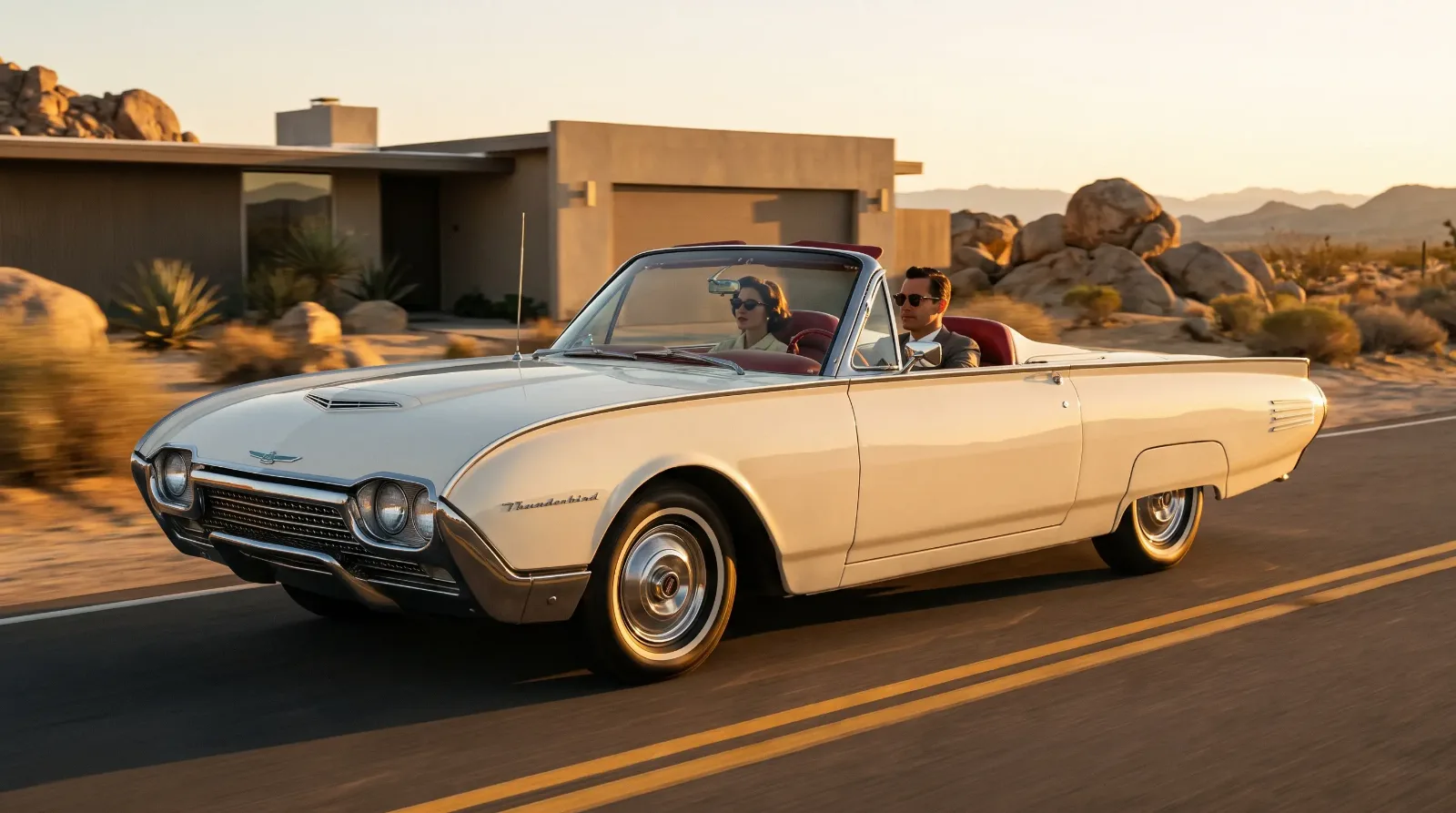
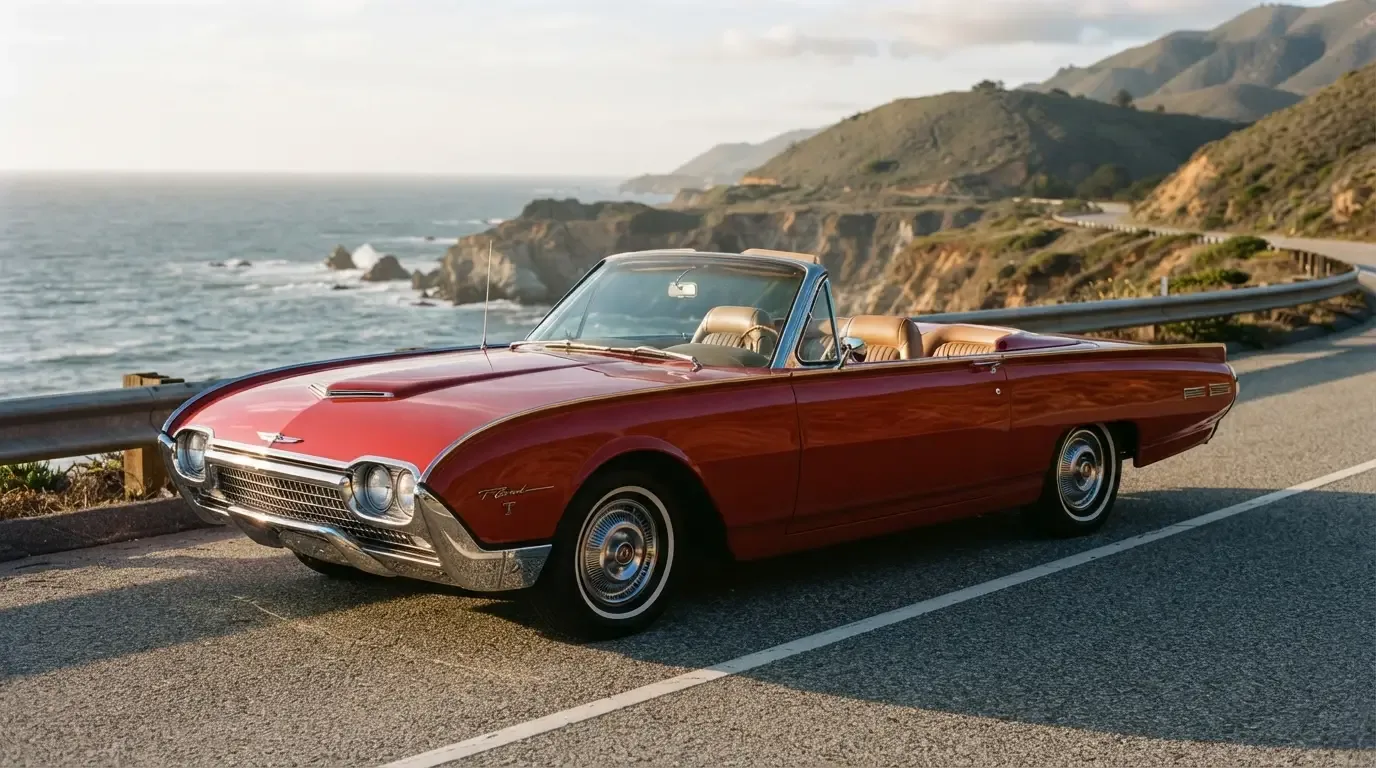
Ford's color offerings for the 1961 Thunderbird leaned into the same forward-looking spirit that shaped the car's pointed, missile-inspired body. Corinthian White sat at one end of the range, clean and formal, the color most often seen in period advertising because it photographed so well against the car's sharp lines. At the other end sat deeper, more saturated tones. Rangoon Red carried genuine presence on the road, a color that made the convertible's chrome trim look almost restrained by comparison. Between those extremes sat a run of blues and greens that period buyers gravitated toward for a car marketed as much on sophistication as on speed.
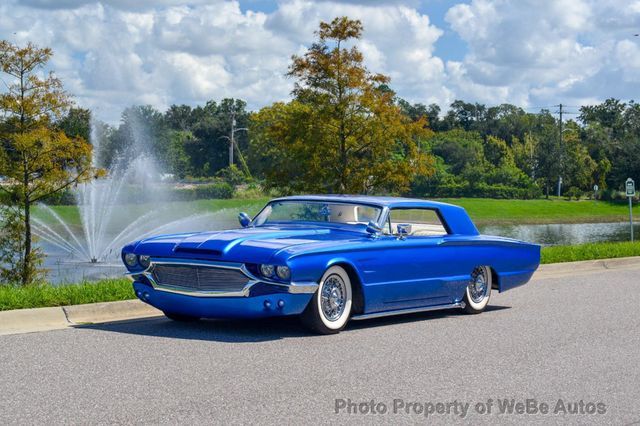
Chalfonte Blue in particular became one of the defining colors of this generation among collectors today, a deep, almost nautical blue that pairs beautifully with the car's rounded surfacing in a way flatter colors do not. Interior color combinations followed suit, coordinated rather than left to chance, so a buyer choosing an exterior color was also choosing a full sensory experience inside the cabin, down to the color of the dashboard padding and the door panel inserts.
What the colors meant to the people who chose them
A color choice in 1961 said something about the buyer that a badge or an engine code never could. This was still an era when picking up a new car from the dealership was an event, when a spouse or a friend came along for the drive home, and the color a family chose often stayed attached to their memory of that day for the rest of their lives. I have talked to more than one owner over the years who could describe, without hesitation, the exact color their father or grandfather drove home in a Thunderbird decades ago, long after every other detail of the transaction had faded.
There is something quietly moving about how much weight a paint chip carried for people who were not thinking about resale value or investment potential, only about what color felt right pulling into their own driveway. A Thunderbird in the right shade of blue or red became, for a lot of families, the backdrop of an anniversary, a graduation, a first long drive together. The car remembers none of that. The people who chose the color do, for as long as they are around to remember it.
The names Ford gave these colors
Ford's naming conventions for 1961 leaned toward evocation rather than description. Nobody at the dealership needed to know the pigment formula behind Rangoon Red or Chalfonte Blue. They needed to feel something when the salesman read the name off the order sheet, and Ford's marketing department clearly understood that a name doing emotional work sold more cars than a name doing chemical work. Diamond Blue, a lighter, cooler tone than Corsair, offered buyers who wanted the same nautical family of colors without the depth of the darker option. Corinthian White anchored the light end of the order sheet on its own, clean and formal enough that a period buyer choosing it was choosing a feeling as much as a visible color.
Two-tone treatments existed on some Ford products of the era but were used sparingly on the Thunderbird itself, which tended toward a single, confident body color rather than a contrast scheme. That restraint fits the broader design philosophy of this generation. The Bullet Bird's surfacing was dramatic enough on its own. A single well-chosen color let the shape carry the visual weight without competing brightwork or a second color fighting for attention along the beltline.
Finding an honest color today
Paint fades. Repaints happen, sometimes well and sometimes carelessly, and a Thunderbird wearing a color that was never offered by Ford in 1961 is a more common sight than most casual shoppers realize. The trim tag on a surviving car records the original paint code, and matching that code against the car's actual finish is the simplest way to confirm whether what you are looking at is the color the original buyer chose or something applied later by an owner chasing a personal preference rather than accuracy.
For readers who want our complete history of how this generation of Thunderbird came together, including the styling decisions that made these colors sing the way they do on the actual body, that piece fills in the mechanical and design context this one leaves aside. Color is only part of the story, but it is the part most people remember first, and often the part they remember longest.
"Ask an owner why they chose their car's color and you rarely get a practical answer. You get a memory instead, something about a person or a moment the color still carries with it."
- Nora Beckett
A color chosen carefully now carries forward
Buyers shopping today who care about getting the color right are not being precious about it. They are preserving something specific about what this car was meant to be in 1961, a rolling piece of that era's optimism rendered in lacquer rather than words. A Chalfonte Blue Thunderbird sitting in a driveway now looks exactly as deliberate as it did the day someone chose it off a dealer's color chart, assuming it has been kept honest.
Anyone who wants to browse classic Thunderbird listings with an eye toward originality should ask sellers directly whether the current color matches the trim tag, and should not assume a striking repaint is necessarily a period-correct one. The right color, worn honestly, is a small thing that carries an outsized amount of meaning on a car built to be remembered as much for how it looked as for how it drove. My grandmother never needed the paint code. She just needed to remember standing next to that car on a morning that felt, for a little while, like the future had arrived early, and that memory has outlasted every other detail from that year of her life.
Sources and notes
- PaintScratch: 1961 Ford Thunderbird Touch Up Paint, OEM Colors
- PaintRef.com: 1961 Ford Color Codes, Thunderbird Paint Cross-Reference
- Automotive Mileposts: 1961 Ford Thunderbird Paint Codes
- Eastwood: 1961 Ford Thunderbird Paint by Colors and Codes
- Mac's Motor City Garage: Bullet Birds, The 1961-63 Ford Thunderbirds
- Wikipedia: Ford Thunderbird (third generation)