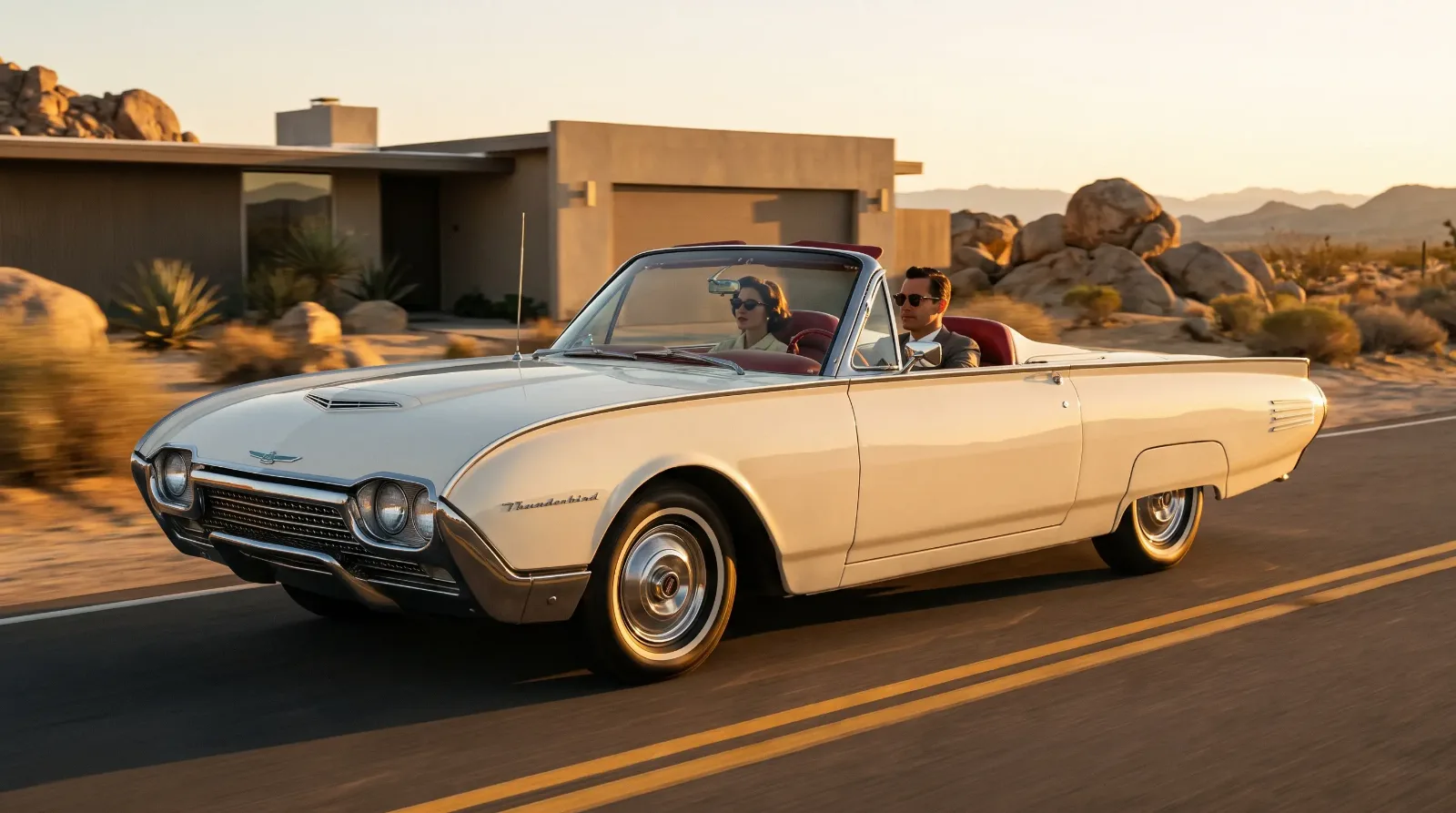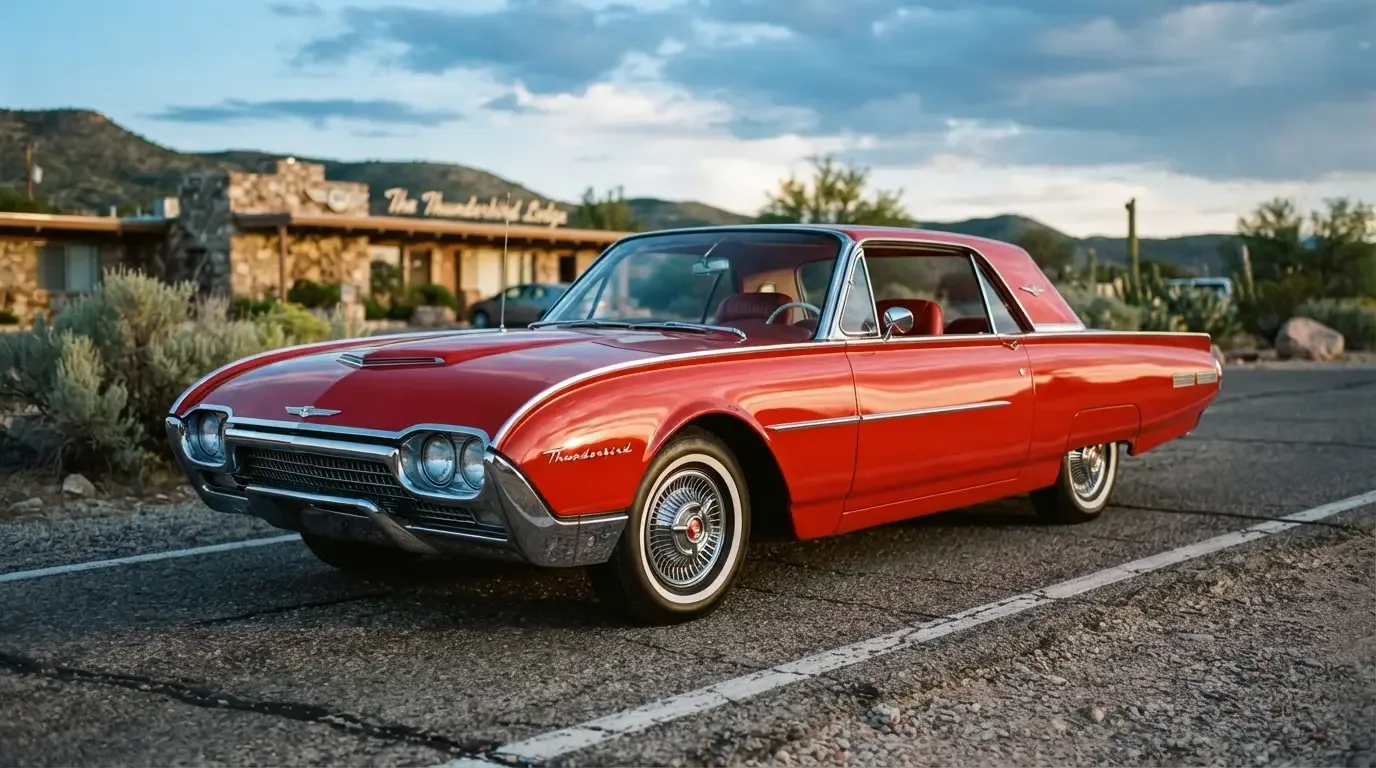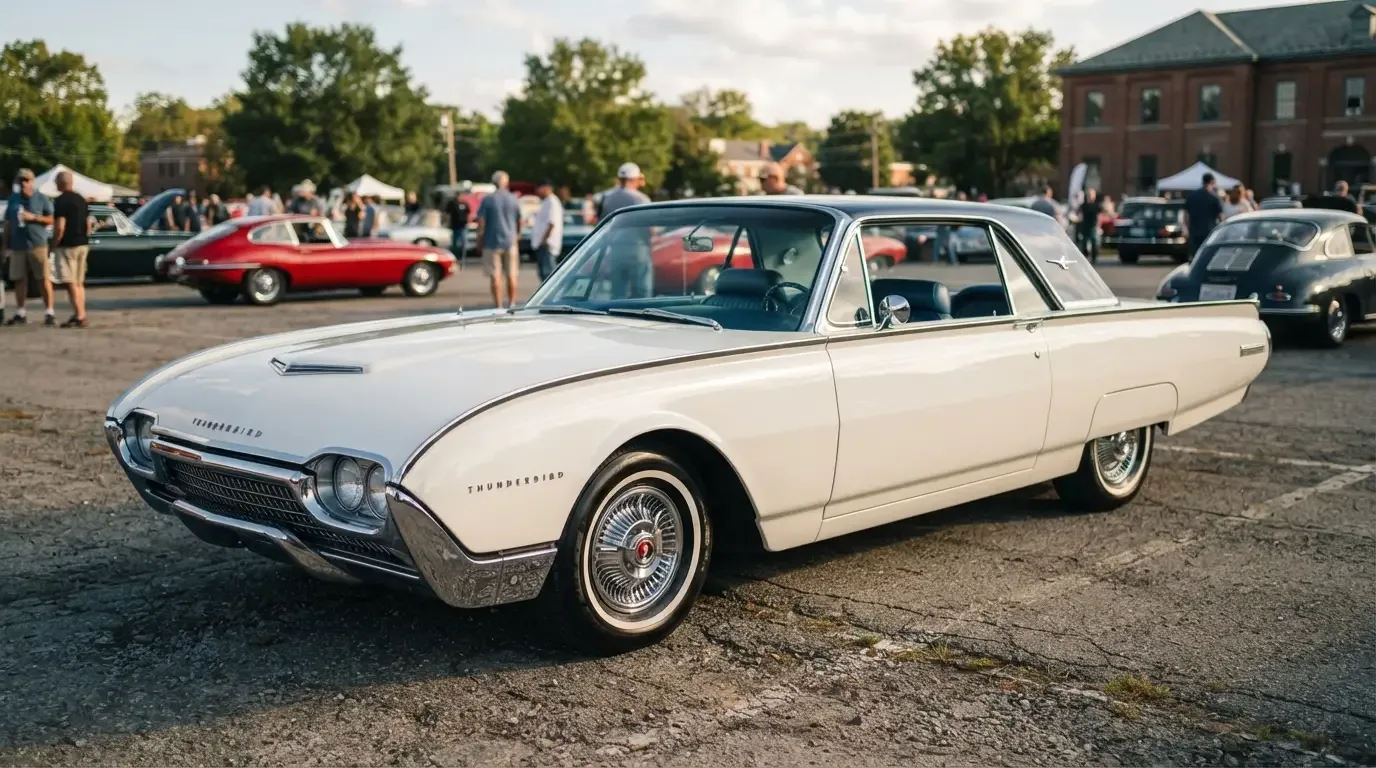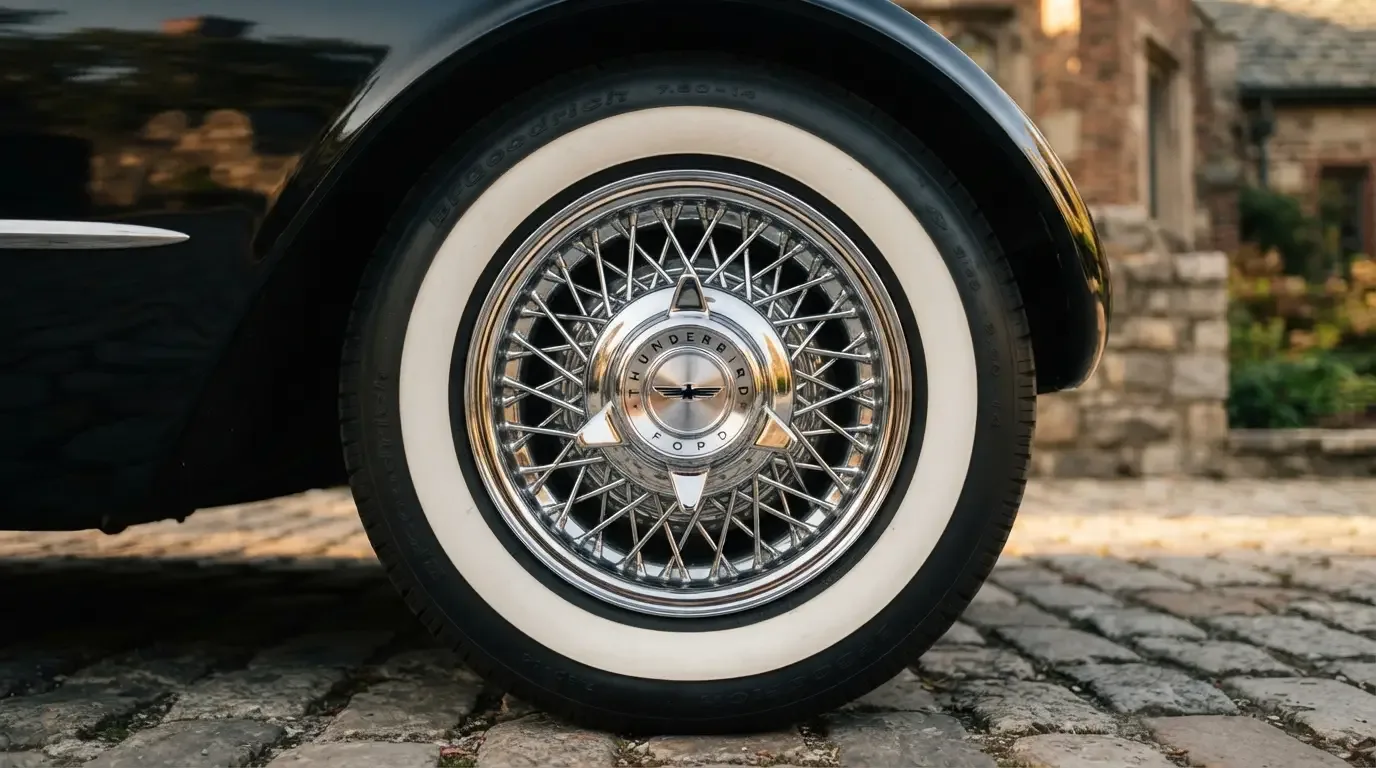
There is a specific sound a wire wheel makes rolling slowly across pavement that a stamped steel wheel never quite replicates, a faint metallic hum from dozens of thin spokes doing the structural work that a single disc of steel does alone. Stand at a car show near a Sports Roadster and you hear it before you see the car pull in. That sound, and the look that produces it, belongs to the Kelsey-Hayes wire wheels Ford fitted to its rarest early-1960s Thunderbird variant, and the thunderbird kelsey hayes wire wheels story is really a story about a company betting that a small number of buyers wanted their personal luxury coupe to look like it had come straight off a European road course.
Why Ford reached for wire wheels at all
By 1962, the Thunderbird had spent several generations establishing itself as a personal luxury car rather than a sports car, and the Sports Roadster package was Ford's attempt to reclaim some of that earlier sporting identity without abandoning the comfort buyers expected. The fiberglass tonneau cover over the rear seat got most of the visual attention, transforming the convertible into something closer to a two-seater in silhouette, but the wire wheels did just as much work reinforcing that message. Nothing about a standard Thunderbird's steel wheels and hubcaps said "sports car." Kelsey-Hayes wires, borrowed conceptually from the same tradition that shaped MG and Jaguar wheels of the period, said it immediately.
Kelsey-Hayes had been supplying wire wheel technology to American manufacturers for years by the time Ford specified them for the Sports Roadster, and the engineering behind them was genuinely different from a styled steel wheel. Each wheel used dozens of individual spokes under real tension, laced between a center hub and an outer rim, a design that distributes load in a way a solid wheel does not. They required a knock-off style hub in Ford's application, adding a further layer of mechanical theater to a car that was already leaning hard into a sporting persona.
What it actually took to keep them true
Wire wheels are not a fit-and-forget component the way a steel wheel largely is. Spoke tension needs periodic checking, because a wheel with loose spokes develops a wobble long before it becomes dangerous, and that wobble is the first sign owners typically notice something has shifted. Ford's dealers in the early 1960s were not universally equipped to service these wheels the way a specialist wire wheel shop was, which meant Sports Roadster owners who wanted their wheels kept in proper tension sometimes had to look outside the dealer network entirely.
That maintenance reality has followed these wheels into the collector era. A Sports Roadster today with its original Kelsey-Hayes wheels still true and correctly tensioned represents real ongoing care, not a set-and-forget restoration. Owners who understand what they have tend to treat wheel maintenance as a recurring line item rather than a one-time expense, because the alternative is a wheel that slowly degrades until it needs a full respoke, a job that requires a specialist and is not cheap when done properly.
The look that still turns heads at shows
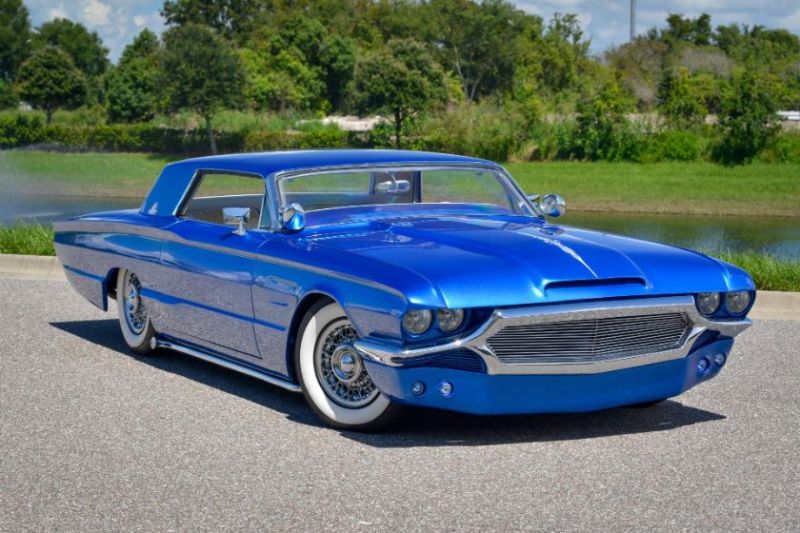
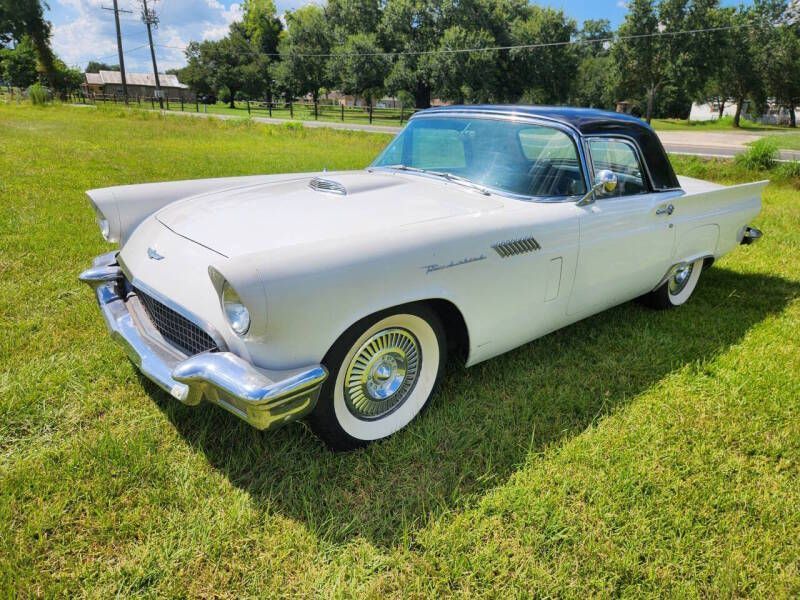
Park a Sports Roadster next to a standard Thunderbird hardtop from the same model year and the wire wheels do more visual work than almost any other single component on the car. They catch light differently, they read as delicate against the Bullet Bird's heavy, rounded body, and they signal to anyone who knows what they are looking at that this particular car represents the top of the range rather than a standard-issue example. That contrast, delicate wheels against a substantial body, is part of why the Sports Roadster photographs so well and why it draws a crowd at concours events decades after Ford stopped building them.
For the fuller 1961 ford thunderbird history that explains where this generation's whole design language came from, the wire wheels make a lot more sense in context. Ford was building a car defined by its pointed, missile-inspired body, and the Sports Roadster package pushed that same forward-looking attitude into the mechanical details, not just the sheet metal.
"You can tell a Sports Roadster from fifty yards just by how the wheels move light around as the car rolls. That's not an accident. That's Ford deciding this particular Thunderbird needed to look fast standing still."
- Patrick Walsh
The rest of the Sports Roadster package
The wire wheels never traveled alone. Ford bundled them with the fiberglass tonneau cover as a single option package, meaning a genuine Sports Roadster should carry both features together rather than one without the other. That bundling matters for anyone trying to sort an authentic Sports Roadster from a standard convertible that has had wire wheels added later by an owner chasing the look without the full package. The tonneau cover itself required its own mounting hardware and a specific set of headrest fairings built into its shape, details that are far more difficult to fake convincingly than a set of wheels, which makes the tonneau a useful cross-check when verifying a car's claimed identity.
Interior appointments on the Sports Roadster stayed largely shared with the standard convertible, which tells you something about where Ford focused its investment for this package. The company was not building a stripped-down sports car cabin to match the exterior theatrics. It was layering a sporting costume, wheels and tonneau, over the same comfortable, well-trimmed cabin every other Thunderbird buyer got, which is a very Thunderbird way of approaching the idea of a sports car in the first place. The result satisfied buyers who wanted the visual statement without giving up any of the comfort the nameplate had built its reputation on.
What this means for buyers today
Original Kelsey-Hayes wire wheels in good, true condition on a documented Sports Roadster carry real weight in how the car is valued, because reproduction wire wheels exist and are considerably more common on the market than genuine original sets that have survived six decades of use. A buyer evaluating a Sports Roadster should ask specifically whether the wheels are original to the car or a later replacement set, since both look similar in photographs but carry very different implications for the car's overall authenticity and value.
For readers curious how these details translate into actual market numbers, a related story covers what collectors are paying for well-documented examples of this generation today. And for anyone ready to start looking in person, Thunderbirds for sale now is a reasonable place to begin, provided you go in already knowing what to ask the seller about the wheels before you ask about anything else.
Sources and notes
- Curbside Classic: 1962 Ford Thunderbird, Let's Talk About the Sports Roadster
- HotCars: What Only True Gearheads Know About the 1963 Thunderbird Sport Roadster
- RM Sotheby's: 1963 Ford Thunderbird Sports Roadster, Sam Pack Collection
- ClassicCars.com Journal: 1963 Ford Thunderbird Sports Roadster
- TrueSpoke: Thunderbird Wire Wheels, Kelsey Hayes Style
- Wikipedia: Ford Thunderbird (third generation)