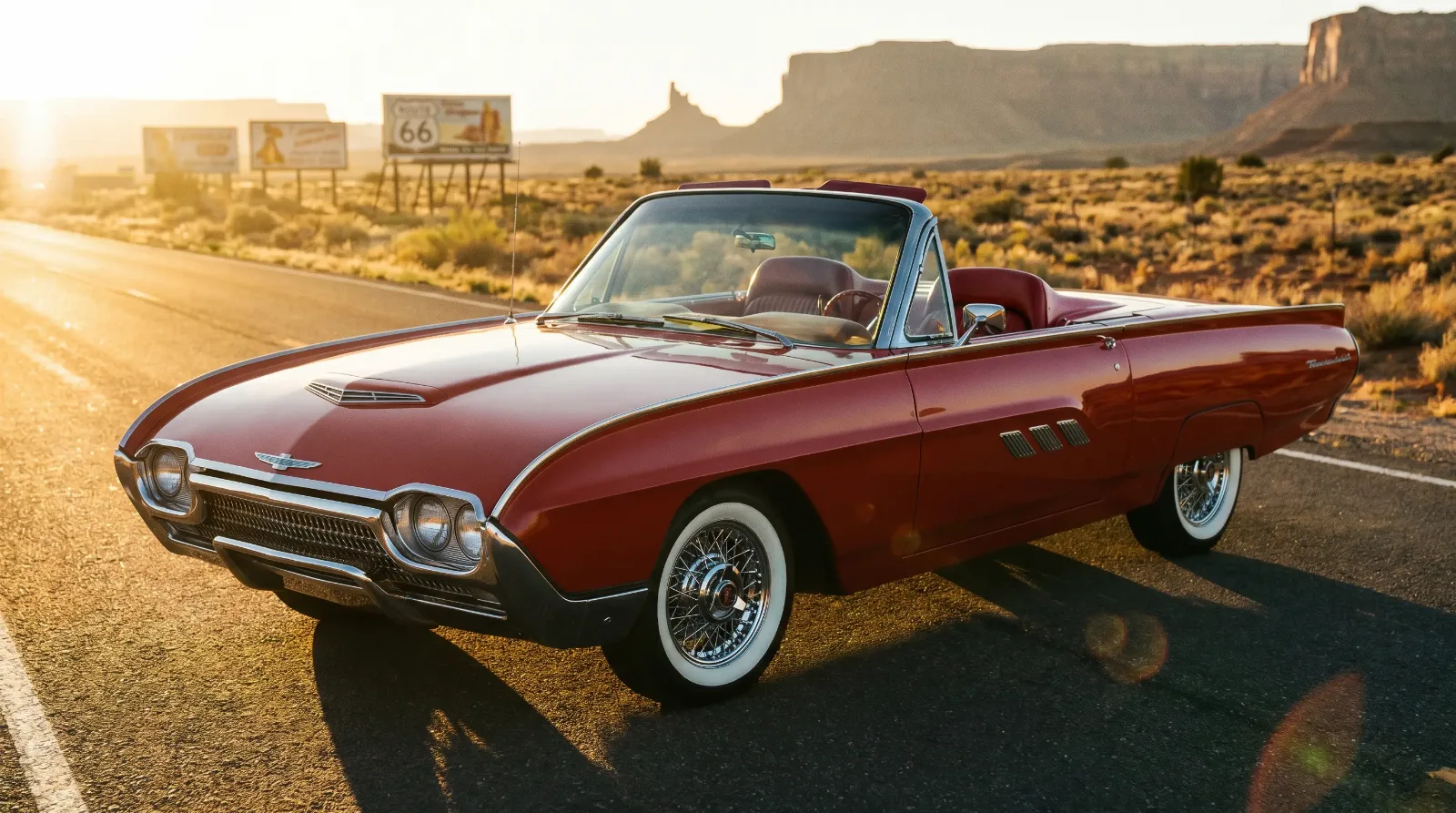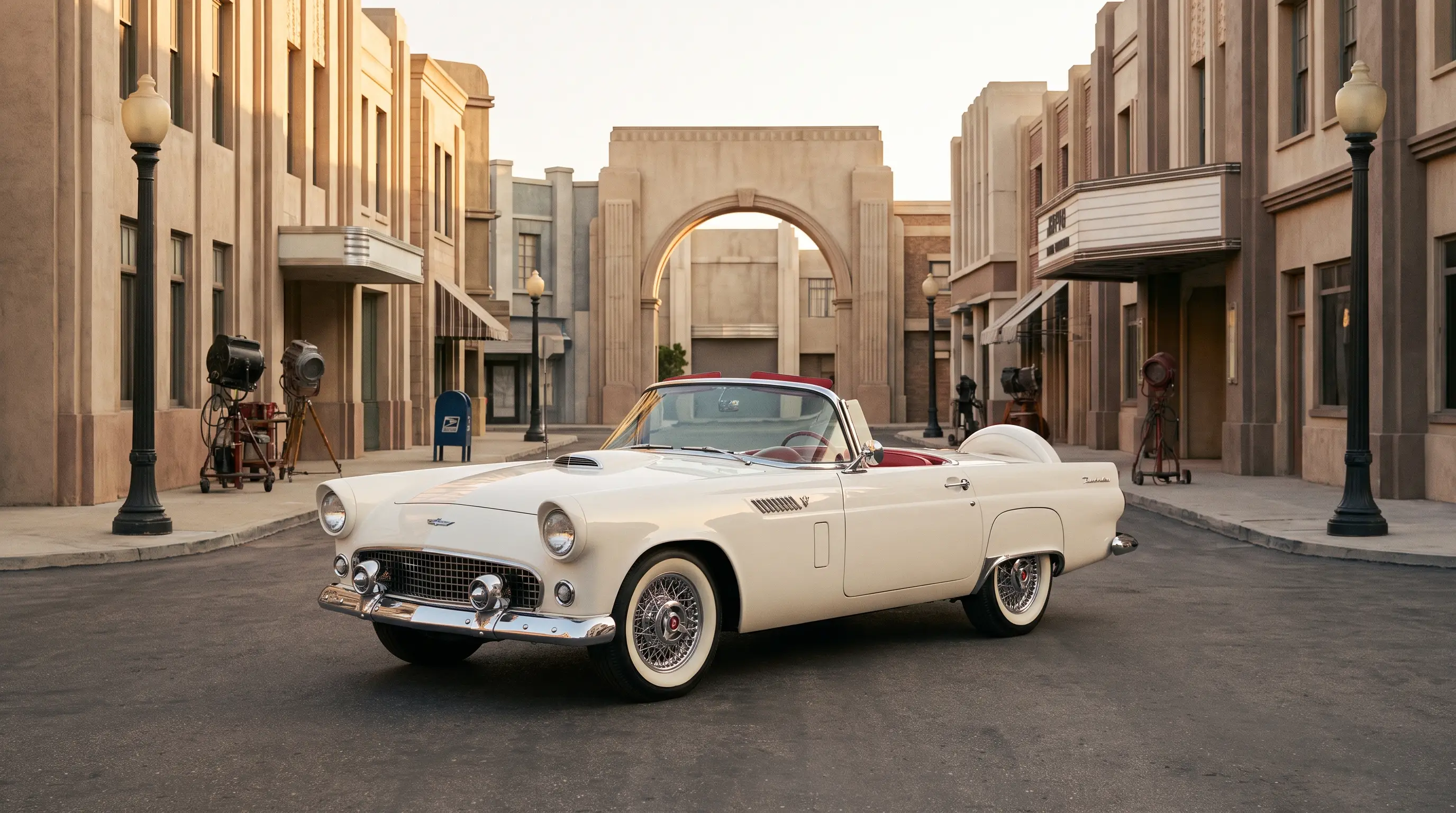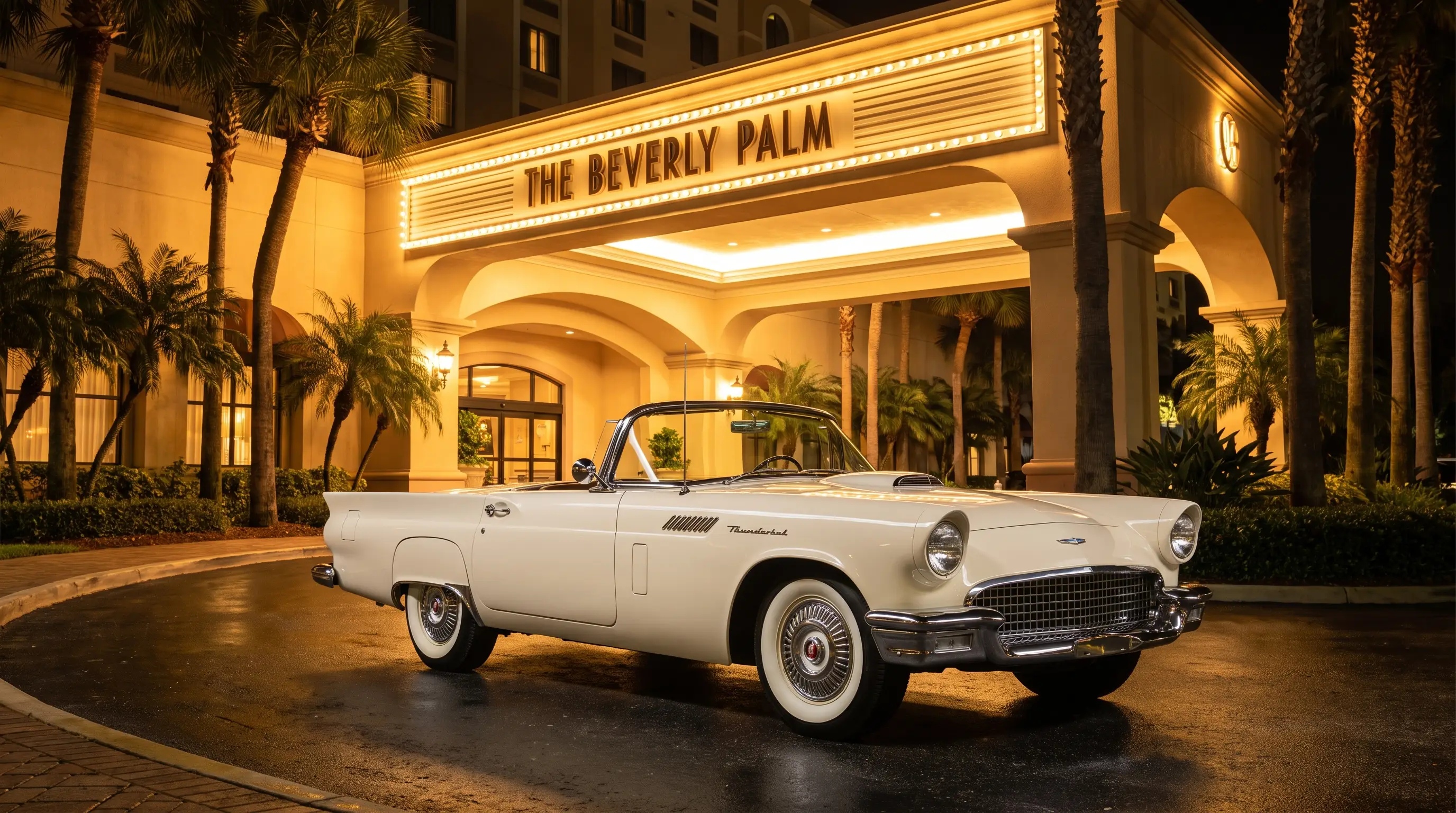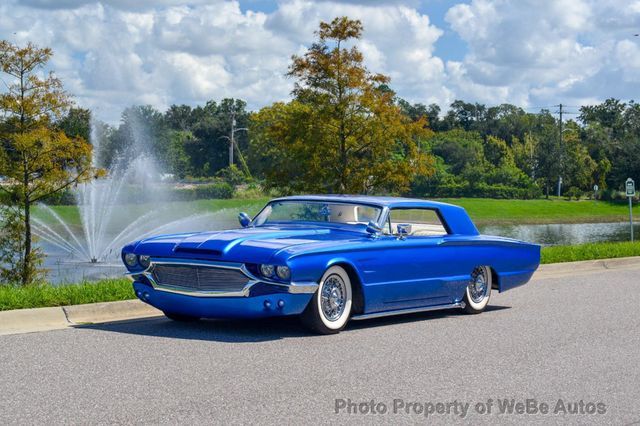
Spend enough time stripping and repainting old Fords and you start noticing something the paint codes never quite explain on their own. Thunderbird color names were never just marketing copy stapled onto a can of lacquer. They were a pitch, a whole lifestyle compressed into two or three words on an order sheet, and once you have sanded down enough factory paint to bare metal you start to respect how deliberately Ford chose those names.
Names that sold a feeling, not a pigment
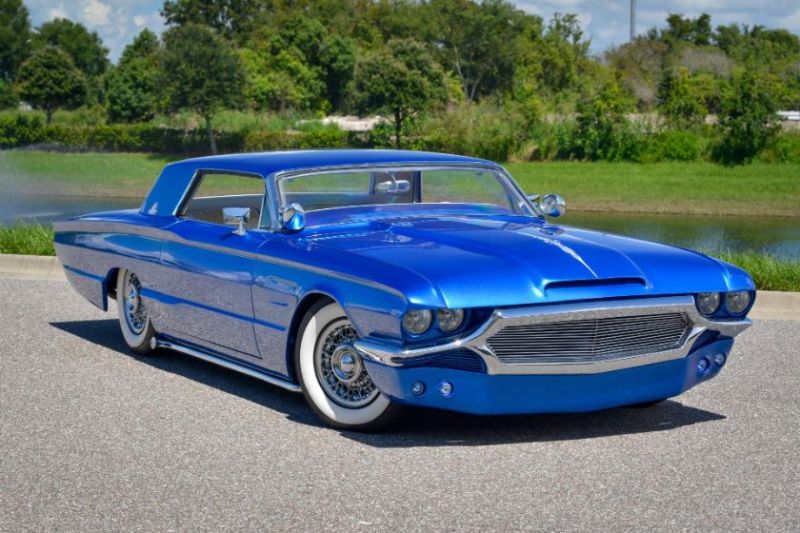
Look through a Thunderbird color chart from any year in the 1960s and you will not find plain descriptors like "dark blue" or "light green" doing much of the work. Instead you get names built to conjure a whole scene: Diamond Blue, Wimbledon White, Chantilly Beige, Rangoon Red. Nobody orders a car in "medium blue metallic" and imagines themselves anywhere in particular. Order it in a color called Diamond Blue and Ford has already put a picture in your head before the paint gun ever touches the body. That is not an accident of naming. That is a sales department doing its job as well as the engineering department did theirs.
Working in a body shop long enough, you learn that customers respond to those names decades after the fact just as strongly as period buyers did. A guy bringing in a numbers-matching Thunderbird for a repaint will ask for the color by its original name, not by a generic hue description, because the name is part of what he is restoring. He is not just matching pigment. He is matching a specific moment Ford's marketing department built on purpose.
"You can match any color with a spectrophotometer these days. What you can't buy back is what a customer felt when he first heard the name on the order form in 1965."
- Jim Vasquez
Where the names actually came from
Ford's naming conventions for Thunderbird colors leaned heavily on associations with luxury, travel, and status, the same territory the car itself was selling. Names referencing exotic locations, precious materials, or high society implied the buyer was purchasing more than sheet metal and an engine. A color called Diamond Blue does real work for a buyer who wants to feel like the car matches the life they are trying to project, and Ford's copywriters clearly understood that a good color name closes a sale just as effectively as a good horsepower figure does.
This was not unique to Thunderbird, but the personal luxury coupe segment leaned into it harder than most other Ford products of the era, because the whole car was already positioned around aspiration. A work truck did not need a color called anything more evocative than its paint code. A Thunderbird needed a name that made the color feel like part of the package's overall promise of arrival and success, matching the same marketing logic that shaped every other decision about the car, from engine choice to interior trim.
What this means in the shop today
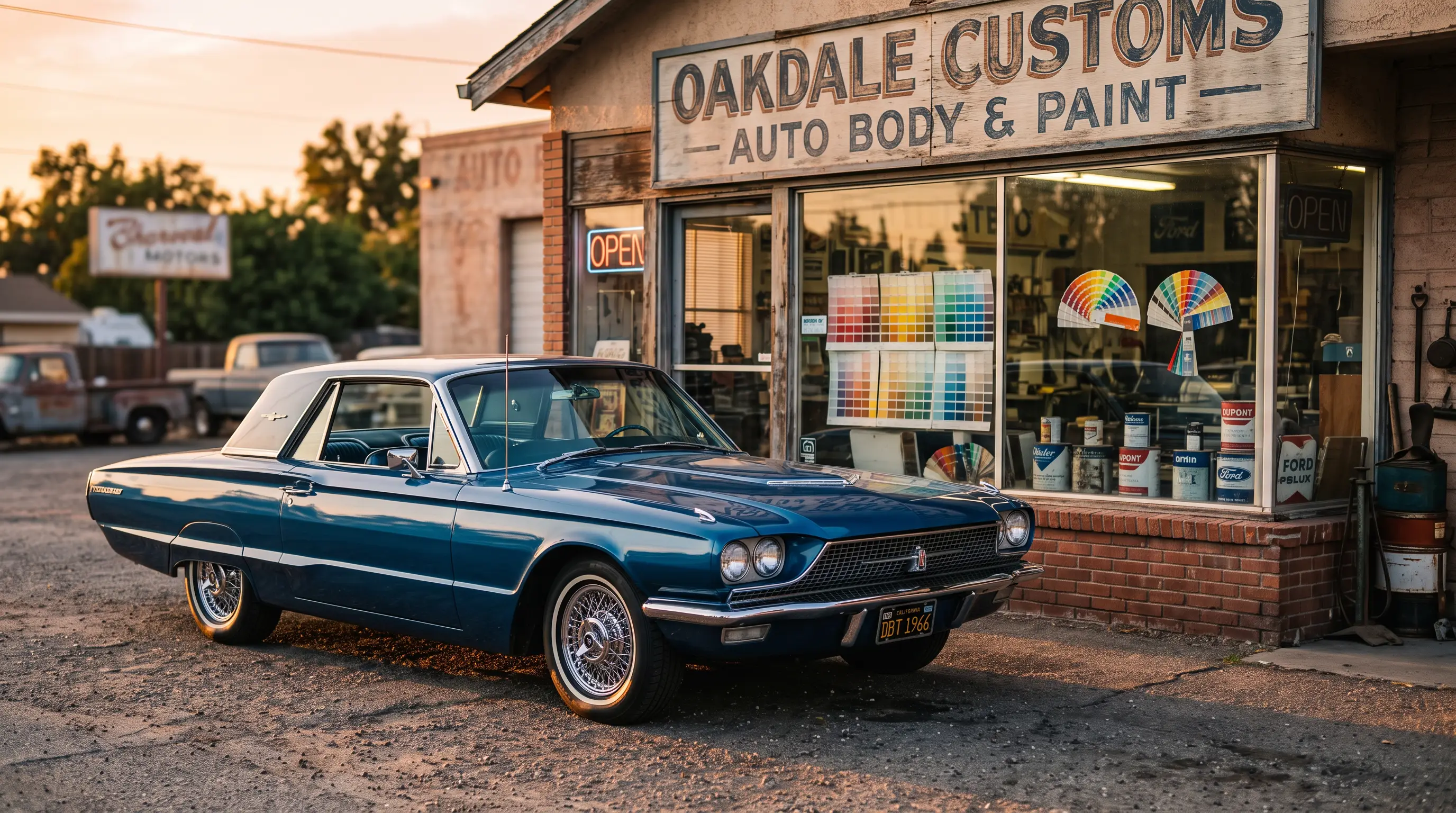
Matching an original Thunderbird color today is a genuinely different job from matching a modern car's factory paint. Original formulas used pigments and mixing ratios that do not always translate cleanly into current paint systems, and a good body shop working on a numbers-matching restoration has to hunt down accurate historical formulas rather than trusting a generic modern equivalent chip. The name on the original build sheet becomes a research starting point as much as a label, since tracking down the correct formula often means cross-referencing the color name against period paint code charts rather than trusting a modern database's best guess at a match.
That extra layer of work is exactly why originality matters so much to serious Thunderbird buyers and why a car with its factory-documented color intact commands more respect from people who actually know what they are looking at. Anyone can repaint a car a similar looking blue. Matching the actual named factory color, verified against build sheet documentation, is a different and considerably harder job, and it shows in the final result to anyone who knows what to check.
Color as its own kind of history
Reading through decades of Thunderbird color names is almost like reading a timeline of what postwar American buyers wanted to be told about themselves. Early names lean toward simple elegance. By the late 1960s the names get bolder, brighter, more willing to commit to a strong statement rather than a safe, quiet choice, tracking the era's broader shift toward louder colors across the entire American car industry. The Thunderbird's color chart, read year over year, tells a story about changing taste that a spec sheet full of engine displacements never could.
For readers who want the fuller arc of how the Thunderbird nameplate evolved across generations, including the design and marketing decisions that shaped everything from color strategy to badge placement, where this started lays out the model's development history in more depth. And for anyone chasing an original-color example to restore or simply to own, the search always starts the same practical way, by seeing what classic Thunderbird for sale listings are actually out there with documentation intact.
A well matched original color does more for a restoration's credibility than almost any other single detail, because it is the first thing anyone notices and the hardest thing to fake convincingly. Get the name right, get the formula right, and the rest of the car has to live up to it.
I have had customers bring in old dealer brochures just to point at a color swatch and ask if I can match it exactly, not the paint code, the swatch itself, faded and yellowed after sixty years under a plastic sleeve. That request tells you everything about how much weight these names still carry. Nobody brings in a brochure to match a modern sedan's silver. They bring in a Thunderbird brochure because the color on that page is tied to a specific memory, sometimes their own, sometimes a parent's, and getting it wrong feels like getting the whole restoration wrong even if every mechanical detail underneath is flawless.
Paint suppliers who specialize in classic Ford restorations keep archives specifically for this reason, cross-referencing decades of factory formulas against the marketing names Ford actually printed on order sheets. It is slower and more expensive than pulling a modern equivalent off a shelf, and every serious restorer I know still insists on doing it that way, because a Thunderbird wearing the wrong shade of what should be Diamond Blue looks wrong to anyone who actually knows the car, even if they cannot immediately say why, and that instinct is usually correct more often than not.