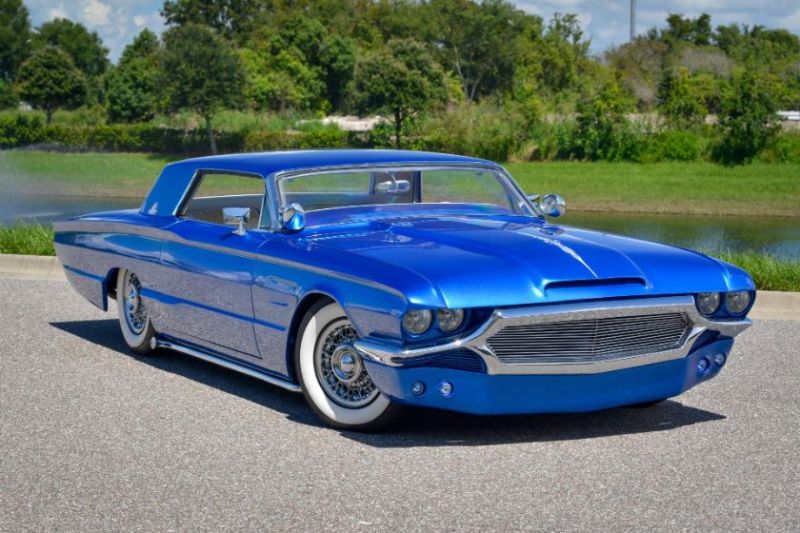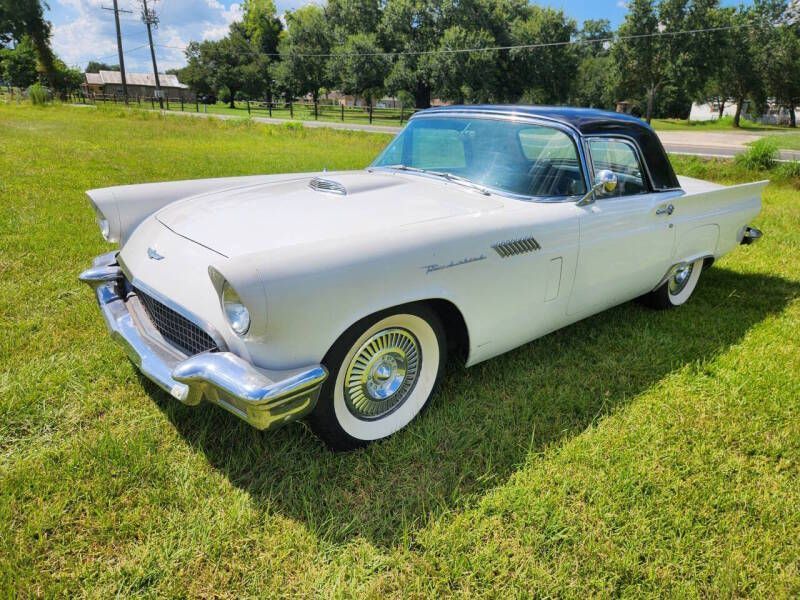
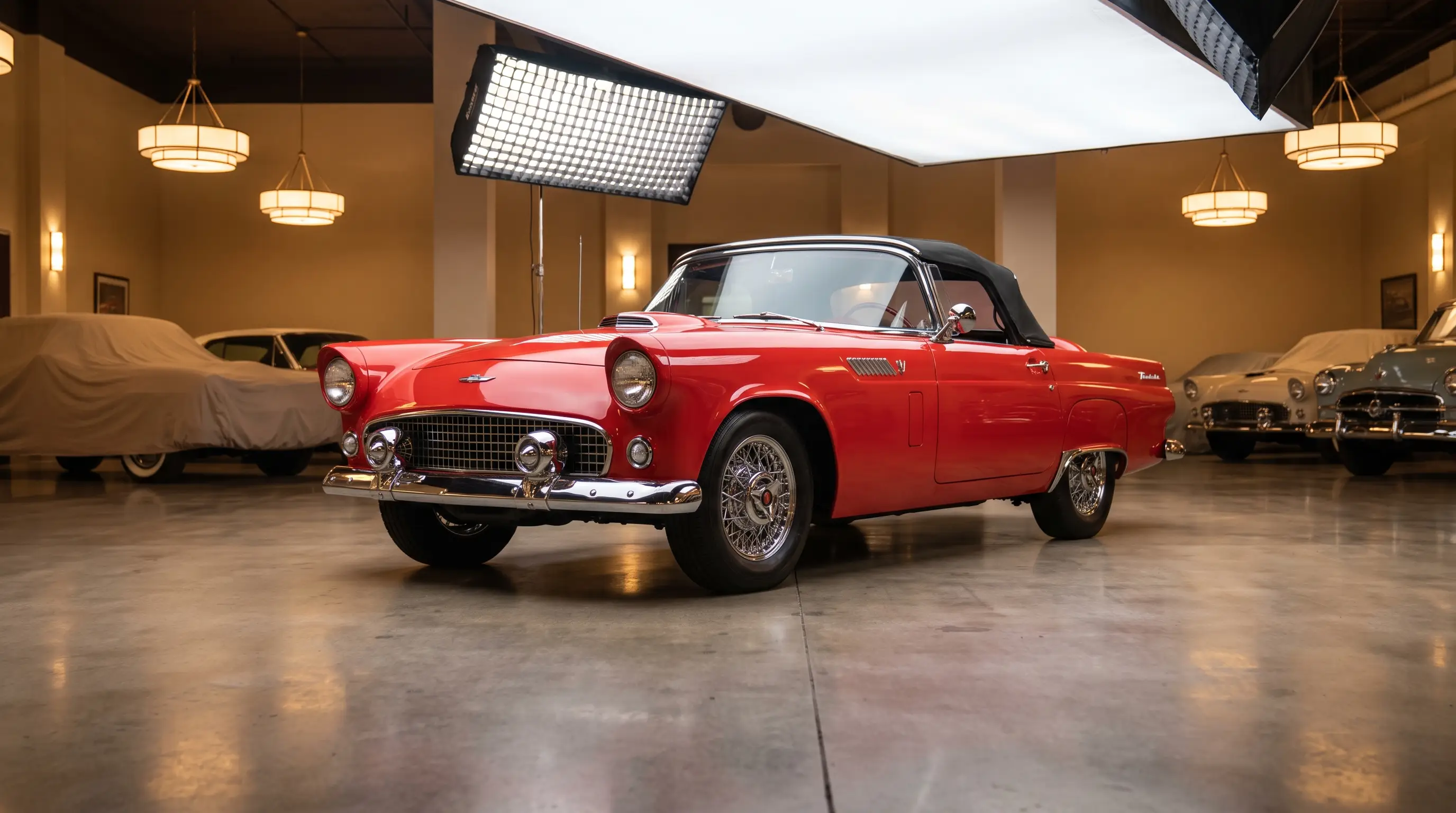
Look at the thunderbird engine history from end to end and you see a company constantly reacting, first to Chevrolet, then to NASCAR, then to a Lincoln parts bin, then to emissions law, and finally to a car that had grown so large it needed nothing less than a full-size big block just to get moving. Two decades, five distinct engine families, and one consistent thread. Ford kept matching engine strategy to what the Thunderbird had actually become, generation by generation.
1955 to 1957: the Y-block starts it all
The original two-seat Thunderbird launched with the 292 cubic inch Y-block, Ford's first modern overhead-valve V8, offered alongside a larger 312 by 1956. This was a straightforward, durable engine borrowed from the passenger car lineup rather than something built specifically for the Thunderbird, and it established the baseline expectation of confident, comfortable power over outright speed. The one dramatic exception came in 1957 with the supercharged F-code 312, a one-year, competition-driven option built to chase NASCAR homologation rather than showroom sales, and its rushed development explains why it disappeared as quickly as it arrived.
1958 to 1960: the Square Bird brings in Lincoln power
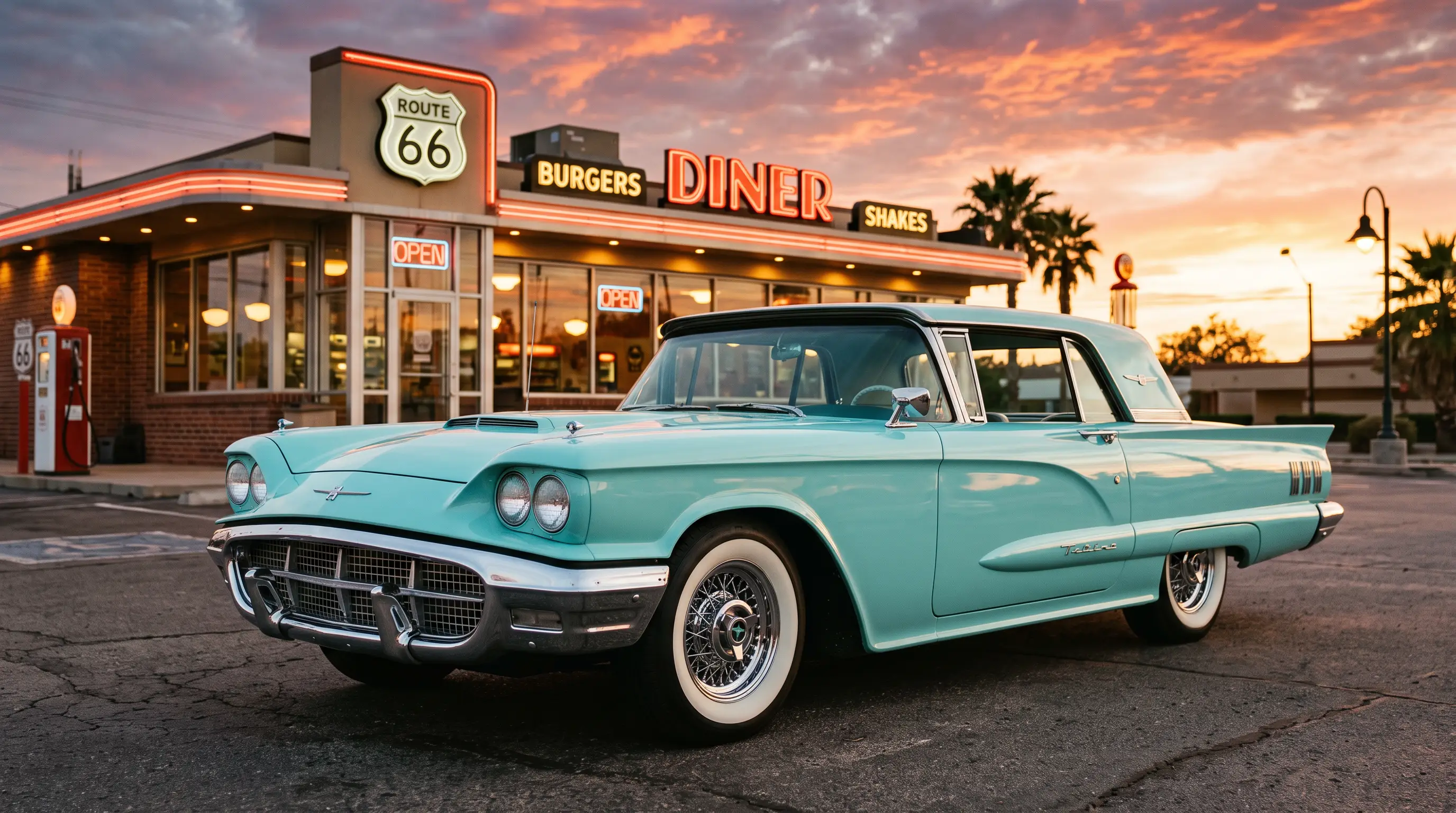
When the Thunderbird grew into a four-seat car for 1958, its added weight demanded more displacement than the Y-block family could reasonably provide. Ford's answer combined a 352 cubic inch FE base engine with an unusual top option, the Lincoln-derived 430 cubic inch MEL big block, offered only in 1959 and 1960. That cross-brand pairing never repeated itself in Thunderbird history, making the Square Bird years a genuine outlier in an otherwise consistent Ford-family engine strategy.
1961 to 1967: the FE big block era
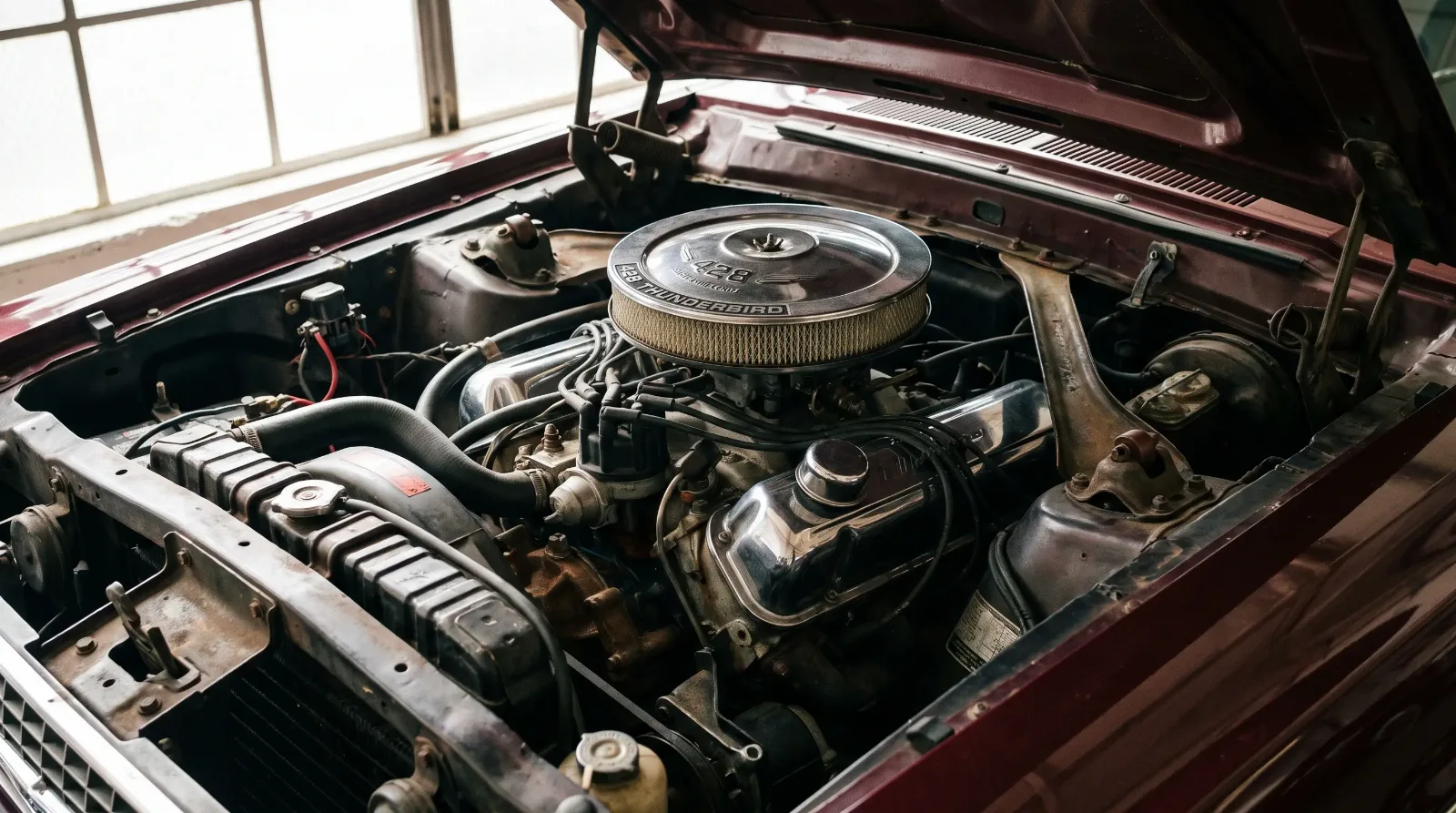
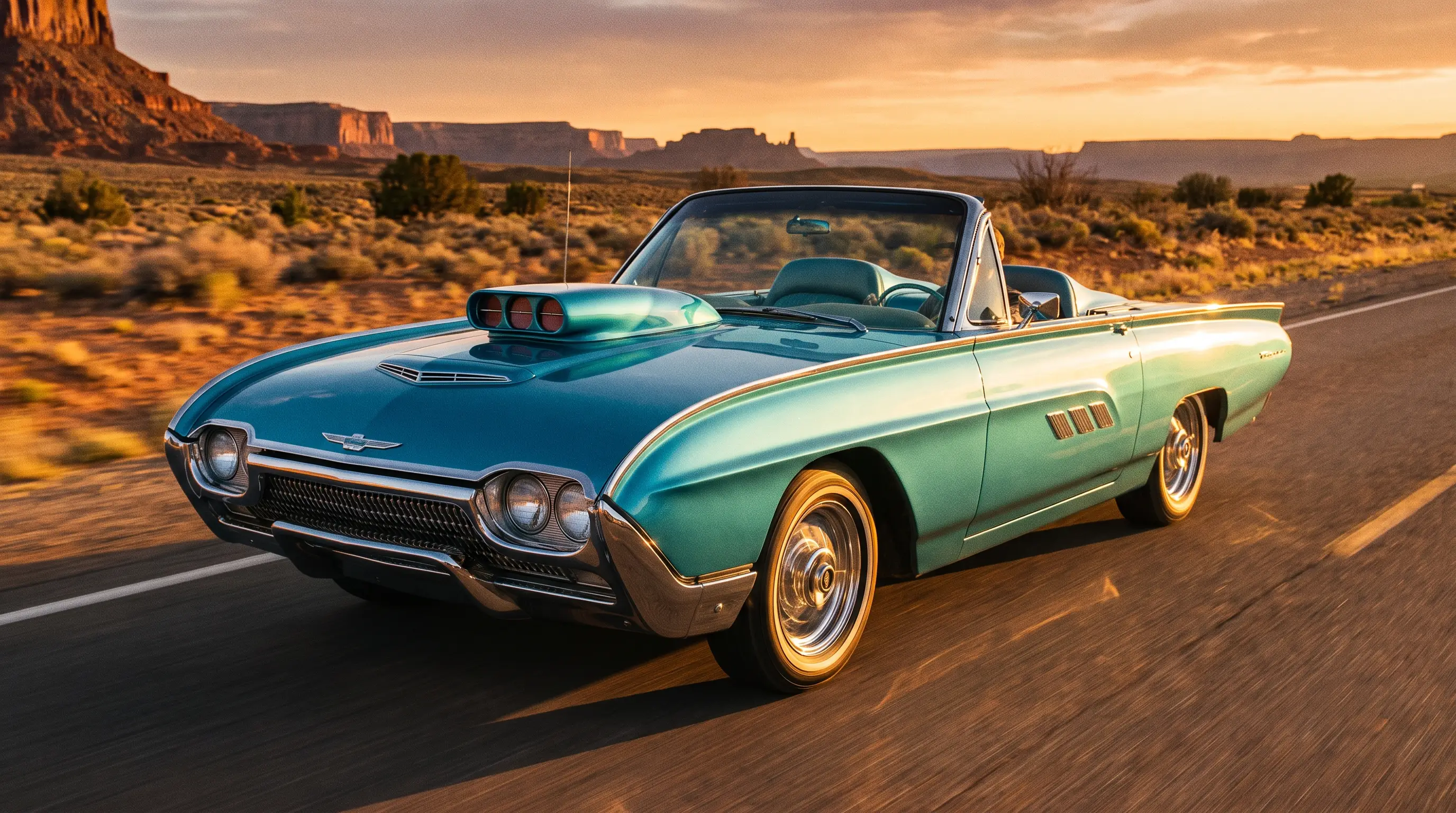
The redesigned "Bullet Bird" and later "Flair Bird" generations settled into a long run built around the FE big block family, starting with the 390 cubic inch standard engine in 1961 and its high-output Tri-Power triple two-barrel M-code variant for buyers who wanted genuine performance. Ford added the 428 cubic inch FE as an optional step-up engine starting in 1966, and the 390 remained the standard engine into the redesigned four-door Thunderbird generation that launched for 1967, with the 428 still available as the big-block option that year, matching a heavier, more aggressively styled car that needed real low-rpm torque. This stretch represents the longest sustained engine strategy in Thunderbird history, and it is the era most enthusiasts associate with the car's peak performance reputation.
1968 to 1976: the 385-series and the Big Bird
Ford retired the FE family for Thunderbird use starting in 1968, replacing it with the newer 385-series big block, beginning with the 429 cubic inch version and growing to 460 cubic inches as the car itself grew into the enormous, chrome-heavy "Big Bird" generation of the early to mid 1970s. This era coincided with the industry-wide shift from gross to net horsepower ratings and with tightening emissions regulations, both of which make the raw output numbers from this period look weaker on paper than the driving experience actually suggests. The 385-series engines were more modern and, in several respects, easier to maintain than the FE family they replaced, even if they arrived during the least flattering years for horsepower figures in Ford's history.
| Era | Engine family | Key displacement |
|---|---|---|
| 1955-1957 | Y-block | 292 and 312 cid |
| 1958-1960 | FE / MEL | 352 cid base, 430 cid option |
| 1961-1967 | FE big block | 390 and 428 cid |
| 1968-1976 | 385-series big block | 429 and 460 cid |
For deep dives into any single chapter of this timeline, our ford thunderbird engine retrospective is the place to start, and the Tri-Power 390 deserves its own dedicated look as a related story for anyone chasing the peak performance years specifically.
"Every Thunderbird engine decision follows the same logic once you line them up. The car got heavier, so the engine got bigger. There's no mystery here, just twenty years of Ford matching displacement to weight."
- Dan Reeves
What stayed constant across every generation
For all the change in displacement, architecture, and even source brand, one thing never varied across two decades of Thunderbird engine choices. Ford never chased maximum output for its own sake in a mainstream production Thunderbird. Even the most powerful factory options, the supercharged F-code and the Tri-Power M-code, existed primarily to answer specific competitive or homologation pressures rather than to turn the Thunderbird into a dedicated performance car. Every standard engine across every generation was tuned first for smooth, low-rpm torque and quiet operation, the exact priorities a personal luxury buyer expected regardless of what decade they were shopping in. That consistency of intent, even as the hardware changed completely five times over, is arguably the real throughline of Thunderbird engine history.
Why the engine timeline matters to buyers today
Knowing which engine family belongs to which generation is not just trivia, it directly shapes what kind of ownership experience a buyer should expect. Y-block and MEL era cars demand more specialized parts sourcing and more patient mechanics familiar with older, lower-volume architectures. FE-era cars from 1961 through 1967 sit in the sweet spot of strong parts availability and genuine period performance credibility. The 385-series Big Bird years trade outright excitement for comfort, size, and relatively accessible maintenance thanks to the 460's long service life in Ford trucks. None of these tradeoffs make one era objectively better than another, but understanding them before shopping saves a lot of surprise later.
The role competition and homologation played
Not every Thunderbird engine decision was purely about matching displacement to weight. The 1957 supercharged F-code and the early 1960s Tri-Power M-code both emerged from a different pressure entirely, the need to give Ford's competition programs a homologated performance option to point to, even on a car built primarily for comfort and style. Those two engines are the exceptions that prove the rule. Everywhere else in the timeline, standard engine choices tracked the car's growing size and weight in a straight line, but these two performance outliers show that Ford was still willing to bend that logic when outside competitive pressure demanded it, if only for a single model year or a short production run.
Reading the whole arc as one story
Collectors who focus on a single era sometimes miss how connected the whole story really is. The FE family that dominated the 1960s grew directly out of the same corporate need for bigger displacement that first pushed Ford toward Lincoln's MEL architecture in 1959, and the 385-series big block that closed out the story was Ford's answer to the FE family's own aging limitations by the late 1960s. Nothing in this timeline happened in isolation, and each engine decision responded directly to the one that came before it.
What makes this progression worth understanding as a single narrative, rather than five isolated engine facts, is how clearly it tracks the Thunderbird's own identity crisis across two decades. A two-seat sports car became a four-seat luxury coupe, then a genuine performance machine, then finally an enormous personal luxury flagship, and the engine bay changed to match every single step. Buyers today gravitate toward different eras for different reasons, some chasing the original Y-block's simplicity, others wanting FE-era performance, still others drawn to the sheer scale of the Big Bird years. None of those preferences are wrong, they simply reflect which chapter of the Thunderbird story speaks to you. Whichever era interests you most, Thunderbirds for sale now spans the full range, and knowing which engine family belongs to which generation is the single most useful piece of knowledge you can bring to that search.