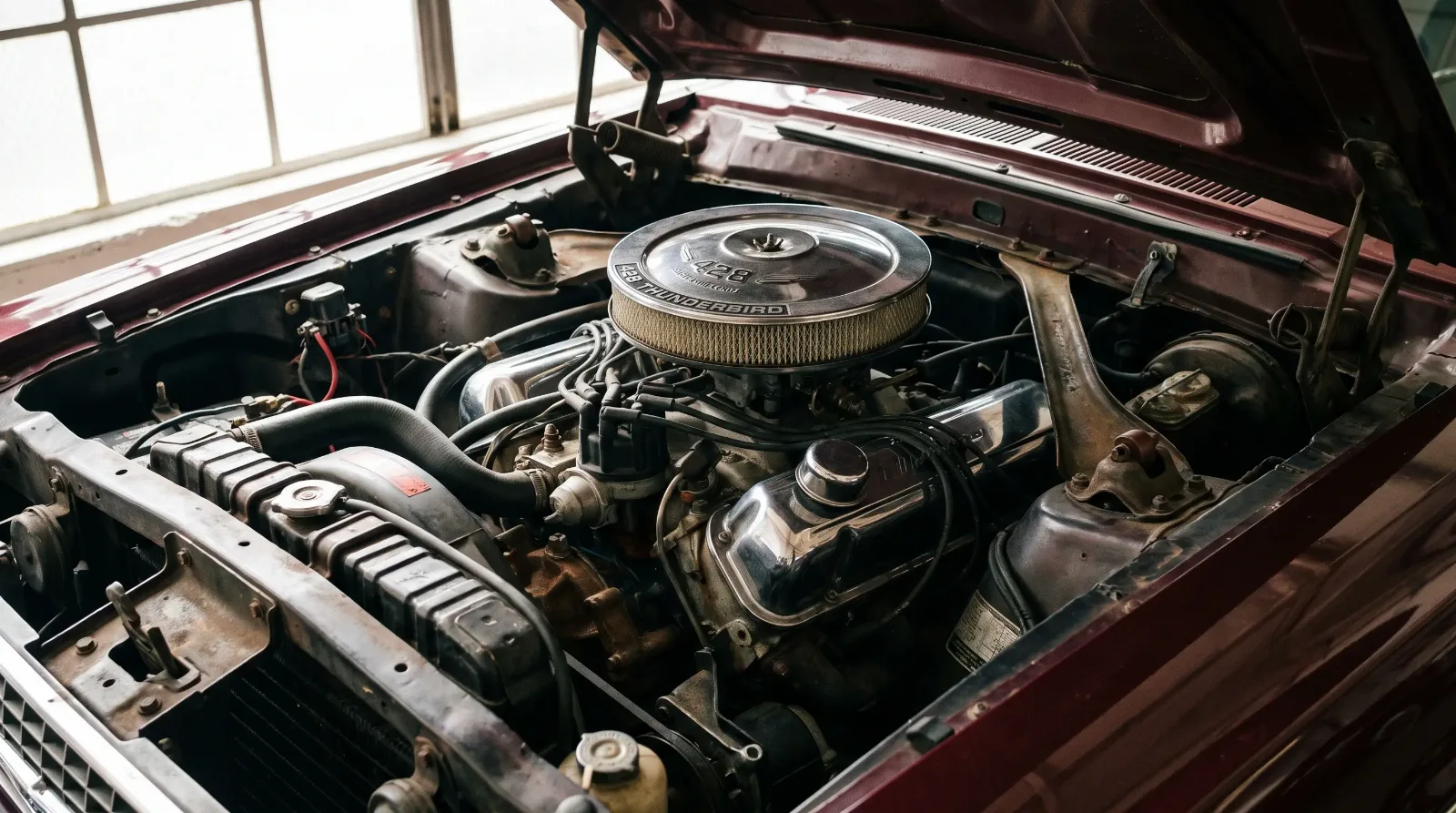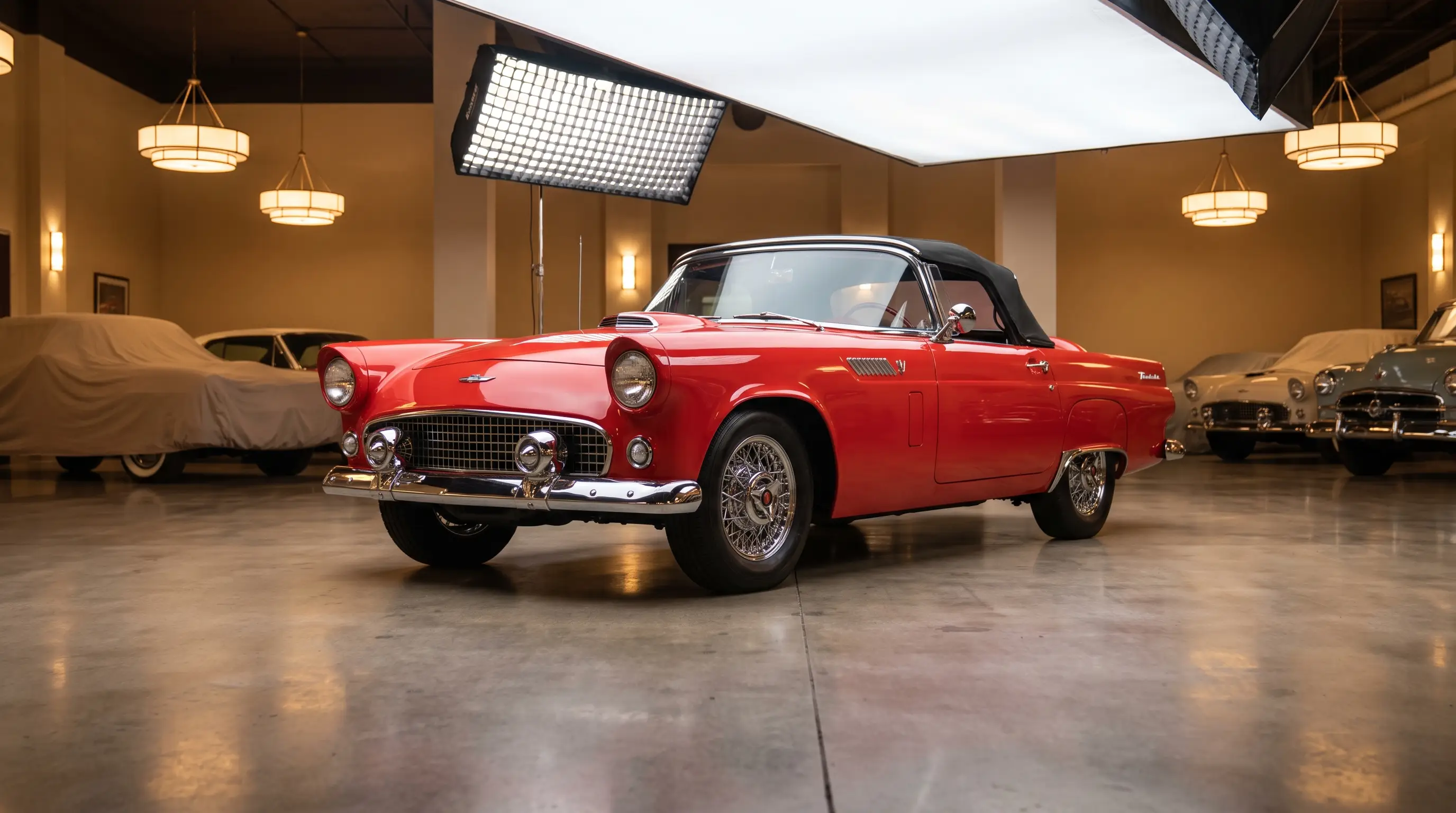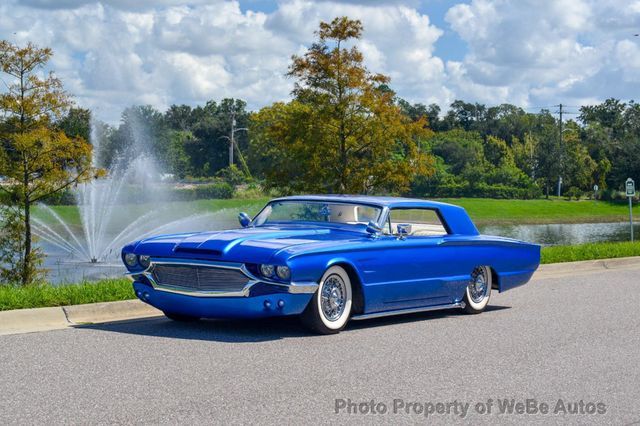
When the Thunderbird grew from a two-seat sports car into a four-seat "Square Bird" for 1958, Ford borrowed something unexpected to top the engine option sheet. The thunderbird 430 mel engine came directly from Lincoln, a 430 cubic inch member of the MEL big block family that had nothing to do with the Y-block or FE engines used elsewhere in the Ford lineup, and for two model years it gave Square Bird buyers the option of putting a genuine luxury-flagship engine under a Thunderbird hood.
Where MEL came from
MEL stands for Mercury-Edsel-Lincoln, the divisions the engine family was developed to serve when Ford introduced it for the 1958 model year across its upper-tier brands. The MEL architecture was built specifically for large, heavy luxury cars, with a wide bore spacing and a low deck height compared to the FE family, optimized for smooth, quiet torque delivery rather than high-rpm output. Lincoln used the largest MEL displacements, up to 462 cubic inches by the early 1960s, in its flagship sedans. The Thunderbird, positioned as Ford's own personal luxury entry, got access to a smaller 430 cubic inch version of the same family starting in 1959, a genuinely unusual move that put a Lincoln-derived engine in a Ford-badged car.
1959 and 1960: the two years it was offered
The base engine for the 1958 through 1960 Square Bird was a 352 cubic inch FE V8, adequate but not remarkable for a car that had grown significantly heavier than the two-seat Thunderbirds it replaced. For 1959, Ford added the 430 MEL as a factory option, rated at 350 horsepower (SAE gross), a substantial jump that gave the now four-seat Thunderbird genuine effortless power to match its new size and its new emphasis on comfort over sportiness. The option carried into 1960 largely unchanged before disappearing when the Square Bird generation ended, never returning to the Thunderbird lineup after 1960. Ford's decision to drop it likely reflected simple platform economics. Sharing a Lincoln-derived engine across a lower-priced Ford product line made the accounting more complicated than it needed to be once the next Thunderbird generation moved toward FE-based engines exclusively.
Driving character and known issues
Owners and restorers who have spent time with the 430 MEL describe an engine built for smooth, unhurried torque rather than any sense of urgency, entirely consistent with its Lincoln luxury-car origins. The MEL family used a distinctive design with the intake and exhaust valves both on the same side of each cylinder head rather than the more common crossflow arrangement, a layout that limited high-rpm breathing but suited the low-stress, low-rpm cruising these engines were built for. Parts support for the 430 MEL today is noticeably thinner than for the more common FE family engines used in later Thunderbirds, since the MEL family saw more limited production overall and was phased out of Lincoln applications by the mid-1960s. Anyone considering ownership of a 430-equipped Square Bird should factor in longer sourcing times for internal engine components compared to shopping for FE parts.
The 430 sits in an unusual branch of Ford's Thunderbird engine story, separate from the FE lineage that dominates most other model years. For the full story, the Square Bird's brief flirtation with Lincoln power is one of the more interesting detours in the car's engine history.
"Putting a Lincoln engine in a Thunderbird for two years and then never doing it again tells you this was never meant to be a long-term plan. It was a stopgap answer to a heavier car, and it happens to be one of the more interesting stopgaps in Ford's history."
- Emily Chen
How the 430 compared to the 352 base engine
Choosing between the standard 352 FE and the optional 430 MEL in 1959 or 1960 was not a subtle decision for a Square Bird buyer. The 352 offered adequate, competent power for a car of this size, entirely in keeping with the FE family's role across the wider Ford lineup at the time. The 430, by contrast, delivered a genuinely different character behind the wheel, with a wave of low-rpm torque more associated with Lincoln's flagship sedans than with anything wearing a Ford badge. Buyers who cross-shopped Thunderbird against Lincoln in this period and chose the Ford were, in effect, given the option to have some of that Lincoln power anyway, which was likely part of the point Ford's product planners had in mind when they approved the option in the first place.
Why the MEL family stayed mostly at Lincoln
Outside of its brief Thunderbird appearance, the MEL big block spent almost its entire production life exclusively in Lincoln and larger Mercury applications, reinforcing just how unusual the 1959 and 1960 Thunderbird option really was. Ford's divisional structure through the 1950s and 1960s generally kept engine families aligned with specific brands for cost accounting and marketing reasons, making cross-brand engine sharing the exception rather than the rule. The Square Bird's 430 option stands out precisely because it broke that pattern, if only for two years, and understanding that context is part of what makes the option interesting to collectors well beyond its horsepower figures alone.
The Square Bird body that carried the option
The 1958 through 1960 Thunderbird was itself a significant departure from the two-seat cars that came before it, adding a rear seat, a longer wheelbase, and considerably more weight in the pursuit of broader market appeal. Ford's decision to add four seats had been driven directly by dealer feedback that the two-seat car, while critically celebrated, was too limiting for buyers who wanted Thunderbird styling and prestige in a car they could actually use for a family. That expanded mission is exactly why a larger, more powerful engine option made sense for the range. The 430 MEL was not power for its own sake, it was Ford's answer to a heavier, more practical Thunderbird that needed genuine reserve torque to still feel special rather than merely adequate.
Value and buying considerations
Pricing for a genuine 430-equipped Square Bird typically runs ahead of an equivalent 352-powered example, reflecting both the option's rarity and the added appeal of its unusual Lincoln connection to collectors who specifically value that kind of automotive trivia. That premium is not automatic, however, and a poorly documented car claiming 430 originality without supporting paperwork or verifiable casting numbers should be priced, and evaluated, with real caution rather than taken at the seller's word.
A documented 430 MEL Square Bird occupies a distinct niche among collectors specifically because the option was so short-lived and because so few of these cars have survived with their original engines intact given the parts scarcity that followed. Verifying originality follows the usual playbook of matching casting numbers, tags, and any period documentation the seller can provide, but buyers should also budget realistically for the reality that a mechanical rebuild, if one is ever needed, will likely take longer and cost more than the equivalent work on a common FE-powered Thunderbird. For buyers drawn to the rarity and the unusual Lincoln connection specifically, that tradeoff is often worth it. If you want to start comparing what is actually available, browse classic Thunderbird listings and ask directly whether the 430 option is documented before assuming anything from the model year alone.