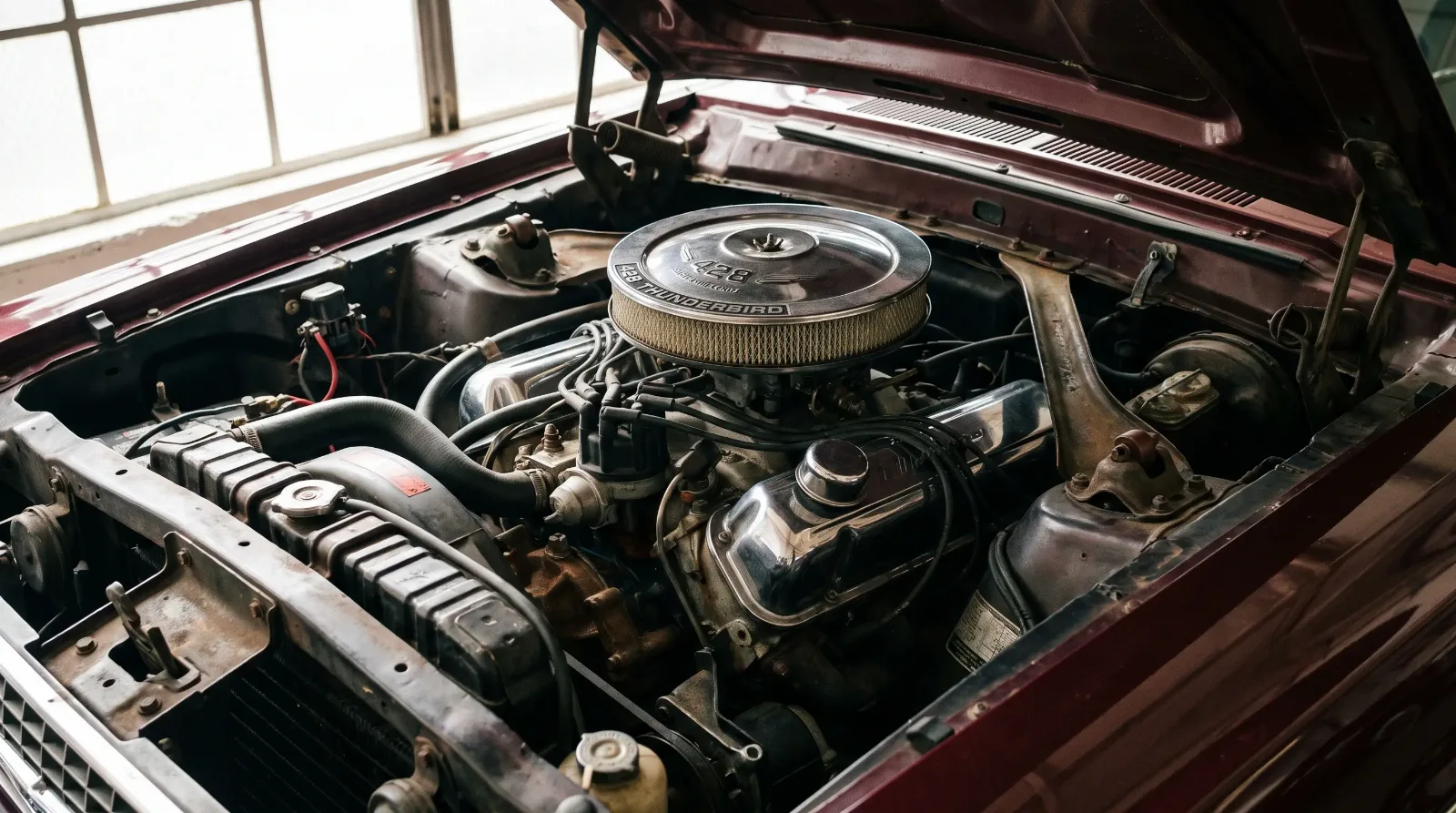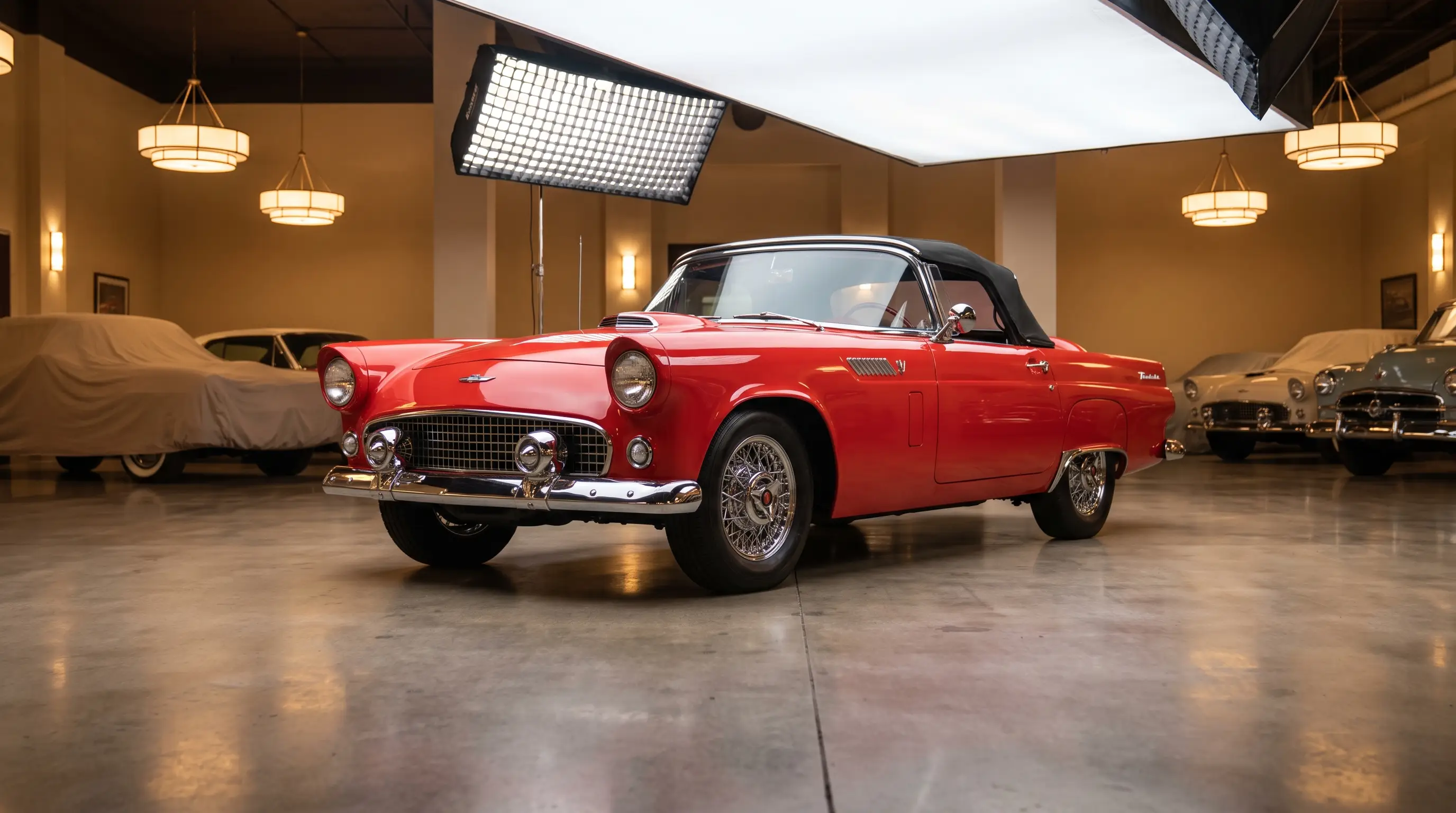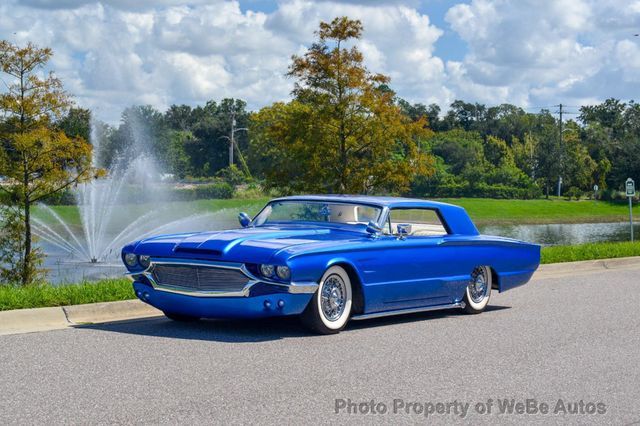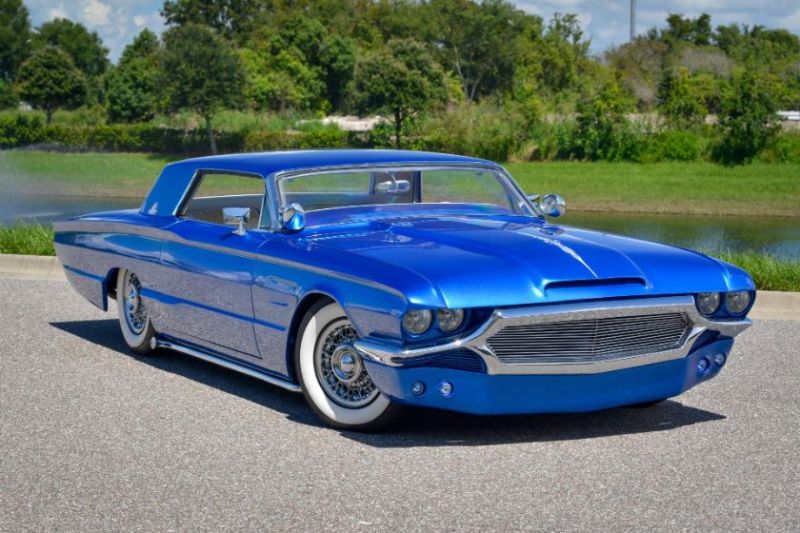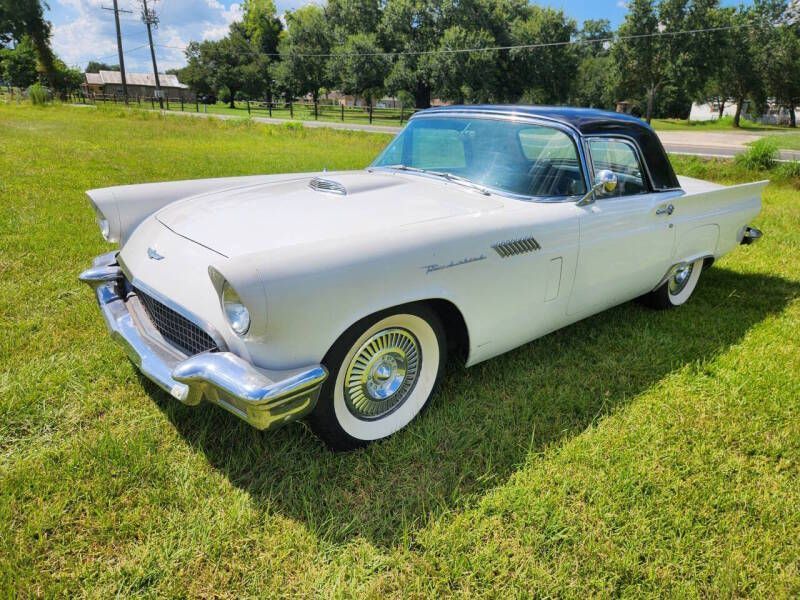
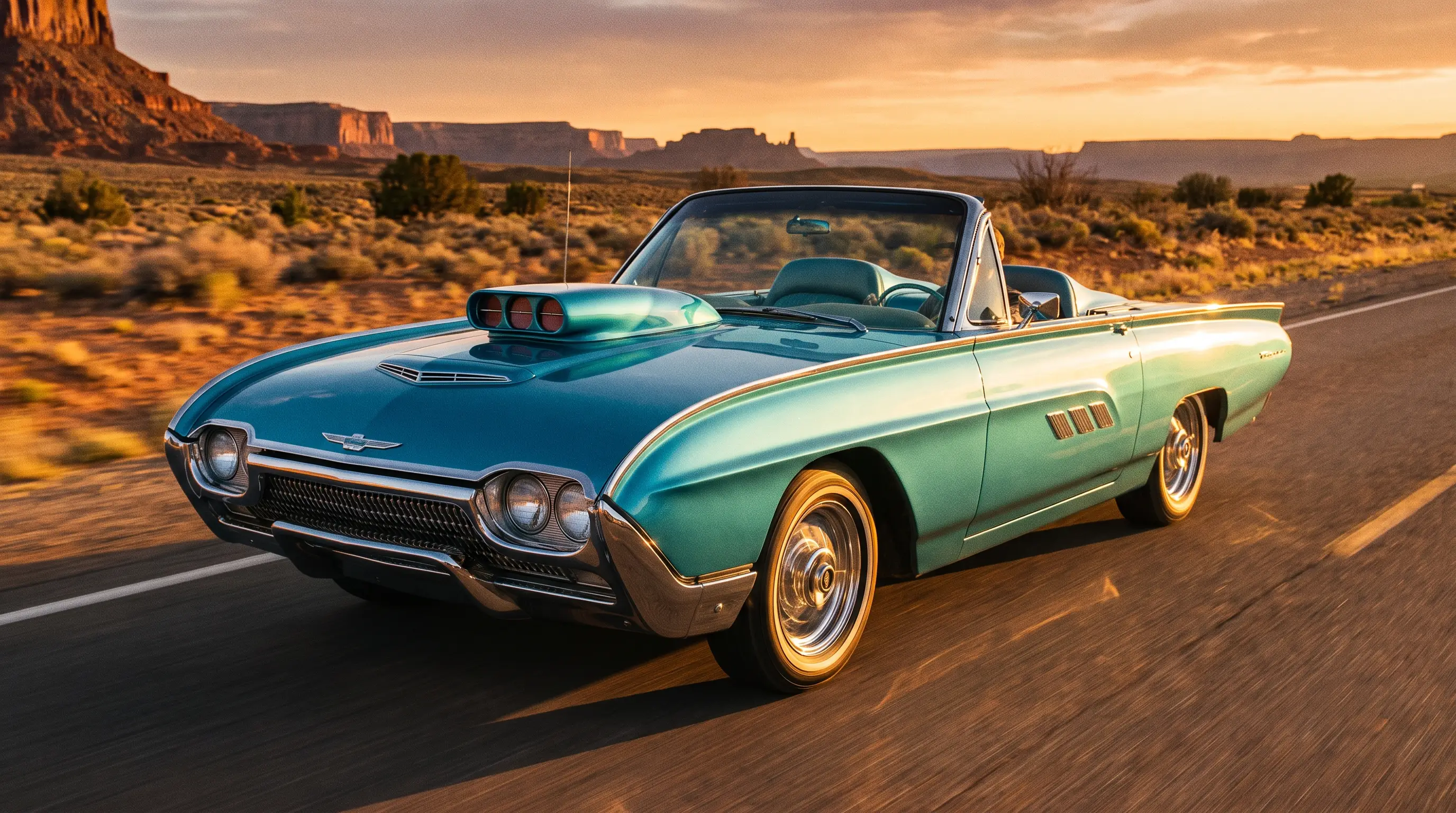
Buried in the option sheet for the 1962 and 1963 Thunderbird sits a single line that turned an already strong big block into the fastest engine the Bullet Bird generation ever offered. The thunderbird tri power 390 used three two-barrel carburetors mounted on a special intake with cylinder heads borrowed from the high-performance 406, an M-code designation stamped right into the engine tag, and a factory rating of 340 horsepower, the strongest engine offered in a Thunderbird up to that point.
What Tri-Power actually means
Triple two-barrel carburetion, commonly shortened to Tri-Power, uses three separate carburetors arranged across an intake manifold, with the center carburetor handling normal driving duty and the two outer carburetors opening progressively under harder throttle. The setup gave the 390 dramatically improved high-rpm breathing compared to the standard single four-barrel version, without requiring any change to the engine's basic displacement or bottom end. General Motors popularized Tri-Power across Pontiac and Chevrolet performance models during the same period, and Ford's M-code 390 represented the company's answer, applied specifically to its personal luxury flagship rather than to a dedicated muscle car.
A performance option in an unlikely car
Putting a 340 horsepower engine option into the Thunderbird was a curious choice given the car's positioning as a comfortable, well-appointed personal luxury coupe rather than a street racer. The M-code option existed largely to give enthusiast buyers a genuine performance choice without abandoning the Thunderbird's core identity, and Ford paired it with heavier-duty suspension components and, on every car, the Cruise-O-Matic automatic transmission rather than a manual gearbox, since no manual was ever offered behind the M-code in the Thunderbird. Production numbers for the Tri-Power option were low relative to the standard single four-barrel 390, since most Thunderbird buyers in this era were shopping for comfort and styling rather than outright acceleration, and the option carried a real price premium on top of an already expensive car. Of the 1,427 Sports Roadsters Ford built for 1962, only about 120 were genuine M-code cars, underlining just how rare the combination was even within an already low-volume body style. Dealers had to specifically stock or special order the M-code configuration, which further limited how many buyers ever encountered the option on a showroom floor rather than seeking it out deliberately after reading about it in period road tests or enthusiast publications.
Why the option did not last
Ford discontinued the Tri-Power 390 option after a short production run spanning the early 1960s, likely for a mix of reasons common to complex carburetion setups of the era. Triple-carburetor systems required more careful tuning and were more sensitive to wear than a single four-barrel, and as buyer interest in Thunderbird performance options remained modest compared to the car's mainstream comfort-focused sales, the complexity and cost of maintaining the M-code option in the lineup likely outweighed its sales benefit. Ford's subsequent Thunderbird engine strategy moved toward simpler single-carburetor big block solutions, first with the standard 390 and later with the 428, suggesting the company concluded that raw displacement was an easier path to power than exotic carburetion for this particular car.
Driving character of the M-code
The appeal of the Tri-Power 390 was never about low-speed comfort, since the standard four-barrel 390 already delivered that in abundance. The M-code's advantage showed up under harder acceleration, when the two outer carburetors opened and the engine's breathing improved dramatically compared to the single four-barrel setup. Owners who have driven both versions back to back describe the Tri-Power car as noticeably more eager through the middle of the rev range, with a distinct step in power delivery as the secondary carburetors came online, a sensation entirely absent from the smoother, more linear standard 390. That character made the M-code genuinely fun to drive in a way the standard Thunderbird simply was not built to be.
How the M-code fits into Ford's broader Tri-Power story
Ford's use of triple carburetion was never as widespread or as heavily marketed as Pontiac's, and the Thunderbird's M-code option remains one of the lesser-known examples of the technology in Ford's own history, often overshadowed by Tri-Power stories from Pontiac's GTO and Chevrolet's Corvette in the same period. That relative obscurity is part of why the option is so poorly documented today, and why so few surviving examples carry complete factory paperwork. For collectors specifically interested in the broader early 1960s horsepower race across American manufacturers, the Thunderbird M-code offers a genuinely different angle on a story usually told entirely through GM's performance models.
Suspension and chassis changes that came with the option
Ford did not simply drop a more powerful engine into an otherwise unchanged Thunderbird and call it finished. Cars ordered with the M-code option generally received firmer suspension calibration and, on many examples, a heavier-duty rear axle to help manage the added power and torque, changes that mattered given how much weight the Bullet Bird carried compared to the earlier two-seat cars. These supporting changes are part of what makes a genuine M-code car feel different from a standard 390 beyond just straight-line acceleration, with noticeably tighter body control through corners and less wallow under hard braking. Buyers evaluating a claimed M-code car should look for evidence of these supporting chassis changes alongside the engine verification itself, since a numbers-matching engine paired with an otherwise standard suspension setup raises its own questions about what exactly was done to the car over the decades.
Finding and verifying a genuine M-code today
Pricing for a genuine M-code Thunderbird typically runs well ahead of a standard 390 example, reflecting both the documented rarity and the added performance the option delivered. That premium can be substantial enough that unscrupulous sellers occasionally represent a modified standard 390 as an original M-code, which is exactly why the tag and casting verification steps matter more here than with almost any other Thunderbird engine option covered in this series.
A documented Tri-Power 390 Thunderbird occupies rare territory in the collector market specifically because so few were built and because the triple-carburetor setup itself is a common target for later removal or replacement with simpler, easier-to-maintain single four-barrel setups. Verifying a genuine M-code means checking the engine tag designation against the VIN, confirming the intake manifold and carburetor setup matches factory Tri-Power specifications, and asking for any period documentation the seller can provide. A convincing aftermarket Tri-Power conversion on a standard 390 block can look correct at a glance, which makes tag verification the non-negotiable first step for any serious buyer.
The M-code sits at the performance peak of the FE-powered Bullet Bird years. For the fuller context of how the standard 390 and the Tri-Power option fit together within Ford's broader engine strategy, read the background on the complete Thunderbird engine timeline.
"Three hundred and forty horsepower in a personal luxury coupe in the early 1960s is not a typo. It is Ford proving it could match the Tri-Power trend without turning the Thunderbird into something it was never meant to be."
- Emily Chen
If the Tri-Power option is what drew you to this generation specifically, expect a longer, more careful search than shopping for a standard 390 car. Start by browsing what is actually available and go find a classic Thunderbird, then work through tag verification with the seller before you get attached to any single listing claiming M-code originality. Patience is the real requirement here, since a genuine, well-documented example may take considerably longer to surface than a standard 390 car, but for buyers specifically chasing this chapter of Thunderbird performance history, the wait is generally worth it.