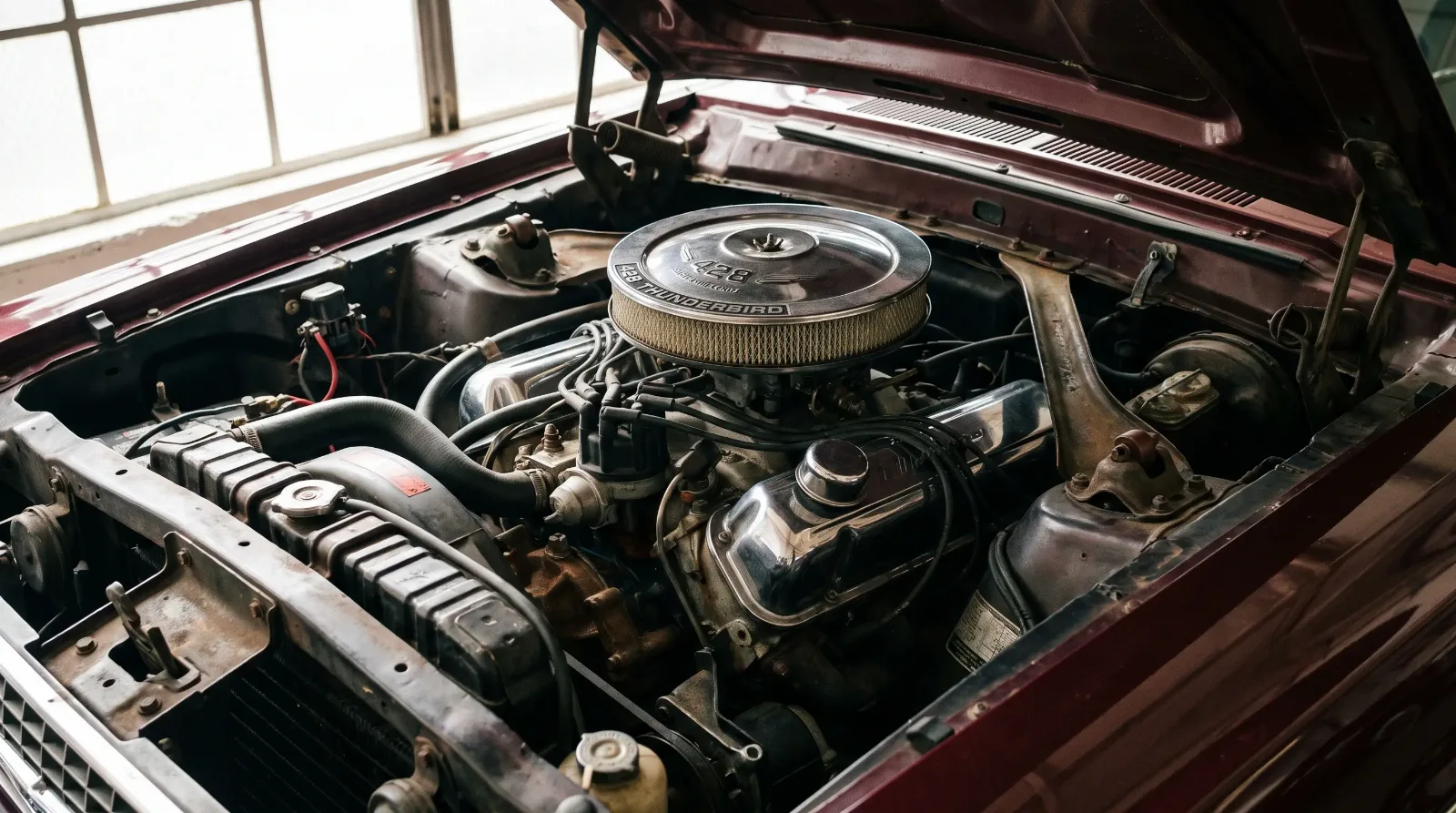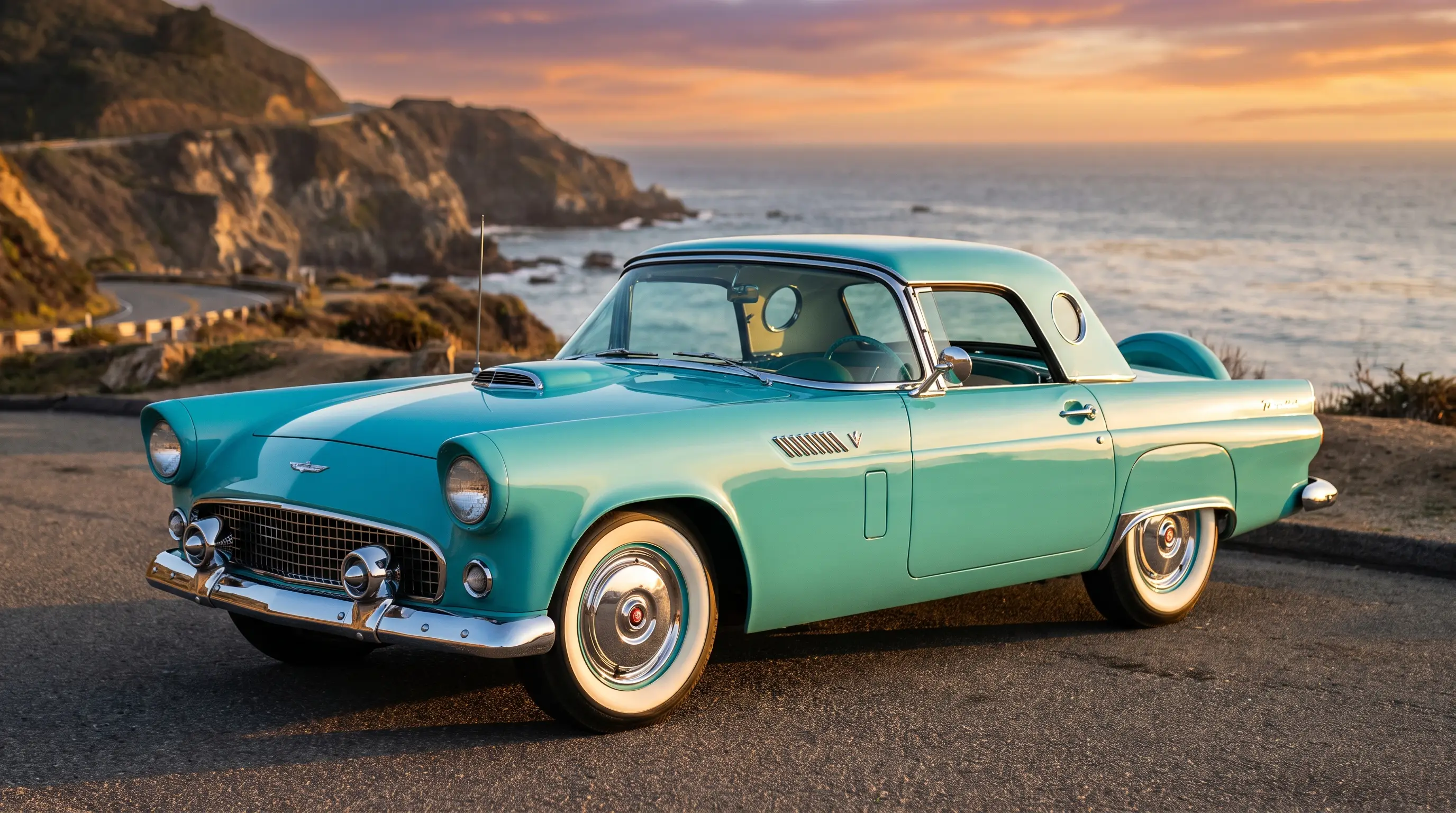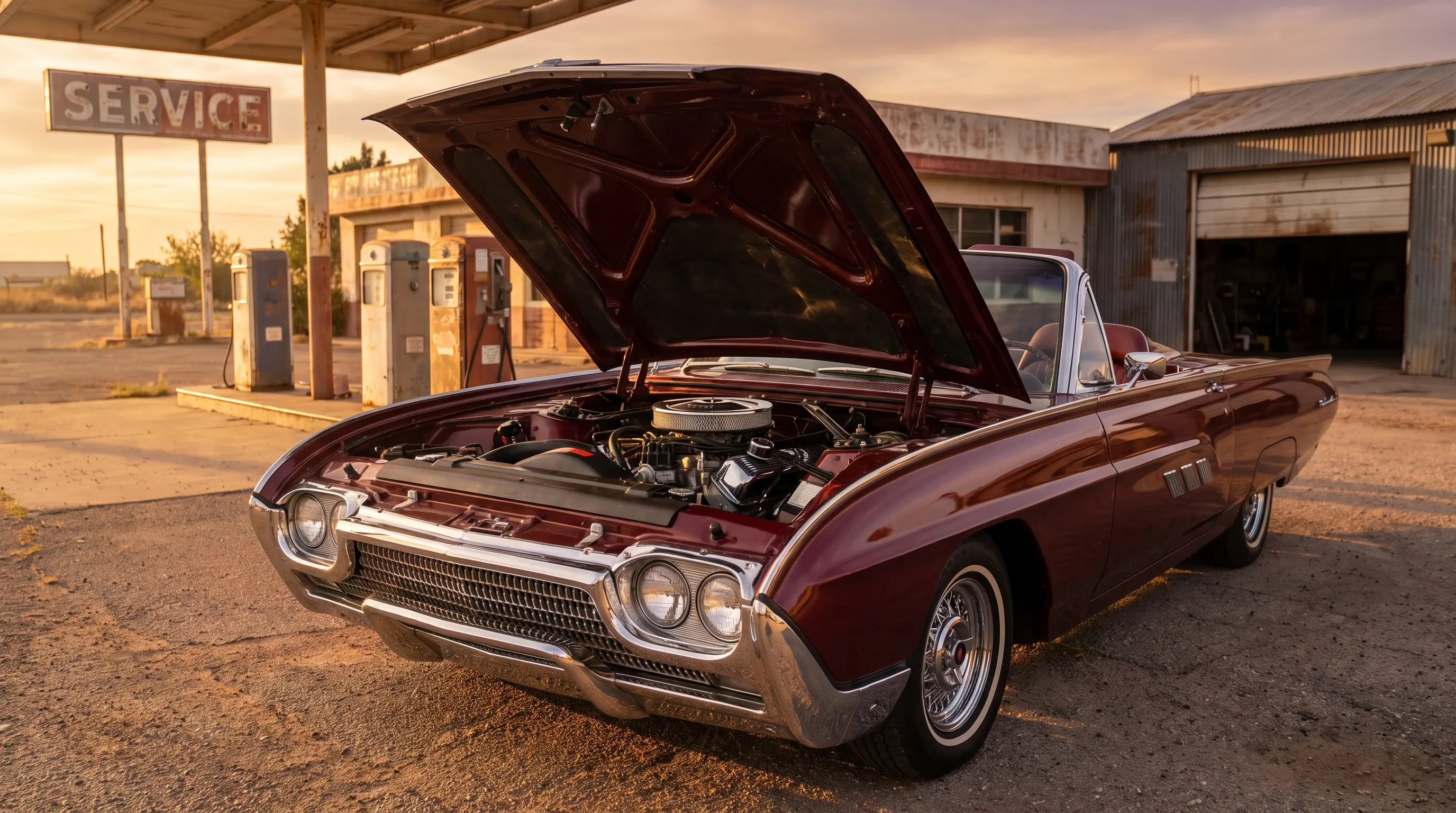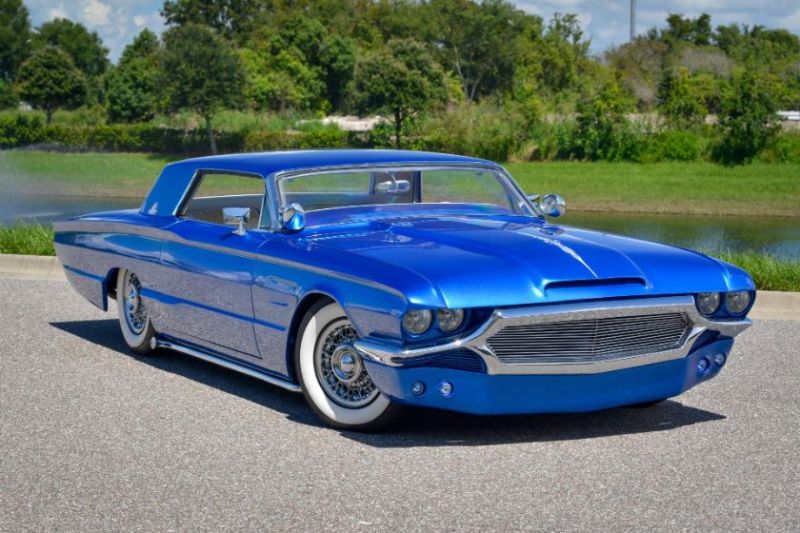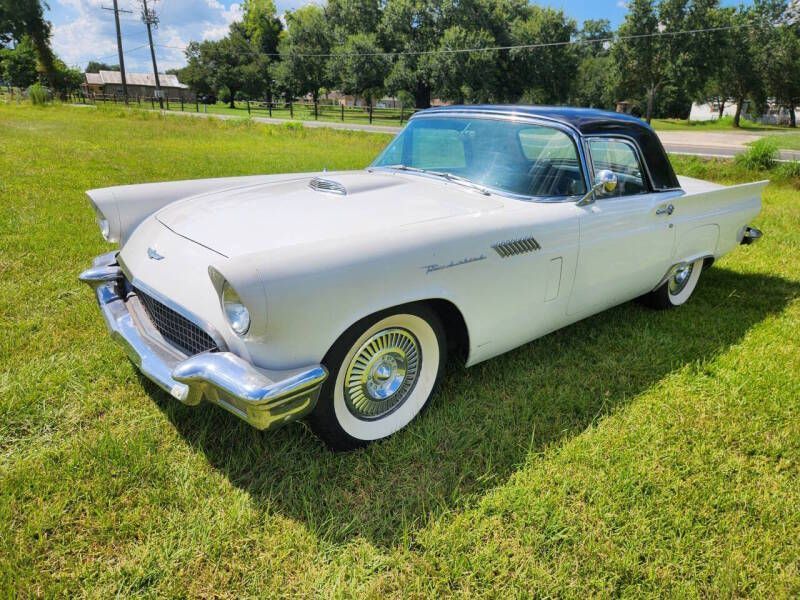
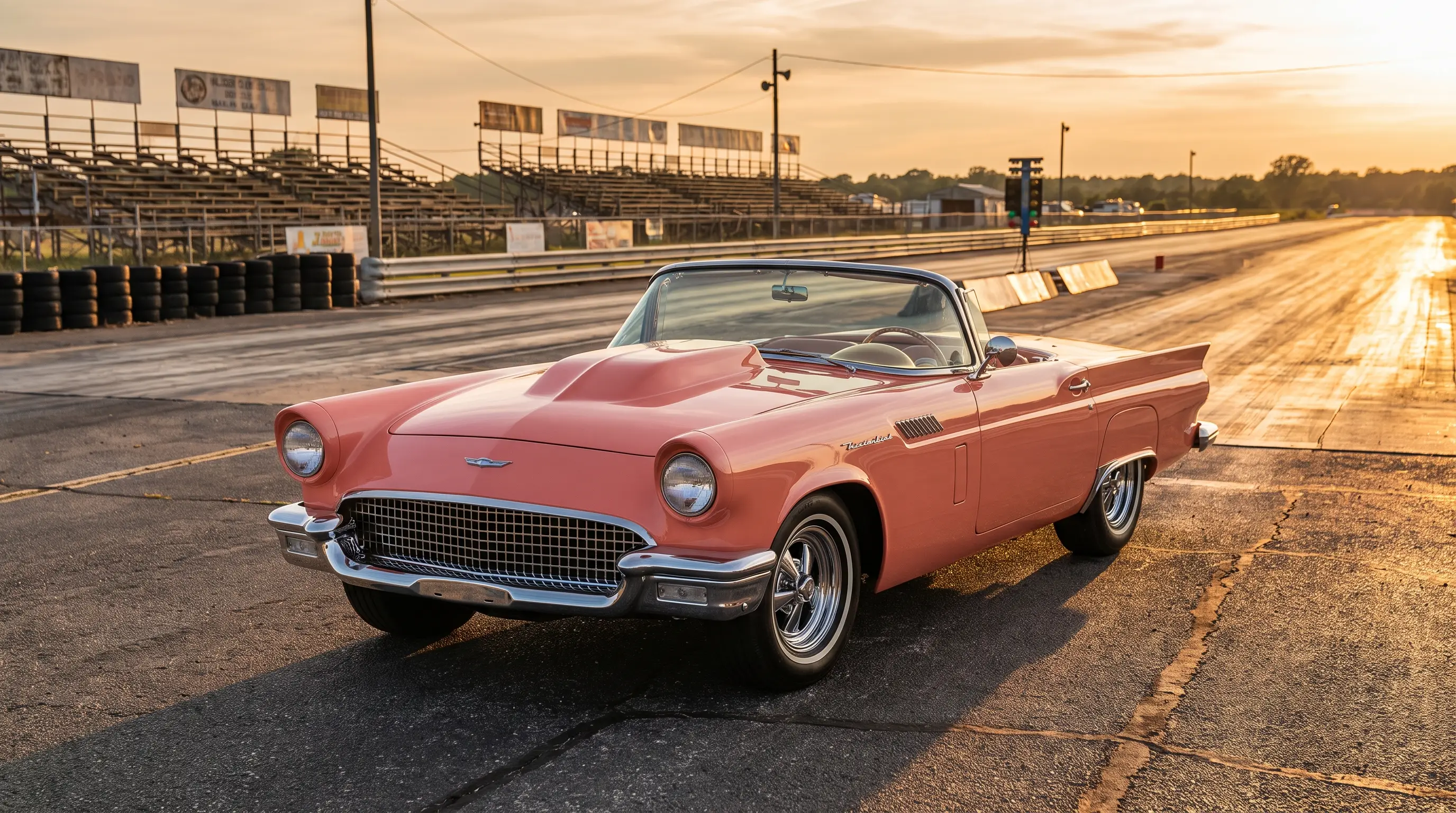
Ford built exactly one supercharged engine option for the two-seat Thunderbird, and it lasted exactly one model year. The thunderbird f-code 312 supercharged is the outlier in an otherwise conservative engine lineup, a McCulloch centrifugal blower bolted to the existing 312 cubic inch Y-block for the 1957 model year and rated at 300 horsepower, matching the one horsepower per cubic inch benchmark that mattered so much to marketing departments in the late 1950s. It is also a case study in what happens when a company chases a performance number faster than its parts bin can support it.
Why Ford supercharged a Thunderbird in 1957
The push for forced induction did not come from a desire to sell faster personal luxury cars to ordinary buyers. It came from NASCAR and from Ford's determination to beat Chevrolet's fuel-injected small block on the sales floor and on the sanctioning body's homologation sheets. Ford needed a Thunderbird variant that could compete in factory stock racing classes, and rather than engineer a new high-revving engine, the company took the pragmatic route of forcing more air into the existing 312. A McCulloch VR57 supercharger, fed through a single Holley four-barrel rather than a dual-quad setup, produced roughly 6 to 8 psi of boost, enough to move output from the naturally aspirated 312's 245 horsepower up to a claimed 300, and factory-documented racing tune examples with a more aggressive camshaft reportedly reached about 340 horsepower. The F-code designation refers to the engine code stamped into the block and used on the tag, distinguishing it from the naturally aspirated C-code and the dual-quad E-code 312 variants offered the same year, the E-code being rated at 270 horsepower rather than the F-code's boosted 300.
An engine built faster than it was proven
The F-code program moved quickly, and the bottom end of the standard Y-block was not substantially reinforced to handle the added cylinder pressure that boost creates. Detonation was a real risk on the pump gas of the period, and Ford specified a stiff compression ratio on top of the boost, a combination that left little margin for error with lower-octane fuel or an owner who leaned on the throttle in hot weather. Reports of cracked pistons and bottom-end failures circulated among period racers and dealers, and the option quietly disappeared after the 1957 model year, the same year the two-seat Thunderbird itself was redesigned into the larger four-seat "Squarebird" for 1958. Whether the supercharger was dropped because of reliability concerns, because the two-seater was being replaced anyway, or some mix of both, is a question historians still argue over, but the timing left the F-code with no second act to prove itself.
How rare is genuinely rare
Rarity by itself does not make a car valuable, but rarity combined with documented factory performance intent does, and the F-code checks both boxes. A verified F-code Thunderbird, meaning the block casting, the tag, and ideally period documentation all agree, sits in a different value tier than a standard E-code car with a supercharger added later by an enthusiast trying to replicate the option. The used-parts market complicates verification further, because McCulloch superchargers from other period Ford and Mercury applications can be adapted to a standard 312, and a convincing-looking engine bay does not automatically mean a factory F-code sits underneath it. Anyone shopping seriously in this space should treat the tag and casting numbers as the starting point of due diligence, not the end of it.
Where the F-code sits in the bigger picture
The supercharged 312 is a footnote in terms of total production, but it is an important one for understanding how competitive pressure shaped Ford's engine decisions even on a car built primarily for style and comfort. For the fuller picture of how the 312 fit alongside the base 292 and the rest of Ford's V8 lineup through the 1950s, our complete history lays out the full progression generation by generation.
"The math on the F-code is simple. Same displacement, same basic architecture, and suddenly 55 more horsepower because Ford needed a number that started with a three. The engineering corners that got cut to hit that number are why so few of these engines survived hard use."
- Emily Chen
Racing intent versus showroom reality
It is worth being clear about what the F-code was actually built to do, because it explains almost every engineering decision Ford made with it. NASCAR rules of the period required manufacturers to offer a performance option to the general public before it could be homologated for competition, so the F-code existed on dealer lots at least partly as a box to check for racing eligibility rather than as a mainstream product Ford expected to sell in volume. That context matters when evaluating the engine's known weaknesses. A racing team running an F-code Thunderbird on a closed course with fresh parts and constant attention is a very different use case than a private owner driving one on public roads with pump gas and infrequent maintenance, and the failures that gave the engine its reputation mostly happened in the second scenario.
How the F-code compares to naturally aspirated 312 variants
Ford offered the naturally aspirated 312 in several states of tune for 1957, ranging from a mild single four-barrel C-code version rated at 245 horsepower through the dual-quad E-code rated at 270 horsepower. The gap between the top naturally aspirated version and the supercharged F-code, 270 horsepower versus a claimed 300, represents one of the larger single-option horsepower jumps Ford offered on any 1957 product, Thunderbird or otherwise. That gap is exactly why the F-code carries such outsized reputation relative to its tiny production numbers. It was not a modest step up the option sheet. It was the single most aggressive engine choice Ford put in front of a Thunderbird buyer that year, delivered through a supplier-built supercharger system rather than anything developed entirely in-house.
What the option cost buyers in 1957
The F-code carried a real price premium over the standard 312, and Ford positioned it deliberately as a specialty item rather than a mainstream upgrade. Dealers ordering the option had to commit to a supercharged engine before delivery, since this was not something a service department bolted on later, and that ordering friction alone likely discouraged casual buyers who might have been curious about the extra power but unwilling to pay for a factory-only option with no easy path to reversal. Combined with growing whispers about reliability even in the engine's first year on the road, the F-code found itself a genuinely niche purchase almost from the moment it appeared on the order form, appealing mainly to buyers who specifically wanted the fastest Thunderbird money could buy that year and were willing to accept the tradeoffs that came with it.
Buying and evaluating an F-code today
If you are looking at a car represented as an original F-code, treat verification as a project in itself. Compare the engine tag against Ford's known casting and stamping conventions for 1957, look for consistency between the supercharger mounting hardware and period photographs, and ask for any paperwork the seller has, including build sheets or dealer invoices if they exist. A rebuilt bottom end is not automatically a red flag given the engine's known weaknesses, but undocumented, unexplained internal work on a car claiming F-code originality deserves closer questions rather than fewer. Buyers who want the performance story without the authentication headache sometimes look at later, better-documented Thunderbird big block options instead, which is a reasonable trade-off depending on what you actually want from the car. Either way, start your search where the inventory actually is and go find a classic Thunderbird before you commit to chasing one specific engine code.