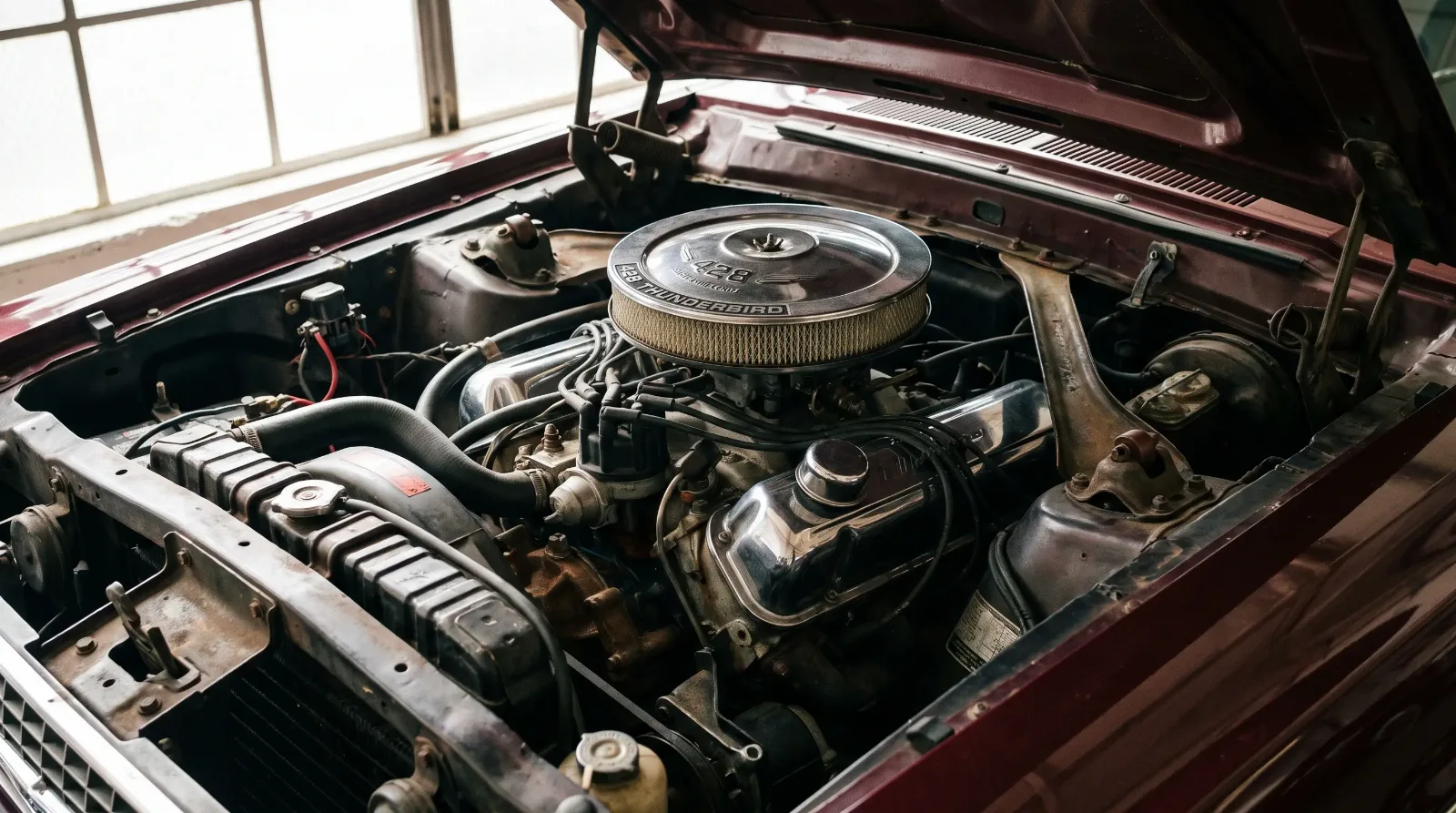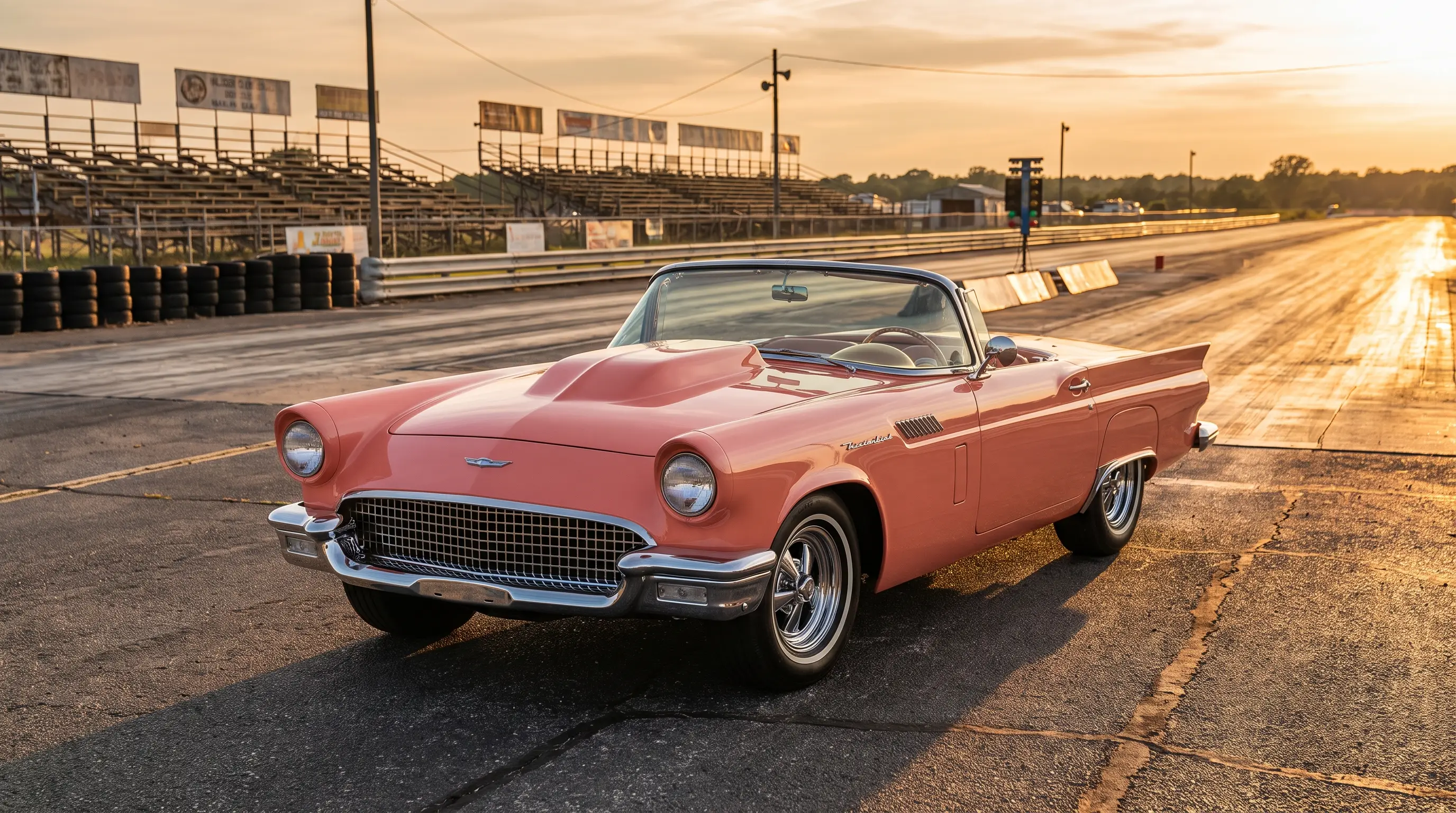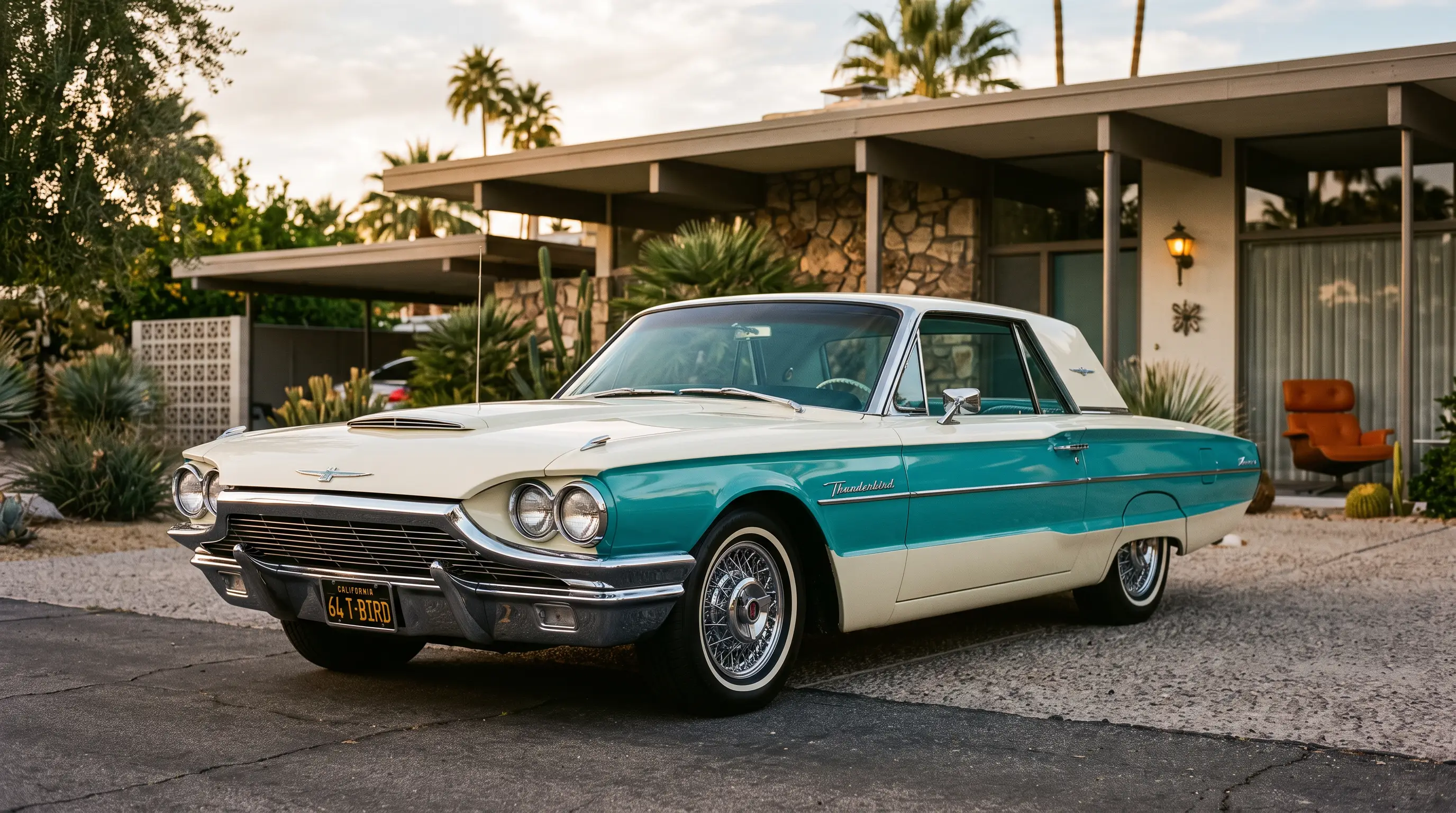
The 1955 Ford Thunderbird did not launch with a big number under the hood, and it did not need one. It launched with the Y-block V8, the engine that got Ford into the overhead-valve V8 game just three years after Chrysler and one year after Chevrolet. If you want to understand the thunderbird y-block v8, start with the shape, not the horsepower chart. Slice the block in half and the crankcase extends well below the crankshaft centerline, giving the casting a rough Y profile when you look at it end on. That deep skirt is where the name comes from, and it is also why the engine earned a reputation for being stout, heavy, and a little old-fashioned before it was even out of diapers.
Where the Y-block came from
Ford introduced the Y-block for the 1954 model year in the full-size Ford and Mercury lines, replacing the flathead V8 that had carried the company since 1932. The flathead was cheap and simple, but it was also maxed out on breathing and compression by the early 1950s. The Y-block gave Ford overhead valves, higher compression ratios, and room to grow displacement without redesigning the whole architecture. When the Thunderbird arrived for 1955, it borrowed the passenger-car Y-block rather than getting something bespoke, which was the correct business decision even if it was not the most romantic one. A halo car does not need a unique engine. It needs a good one that is already proven and already in the parts bin.
1955 to 1957: three sizes, one architecture
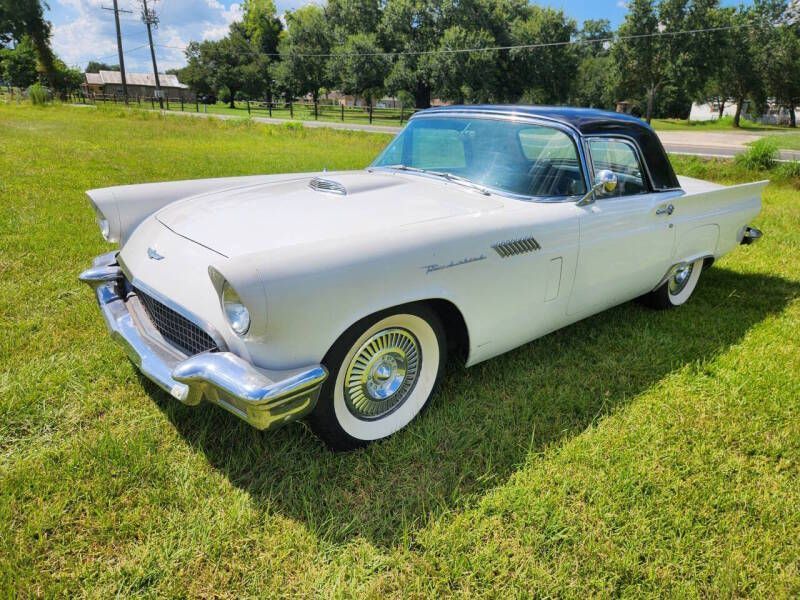
The 1955 Thunderbird came standard with a 292 cubic inch Y-block rated at 193 horsepower with the three-speed manual and 198 with the Ford-O-Matic automatic, the higher figure coming from a slightly different carburetor and distributor calibration rather than any mechanical change. For 1956, Ford bumped compression and added a larger 312 cubic inch version as an option, pushing output past 200 horsepower depending on transmission and axle ratio. By 1957, the final year of the two-seat Thunderbird, the 312 became the headline engine, offered in several states of tune from a mild two-barrel version up through the four-barrel E-code and the supercharged F-code, which gets its own story because it deserves one. The 292 stuck around as the base engine through 1957 for buyers who wanted the styling without paying extra for power.
None of these three displacements, 272, 292, or 312 cubic inches, were unique to the Thunderbird. All three appeared across the Ford and Mercury passenger lineup during the same years, which is worth remembering when someone tells you their Y-block is a Thunderbird-only piece. The block casting, the heads, and most of the internals are shared parts. What made a Thunderbird engine a Thunderbird engine was mostly the carburetion, the cam, and in 1957, the supercharger option that never appeared on a mainstream Ford sedan.
Why the Y-block earned its reputation
The Y-block is not remembered as a high-revving engine, and it was never meant to be one. Oiling to the rocker arms was marginal by later standards, funneling through small passages that could starve the top end if a Thunderbird owner ran hard for long stretches without attention to maintenance. Ford revised the oiling system more than once during the Y-block's run, but the fundamental layout, with its deep skirts and generous main bearing webbing, was built for durability and low-end torque rather than screaming rpm. That is exactly what a personal luxury car needed in 1955. Thunderbird buyers were not lapping a road course. They wanted smooth, confident acceleration off the line and an engine that would run for a decade without drama, and the Y-block delivered both.
Read the ford thunderbird engine history and you will see the Y-block sitting at the very start of the timeline, the engine that established Ford's V8 credibility before the FE big block ever showed up. It is also worth reading a related story about the one Y-block variant that broke from the durability-first script entirely.
Collecting and rebuilding today
Parts support for the Y-block remains healthier than you might expect for a design that last powered a new car in the mid-1960s. Aftermarket cylinder heads, rebuild kits, and even improved oiling components are available because the same basic architecture powered Ford and Mercury sedans, trucks, and industrial applications for close to a decade beyond the Thunderbird's use of it. What is harder to find is a numbers-matching 1955 through 1957 Thunderbird block with clean, documented casting numbers, because these cars have been swapped, rebuilt, and occasionally re-engined with later small blocks over seven decades of ownership. A verified original engine adds real money to a Square Bird sale, and buyers who care about matching numbers should ask for casting date codes before they ask about horsepower claims.
"Everybody wants to talk about the F-code supercharger because it is the exciting outlier. The plain 292 is the engine that actually built Ford's reputation, one reliable Thunderbird at a time."
- Dan Reeves
Transmissions and how the Y-block actually drove
Most 1955 Thunderbirds left the factory with the three-speed manual, some with factory overdrive, though the Ford-O-Matic automatic proved far more popular with the personal-luxury crowd Ford was actually courting. The Y-block's broad torque curve suited the automatic well, since the engine did not need to be revved hard to feel responsive around town. A manual Thunderbird with overdrive is the rarer, more collector-prized combination today, not because it is dramatically quicker, but because fewer buyers ordered it in period and fewer have survived with the original gearbox intact. Either way, the driving character is the same story told at a different pace: smooth, unhurried, and built to feel effortless rather than urgent.
The Y-block outside the Thunderbird
Understanding the Y-block also means understanding how long it outlived the two-seat Thunderbird itself. Ford kept the architecture in production for full-size cars into the early 1960s and continued using related Y-block derivatives in light trucks well past that, meaning the engineering lessons learned building and servicing this block stayed relevant to Ford mechanics for the better part of a decade after the last two-seat Thunderbird rolled off the line in 1957. That long tail is part of why parts and expertise remain accessible today. A restoration shop that has never touched a Thunderbird has often still worked on a Y-block-powered Fairlane or F-100, and the knowledge transfers directly.
The bottom line on the Y-block
The Y-block V8 is not the fastest engine Ford ever built, and it is not the one with the best story attached to a single legendary variant. It is the engine that proved Ford could build a modern overhead-valve V8 on the same timeline as its rivals, and it is the engine that sat under the hood of every two-seat Thunderbird ever built. Three displacements, one basic architecture, and a reputation for outliving its owners' patience with maintenance schedules. That is not a flashy legacy, but it is a real one, and it is the reason a numbers-matching 1955 to 1957 Thunderbird with its original Y-block still commands a premium over a car with a later small block swapped in. If you are shopping, check Thunderbirds for sale now and ask the seller specifically which of the three Y-block displacements sits under that hood before you assume anything from the model year alone.