Thunderbird horsepower is one of those numbers that looks simple on a spec sheet and gets complicated the moment you start comparing years. Ford's personal luxury coupe ran through four distinct generations before 1980, and the horsepower figure attached to each one tells a story about gross versus net ratings, emissions rules, and a company slowly figuring out what buyers actually wanted from this car.
The two-seat years set a modest baseline
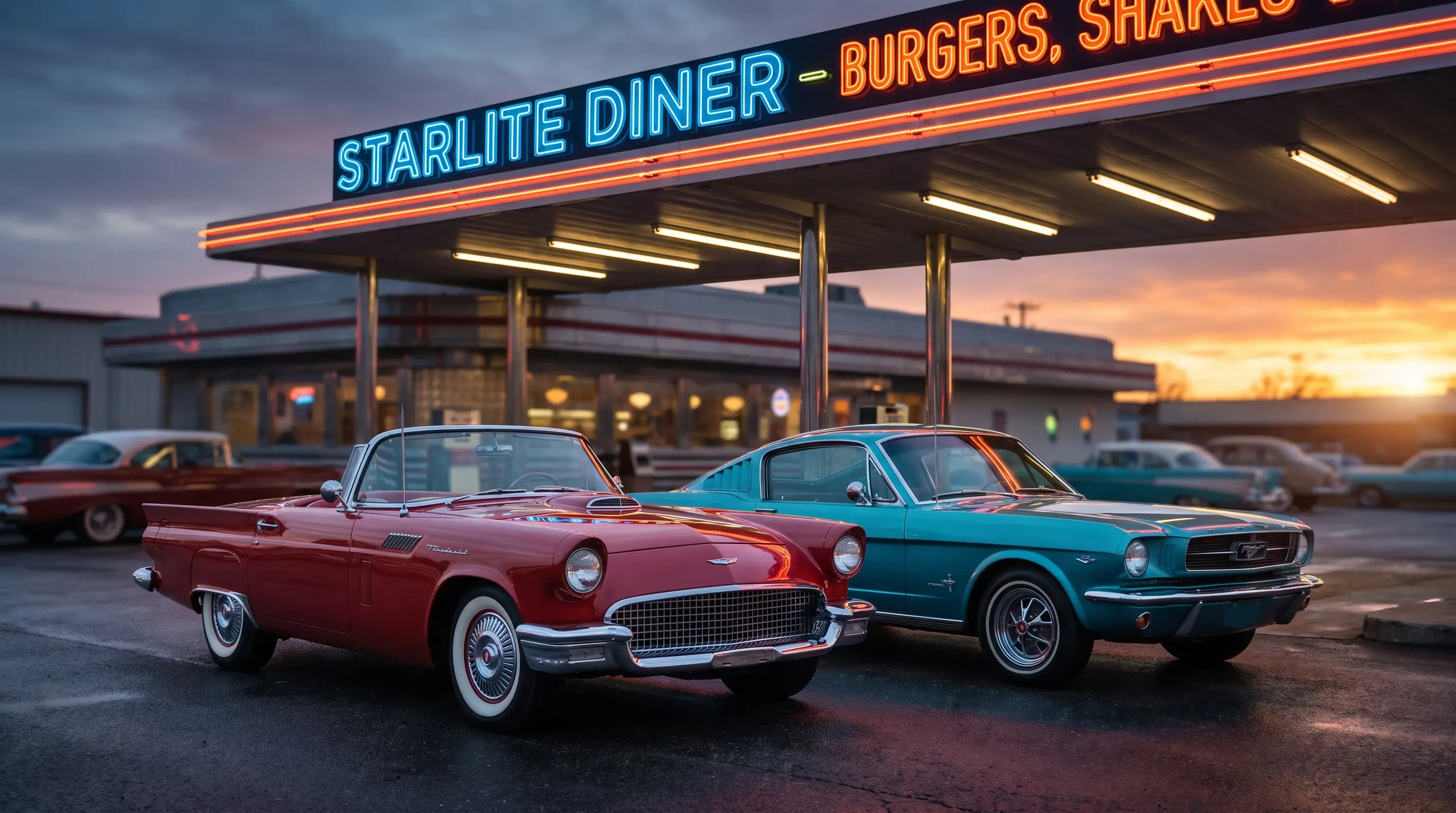
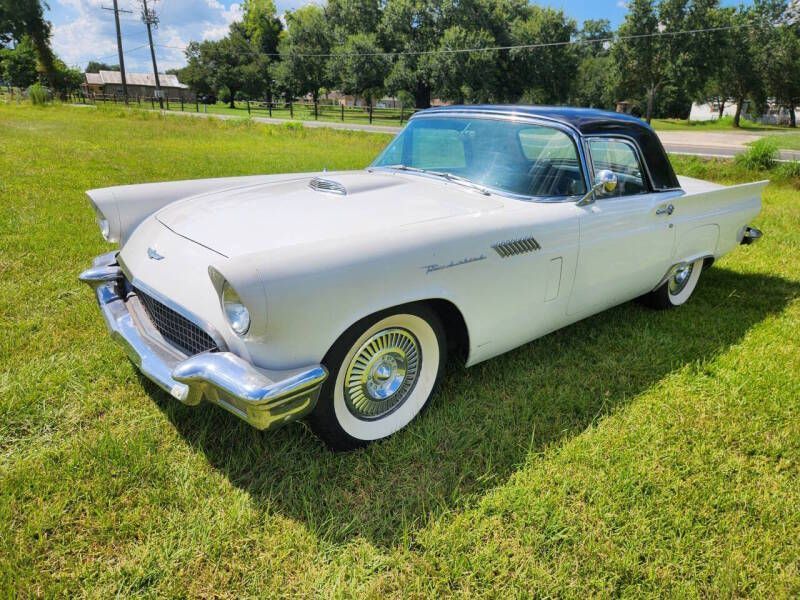
The original 1955 Thunderbird carried a 292 cubic inch V8 rated at 193 horsepower. That number climbed quickly. By 1956 Ford offered a 312 cubic inch option good for 215 horsepower, and 1957 pushed further with a supercharged 312 rated at 300 horsepower in its rarest form. These early numbers came from a lighter, two-seat platform, so the power to weight ratio was genuinely sporty for the era, even if Ford never marketed the car as a raw performance machine. The two-seat Thunderbird was about presence and refinement first, speed second.
The Square Bird changes the math
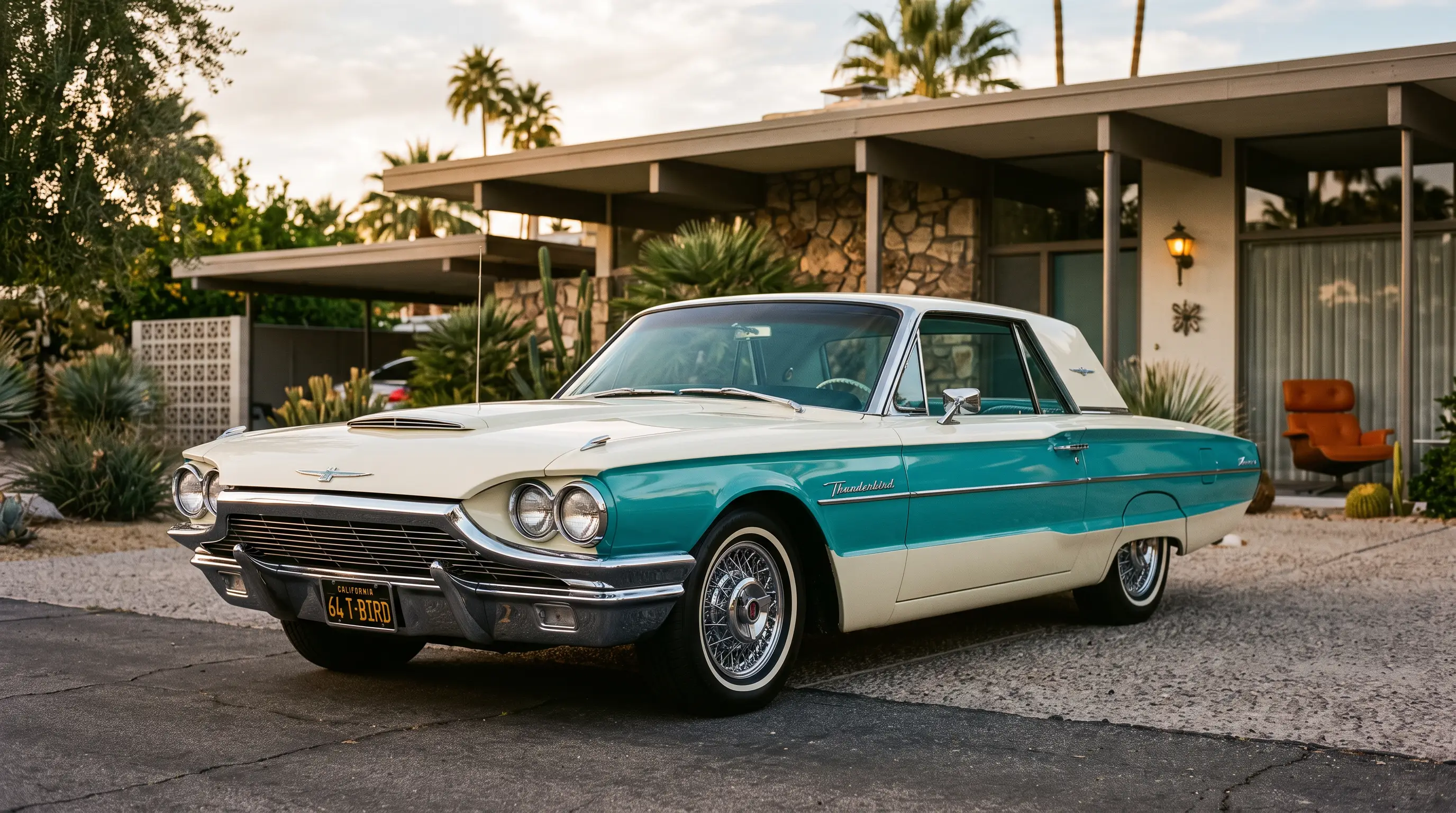
1958 brought the four-seat "Square Bird" and a heavier body, which meant horsepower had to climb just to keep the driving experience from feeling sluggish. This was the first year Ford treated the Thunderbird as a distinct product line rather than a niche sports car competing with the Corvette. That shift in identity is a large part of why the horsepower numbers climb so quickly after 1957: Ford was no longer chasing a light two-seat ideal, it was chasing comfort and the ability to carry four adults at speed without the engine feeling strained. The 352 cubic inch V8 arrived at 300 hp, and by 1960 Ford offered a 430 cubic inch engine, shared with the Lincoln MEL family, rated at 350 hp. This is the point where Thunderbird horsepower numbers start looking impressive purely because Ford needed bigger engines to move a bigger, more comfortable car. Weight and power grew together for the rest of the classic era, which is worth remembering any time a raw horsepower figure gets tossed around without context.
The 1960s peak
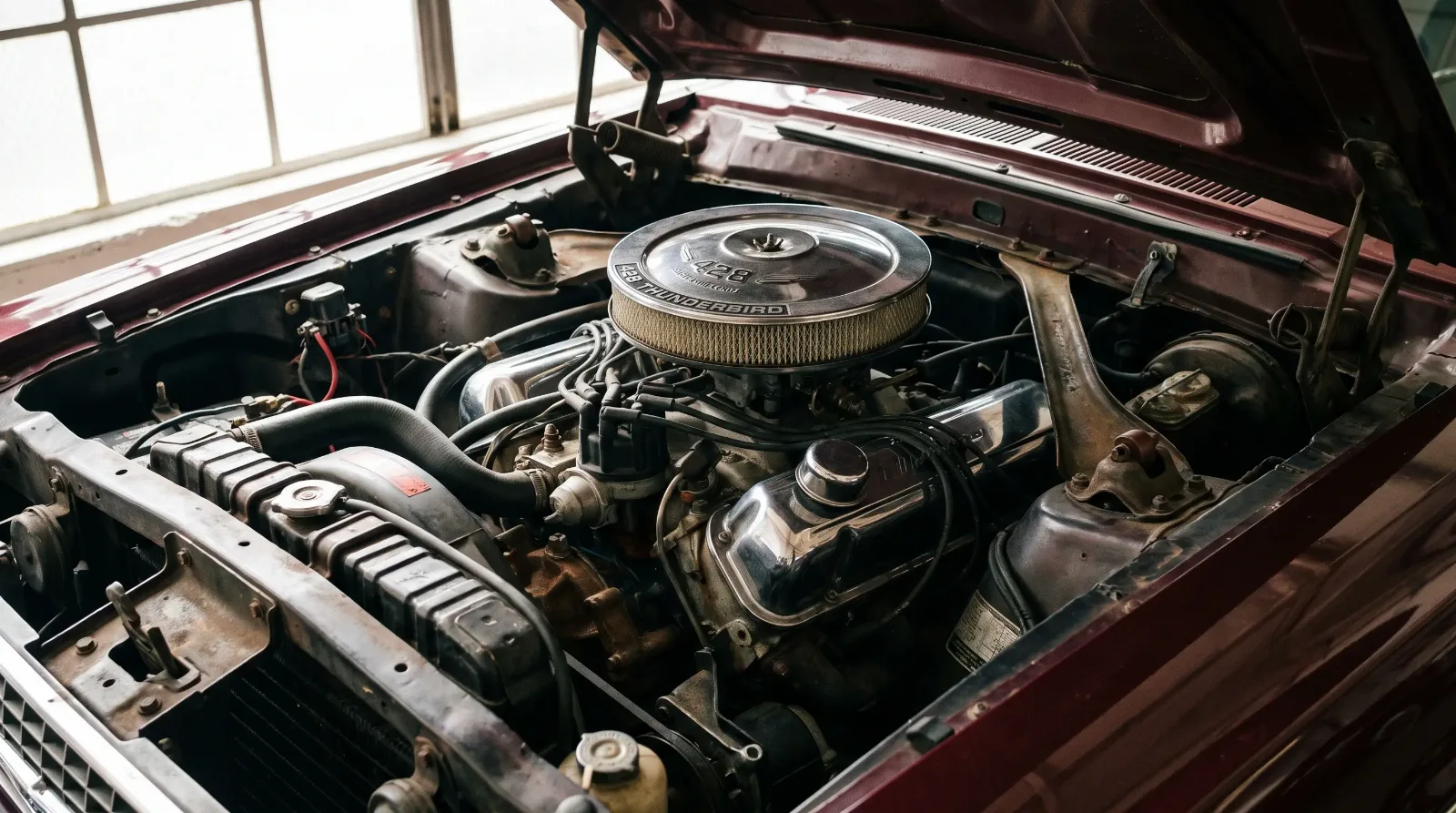
Thunderbird horsepower reached its classic-era high points in the mid to late 1960s. The 1966 model offered a 428 cubic inch V8 rated at 345 hp, paired exclusively with Ford's Cruise-O-Matic automatic. This engine carried the Thunderbird through the rest of the decade and into the 1970s largely unchanged in basic architecture, even as the car itself grew heavier with each redesign. By 1972 the Thunderbird had swelled into a genuinely massive personal luxury coupe, and Ford answered with a 429 cubic inch V8, rated at 212 net horsepower under the new SAE standard, a figure that looked weak next to earlier gross numbers even though the mechanical losses were smaller than they appeared.
For readers who want the full technical arc across every generation rather than just the peak years, the ford thunderbird engine story covers each engine family in detail, from the early Y-block to the FE and 385 series big blocks that carried the nameplate through the 1970s.
"Every time someone quotes a Thunderbird horsepower number without saying whether it is gross or net, I assume they have not actually looked at the data. The two figures for the same engine, same year, can differ by close to a third."
- Emily Chen
Then the numbers dropped, on paper
1972 was the year the SAE switched the industry from gross horsepower ratings, measured on a stripped test engine with no accessories, to net horsepower ratings, measured with the engine installed as it would ship, accessories and all. A Thunderbird engine that had been rated at 360 gross horsepower one year could show up rated at 205 net horsepower the next, with no actual mechanical change. This single accounting shift causes more confusion about Thunderbird horsepower than any other factor in the car's history. Buyers looking at a 1971 spec sheet next to a 1972 spec sheet without knowing about the switch assume Ford gutted the engine overnight. It did not. The engine was largely the same. The measurement changed.
Emissions equipment compounded the real losses through the mid 1970s. Catalytic converters, exhaust gas recirculation, and leaner carburetor tuning did cut genuine output year over year, on top of the accounting change. By 1975 a Thunderbird 460 cubic inch V8, the largest engine ever offered in the nameplate, made a net rating of around 194 hp on the standard single exhaust setup (224 hp with the dual exhaust option), a fraction of what a similarly sized engine would have shown under the old gross standard just a few years earlier.
Reading old horsepower claims correctly
Anyone researching thunderbird horsepower figures from period brochures needs to check the year against the rating standard before comparing across generations. A rule of thumb: anything from 1971 and earlier is a gross figure, anything from 1972 onward is net. This single fact resolves most of the apparent horsepower cliff people think they see in Thunderbird history. The engines did get genuinely weaker through the mid 1970s because of emissions gear, but not nearly as dramatically as the raw numbers alone suggest.
The practical upshot for collectors is that a documented 1966 Thunderbird with its factory 428 will out-accelerate a 1975 Thunderbird with its factory 460, despite the smaller engine and the lower-looking number belonging to the newer car if you only glance at year-over-year figures without knowing the standard changed. Weight also matters here since the 1970s cars were considerably heavier than their 1960s counterparts, compounding the emissions-era power loss.
Where to see it firsthand
Reading about horsepower figures only gets a buyer so far. The differences between a documented 1960s Thunderbird and a 1970s example show up immediately behind the wheel, in throttle response and the way each car pulls through the gears. For the full story of how the model evolved generation by generation, including the body and chassis changes that forced these horsepower shifts, the complete history lays out the connections between weight, engine size, and output across two decades. Buyers ready to compare examples directly can look at classic Thunderbirds on the market and cross-reference engine codes against the year and rating standard before making a decision.
Horsepower numbers are useful shorthand, but only once you know which measurement system produced them. The Thunderbird's own history is the clearest illustration of why that caveat matters, since the same basic engine family can look like it lost a third of its output overnight when nothing mechanical actually changed.
That is also why a well documented example matters so much when horsepower claims come up during a purchase. Original build sheets, Marti Reports, and matching engine codes settle the question that a brochure number alone cannot, since the brochure figure depends on which side of 1972 the printing happened to land. A careful buyer treats the horsepower rating as a starting point for research rather than a final answer, and checks it against the actual engine code stamped on the block before making any comparison across model years.
Sources and notes
- Squarebirds.org: 1958 Ford Thunderbird Specifications
- Conceptcarz: 1960 Ford Thunderbird Specifications
- Automobile Catalog: 1966 Ford Thunderbird 428 V-8 specs
- Automobile Catalog: 1972 Ford Thunderbird 429 V-8 specs
- Automobile Catalog: 1975 Ford Thunderbird 460 V-8 specs
- Wikipedia: Ford Thunderbird (sixth generation)