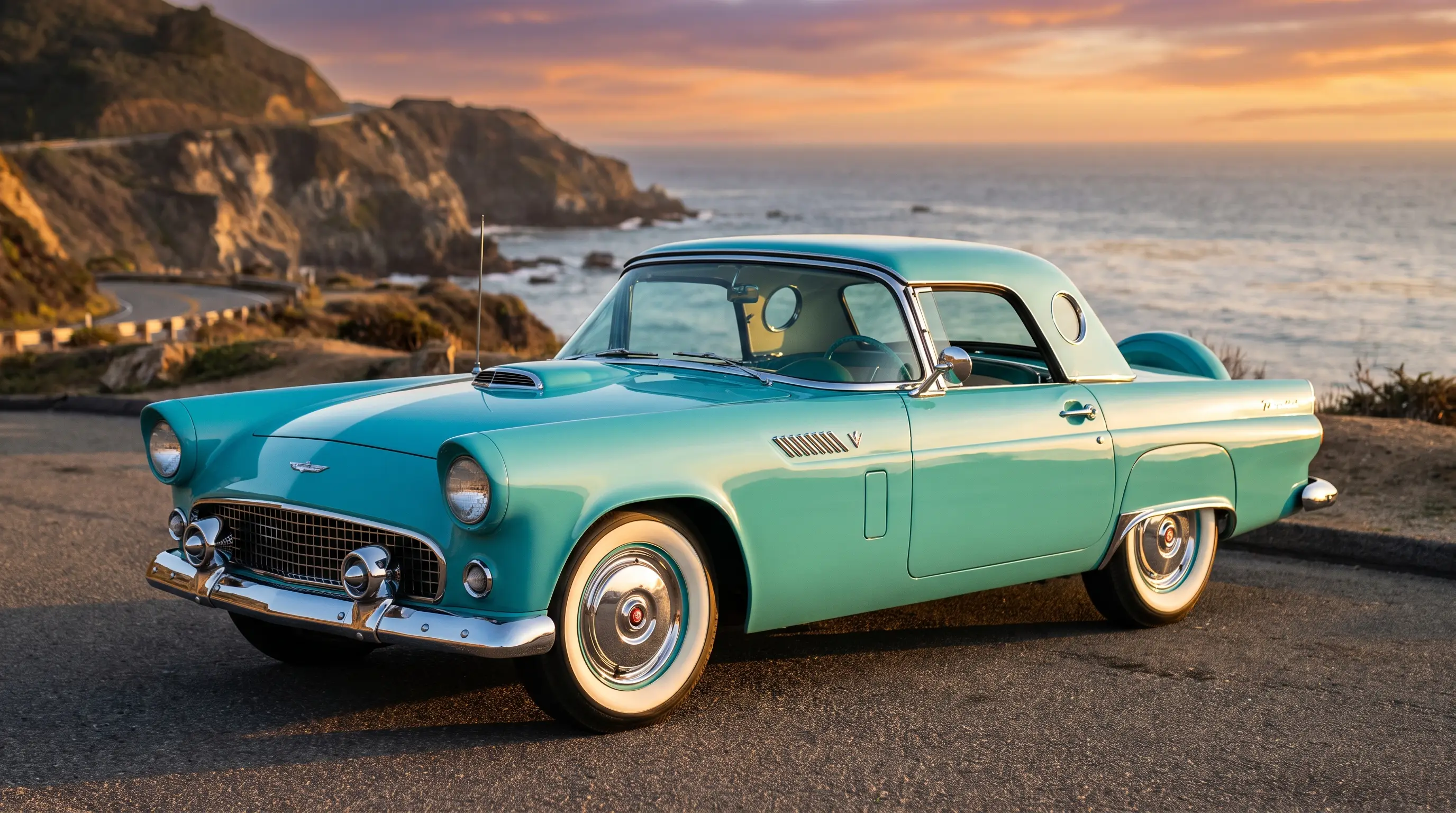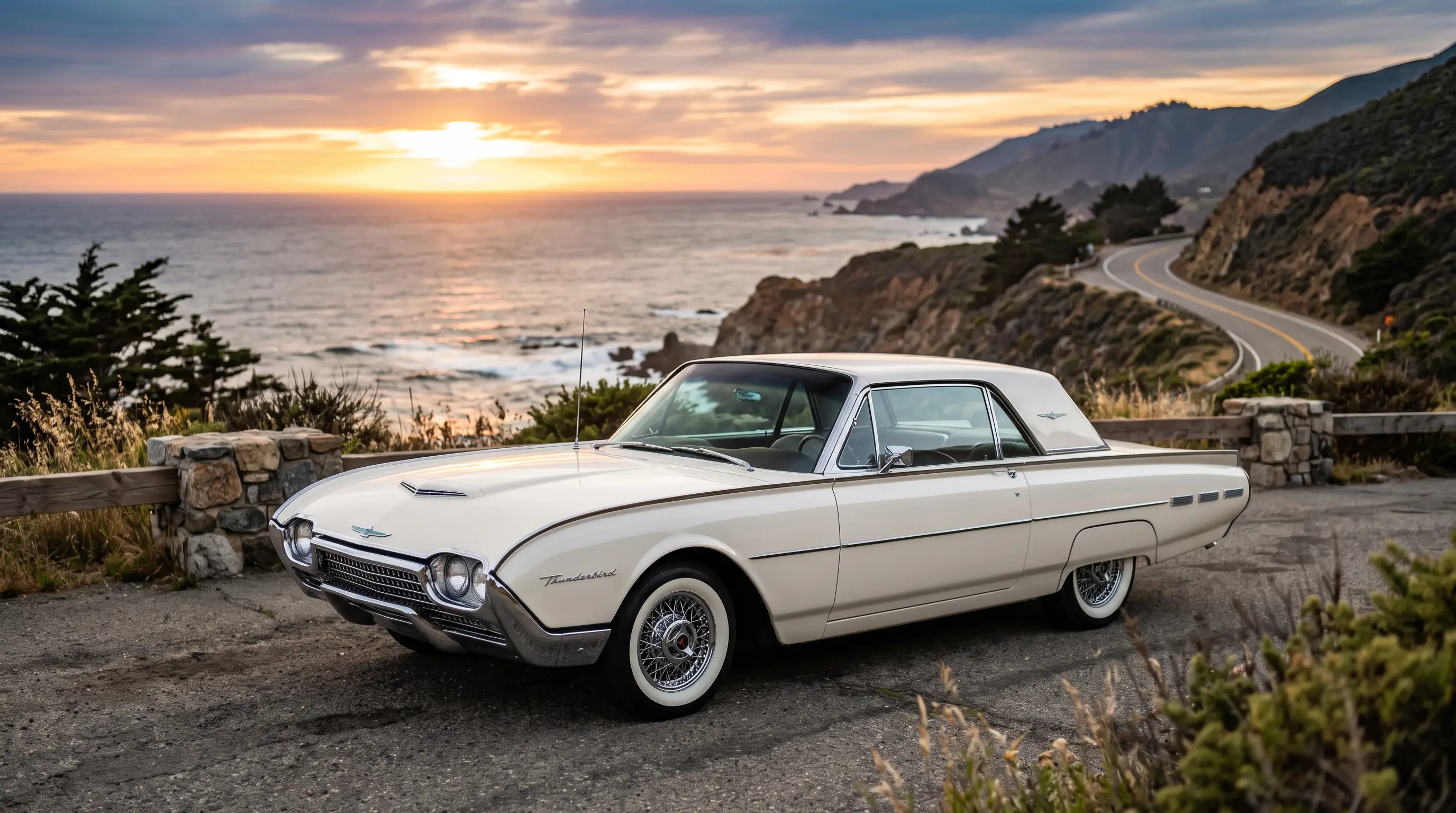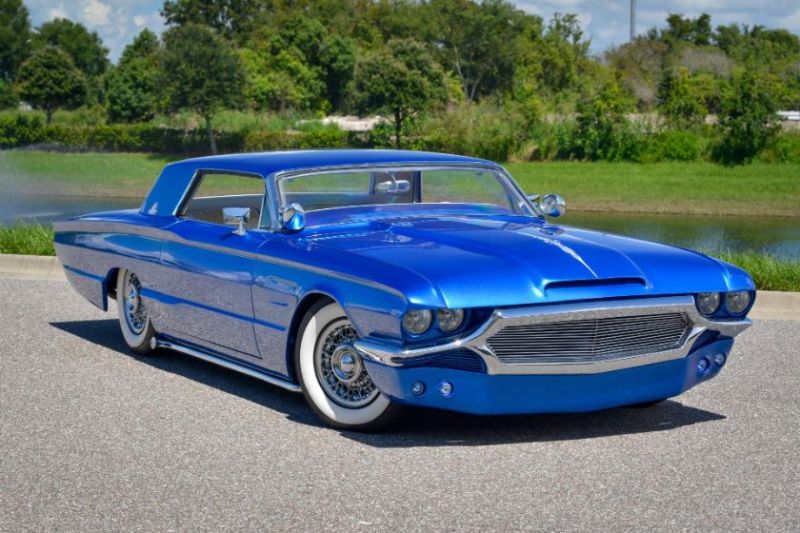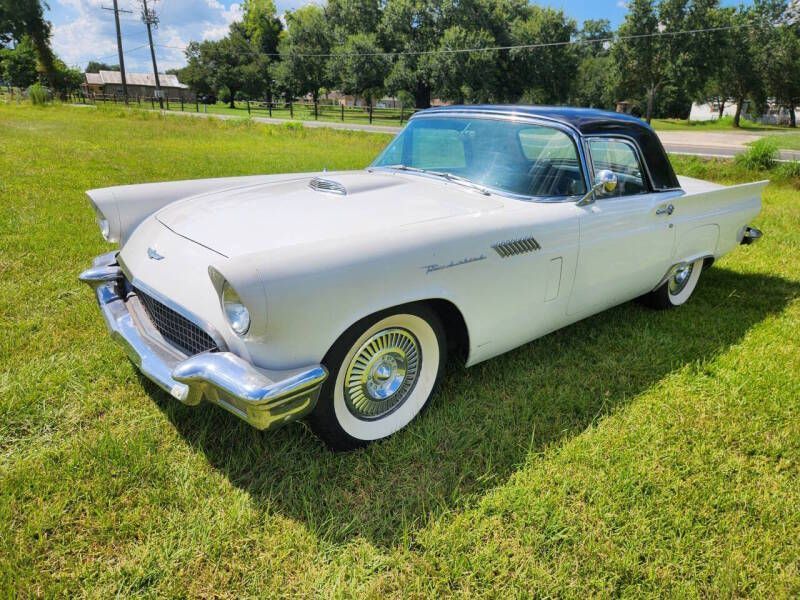
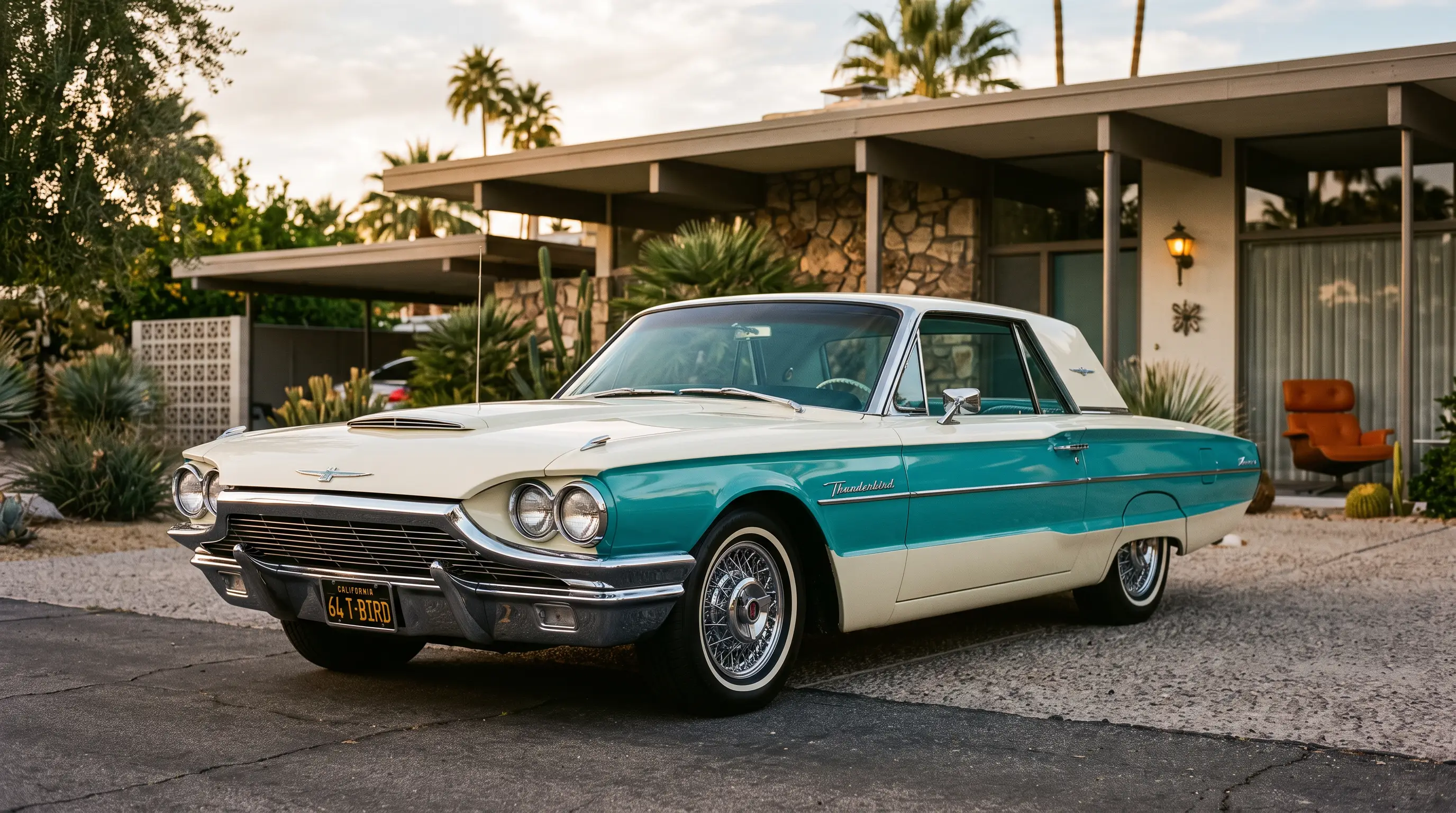
I still hear it at every show I bring my Thunderbird to. Somebody walks up, admires the lines, then asks why Ford never turned this thing into a real muscle car. I have had this conversation enough times now that I can predict the whole thing before it starts, and the honest answer is that the Ford Thunderbird was never supposed to be a muscle car in the first place. That was never the assignment.
A story my uncle told me first
My uncle Ray bought a 1964 Thunderbird new, traded in a perfectly good Galaxie to do it, and my grandmother never let him hear the end of it. She thought he'd bought a car for show, not for driving. Ray used to laugh about that at every family gathering for thirty years. He'd say the Thunderbird was never built to win a race down Main Street, it was built so you'd arrive at the drive-in without a hair out of place and the windows still up, air conditioning humming, while the kid in the Galaxie next to him showed up sweating with his arm hanging out the window. That is the whole personal luxury coupe idea in one story, and it explains the thunderbird muscle car question better than any spec sheet.
What "personal luxury" actually meant
Ford invented a category with the four-seat Thunderbird starting in 1958, and it kept refining that category through the 1960s and 1970s. Personal luxury meant a car sized and priced above the mainstream lineup, loaded with comfort features, and marketed to buyers who had already proven themselves financially. It was never marketed against the GTO, the Road Runner, or the Chevelle SS. Those cars were fighting for young buyers with a hot engine and a low price. The Thunderbird was fighting for buyers a decade older with more money and less patience for a stiff ride.
Every mechanical decision flowed from that positioning. Automatic transmissions only, in most years. Power steering and power brakes as near-universal equipment. Sound insulation that added weight nobody in a muscle car would tolerate. A frame tuned for a smooth ride over broken pavement instead of a stiff platform for cornering grip. None of that is what a muscle car buyer wanted, and Ford knew it, because Ford was selling muscle car buyers a completely different car from the same showroom floor.
"You don't build a muscle car with power windows standard and a vinyl roof on the options list. Ford wasn't confused about what it was building. The customer wasn't confused either."
- Wayne Coburn
Big engines are not the whole story
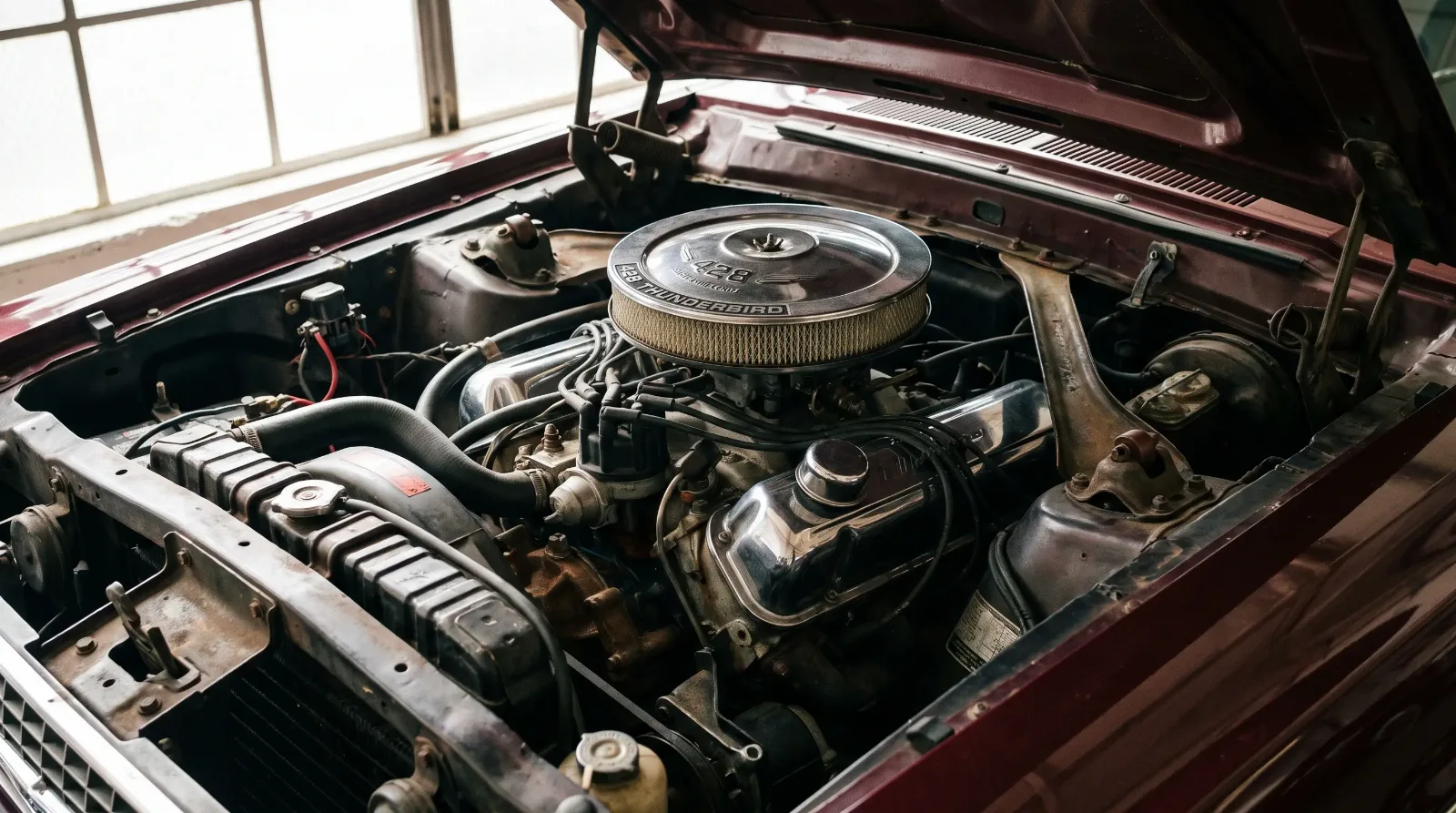
People point to the Thunderbird's big block options, the 428 and later the 429 and 460, and treat those numbers as proof the car could have been a contender. Cubic inches alone never made a muscle car. The formula that defined the genre was a big engine in a light, cheap body with minimal weight to haul around. The Thunderbird flipped every part of that formula except the engine size. A 1970 Thunderbird weighed well over two tons, wore full carpeting and power everything, and never offered a manual transmission. Strip all that away and you might have had a genuine performance car under the skin. Ford never had any intention of stripping it away, because the customer paying Thunderbird money wanted the weight, the insulation, and the comfort just as much as the engine.
Compare that to what Pontiac did with the GTO or what Plymouth did with the Road Runner. Those cars started from a light, cheap intermediate body and added a big engine on purpose, stripping out sound deadening and comfort options to keep the price down and the power to weight ratio in the buyer's favor. Ford took the opposite path with the Thunderbird every single year. Bigger engines arrived alongside more insulation, more chrome, more standard equipment, and more curb weight, not less. That is not a company accidentally missing a muscle car opportunity. That is a company deliberately building something else and staying consistent about it for two decades straight.
Club conversations settle it faster than any brochure
I have brought this question up at a dozen local club meets over the years, and the longtime owners always land in the same place. Nobody who actually drives a big block Thunderbird regularly wants it to behave like a GTO. They want the torque for effortless passing on the highway, the quiet cabin, the way it settles into a cruise and stays there. Ask a room full of Thunderbird owners if they wish Ford had built a stripped, lightweight performance version and most of them will tell you that car already exists, it is called a Fairlane, and it is a completely different ownership experience they were never shopping for.
That distinction matters more than it sounds. The people who cross-shopped a Thunderbird against a muscle car in period were rare, because the price gap and the intended use case rarely overlapped. A GTO buyer wanted a fast car they could barely afford. A Thunderbird buyer wanted a comfortable car they could easily afford, with power to spare when they wanted it, not power that demanded to be used constantly.
The documentation backs up the folklore
For readers who want the engineering side of this argument laid out generation by generation, the full story walks through exactly how Ford's engine choices for the Thunderbird tracked its shift from sporty coupe to full luxury cruiser, and why the displacement kept growing even as the performance intentions moved in the opposite direction.
My uncle Ray passed a few years back, and his Thunderbird went to a cousin who still shows it every summer. It has never won a drag strip trophy and it was never going to. It wins concours points and comfort arguments instead, which was always the point Ford was making with this car. If you are chasing that same feeling, there is usually classic Thunderbird for sale listings worth a look, and the good ones still carry that same unhurried confidence Ray talked about at every family cookout for three decades.
Ford built plenty of fast cars in this era. The Thunderbird was never meant to be one of them, and every person who has actually lived with one for a while already understands why that was the right call.
What strikes me most, looking back on Ray's ownership and my own since, is how little that verdict has changed with time. Values for genuine muscle cars have chased big numbers for decades, driven by quarter mile times and rarity of options. Thunderbird values move on a different axis entirely, built on originality, condition, and the quality of the ride, which is exactly the axis Ford was engineering toward the whole time. The car never lost an argument it was never trying to win.