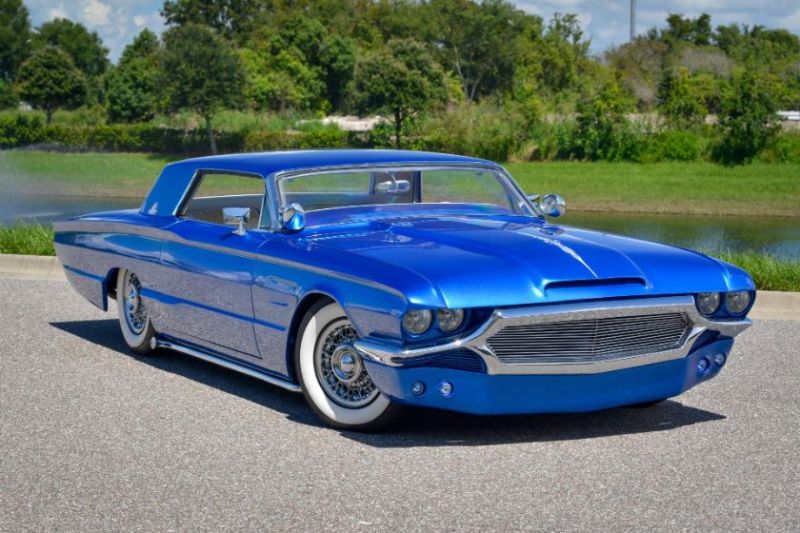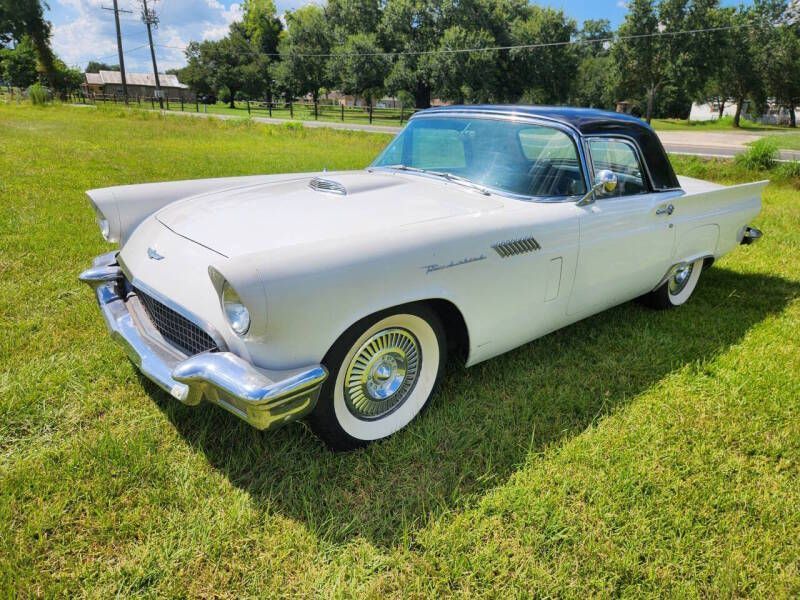
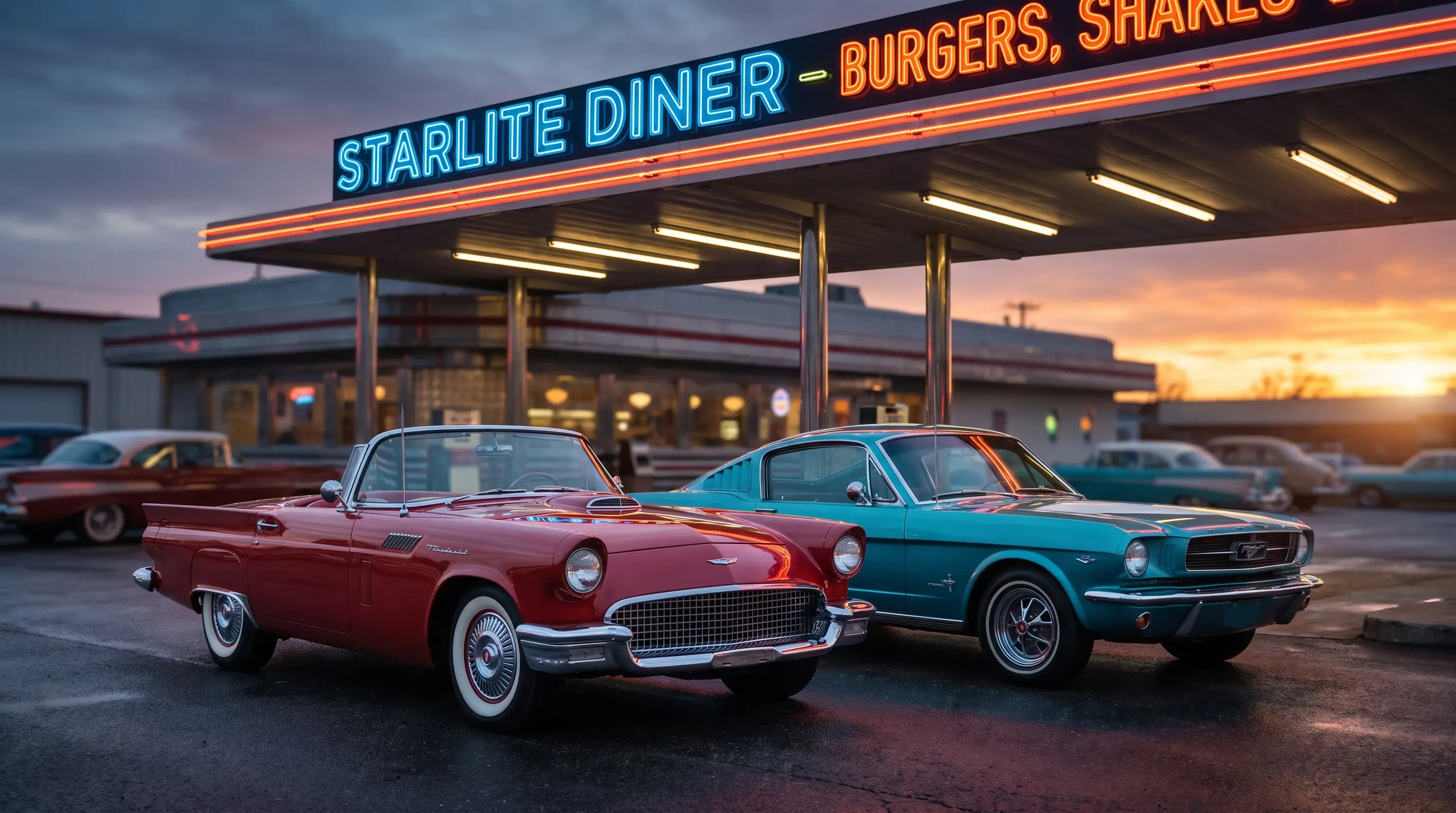
The Ford Thunderbird vs Mustang engine comparison gets asked wrong more often than not. People assume Ford dropped the same motors into both cars and just changed the sheet metal. It did not work that way. The Thunderbird and the Mustang were built for different jobs, priced for different customers, and fed different iron under the hood, even in years when both cars sat on Ford lots at the same time.
Two cars, two missions
By 1965 the Mustang was a year old and selling in numbers that stunned Ford's own planners. The Thunderbird was in its eleventh model year and had already gone through three complete personality changes, from two-seat sports car to four-seat personal luxury coupe. The Mustang was built to be light, cheap to option up, and quick off the line for a young buyer. The Thunderbird was built to be quiet, heavy, and comfortable for a buyer who already owned a Mustang's price tag twice over. Engine choices followed the mission, not the badge.
A base 1965 Mustang could be had with a 170 cubic inch six. A 1965 Thunderbird never offered a six of any size. The smallest engine in a Thunderbird that year was a 390 cubic inch V8, standard equipment, no options below it. Ford was not being generous. It was drawing a hard line between an economy sporty car and a genuine luxury coupe, and the engine bay was the clearest way to do it.
Displacement tells the story
The 1965 Mustang's V8 lineup ran from a 260 up through a 289, with the high performance 289 K-code putting out a claimed 271 hp. Buyers who wanted more than that went aftermarket or waited for the Shelby cars. The Thunderbird that same year offered only the 390, rated at 300 hp, with a Special Performance version pushing further. On paper the Thunderbird engine looks stronger. In practice it was moving a car that weighed several hundred pounds more, wrapped around a frame built for isolation rather than agility.
Horsepower numbers alone miss the point of the thunderbird vs mustang engine question. The Thunderbird's 390 was tuned for smooth, low-effort torque delivery through a Cruise-O-Matic transmission. Mustang buyers who ordered a four-speed and a hot 289 were tuned for a different feeling entirely, one built around revs and a lighter nose. Same manufacturer, same era, completely different engineering brief.
"People love to argue that the Thunderbird could have been a muscle car if Ford had just tried. Ford tried plenty. It tried to build the best riding, quietest, most confident personal car in the segment, and every engine choice backs that up."
- Dan Reeves
When the 428 showed up
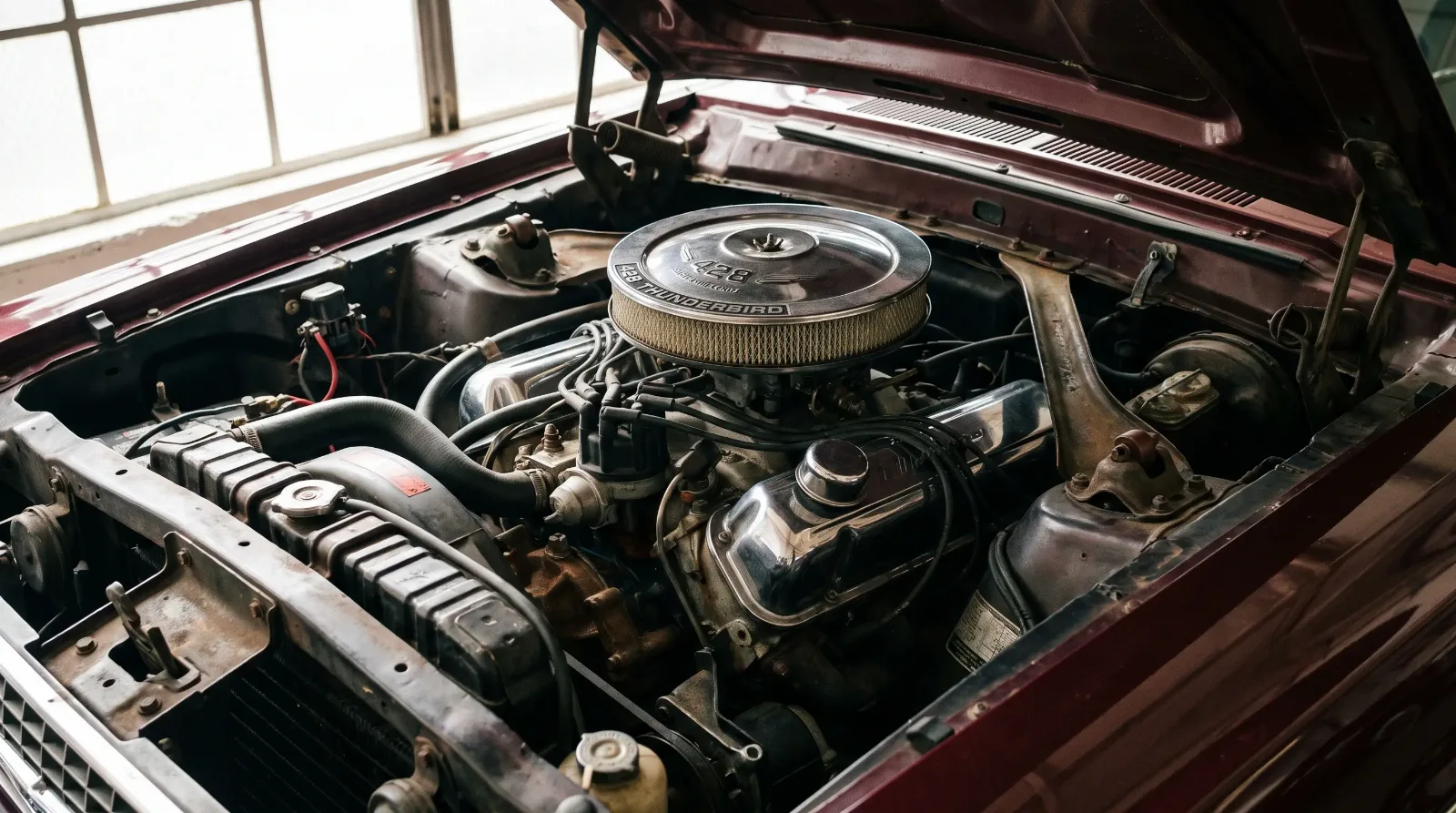
The 1966 Thunderbird added a 428 cubic inch V8 as an option, rated at 345 hp. This is the number people point to when they want to claim the Thunderbird could run with anything on the street. It could pull hard, no argument there. But the 428 Thunderbird still carried automatic-only drivetrains, power everything, and a curb weight north of two tons. The Mustang, meanwhile, was heading into 1967 with its own big block option, the 390, in a much lighter chassis that could actually put the torque to better use per pound.
The gap was never really about which engine made more numbers. It was about what surrounded the engine. A Mustang GT with a 390 was a performance package built around the motor. A Thunderbird with a 428 was a comfort package that happened to have a strong motor bolted in. For the whole picture on how Thunderbird engines evolved across every generation, the full breakdown covers displacement changes generation by generation.
Weight changes everything
Look past the spec sheet and the numbers only confirm what a test drive already tells you. A 1966 Mustang hardtop weighed around 2,700 pounds. A 1966 Thunderbird hardtop weighed close to 4,300 pounds, more with options. That is roughly a mid-size sedan's worth of extra mass for the Thunderbird's engine to carry around. No amount of cubic inches erases sixteen hundred pounds of difference. The Mustang's smaller, lighter engines still moved the car with more urgency per pound than the Thunderbird's bigger blocks managed, and that ratio is the real answer to why the two cars never competed for the same buyer's checkbook.
Ford's engineers understood this from the start. Thunderbird suspension tuning, sound insulation, and gearing were all built around comfort at speed, not acceleration off the line. Mustang tuning went the other direction on every performance trim. Put a 390 in each car and you get two completely different driving experiences, which is exactly what Ford intended.
Why the comparison still comes up
Collectors bring up the thunderbird vs mustang engine debate because both cars share a badge, an era, and occasionally a parts bin. Some Thunderbird and Mustang big blocks used related architecture within Ford's FE and 385 engine families. That kinship gets people thinking the cars themselves were kin. They were not. One was Ford's answer to a market it invented with the two-seat 1955 car and then reinvented as a personal luxury coupe. The other was Ford's answer to a market Chevrolet had been quietly building with the Corvair Monza. Different problems, different solutions, different engines under the same corporate roof.
None of this makes the Thunderbird engines weak. A well sorted 428 Thunderbird still moves with authority, and the torque curve makes it a relaxed highway car in a way no period Mustang GT ever was. It just was not built to win a stoplight contest against its own showroom neighbor, and Ford never priced or engineered it to try.
What this means for buyers today
Anyone cross-shopping a mid-1960s Thunderbird against a Mustang for the same money should stop comparing horsepower figures and start comparing what they actually want to do with the car. Want a boulevard cruiser with real presence and a torquey V8 that never feels stressed. The Thunderbird wins. Want something you can actually toss into a corner and feel alive doing it. The Mustang wins, even with a smaller motor. Buyers who understand this before they shop end up happier owners either way. For those leaning toward the Thunderbird side of that decision, you can shop classic Thunderbird listings and see what condition and options are actually available right now.
The engines tell the truth about both cars if you read them correctly. Cubic inches and horsepower ratings only matter next to weight, gearing, and intent. Ford built two different answers to two different questions in the same decade, and comparing them by displacement alone misses everything that made each one good at its job. Owners who understand that distinction stop apologizing for whichever car they picked, because both cars were doing exactly what Ford designed them to do all along.