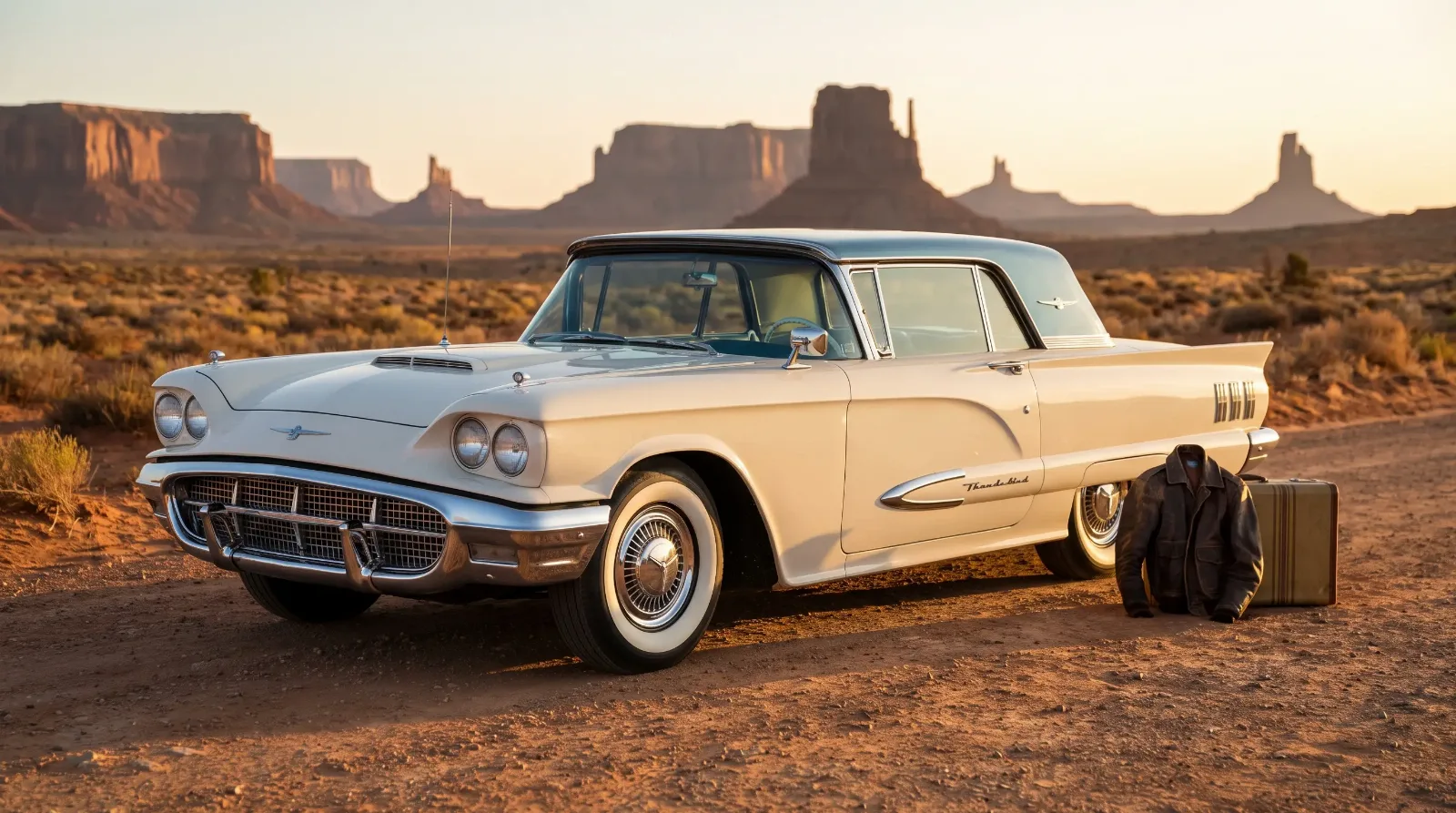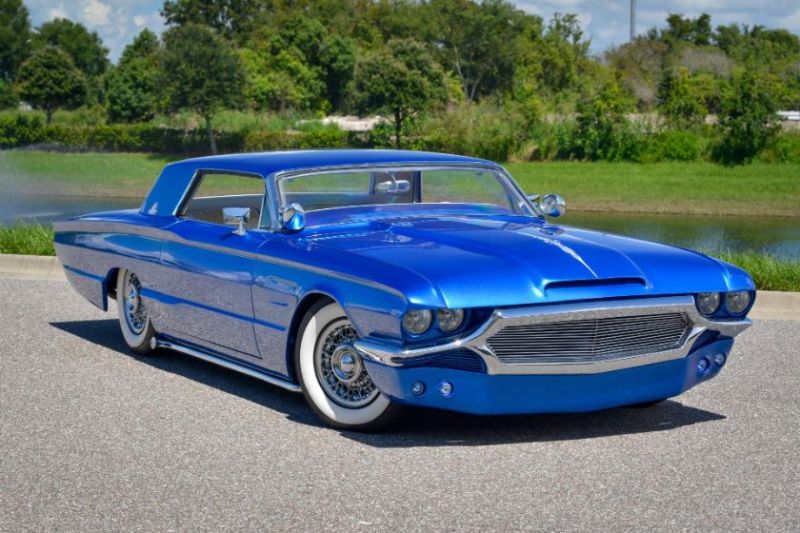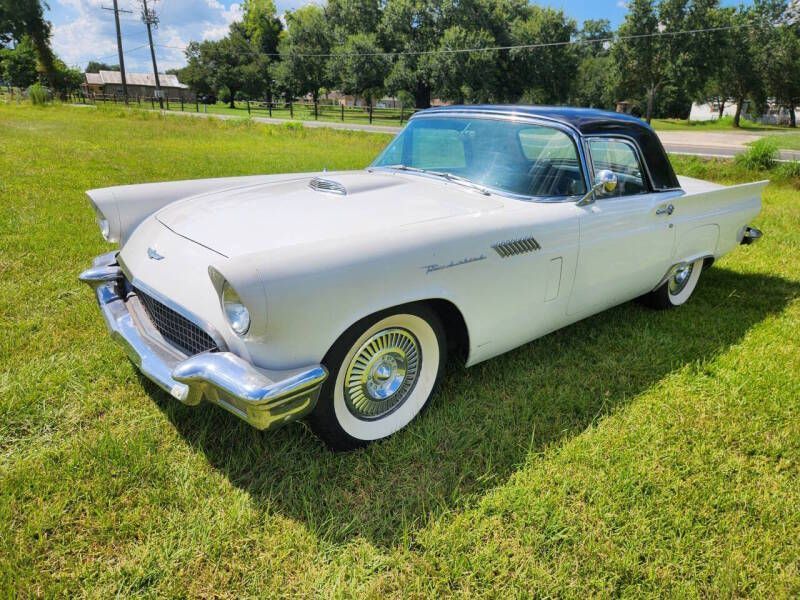
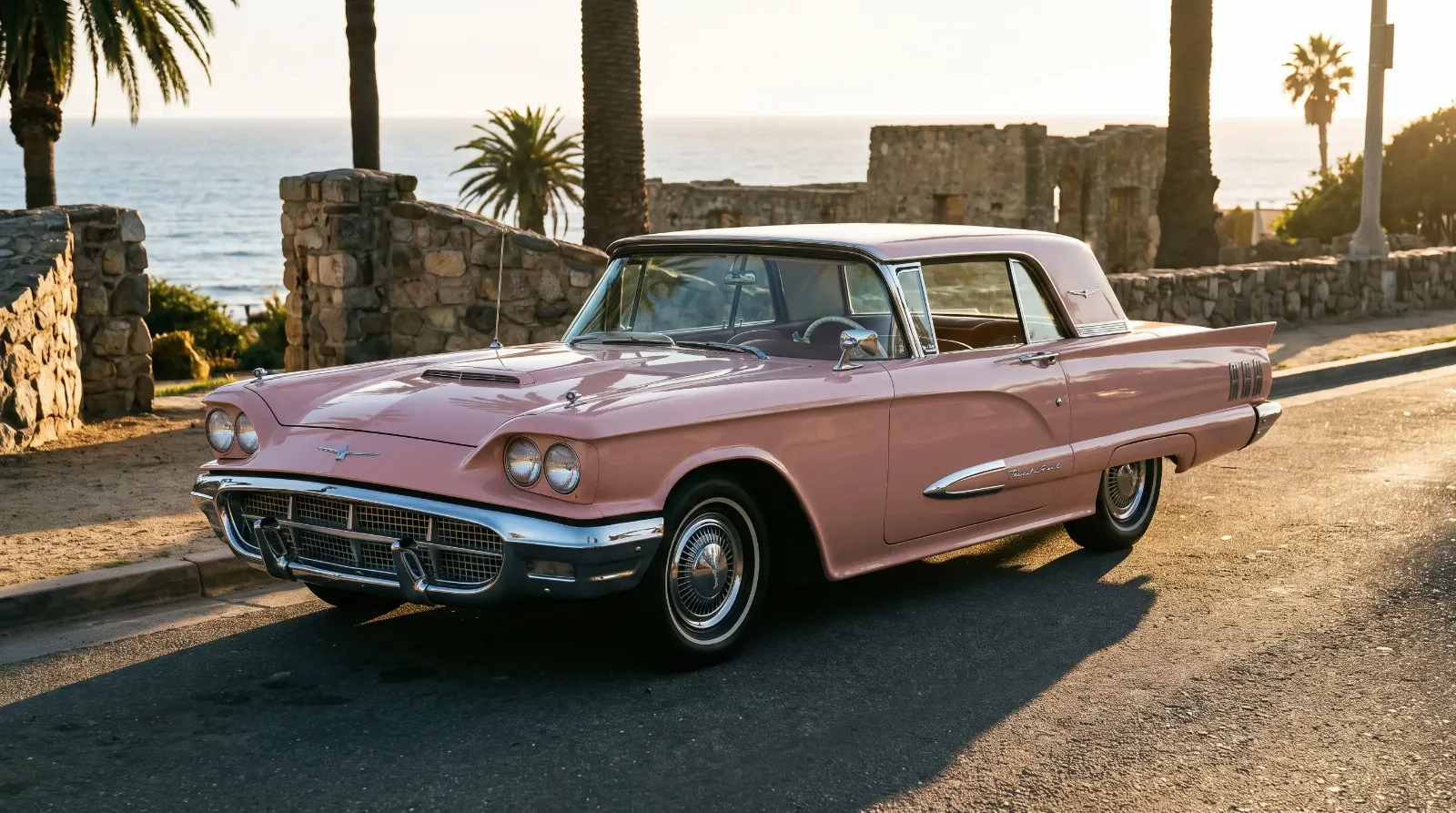
1959 Thunderbird colors tell you almost as much about a restoration's honesty as the metal underneath the paint does. I've stripped enough of these cars down to bare steel to know that the factory color chart from this era wasn't a suggestion, it was a specific palette Ford committed to for a reason, and a lot of what gets sprayed on Square Birds today has nothing to do with what actually left the factory.
What was actually on the chart
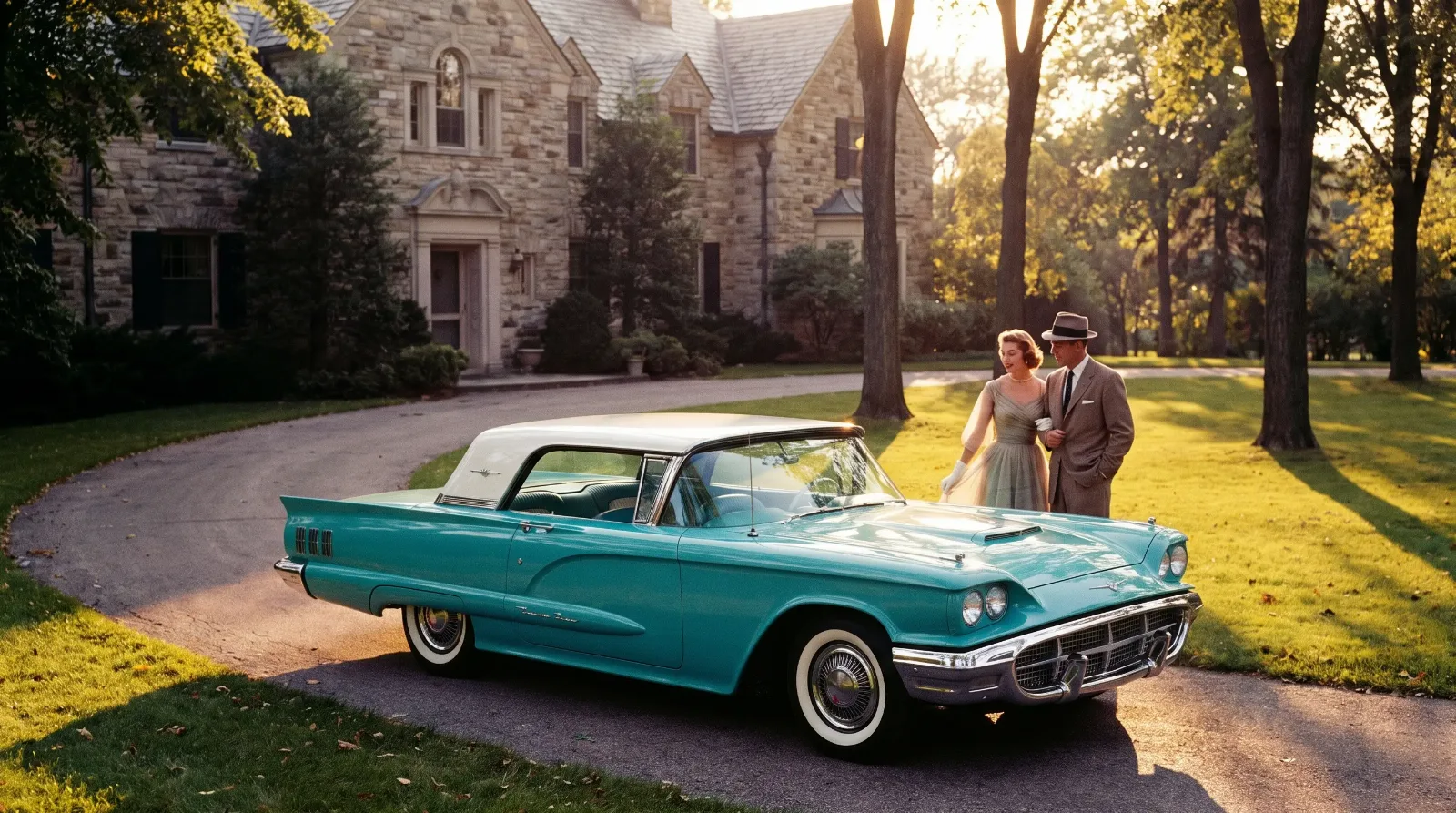
Ford's 1959 Thunderbird color offerings ran a real spread, roughly 21 exterior colors that year, from Raven Black and Colonial White at the conservative end to more distinctive options like Diamond Blue, Starlight Blue Metallic, and Tahitian Bronze Metallic. Two-tone combinations were common on the Square Bird, a lower body color paired with a contrasting or complementary roof shade, and this wasn't random either. Ford specified exact combinations that were approved for factory application, not an open menu where any two colors on the chart could be paired together.
That distinction matters more than most casual buyers realize. A two-tone paint job in colors that were never factory-approved together, even if both individual colors were legitimately available that year, is not period-correct no matter how good it looks in the sun. I've seen plenty of restored cars wearing combinations that never existed on a build sheet, and it always comes down to somebody picking colors they liked rather than colors that were documented.
Reading paint codes off the trim tag
The trim tag on these cars carries the original paint code, and it's the first thing I check on any Square Bird that's claiming factory-correct color. A tag that's been swapped, replaced, or is illegible tells you the car's history has a gap somewhere, and that gap is exactly where an incorrect repaint likes to hide. Cross-reference the code against Ford's period color charts, not against a modern paint supplier's "closest match" chip, because tint formulations have shifted over sixty-plus years and what a supply house calls a match today can be noticeably off from the original pigment.
This is where a lot of otherwise solid restorations lose real value. A car with straight panels, good gaps, and a professional-quality paint job in the wrong color, or the right color mixed slightly wrong, is a nicer-looking car than an honest original, but it's not the more valuable one to a buyer who knows what they're looking at. Shine doesn't buy correctness.
Interior-to-exterior color pairing
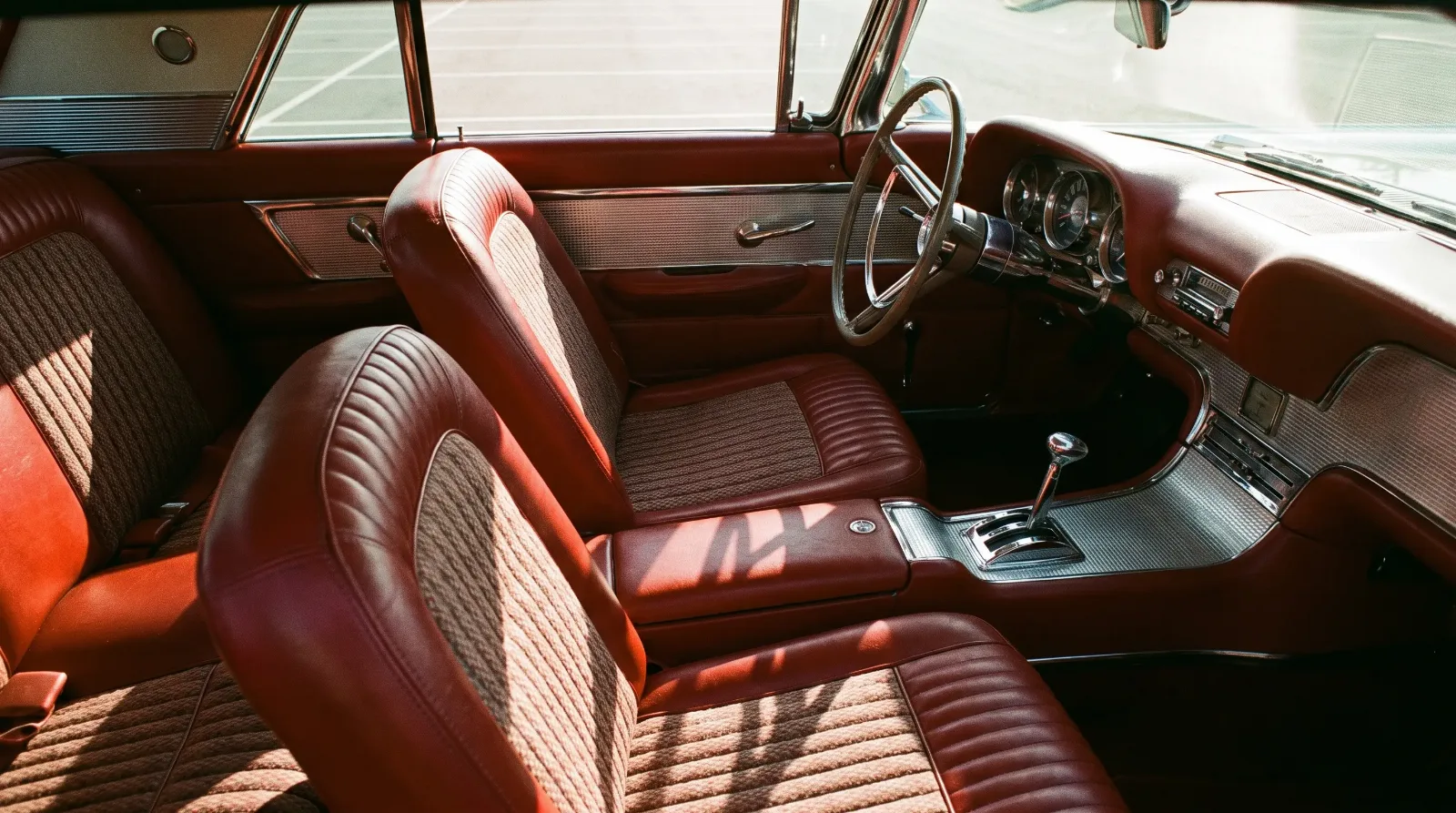
Ford didn't leave interior trim color as an afterthought either. Specific exterior colors were paired with a limited set of approved interior trim combinations, vinyl and cloth options that Ford's design department matched to the exterior palette rather than letting dealers or buyers mix freely outside the approved list. A Square Bird with an exterior and interior combination that never appeared together on a factory order sheet is a car that's had aftermarket work done somewhere in its life, whether that's a repaint, a reupholstery, or both.
I tell people shopping this generation to get the build sheet or a Marti Report equivalent if one exists for their specific car before they get emotionally attached to how it looks sitting in a driveway. Original documentation settles arguments that a paint chip never will.
"Anybody can spray a nice color on a Square Bird. Matching the actual factory combination, exterior to interior, is the part that separates a real restoration from a nice-looking guess."
- Jim Vasquez
What a repaint costs you at resale
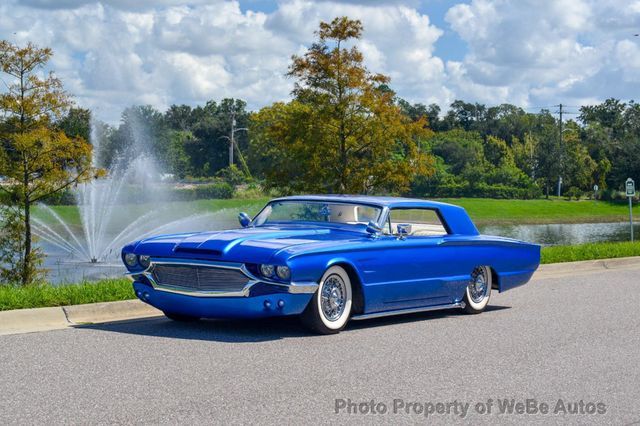
A non-factory color, even a period-appropriate one from a different model year or a different Ford product entirely, drops a Square Bird's ceiling with serious buyers regardless of paint quality. This isn't snobbery, it's a straightforward market reality. Buyers paying top dollar for this generation are usually paying for correctness as much as condition, and a wrong color, however well applied, tells them the rest of the car may have similar shortcuts hiding under better-looking surfaces.
If you're restoring one of these and considering a color change for personal taste, that's a legitimate choice, plenty of owners do it and enjoy their cars just fine. Just don't expect the market to value it the same way it values a documented, correct restoration, and don't let a seller tell you otherwise when a repainted car is on the table at a factory-correct price.
Common mistakes I see in the shop
The most frequent error isn't a wildly wrong color, it's a subtly wrong one. Somebody matches a paint chip that looks close under shop lighting and calls it done, without accounting for how period lacquer and enamel formulations aged and how modern basecoat-clearcoat systems reflect light differently than what left the factory in 1959. Under direct sun, a modern repaint in a "close enough" color often reads slightly too saturated or slightly too cool compared to an original panel that's had sixty years to fade and mellow. Put a repainted fender next to an original trunk lid on the same car and the mismatch becomes obvious immediately, which is exactly the kind of detail a knowledgeable buyer checks for during an inspection.
Another common mistake is treating the color code as optional information rather than a hard requirement. I've had customers bring me cars wanting a specific two-tone combination because they saw it on a different Ford product from the same era, not realizing the Thunderbird's approved pairings were their own distinct list. It might be a legitimate late-1950s Ford color, applied in a combination that never existed on this specific car. That's not a factory-correct restoration no matter how period-appropriate each individual color is on its own.
Sourcing correct paint today
A handful of specialty suppliers formulate paint specifically matched to original Ford codes from this era, and it's worth paying the premium for a supplier who's done the actual research rather than a generic "vintage color" mix from a mainstream paint counter. Ask any potential supplier directly whether their formulation is based on an original paint chip or spectrophotometer reading from a documented factory-correct panel, versus a generic interpretation of what the color name suggests. The difference in accuracy between those two approaches is significant, and it's the kind of detail that separates a restoration shop that understands this segment from one that's simply competent at spraying paint.
Where color fits in the bigger picture
Color is one piece of a larger authenticity puzzle that includes engine, trim, and options, and it's worth understanding alongside the rest of the Square Bird's story rather than in isolation. For that broader context, the full story covers how this generation came together and what made it different from the two-seat Thunderbird before it. When you're ready to go look at real cars, classic Thunderbird for sale listings are a good place to start putting build sheets next to paint codes in person.