The american graffiti blonde thunderbird scene lasts under a minute, has no audible dialogue from its lead, and somehow launched a career while leaving behind one of the most enduring unanswered questions in American film. The woman behind the wheel of that white 1956 Ford Thunderbird was Suzanne Somers, cast in a role so brief the credits almost didn't bother crediting it properly, and the mystery she embodied on screen followed her, in the best possible way, for the rest of her public life.
A role built almost entirely on presence
Somers was a working actress with a handful of small credits when she auditioned for American Graffiti in 1972. The part, listed in some records simply as "The Girl in the T-Bird," required no monologue, no extended scene, nothing beyond a look through a windshield and three silently mouthed words, "I love you," aimed at a stunned teenager riding past on a bicycle. George Lucas built the entire sequence around a single visual idea: beauty and possibility glimpsed and then lost, immediately and permanently, in the space of a few seconds. Somers had to carry that idea with her face and her posture inside a car, nothing else to work with, and the scene has held up for over fifty years because she did.
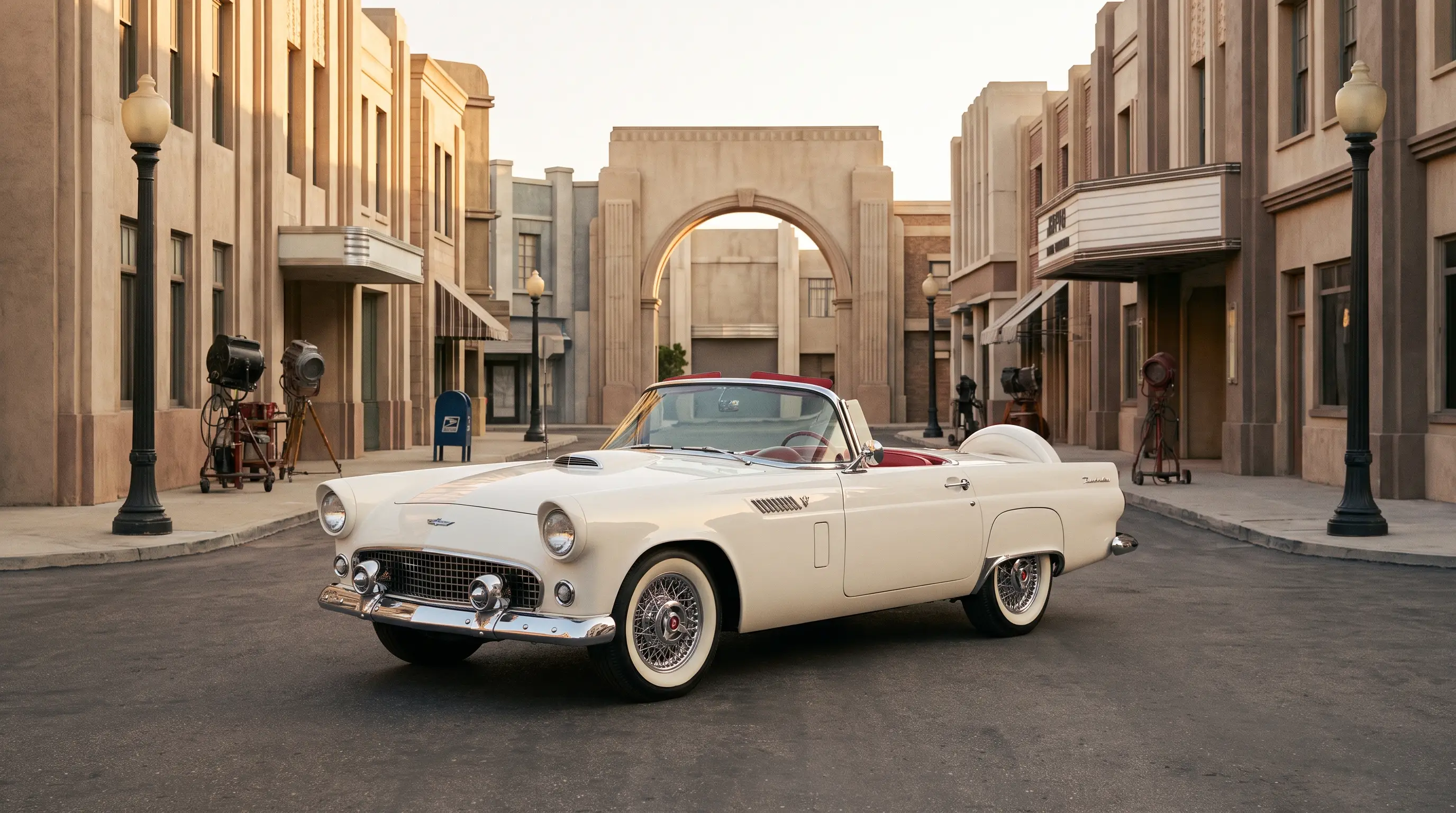
The white Thunderbird itself was doing real narrative work alongside her. A 1956 two-seat model, already an older car by the film's 1962 setting, gave the moment a faint sense of nostalgia even within the story's own timeline. Somers, glamorous and unreachable behind the wheel of a car that already read as slightly out of time, became a kind of double image of longing, a woman the male lead could never catch paired with a car representing a kind of American glamour already starting to feel like the past.
"Suzanne Somers spent decades afterward being recognized for a scene where she says nothing out loud. That is a strange kind of stardom, and the Thunderbird earned just as much of the credit as she did."
- Patrick Walsh
The career that followed
American Graffiti became a box office phenomenon relative to its modest budget, and while Somers's screen time was brief, the role put her in front of casting directors and audiences in a way her earlier credits had not managed. She went on to a long career across television and film, most famously in a run of network sitcom work later in the 1970s, but interviews across her career kept circling back to the same starting point: the blonde in the white Thunderbird who never got a real name in the movie's credits.
Somers herself acknowledged in later interviews that fans brought up the scene more consistently than almost anything else in her body of work, decades of public appearances where someone would inevitably ask about the mystery woman and the car she drove for less than sixty seconds of screen time. That kind of persistent recognition for a nearly silent role says something about how effectively the scene was constructed, and how much of that effectiveness depended on the specific choice of a white two-seat Thunderbird rather than any other car available to the production.
Why the mystery never needed solving
Unlike a lot of unresolved plot threads that frustrate audiences, the identity of Somers's character in American Graffiti became part of the film's appeal rather than a flaw in it. The story never explains who she is, where she came from, or where she goes after that fleeting encounter, and five decades of audiences have generally preferred it that way. Answering the question would have deflated exactly the quality that made the scene memorable in the first place: a glimpse of something beautiful and complete that the story deliberately refuses to explain or resolve.
The Thunderbird plays the same role structurally. Audiences never learn where the car came from, who owns it beyond the implied wealth of its driver, or what happens to it after the credits roll. Car and driver exist in the film purely as an image of possibility, seen once, remembered forever, explained never. That pairing, a specific actress and a specific classic Ford model, has become one of the more durable single-scene legacies in American film history, referenced in retrospectives and clip compilations far more often than the scene's brief runtime would suggest it deserves.
Reading further into the culture around this scene
For readers who want the fuller picture of how this specific moment connects to decades of Thunderbird appearances in film, music, and public life, more on the ford thunderbird history traces that throughline across generations of the car and multiple decades of pop culture references built around it. And for anyone curious about where this particular thread of Thunderbird mythology first started gaining momentum before Hollywood got involved, where this started covers the model's earliest years and the reputation it had already built before this scene made it iconic to an entirely new audience.
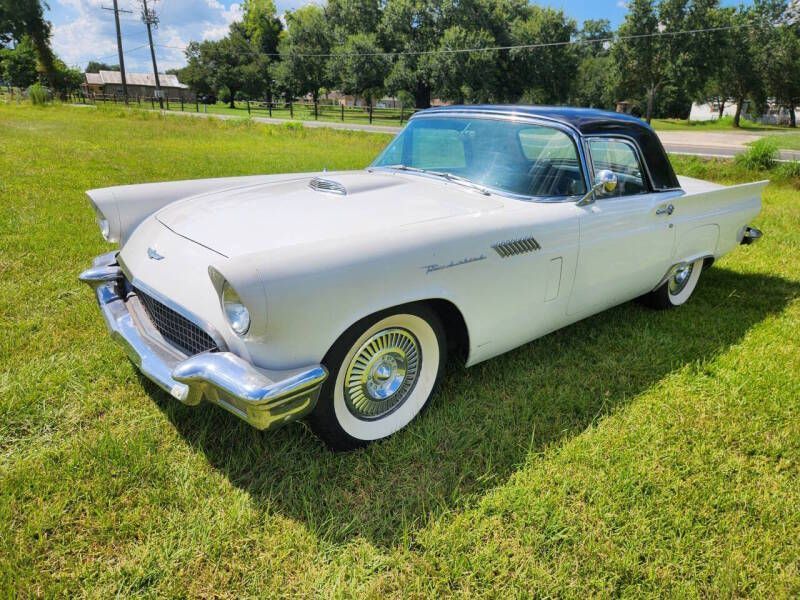
The specific 1956 Thunderbird used in the scene remains one of the more romanticized individual cars in Thunderbird enthusiast circles, even without a documented ownership history connecting any surviving example directly to the production. Collectors chasing that particular white two-seat look, and the feeling that comes with it, can look at classic Thunderbirds on the market and see how many genuine period examples in that configuration are actually available today. Few of them will mouth "I love you" through the windshield, but the presence the car carries on its own has proven durable enough without the scene attached.
Somers passed away in 2023, and obituaries and tributes across entertainment coverage repeatedly returned to the American Graffiti scene as a defining early moment in her career, alongside her later television work. That kind of staying power for a role with no spoken lines says something rare about the collaboration between an actress, a director, and a car chosen with real care rather than convenience. Lucas could have cast the moment with any pretty face in any convertible. He specifically wanted a Thunderbird, and specifically wanted the white two-seat body style, because the car needed to carry the same weight of glamour and distance that the character herself needed to project without a single word of dialogue.
That level of intentional casting, applied equally to actress and automobile, is rare enough in film history to deserve its own note in the Thunderbird's cultural record. Most classic cars that show up in movies do so as background texture, dressing a scene without shaping it. This one shaped an entire sequence, anchored an actress's early career, and gave the Thunderbird nameplate a moment of pop culture relevance that has outlasted several generations of the actual production model.