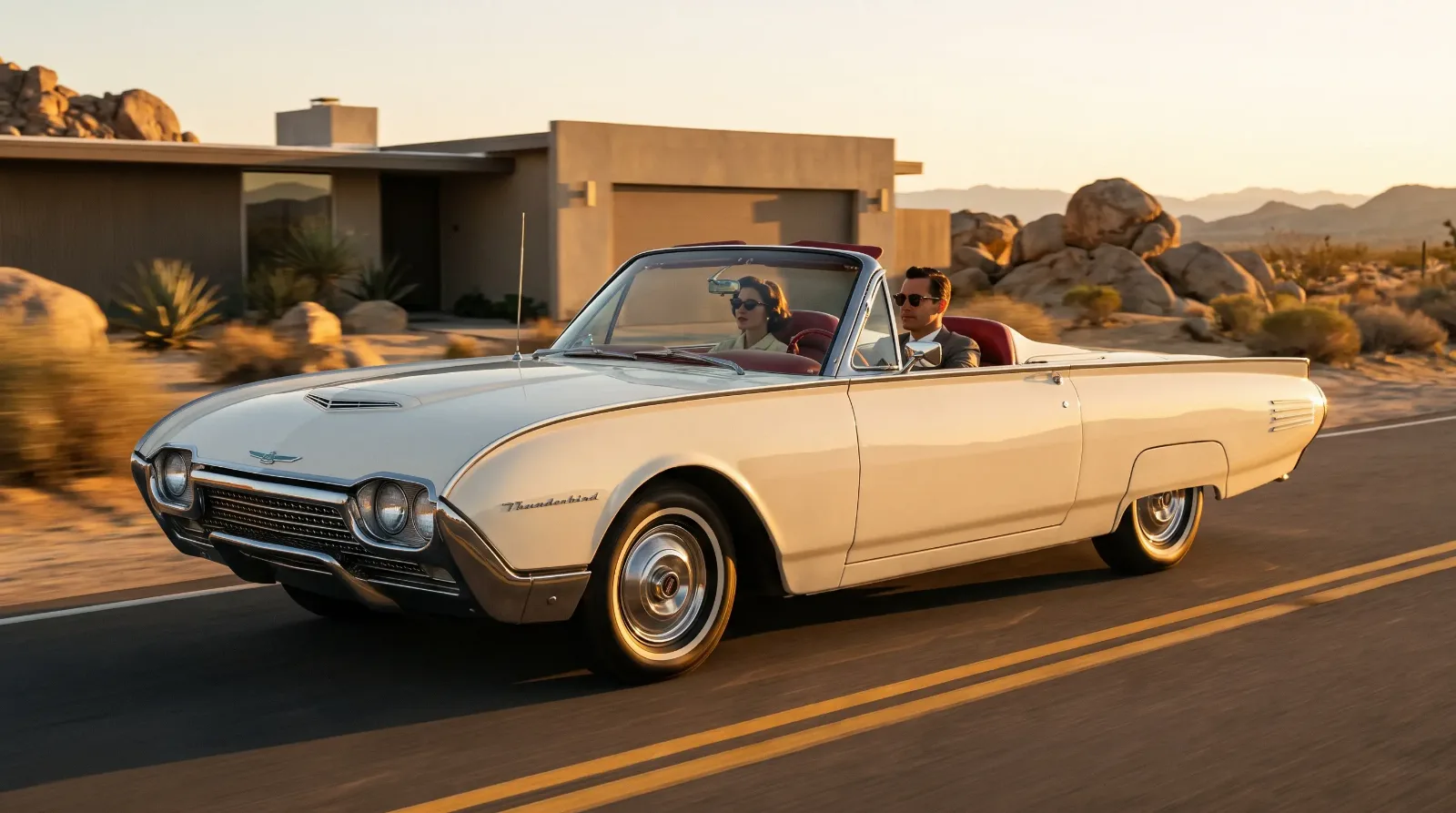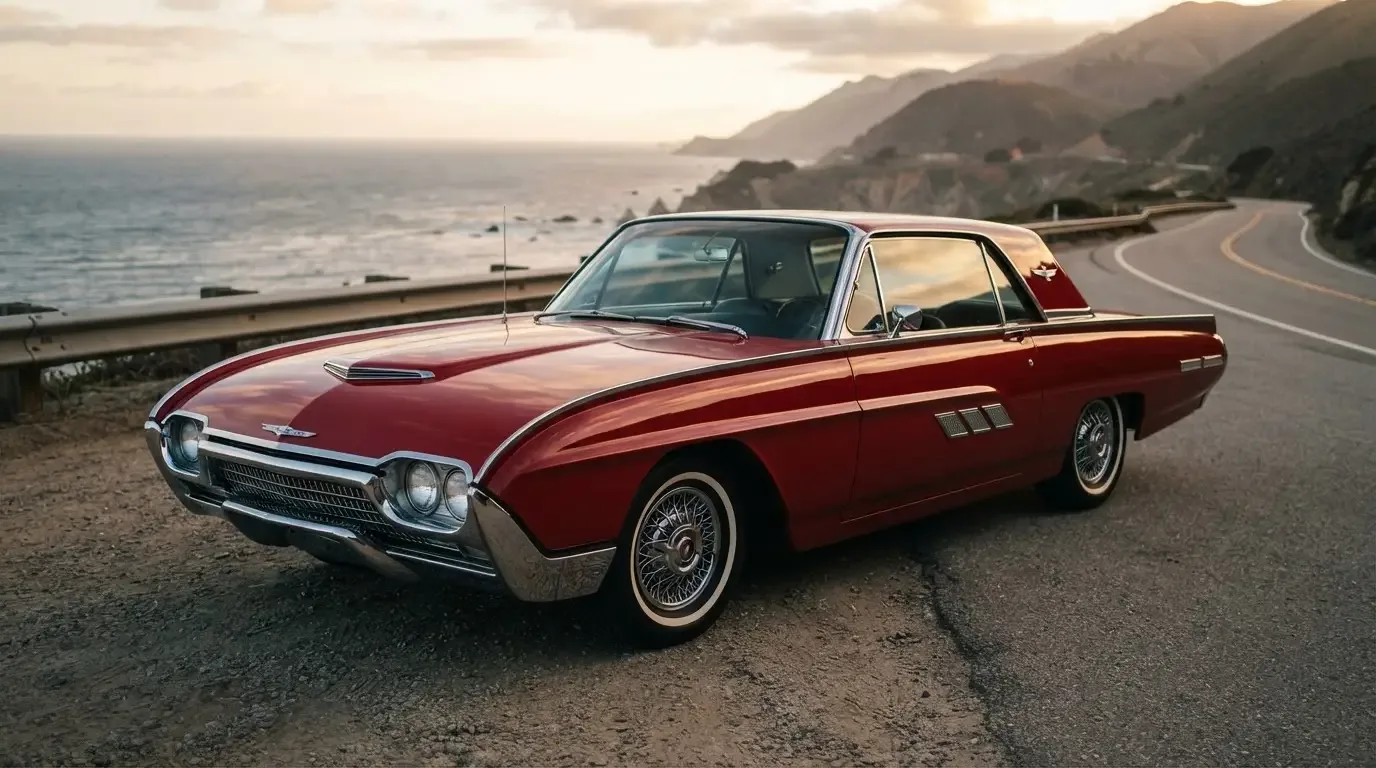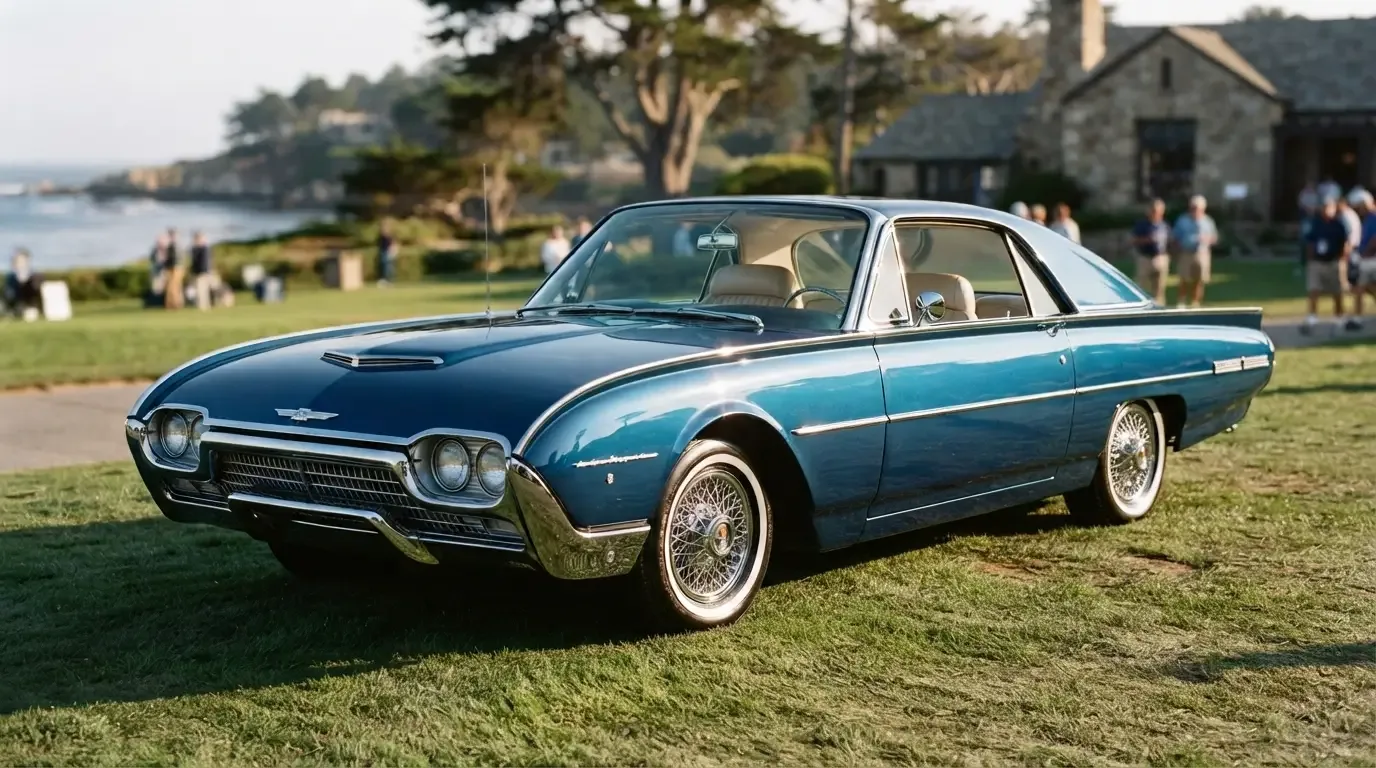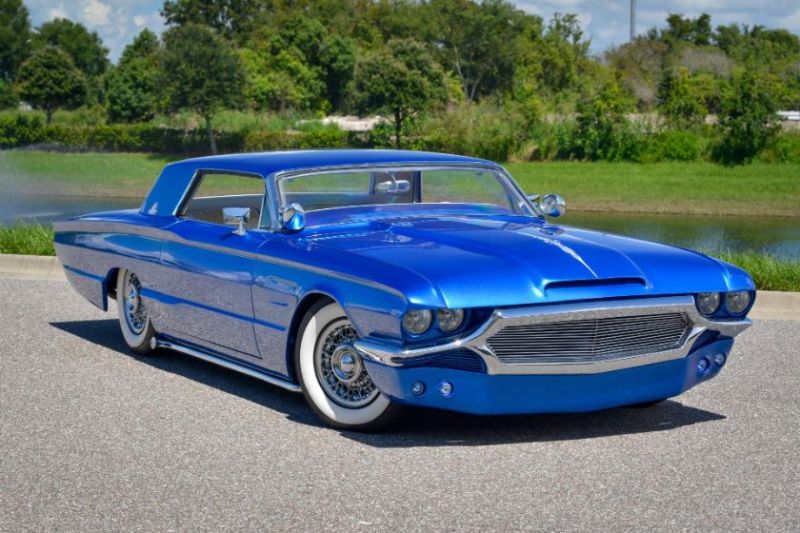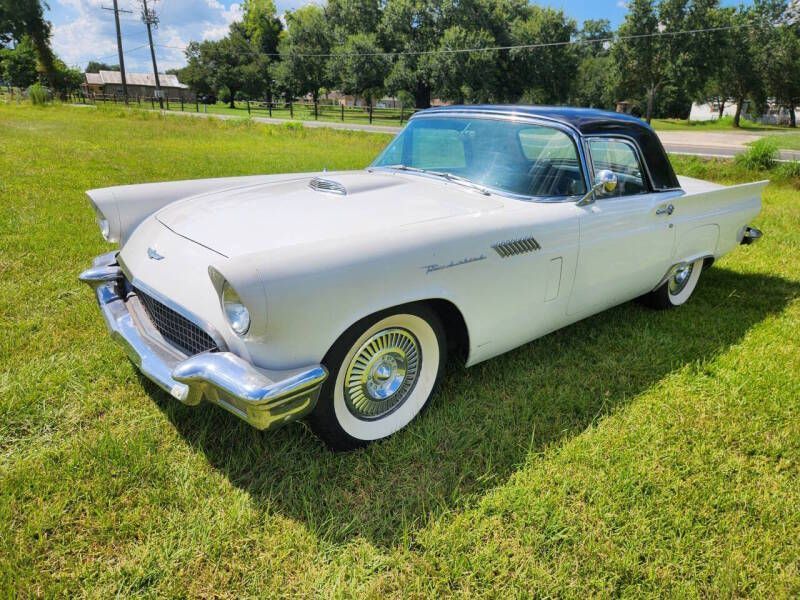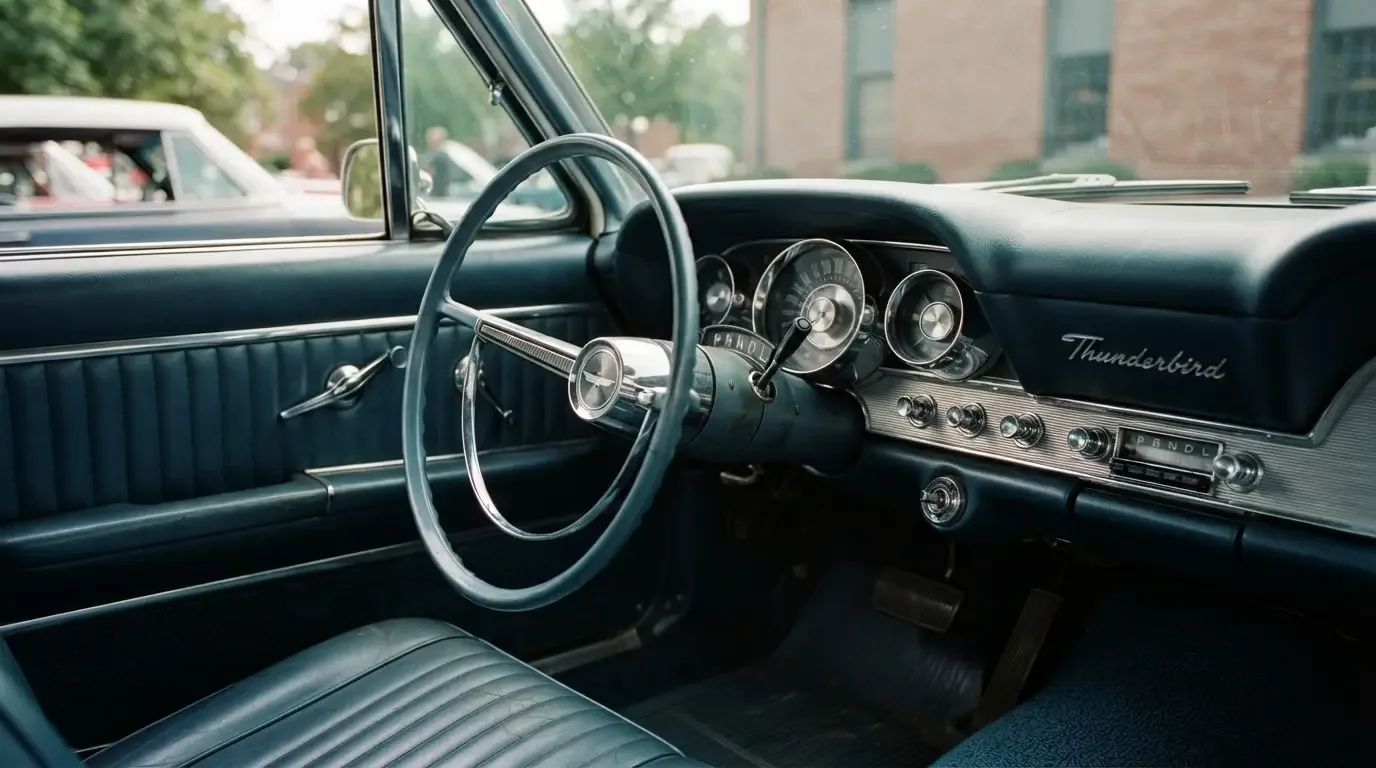
Picture a department store parking lot in 1961, gravel dust settling over rows of finned sedans, a woman in a fitted skirt approaching a brand-new Thunderbird with a bag of groceries balanced on one hip. In any other car on the lot that afternoon, getting behind the wheel meant a small negotiation with the steering column, a sideways shuffle past the door frame, skirt fabric catching on the seat edge. In the Thunderbird, something different happened. She put the transmission in park, and the entire steering wheel swung nearly 18 inches to the right, out of the way entirely, opening a clear path into the driver's seat. That small mechanical courtesy, the Thunderbird swing away steering wheel, became one of the most talked-about features Ford introduced during the entire Bullet Bird era.
A simple idea, cleverly executed
The mechanism itself was not complicated in principle. When the driver shifted the Cruise-O-Matic transmission into park, a linkage released the steering column from its locked driving position and allowed the entire wheel and column assembly to pivot roughly 18 inches toward the center of the car, clearing the space directly in front of the driver's seat. Shifting out of park automatically returned the wheel to its normal position, ready for driving without requiring the driver to manually swing it back into place first. It sounds almost trivial described this way, a party trick more than an engineering achievement, but anyone who actually used one in period will tell you it solved a real, everyday annoyance that every other car on the road simply ignored.
Ford introduced the feature with the redesigned 1961 Thunderbird as a $25.10 factory option, and it proved popular enough that Ford made it standard equipment for 1962 and kept it standard on the Thunderbird every year through 1966. This was not a gimmick that disappeared after one model year. It became something buyers specifically requested, and something dealers used as a genuine selling point rather than a footnote in the brochure.
Why it mattered in 1961 specifically
Context matters here. Women's fashion in 1961 still leaned heavily on fitted skirts and dresses, and cars generally were not designed with much thought toward how a driver in that kind of clothing actually got in and out of a bucket seat positioned close to a fixed steering wheel. Ford's engineers and marketers understood this dynamic well enough to build an entire feature around solving it, which says something about who Ford believed was actually buying and driving these cars. The Thunderbird had been marketed from its earliest days as a car for couples, and the swing-away wheel reads today as a small but genuine acknowledgment that the person behind the wheel was just as likely to be a woman as a man, at a time when automotive engineering rarely bothered to design around that reality at all.
How period buyers responded
Ford's own promotional materials from the era leaned into the feature heavily, often demonstrating it in dealership brochures and print advertisements with photographs showing the wheel swung fully aside. It became a genuine talking point on showroom floors, the kind of detail a salesperson could demonstrate in thirty seconds that made an immediate, memorable impression on a potential buyer standing next to the car. Compared against the styling drama of the redesigned Bullet Bird body or the mechanical novelty of the Sports Roadster's tonneau cover, the swing-away wheel was a quieter kind of showmanship, but it worked precisely because it solved a problem people actually had rather than simply looking impressive in a magazine ad.
Other manufacturers noticed. Within a few years of the Thunderbird's introduction, competing brands began experimenting with their own tilt and telescoping steering column ideas, though few committed to a full lateral swing like Ford's mechanism. It is worth remembering that Detroit in this period moved fast on convenience features once one manufacturer proved a market existed for them, and the swing-away wheel is a clean example of a single company's engineering choice nudging an entire industry's thinking about cabin ergonomics, even if the specific mechanism itself never became a universal standard.
"Every Thunderbird from this era gets remembered for how it looked. The swing-away wheel is the rare detail people remembered for how it felt to actually use, and that kind of feature earns loyalty in a way styling alone never quite manages."
- Patrick Walsh
Finding and verifying the feature today
Collectors shopping the Bullet Bird generation today should check whether a given car's steering column linkage still functions correctly, since decades of wear, neglect, or improper prior repairs can leave the swing mechanism stiff or nonfunctional even when the rest of the car presents well. A correctly working swing-away wheel is a small detail that tells a larger story about how carefully a car has been maintained, and buyers evaluating originality should test it in person rather than taking a seller's word that it works.
Parts availability for the swing-away mechanism has improved over the decades as the wider Thunderbird collector community has grown, though genuine factory components remain preferable to any generic substitute given how specific the linkage geometry is to this application. Club swap meets and specialty Thunderbird parts suppliers are usually a more productive hunting ground than general classic car salvage yards when a repair is needed, since the mechanism was never widely shared across other Ford models of the period.
The swing-away wheel debuted alongside the entire redesigned 1961 lineup, and readers who have not yet explored that full launch story should read our 1961 ford thunderbird retrospective to understand how this detail fit into the broader design philosophy Ford was pursuing that year. It is worth pairing that reading with the story of the 1962 Italien show car, since Ford used that fastback concept to explore just how far it could push interior comfort and convenience ideas beyond what reached production, and there is a related story covering that vehicle in depth.
A detail worth remembering
Sixty years later, the swing-away steering wheel remains one of the small mechanical flourishes that separates the Bullet Bird generation from its competitors and from Thunderbirds that came before and after it. It was never the headline feature in any advertisement, never the reason someone chose a Thunderbird over a Buick Riviera at the dealership, but it was the detail that made ownership genuinely more pleasant day to day, which is exactly the kind of quiet engineering that tends to get overlooked until someone points it out. Buyers curious about experiencing the feature firsthand can look at Thunderbirds for sale now to find an example equipped with it.
Sources and notes
- Swing-Away Steering Wheel (1961-1966) - Automotive Mileposts
- Ford Thunderbird (third generation) - Wikipedia
- Swing-Away steering for comfort and control - Hagerty Media
- Classic Ford Swing-Away Steering Wheel Is Awesome - Ford Authority
- Ididit Steps Up To Rescue A 1962 T-Bird Swing-Away Steering Column - Street Muscle