
They called it the Elephant, and the nickname fit. The 426 Hemi was big, heavy, and it moved things that had no business moving. Chrysler did not build this engine for the guy who wanted to look fast at a stoplight. They built it to win races, and everything else about it followed from that. The street version that landed in Dodges and Plymouths starting in 1966 was a race engine wearing just enough manners to get a license plate. I have had these apart, and there is nothing else from Detroit that feels quite like one.
Car Features
6 min read
The 426 Hemi: The Elephant Engine
The 426 Hemi engine explained: where the Elephant came from, its 425 hp gross rating, what it costs to own, and how to buy one without getting burned.
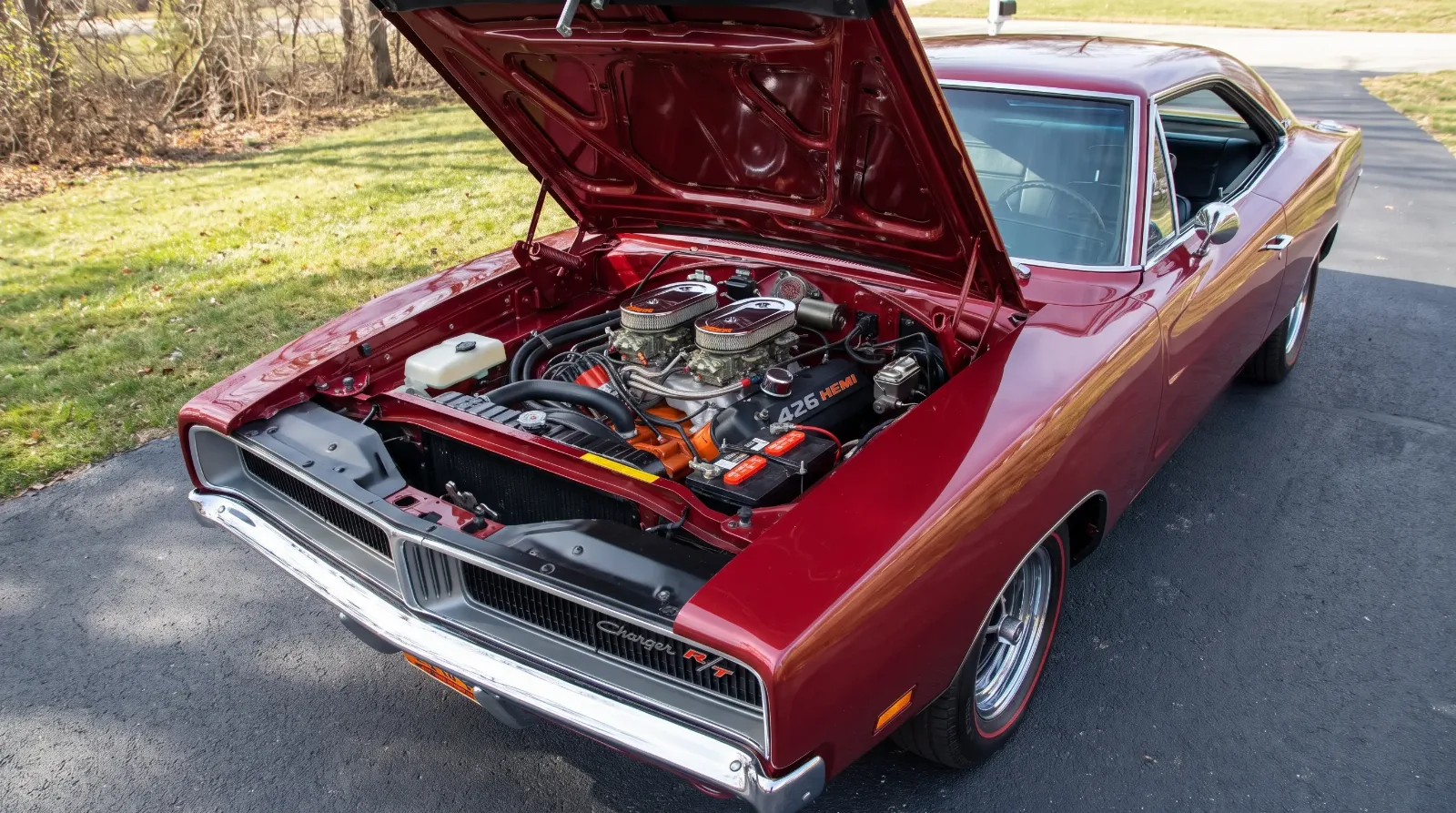
The name comes from the shape of the combustion chambers. Hemi is short for hemispherical, the domed shape of the chamber that lets the valves sit at an angle and breathe like almost nothing else of the era. That design is the whole story. It is why the engine made the power it made, why it cost what it cost, and why it is still the most valuable production muscle engine you can bolt into a car. If you want the family context, the muscle car engines story puts the Hemi next to its rivals so you can see what it was actually up against.
Where the Elephant came from
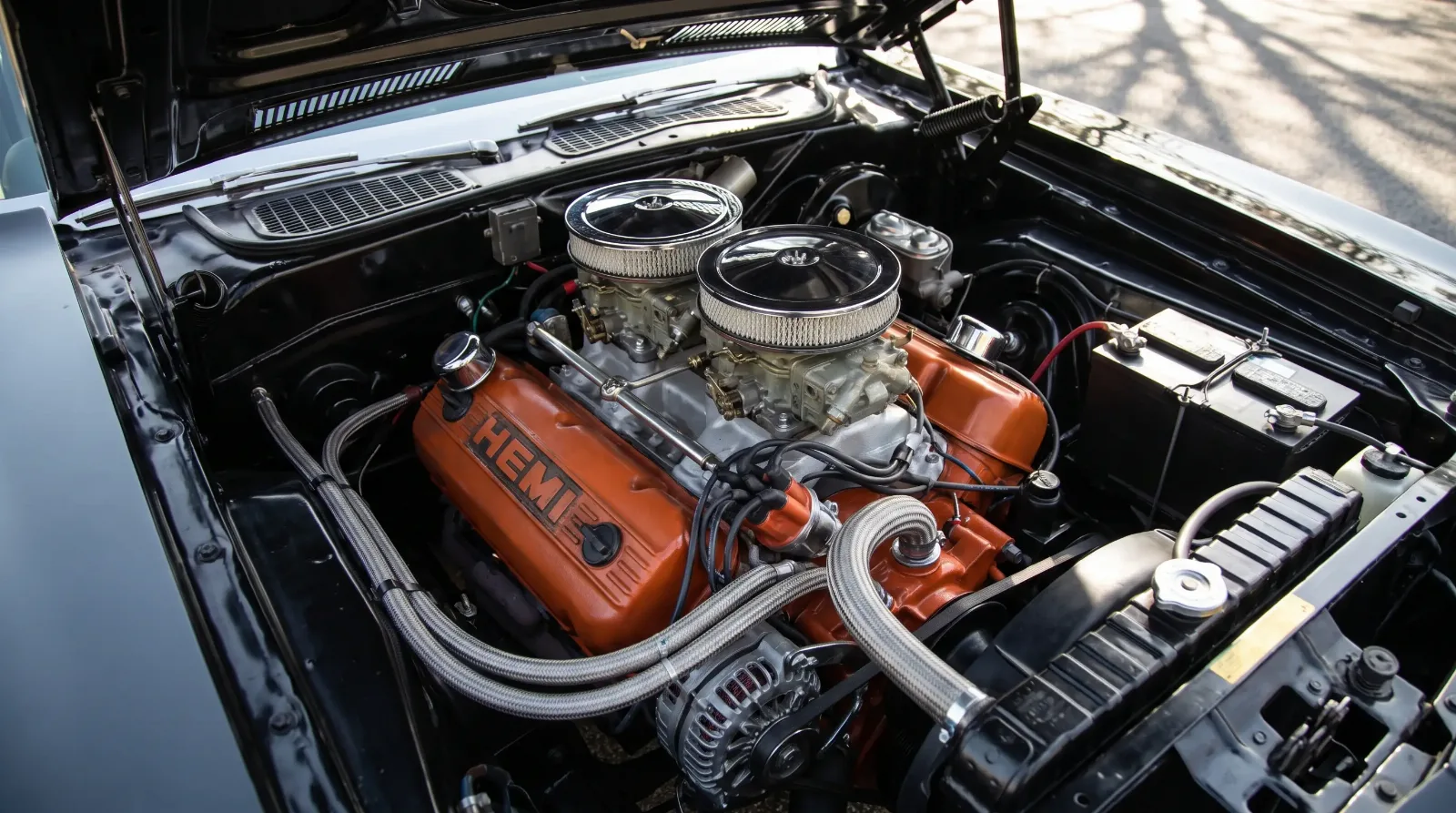
Chrysler had built hemispherical-head engines back in the 1950s, so the idea was not new to them. The 426 that matters here arrived first as a race-only engine in 1964, built to dominate NASCAR, and it did exactly that at Daytona right out of the gate. It was so effective that it got legislated around, and to keep it eligible Chrysler had to offer a street version. That is how the Street Hemi came to be. It was not born from a marketing meeting. It was born from a rulebook that said you had to sell the thing to race it.
The street Hemi debuted for 1966. It kept the hemispherical heads, the massive valves, and the racing bones, but it got a milder cam, dual four-barrel carburetors on an aluminum intake, and enough softening to survive a daily commute if you were brave. It stayed in production through 1971, and across those years it powered some of the most sought-after cars ever built, the Road Runner, the Charger, the Challenger, the Cuda, the Super Bee. Every one of them is a blue-chip car today. This engine sits right at the center of the rise of American muscle, and its shadow is long.
What the numbers really say
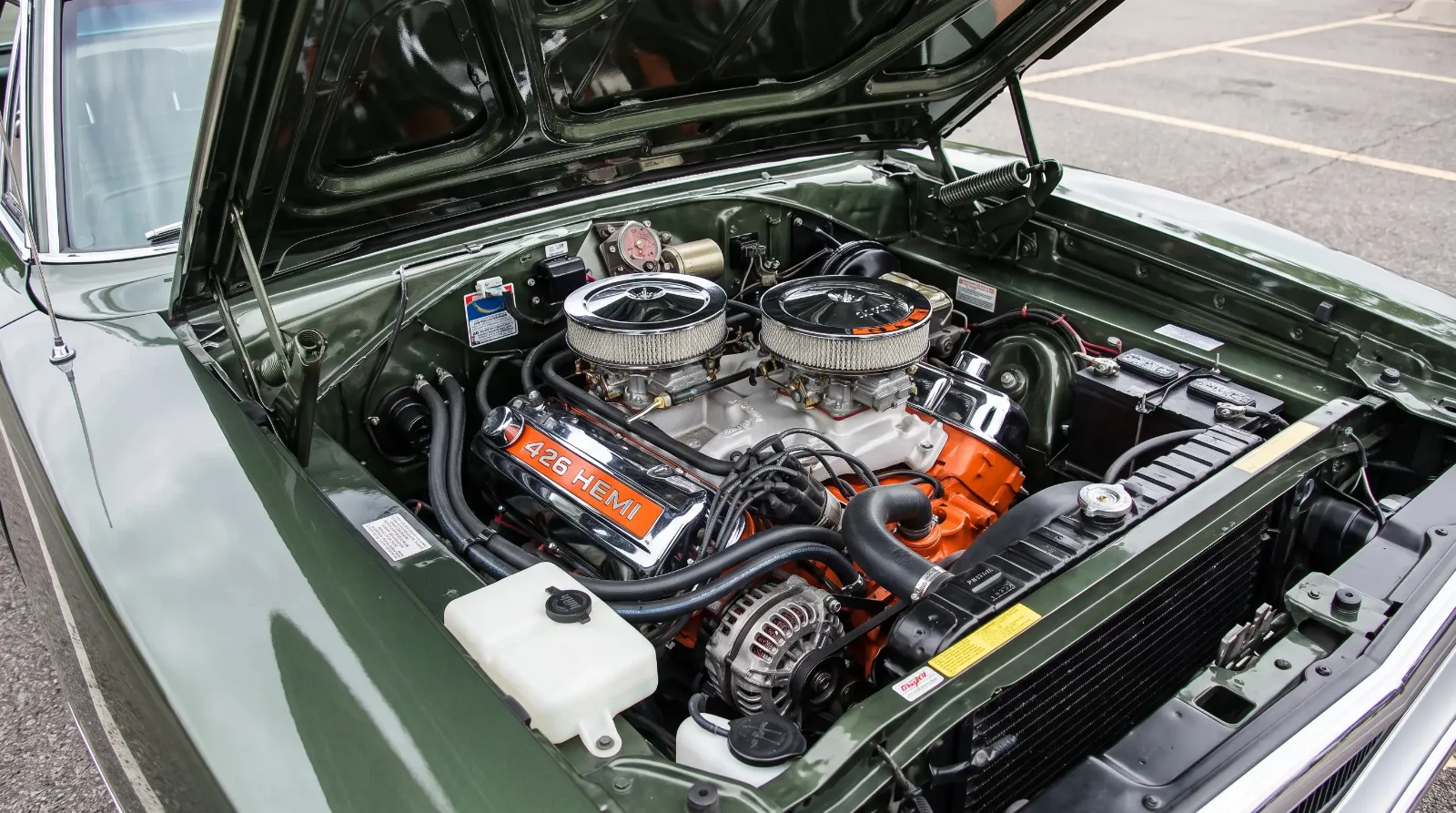
The factory rated the 426 Street Hemi at around 425 horsepower gross from its 1966 introduction onward. That number is famous, and it is almost certainly conservative. Chrysler had every reason to keep the advertised figure down, insurance companies were watching, and racing classes were sorted by rating. Most people who have run one believe the real output was north of that 425 figure. On the strip these cars ran with anything, and a well-sorted Hemi car was a genuine threat to everything else Detroit built.
Here is where I flag the fine print. That 425 hp is a gross rating, measured the old way with the engine stripped for the test. It is not what reached the rear tires. Displacement was 426 cubic inches, hence the name, and the torque figure was enormous, commonly cited around 490 lb-ft gross. Treat those as approximate factory figures, not stopwatch truth, and confirm any exact number against a documented source before you quote it, because the Hemi is exactly the kind of engine where legends get inflated over a lifetime of retelling.
| Spec | 426 Street Hemi (1966–1971) |
|---|---|
| Displacement | 426 cu in (approx. 7.0 L) |
| Head design | Hemispherical combustion chambers |
| Rated power | Around 425 hp gross (widely believed underrated) |
| Rated torque | Roughly 490 lb-ft gross |
| Induction | Dual four-barrel carburetors |
| Street production years | 1966 through 1971 |
What it costs to own one
Let me be blunt about the money, because this is where people get hurt. A real, numbers-matching Hemi car is a six-figure car and often much more. The engine alone, if you can find a correct one, costs more than a whole running project car in most other families. That reality created a cottage industry of fakes, tribute cars, and clones, and not all of them are honestly advertised as such.
The Hemi is expensive to keep, too. Those dual quads need to be set up right or the car runs terrible and eats fuel for nothing. The engine is complex, parts are pricey, and finding someone who genuinely knows how to tune one is harder than it should be. This is not a buy-it-and-drive-it engine unless you have deep pockets and a good relationship with a specialist. But when one is right, and it is running the way it should, there is nothing else like it.
"I've seen more fake Hemi cars than real ones, and some of them were built well enough to fool a hurried buyer. The engine's worth more than most people's first house, so of course the con artists showed up. Get the fender tag, get the block casting numbers, and get somebody who knows Mopar to look before you write any check with that many zeros."
Mike Sullivan
Buying one without getting burned
Documentation is everything on a Hemi car. Broadcast sheets, fender tags, matching casting numbers on the block and heads, a paper trail that ties the engine to the car. A Hemi without documentation is not worthless, but it is a completely different conversation and a completely different price. The market pays a giant premium for provenance here because the fakes are so good and the stakes are so high.
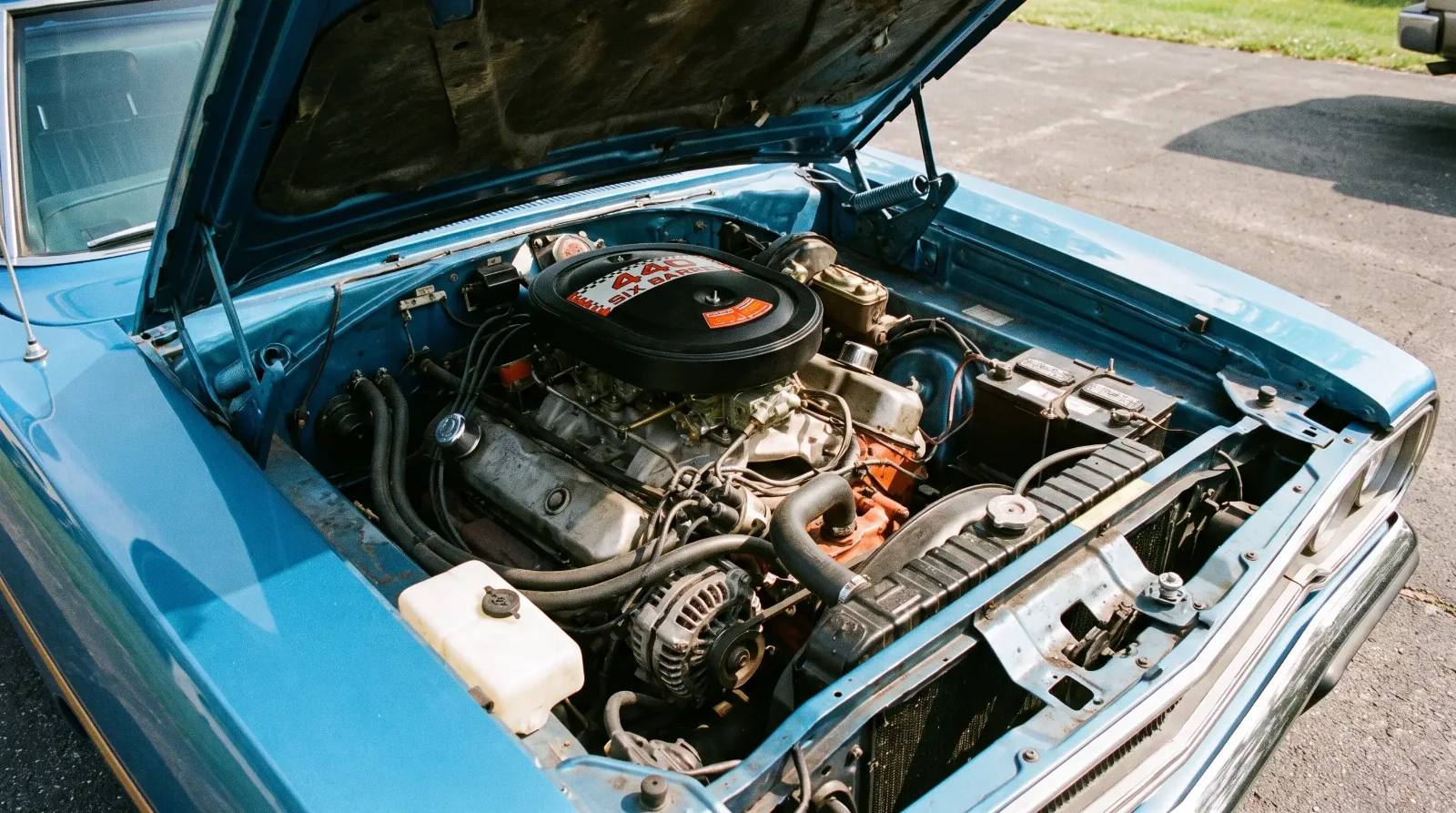
If a Hemi is out of reach, and for most of us it is, the same Chrysler big-block architecture gave us other monsters that cost a fraction of the Elephant. The 440 in its multi-carb form was a serious performer that many buyers preferred on the street, and you can read the full story on why it earned its own following. And if you are ready to shop the real thing, see muscle cars up for grabs and go in with your eyes open, your documentation checklist in hand, and a specialist on speed dial. The Elephant rewards patience and punishes hurry.
Related Reading
Have a
Classic Car
for Sale?
Reach thousands of serious classic car collectors across the US.
Sell It Here →
Are You a Classic Car Dealer?
List your full inventory and connect with targeted classic car buyers.
Join as a Dealer →

About the author
Mike Sullivan
Detroit-area muscle car enthusiast and restoration specialist with three decades of hands-on experience working on American iron.




Comments
Be the first to comment on this article.