
The Hemi got the glory, but plenty of guys who actually drove these cars will tell you the 440 Six-Pack was the smarter buy. Same idea, brute Chrysler big-block force, at a fraction of the price and half the fuss. Where the Hemi was a temperamental race engine playing dress-up, the 440 was a big, honest wedge motor that made its power the easy way, with cubic inches and three carburetors sitting on top. It hit hard, it started every morning, and it did not need a specialist to keep it happy. I have always had a soft spot for it.
Car Features
6 min read
The 440 Six-Pack Explained
The 440 Six-Pack explained: how the three-carb setup worked, its 390 hp gross rating, 1969-1971 production, and what to watch when buying a Six-Pack car.
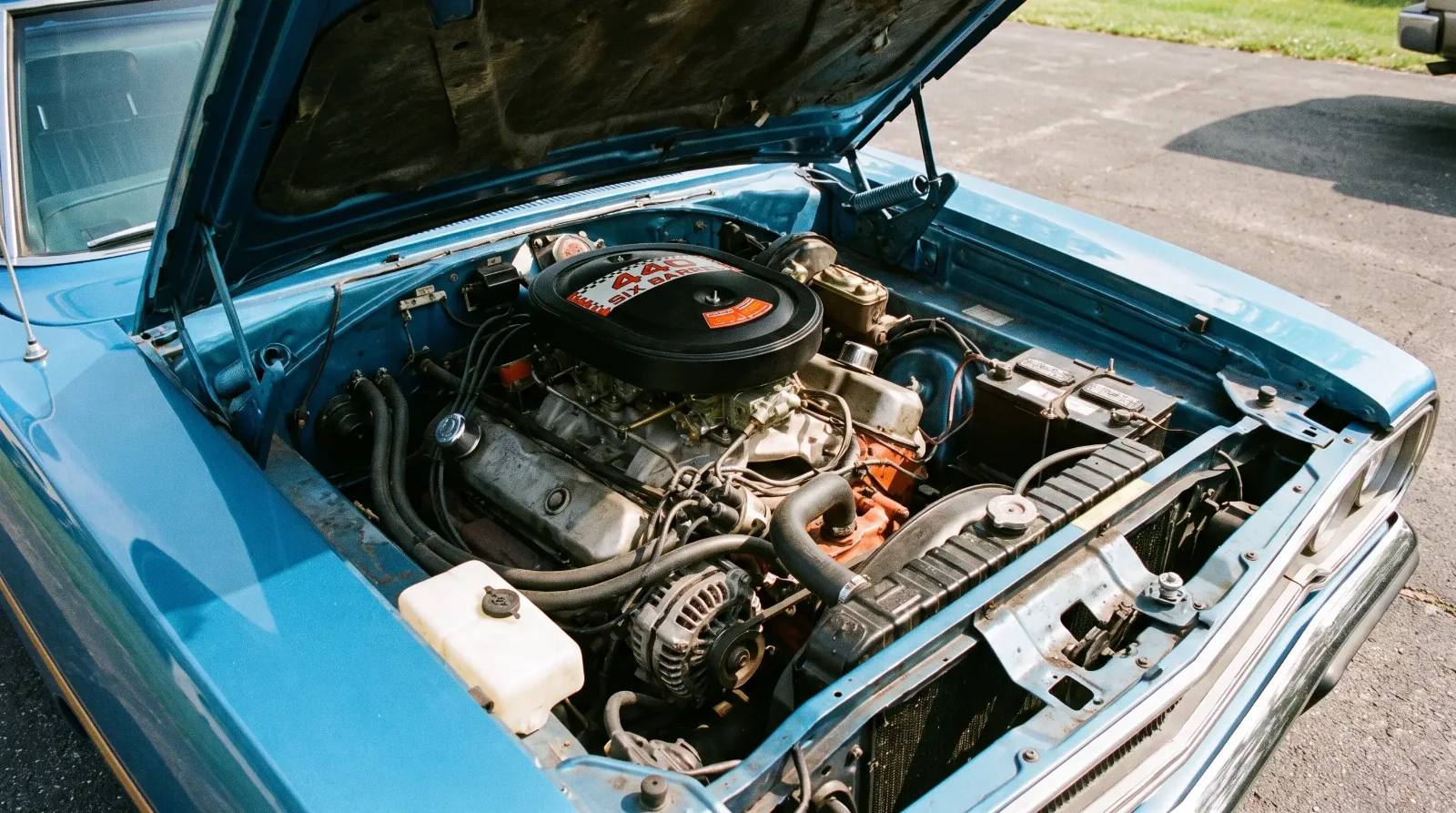
Six-Pack is Dodge's name for the setup. Plymouth called the same thing the Six-Barrel. Both names describe three two-barrel carburetors mounted on a single intake, and that is where the magic lived. Under light throttle the engine ran on the center carb alone, sipping fuel and behaving itself. Stand on it and the two outboard carbs snapped open, and all six barrels fed the beast at once. If you want to see where this motor fits among its rivals, here's the full breakdown of the whole muscle engine field.
How the three-carb setup worked
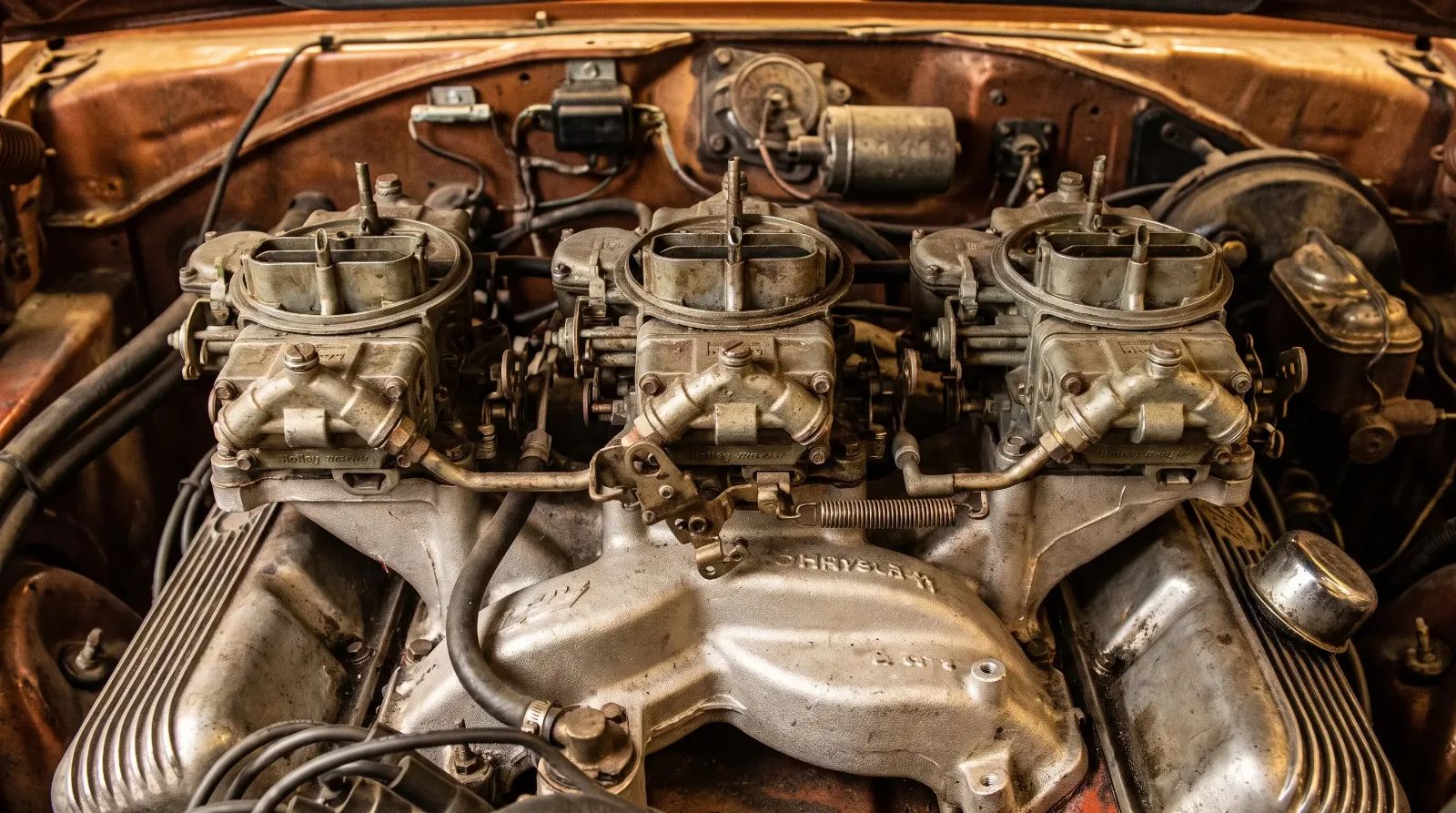
The heart of the Six-Pack was that progressive three-carburetor arrangement on a special intake manifold. The center carburetor handled normal driving, so around town the car was reasonably civilized and did not drink any worse than a regular four-barrel 440. The two end carburetors sat closed until you asked for everything. When the throttle went past a certain point, vacuum opened the outboard pair, and the engine went from sensible to savage in the space of a pedal press.
That design gave you two engines in one. A daily driver at part throttle and a drag car at wide open. It also made the car easier to live with than the multi-carb Hemi, because the linkage and tuning were simpler and the parts cost less. When one of those outboard carbs got fouled or out of adjustment, it was a headache, but it was a cheaper headache than anything Hemi-related. That practicality is a big part of why the Six-Pack built the loyal following it did.
What it made and when
The 440 Six-Pack and Six-Barrel arrived for 1969 and ran through the 1971 model year in its hottest form. The factory rated it at around 390 horsepower gross across those years. That put it just below the 426 Hemi's roughly 425 gross rating on paper, but the gap on the street was smaller than the numbers suggested, and the 440 made its torque lower and easier to use. For a lot of real-world driving, the Six-Pack car was the quicker thing to launch.
Displacement was 440 cubic inches, a genuine big wedge, and the torque figure was huge, commonly cited around 490 lb-ft gross. Remember that 390 hp is a gross number measured the old way, not what reached the tires, so read it in that light. Treat these as approximate factory figures and confirm any exact spec against documentation before you quote it, because big-block numbers shifted year to year and the internet is full of figures carried over from the wrong model year.
| Spec | 440 Six-Pack / Six-Barrel (1969–1971) |
|---|---|
| Displacement | 440 cu in (approx. 7.2 L) |
| Induction | Three two-barrel carburetors (progressive) |
| Rated power | Around 390 hp gross |
| Rated torque | Roughly 490 lb-ft gross |
| Dodge name / Plymouth name | Six-Pack / Six-Barrel |
| Peak production years | 1969 through 1971 |
Living with a Six-Pack car
The good news is that the 440 short block is one of the tougher big-blocks Detroit built. It takes abuse, it makes torque all day, and the basic engine is not hard to work on. Parts are available and reasonable compared to Hemi money. The three-carb intake and linkage are the fussy part. Those end carbs need to be synced and the progressive linkage set up correctly, or the car either bogs when the outboards open or runs rich and sloppy.
A lot of Six-Pack cars over the years had their three-carb setups pulled and replaced with a single four-barrel because the owner got tired of fiddling with them. That means a numbers-matching, correct Six-Pack intake and carb set is worth real money on its own, and a car wearing the original setup is worth more than one that has been converted back. If you are inspecting one, confirm the intake casting and the carbs are correct for the year, because reproduction and swapped parts are common.
"The Six-Pack was the workingman's Hemi, and I mean that as a compliment. It made stupid torque, it didn't cost Hemi money, and you could actually tune the thing in your own garage on a Saturday. When those three carbs are set up right, the way that engine wakes up when the outboards crack open will put a grin on your face every single time."
Mike Sullivan
What to pay and what to watch
Six-Pack cars sit below Hemi cars in value but well above base big-block cars, and correct, documented examples have climbed steadily. The premium rides on the same things it always does with Mopar, documentation and originality. A car with its broadcast sheet, correct fender tag, matching numbers, and the original six-barrel induction still in place is the one that holds and grows its value.
Watch for converted cars sold as original, reproduction intakes passed off as factory, and the usual clone temptation on the desirable body styles. The Six-Pack is one of the great muscle engines precisely because it delivered near-Hemi punch without the Hemi headaches, and the Pontiac camp cooked up its own version of that big-cube, cold-air philosophy that is worth a look if you want to read the full story. When you are ready to shop, view classic muscle cars for sale and put originality of that three-carb setup at the top of your checklist. It is the detail that separates a real Six-Pack from a good imitation.
Related Reading
Have a
Classic Car
for Sale?
Reach thousands of serious classic car collectors across the US.
Sell It Here →
Are You a Classic Car Dealer?
List your full inventory and connect with targeted classic car buyers.
Join as a Dealer →

About the author
Mike Sullivan
Detroit-area muscle car enthusiast and restoration specialist with three decades of hands-on experience working on American iron.

Comments
Be the first to comment on this article.