
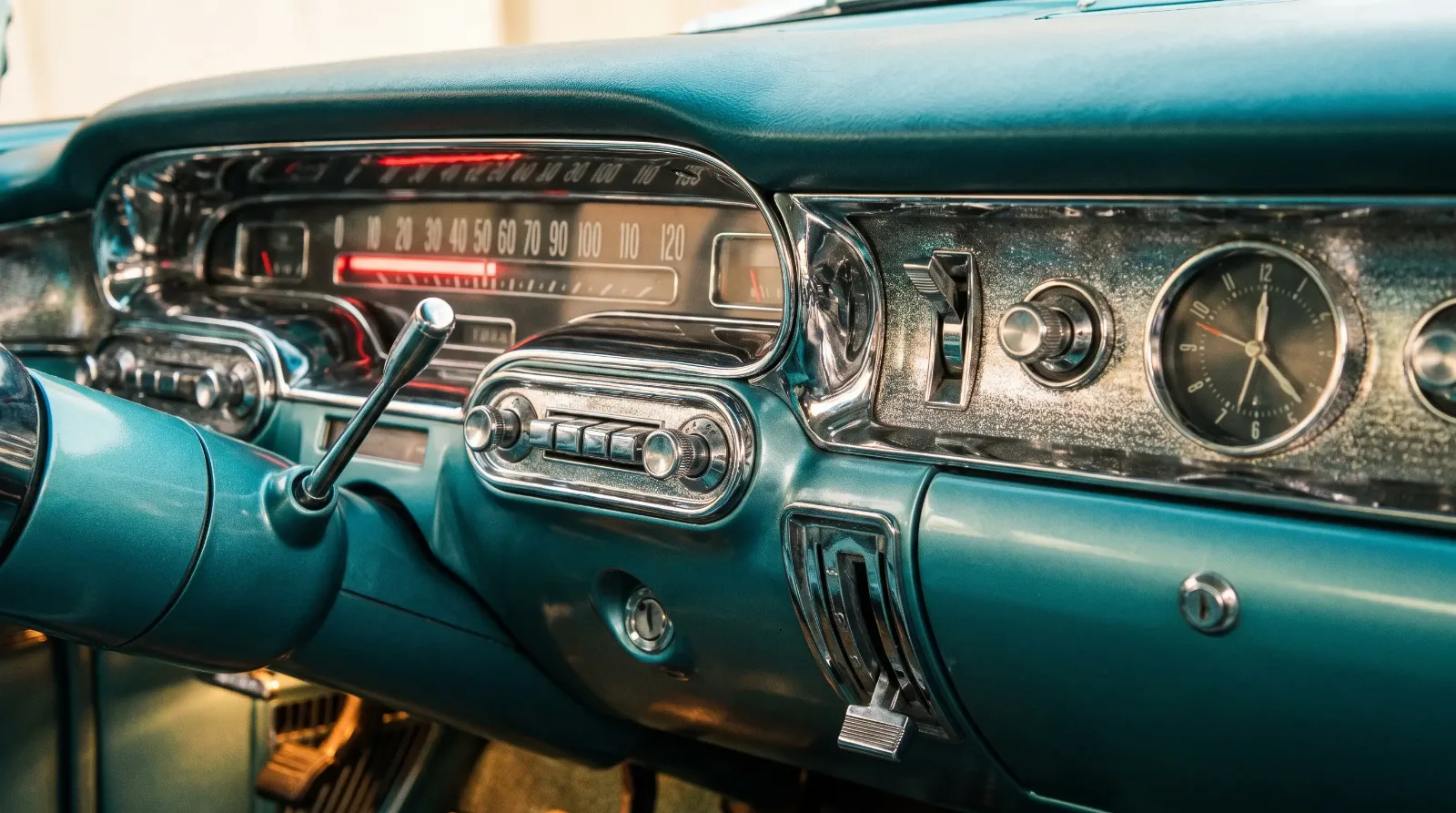
For forty years, chrome was how an American luxury car announced itself. Bright metal ran along the flanks, wrapped the bumpers, framed the windows, and crowned the grille. Then, over a single decade, most of it vanished. The car that glittered in 1965 wore matte black and body-color plastic by 1985. The disappearance of chrome from luxury design was not a matter of taste alone. It was driven by federal law, an energy crisis, and hard economics, all arriving at once during the years collectors now call the malaise era.
Car Features
6 min read
The Death of Chrome: How the Malaise Era Changed Luxury Design
How malaise era luxury car design killed chrome: 5 mph bumper laws, the fuel crisis, and downsizing that traded brightwork for body-color plastic.
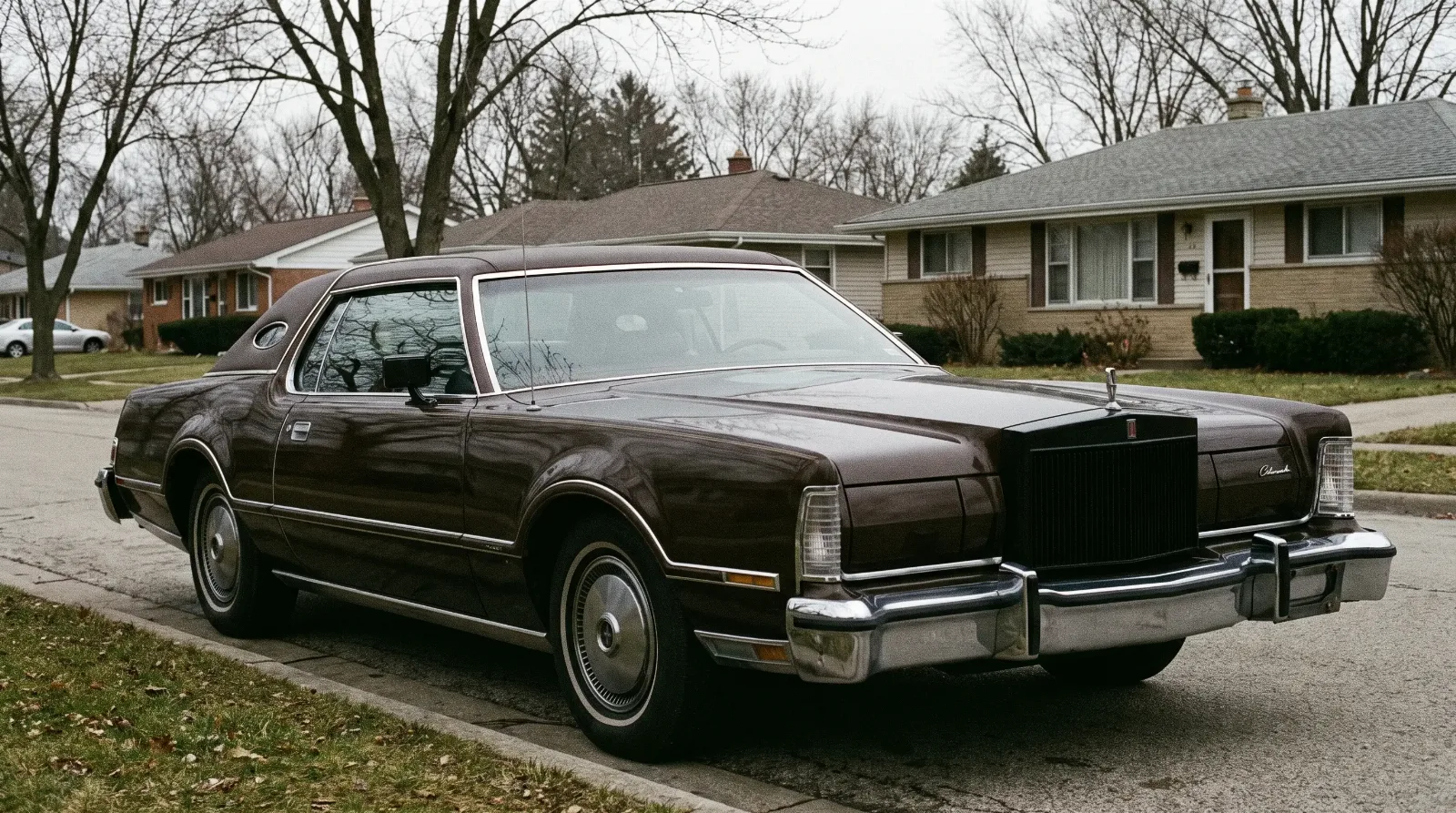
Understanding that shift matters, because it explains why so many luxury cars of the mid-1970s look heavy and awkward compared with the cars that came just before them. The stylists of that period were not suddenly incompetent. They were designing under a set of constraints that had never existed before, and the constraints showed.
The bumper laws that broke the front end
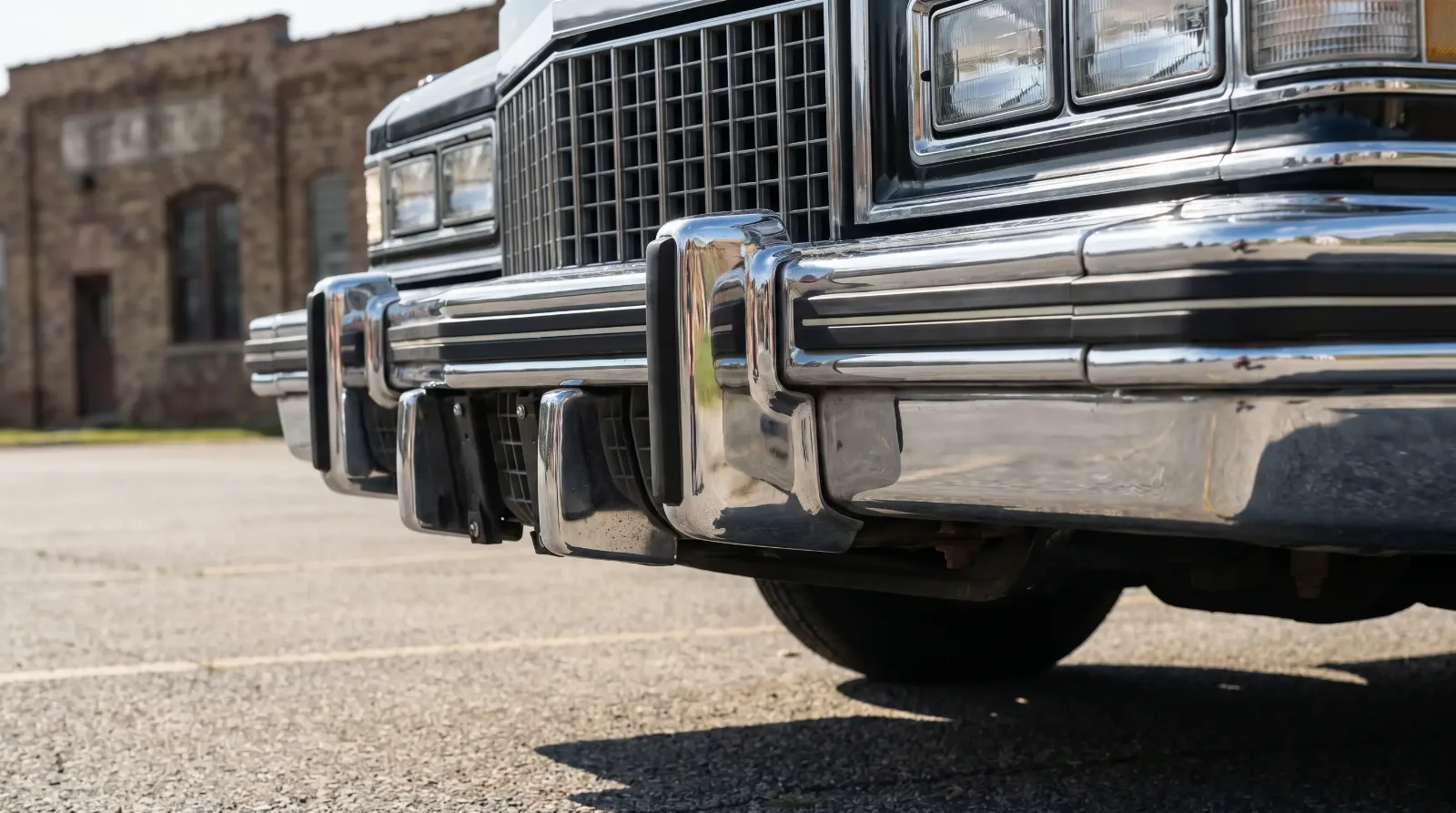
The single biggest blow to chrome came from safety regulation. United States federal bumper standards phased in during the early 1970s required passenger cars to withstand low-speed impacts without damage, commonly summarized as a 5 mph front standard for the 1973 model year and a matching rear requirement for 1974. To meet it, makers bolted on large, heavy bumpers backed by hydraulic shock absorbers or thick mounting brackets.
A delicate, close-fitting chrome bumper could not do that job. The elegant thin blades of the 1960s gave way to massive battering-ram units that stood proud of the bodywork on visible piston mounts, often with black rubber impact strips and ugly filler panels bridging the gap between bumper and body. On a formerly graceful luxury car, that added length and visual weight at exactly the wrong place. The whole front-end proportion, which the previous era had labored to perfect, came undone almost overnight.
Fuel, weight, and the economics of brightwork
Chrome plating was never cheap. It is a multi-stage process over a steel or pot-metal base, and every bright strip added cost, labor, and weight. When the 1973 oil embargo and the 1979 energy crisis put fuel economy at the center of every buyer's mind, weight became the enemy. Manufacturers began the great downsizing, with General Motors trimming its full-size cars dramatically for 1977 and its personal luxury and Eldorado-class cars soon after. A lighter car meant less brightwork, thinner sheet metal, and a hard look at every ounce of decorative trim.
At the same time, plastics improved. Body-color urethane bumper covers and molded trim could do what chrome once did, at lower cost and weight, while meeting the impact rules. For a manufacturer counting pennies and pounds under regulatory pressure, the choice made itself. The bright metal that had defined luxury for a generation was now a liability on the balance sheet and the scale. This economic squeeze is a thread that runs through the whole period, and it connects to the larger arc laid out in the full design story.
"The malaise era is often blamed on bad taste, but the record shows constraint, not carelessness. Regulation dictated the bumpers, the fuel crisis dictated the weight, and economics dictated the materials. Chrome did not fall out of fashion so much as it was priced and legislated off the car. The stylists were working inside a cage."
Sarah Whitfield
What luxury clung to as the chrome fell away
Luxury design did not surrender its identity quietly. As bright metal receded, makers leaned harder on the ornaments that remained legal and affordable. Opera windows, padded vinyl roofs, landau bars, stand-up hood ornaments, and thick woodgrain interiors carried the prestige message that chrome used to carry. If you could not glitter, you could still signal formality and exclusivity through the roofline and the cabin.
| Before the malaise era | How luxury was signaled after |
|---|---|
| Thin bright chrome bumpers | Heavy 5 mph bumpers with rubber strips and fillers |
| Broad brightwork along the body sides | Padded vinyl roofs and opera windows |
| Chrome window surrounds and grilles | Blackout trim, standing hood ornaments, wire wheel covers |
| Polished metal detailing | Woodgrain appliqué and plush interior fabrics |
The effect was a curious kind of overcompensation. As the exterior lost its shine, the ornament that survived grew more insistent, which is why the late-1970s luxury car can feel both stripped and fussy at the same time. It was a design language under strain, borrowing prestige signals from every direction because its main one had been taken away.
A car like the Lincoln Continental Mark IV shows the strain plainly. Its earlier form carried bright metal with real confidence, but as the bumper rules and downsizing pressure took hold, the survivors of the decade piled on vinyl, opera lamps, and standing hood ornaments to compensate for what the front and rear ends had lost. The 1976 Cadillac Eldorado, marketed as the last of the true big convertibles, wore its heavy federal bumpers as an unavoidable fact rather than a design choice. These were dignified cars doing their best inside rules written elsewhere, and the seams show if you know where to look.
The lasting mark of the malaise era
When the constraints eased in the 1980s, chrome never returned in force. Designers had discovered that body-color surfaces and blackout trim could look clean and modern, and a new aesthetic of monochrome sophistication took hold that has largely defined luxury ever since. The bright, glittering car of the 1950s and 1960s became a period piece, admired precisely because nothing built after looks like it.
That is why malaise-era cars occupy such a strange place with collectors. They are the hinge between two worlds, the last cars to reach for chrome-era grandeur and the first to abandon it under pressure. Reading them teaches you as much about regulation and economics as about styling. To go back to the beginning of the chrome story, when bright metal and bold ornament were first weaponized to sell luxury, continue with next: The Tail Fin Story.
Related Reading
Have a
Classic Car
for Sale?
Reach thousands of serious classic car collectors across the US.
Sell It Here →
Are You a Classic Car Dealer?
List your full inventory and connect with targeted classic car buyers.
Join as a Dealer →

About the author
Sarah Whitfield
Third-generation classic car collector specializing in pre-war American and European coachbuilt automobiles. Researcher and concours enthusiast.




Comments
Be the first to comment on this article.