
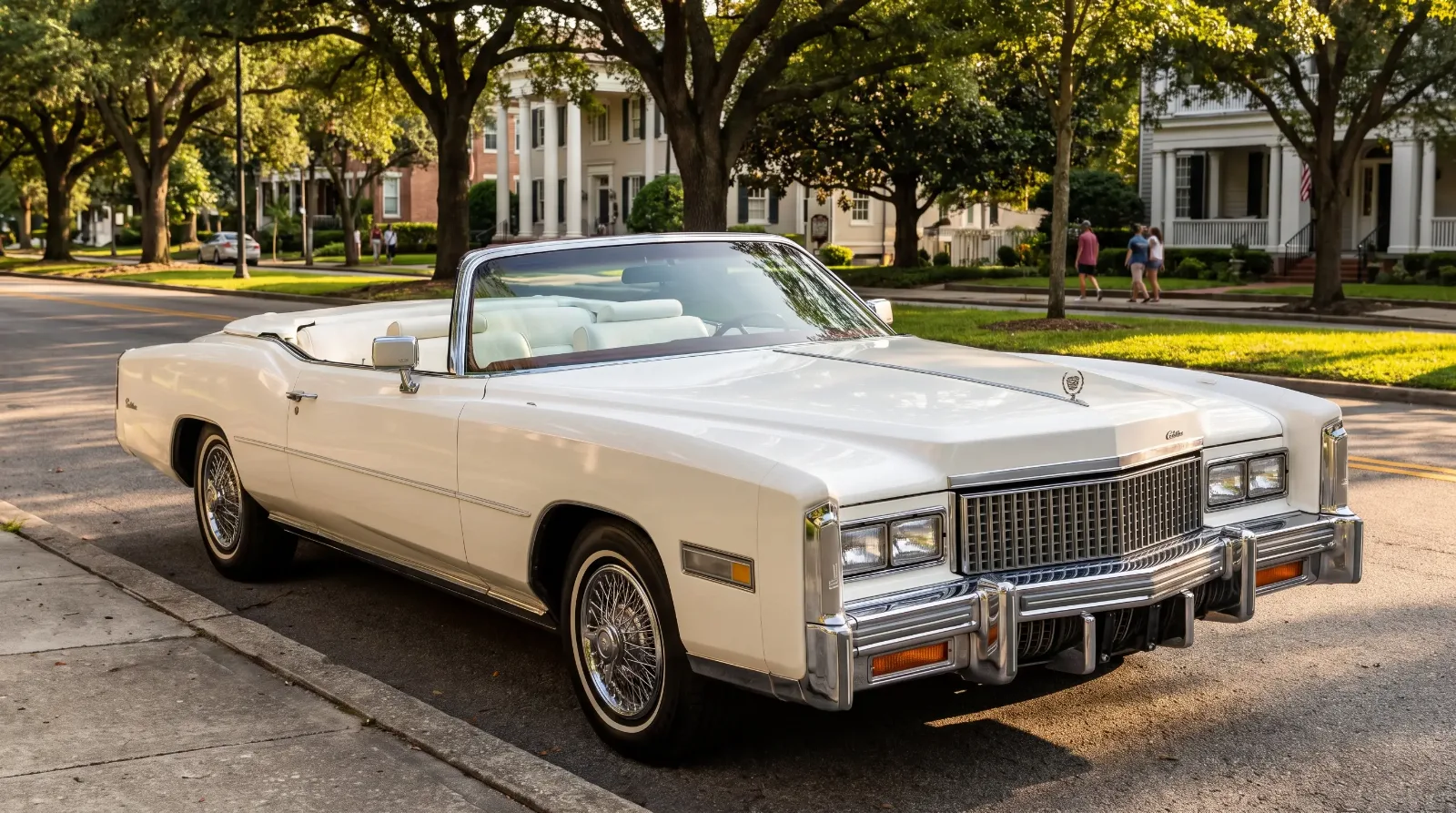
Walk up to a 1975 Cadillac Fleetwood and open the door, and the first thing that reaches you is not the size of the seat. It is the texture. The upholstery is soft in a way that leather is not, gathered into deep folds, and the door panels carry the same fabric across broad padded surfaces. This was the land yacht interior at its most confident, a cabin designed to feel less like a car and more like a small parlor that happened to move. The materials tell the story of what American luxury meant in the 1970s, and most of that story is written in velour and printed woodgrain.
Car Features
6 min read
Tufted Velour and Wood-Look Dashes: Inside the Land Yacht Cabin
Inside the land yacht cabin: why velour beat leather, the tufted pillow seats, and the printed woodgrain dash that was never real wood.
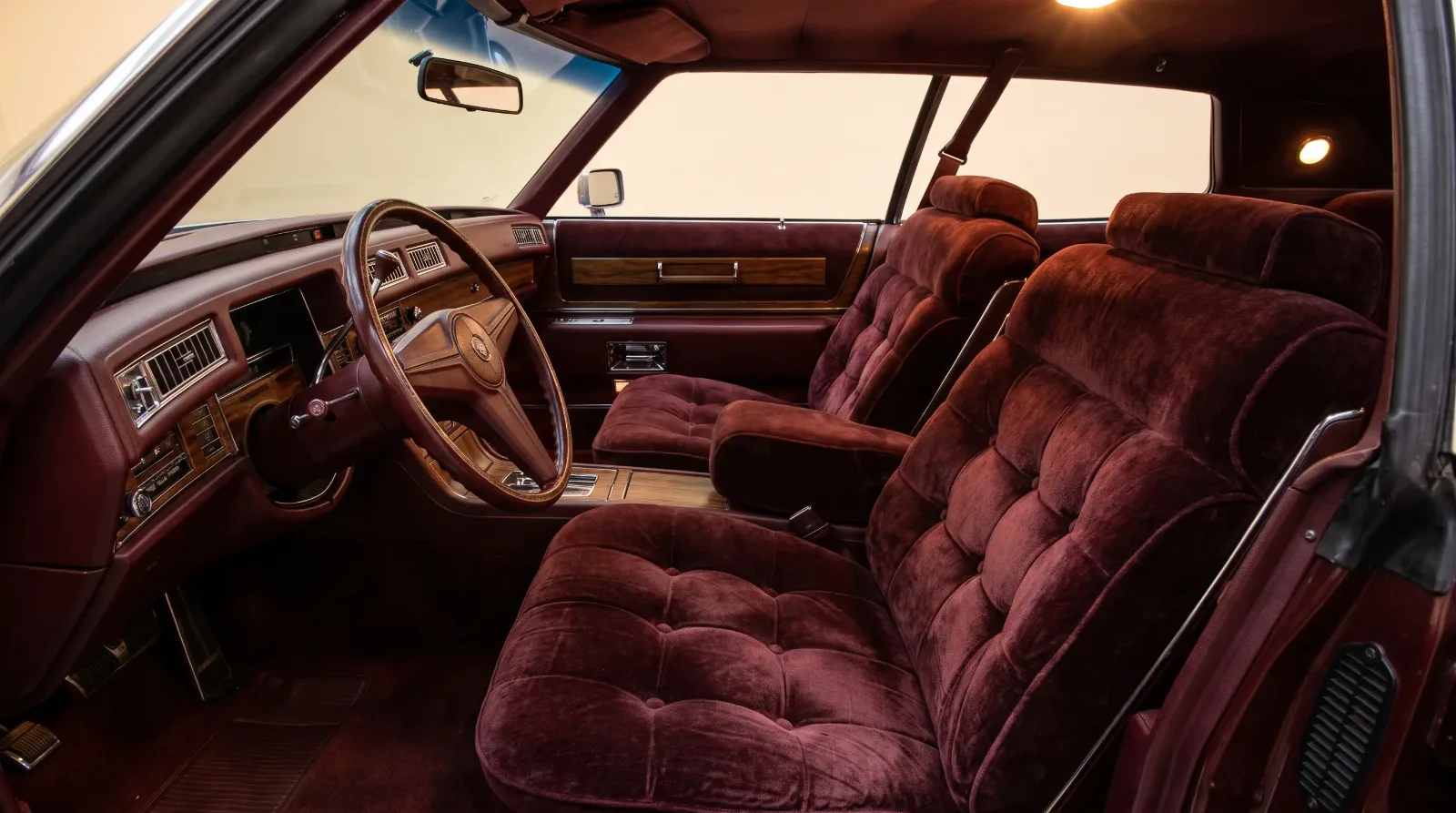
The interiors of these cars are often dismissed today as kitsch, all button-tufted plush and fake timber. That reading misses what the designers were actually doing. Every surface was chosen to signal a specific idea of comfort, and the choices were deliberate, costed, and marketed with real care. Understanding the cabin is part of understanding the land yacht story, because the inside sold the car as much as the length of the hood.
Why velour replaced leather at the top of the range
For most of the century, leather signaled the premium car. By the early 1970s that logic had inverted inside American luxury cabins. Cloth, specifically cut-pile velour and its plusher cousin crushed velour, became the higher-status choice, while leather was frequently offered as a no-cost or even lower-tier option. The reasoning was partly practical and partly cultural. Velour held a steady temperature in a way leather did not, staying cool in July and warm in January, which mattered in a car sold on the promise of a controlled, insulated ride.
It also read as softer and more residential. A buyer stepping out of a formal living room furnished in the taste of the period found the same visual language inside the car: deep pile, gathered folds, coordinated colors in maroon, dark blue, saddle, and the ubiquitous medium green. The fabric absorbed light rather than reflecting it, which made the cabin feel enclosed and hushed. Leather, by contrast, looked sportier and slightly austere, which is exactly why it drifted down the order sheet in the plushest models.
Tufting, loose pillows, and the button-and-biscuit look
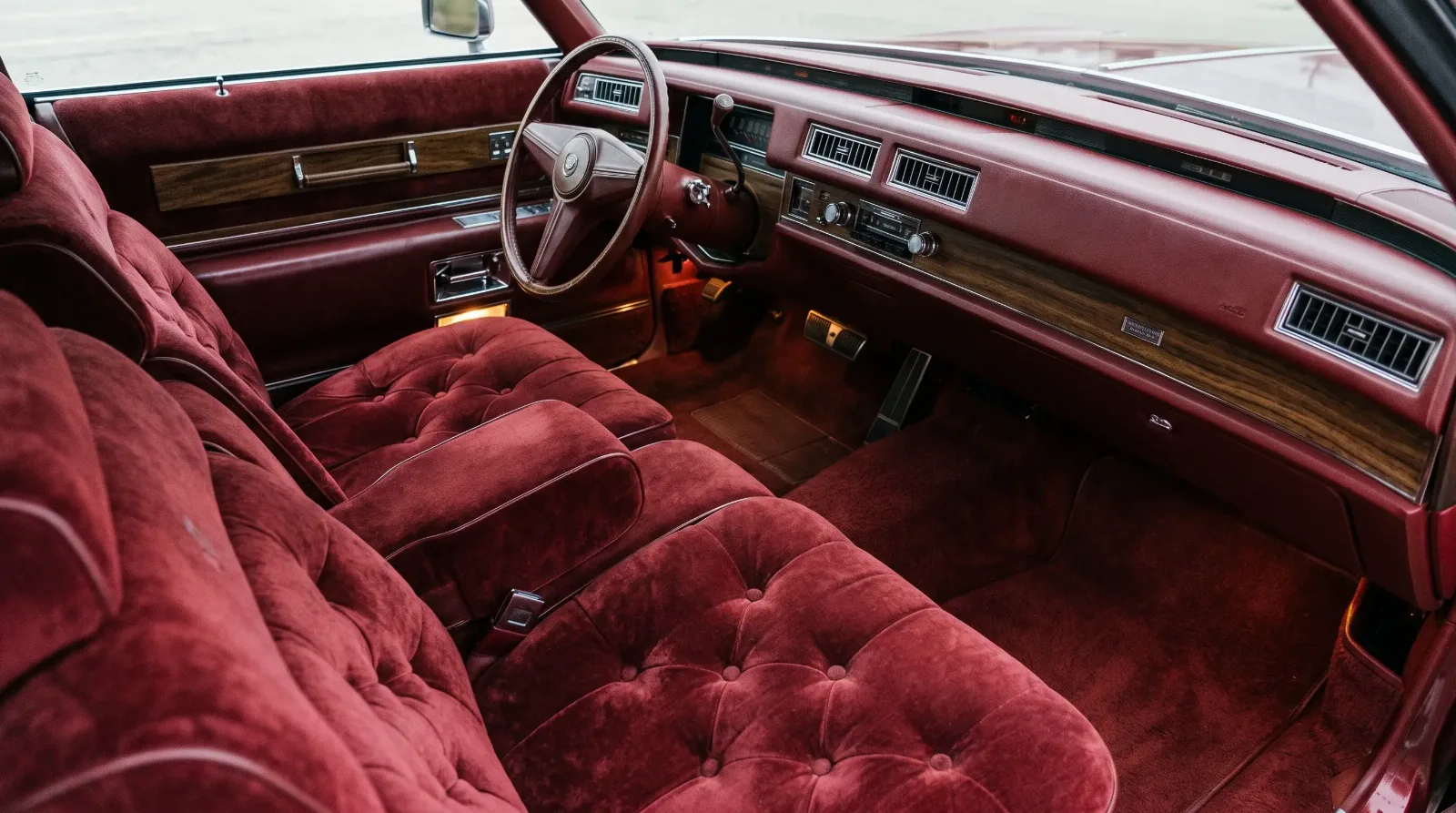
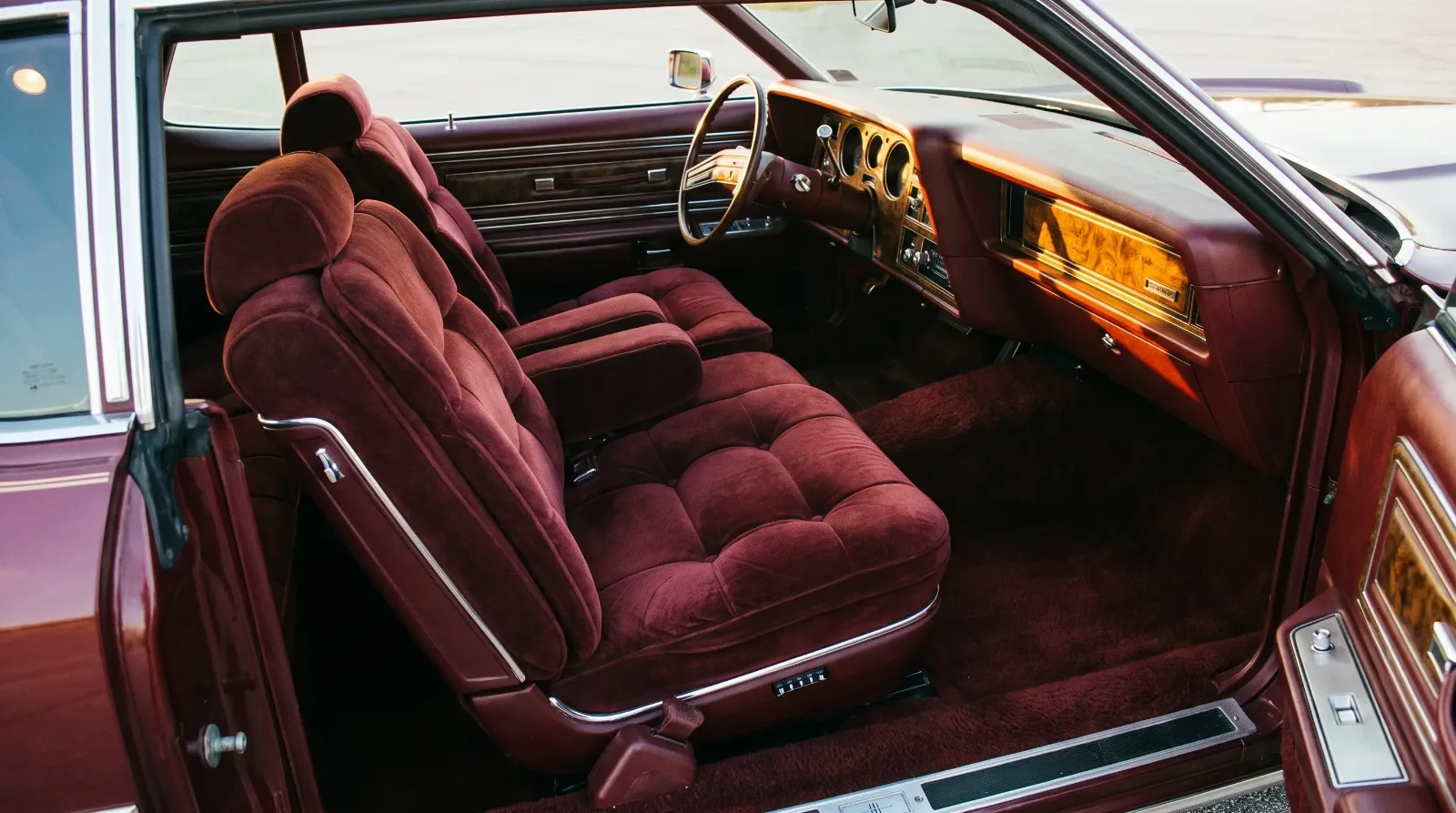
The signature texture of the era was tufting. Seat surfaces were divided into rows of soft biscuits, often finished with buttons pulled deep into the padding, so the cushion read as a series of pillows rather than a flat plane. Lincoln leaned hard into this with its loose-pillow seat designs through the Continental Mark IV and Mark V, where the seatback looked like stacked cushions from a sofa. Cadillac and the top Oldsmobile and Buick models offered their own versions, sometimes called pillow-style or tufted-crown seating in the brochures.
The effect was intentional. A tufted, buttoned surface photographs as expensive and, more to the point, it yields under the hand in a way a firm bolstered seat does not. These seats were tuned for a first impression of softness, not for lateral support, because nobody was cornering hard. The trade-off is one every owner learns. The plush foam that made the seat feel wonderful when new is exactly what collapses and cracks with age, and the buttons that defined the look are the first thing to pull loose.
Wood that was never wood
The other defining surface was the dash, and here the marketing and the material parted ways. The "wood" across the instrument panel, the doors, and the console of nearly every land yacht was not wood. It was a printed appliqué, usually a woodgrain film or a molded plastic panel finished to imitate walnut, rosewood, or burl. Real timber appeared on a handful of the most expensive imports and a few special interiors, but on a domestic luxury car the dash trim was almost always simulated.
This was not simple cost-cutting, though it was cheaper. Printed woodgrain was consistent, it did not warp or split in a car that sat in the sun, and it could be applied across large molded surfaces that a real veneer would struggle to cover. The padded dash tops, another period signature, were vinyl over foam, chosen for a soft look and for occupant protection in a crash. The result was a dashboard that read as warm and traditional from the driver's seat while being entirely synthetic under the surface. Buyers knew, mostly, and did not much care. The look was the point.
"People laugh at the fake woodgrain now, but hold an original panel to the light and you see how carefully the grain was printed to catch a reflection. It was never trying to fool a cabinetmaker. It was set-dressing for a room, and judged as that, it was very good at its job."
Sarah Whitfield
What survives, and what to check
Original interiors are getting scarce, and that scarcity is starting to matter to the way these cars are valued. A land yacht with its correct velour uncracked and its woodgrain panels unfaded is a different object from one that has been reupholstered in a modern approximation. The fabrics were period-specific, and matching an original Medici or a factory pillow-seat pattern is difficult and expensive. If you are looking at one of these cars, or browsing classic luxury cars for sale, the cabin is where originality either holds or falls apart.
The land yacht cabin was the clearest expression of a very specific idea, that luxury meant softness, quiet, and the visual comfort of a well-appointed room. It was a look that dated quickly once tastes turned toward crisp European austerity, but seen on its own terms it was coherent and expensive to build. The interiors deserve more credit than the "fake wood and plush" shorthand allows. The next chapter of that comfort story arrives from a different direction, in next: The Slow Fade of the Land Yacht Convertible, where the open-top version of this same luxury slowly disappeared.
Related Reading
Have a
Classic Car
for Sale?
Reach thousands of serious classic car collectors across the US.
Sell It Here →
Are You a Classic Car Dealer?
List your full inventory and connect with targeted classic car buyers.
Join as a Dealer →
#classic luxury cars
#Lincoln Continental
#land yacht
#car interiors
#velour upholstery
#1970s cadillac

About the author
Sarah Whitfield
Third-generation classic car collector specializing in pre-war American and European coachbuilt automobiles. Researcher and concours enthusiast.

Comments
Be the first to comment on this article.