
Open a magazine from 1968 or 1974 to a full-page car advertisement and one phrase appears again and again in the copy for American full-size cars: six-passenger comfort. It was a promise, a selling point, and a small piece of social engineering all at once. The idea that a family car should seat six adults in genuine comfort shaped how these cars were built, how they were photographed, and how they were sold.
Car Features
6 min read
“Six-Passenger Comfort”: How Detroit Marketed Land Yacht Interiors
How Detroit turned bench seats and column shifters into "six-passenger comfort" and sold roominess as luxury in the classic land yacht era.
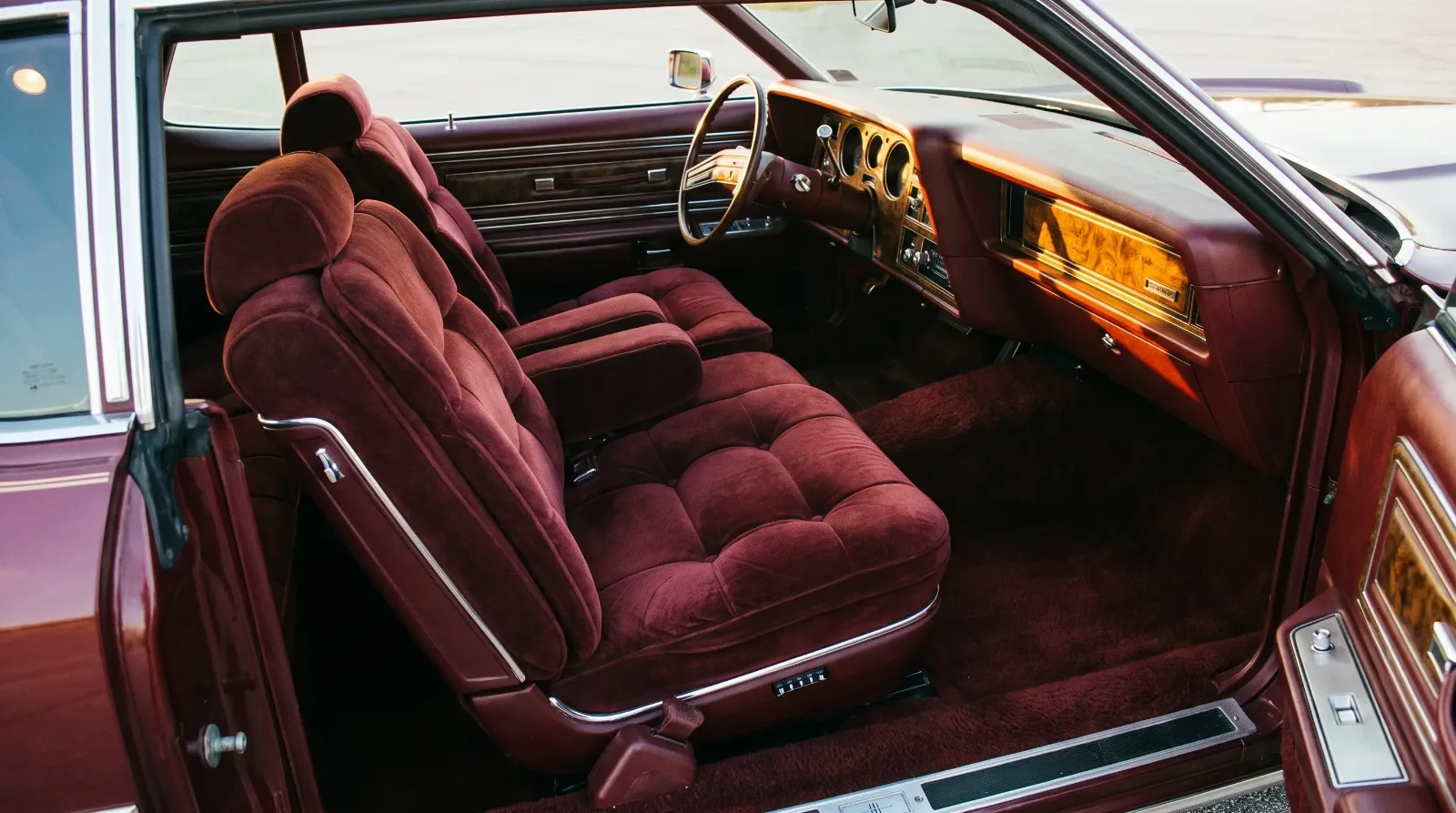
What makes the phrase worth examining is how much work it did. It justified the size, it flattered the buyer, and it framed a car's roominess as a form of hospitality. Reading the marketing of the land yacht era through this single claim reveals a great deal about what Detroit thought its customers wanted.
The engineering behind the claim
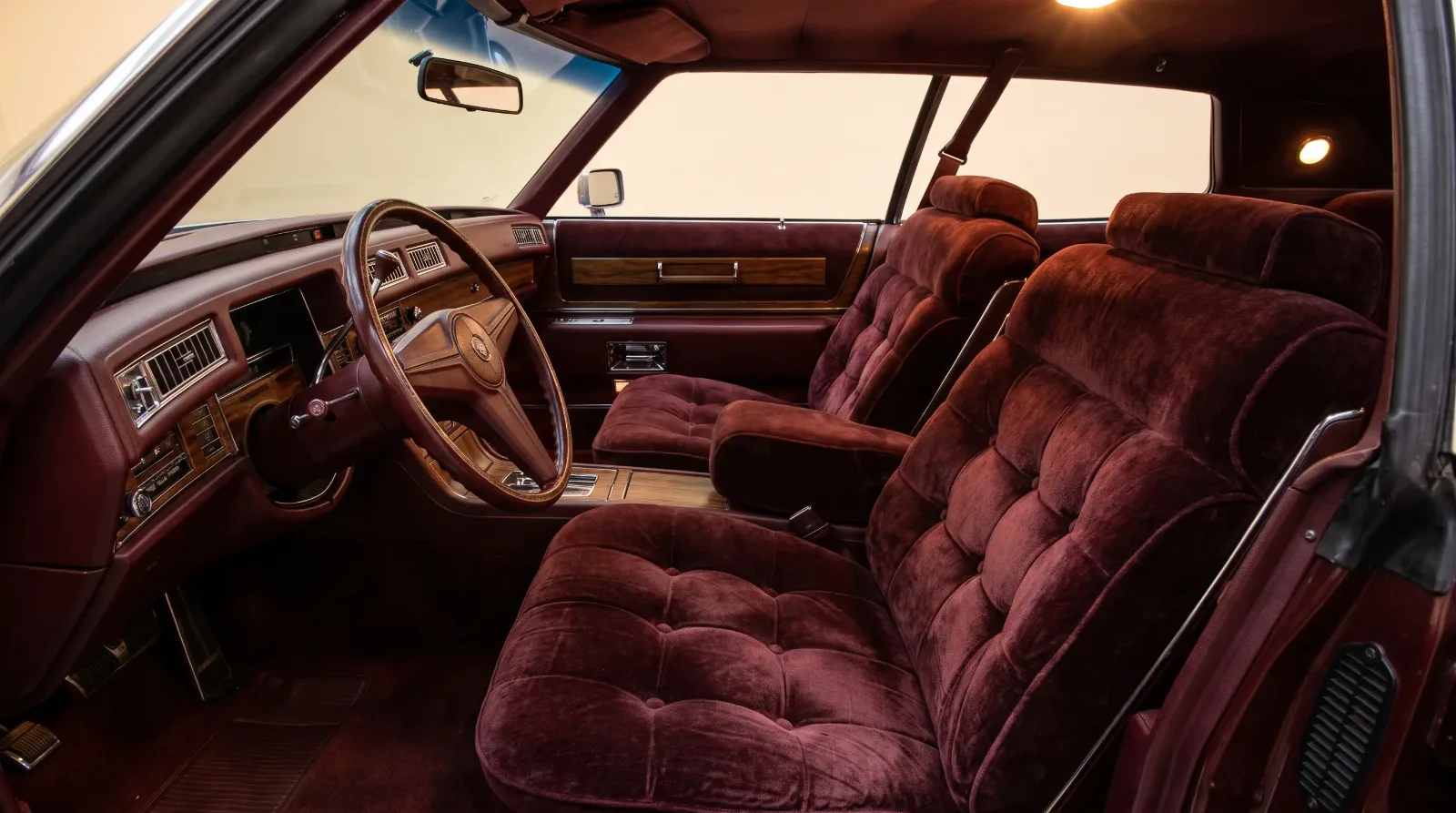
Six-passenger seating was not marketing invention. It rested on real design decisions, chief among them the bench seat. Front and rear bench seats, each nominally seating three, gave the car its six places. Making the front bench usable for three people required a flat or nearly flat floor and, critically, a column-mounted gear shifter. With the shifter on the steering column, the space between the front seats stayed open, and a third passenger could sit there without straddling a transmission tunnel or a console.
This is why the column shift, often called three-on-the-tree in its manual form and simply a column automatic in most luxury cars, mattered so much to the format. A floor shifter and a center console, the hallmarks of a sporty car, would have destroyed the six-passenger claim by eliminating the middle front seat. The land yacht's whole cabin layout was organized around keeping that center position open and inviting. The broader thinking that produced these enormous, accommodating cabins is laid out in why land yachts got so big.
How the ads sold roominess
The advertising art reinforced the message at every turn. Period photography frequently showed well-dressed adults, sometimes six of them, arranged in and around the car, the men in suits and the women in formal wear. The car was presented not as transportation but as a setting, a place where a group could travel together in the manner of a private lounge. Copy dwelled on the width of the seats, the depth of the cushions, and the quality of the upholstery.
The language was aspirational without being subtle. Interiors were described as living rooms on wheels, and the space itself became a luxury feature to be listed alongside power accessories and the engine. Roominess was sold as generosity, as the owner's ability to bring others along in comfort, which flattered the buyer as much as it described the car. The same interiors that carried this promise are part of the longer arc traced in the full classic luxury car story.
There was a competitive edge to the claim as well. Imported cars, which were smaller and increasingly present on American roads by the late 1960s, could not credibly make the same promise. A European sedan of the period seated four in comfort and five in a pinch. Detroit's answer was to make interior space itself the argument, positioning the full-size American car as the only honest choice for a family or a group that traveled together. Six-passenger comfort was, in part, a way of saying that the smaller cars simply could not do what these could.
"The phrase six-passenger comfort is doing something quite deliberate. It reframes size, which is really a cost and an inconvenience, as an act of hospitality. The car is not merely large. It is generous. That shift in language turned a practical dimension into a social virtue, and it is one of the more effective pieces of automotive copywriting of the whole period."
Sarah Whitfield
What six-passenger seating meant in practice
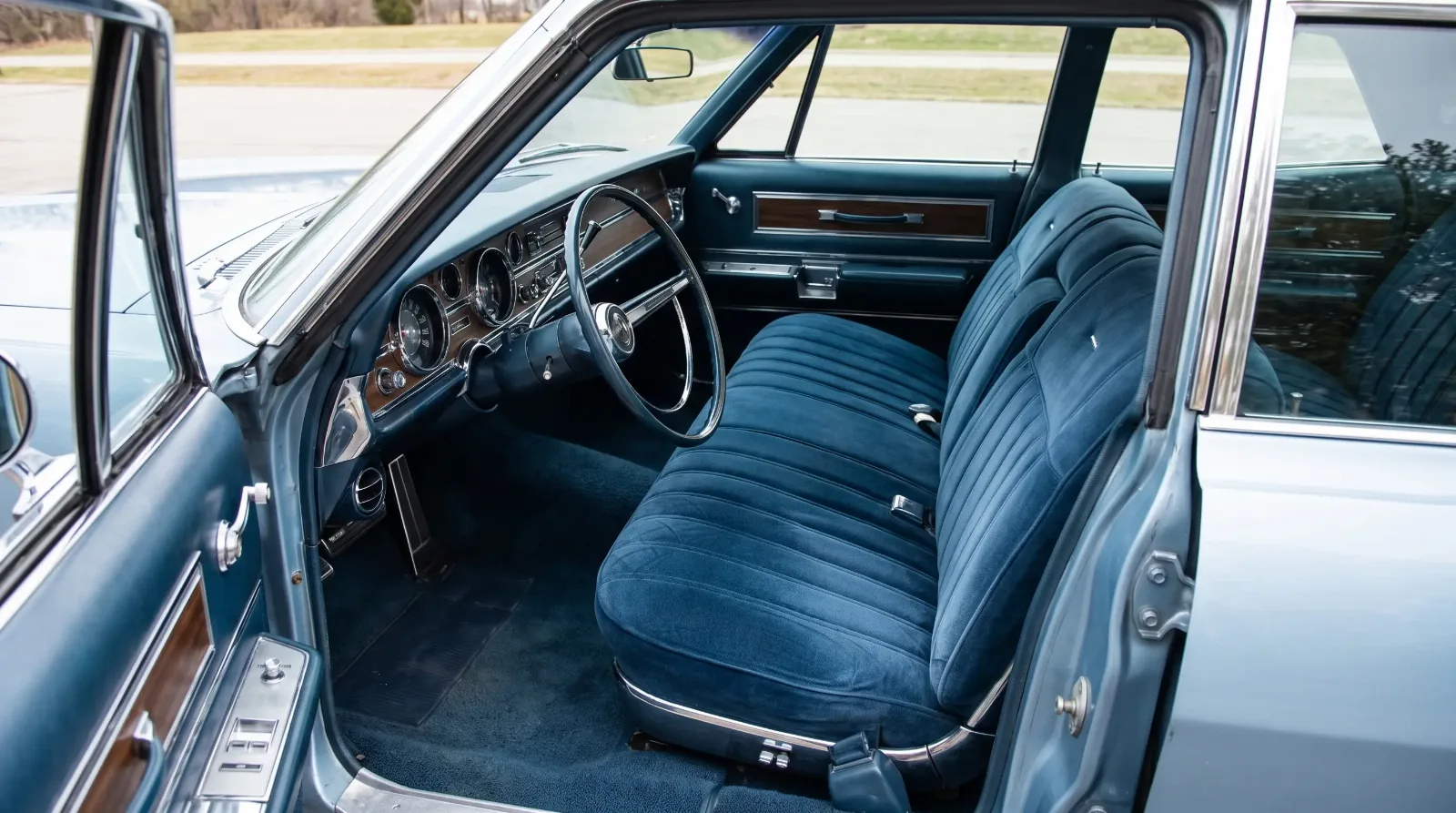
The reality was slightly more complicated than the copy suggested. The center positions, front and rear, were the least comfortable seats in the car, with less legroom, a firmer perch over the transmission and driveline area, and no armrest when the fold-down center rest was in use. Six adults could travel in one of these cars, and often did, but the two center passengers were making a real compromise the advertising never mentioned.
Still, the claim held up better here than in almost any car sold since. A full-size land yacht genuinely could carry six people and their luggage over long distances in relative comfort, something no modern sedan of comparable footprint attempts. The bench-seat, column-shift layout was the enabling technology, and it survived in American full-size cars long after sportier packaging had taken over everywhere else.
It is worth being precise about what comfort meant here. The outboard four passengers, two in front and two in the rear corners, traveled in genuine ease, with wide flat cushions, generous shoulder room, and soft springing. The car delivered fully on the promise for them. The middle two simply came along for the ride. That was the honest arithmetic behind the phrase, and buyers who used the center seats only occasionally, for a short hop or an extra guest, never felt the compromise the way a family of six on a long trip would.
The end of the six-passenger car
The six-passenger claim faded for reasons that had nothing to do with buyers falling out of love with it. Bucket seats and center consoles grew more fashionable, drawn from sporty and imported cars. Downsizing after 1977 reduced the interior width that made three-across seating comfortable. Later, safety regulation and the rise of the center console with airbags and controls made the open front bench impractical, and eventually the front bench seat disappeared from American cars almost entirely.
Today the six-passenger full-size car is a genuine period artifact, and its bench seats and column shifter are part of what draws collectors to the type. Anyone who wants to sit six the old way can look through the current classic luxury cars for sale and find the layout still intact. The comfort these cars promised extended well past the seating, into the materials themselves, which is where to look next: Tufted Velour and Wood-Look Dashes.
Related Reading
Have a
Classic Car
for Sale?
Reach thousands of serious classic car collectors across the US.
Sell It Here →
Are You a Classic Car Dealer?
List your full inventory and connect with targeted classic car buyers.
Join as a Dealer →

About the author
Sarah Whitfield
Third-generation classic car collector specializing in pre-war American and European coachbuilt automobiles. Researcher and concours enthusiast.
Comments
Be the first to comment on this article.