
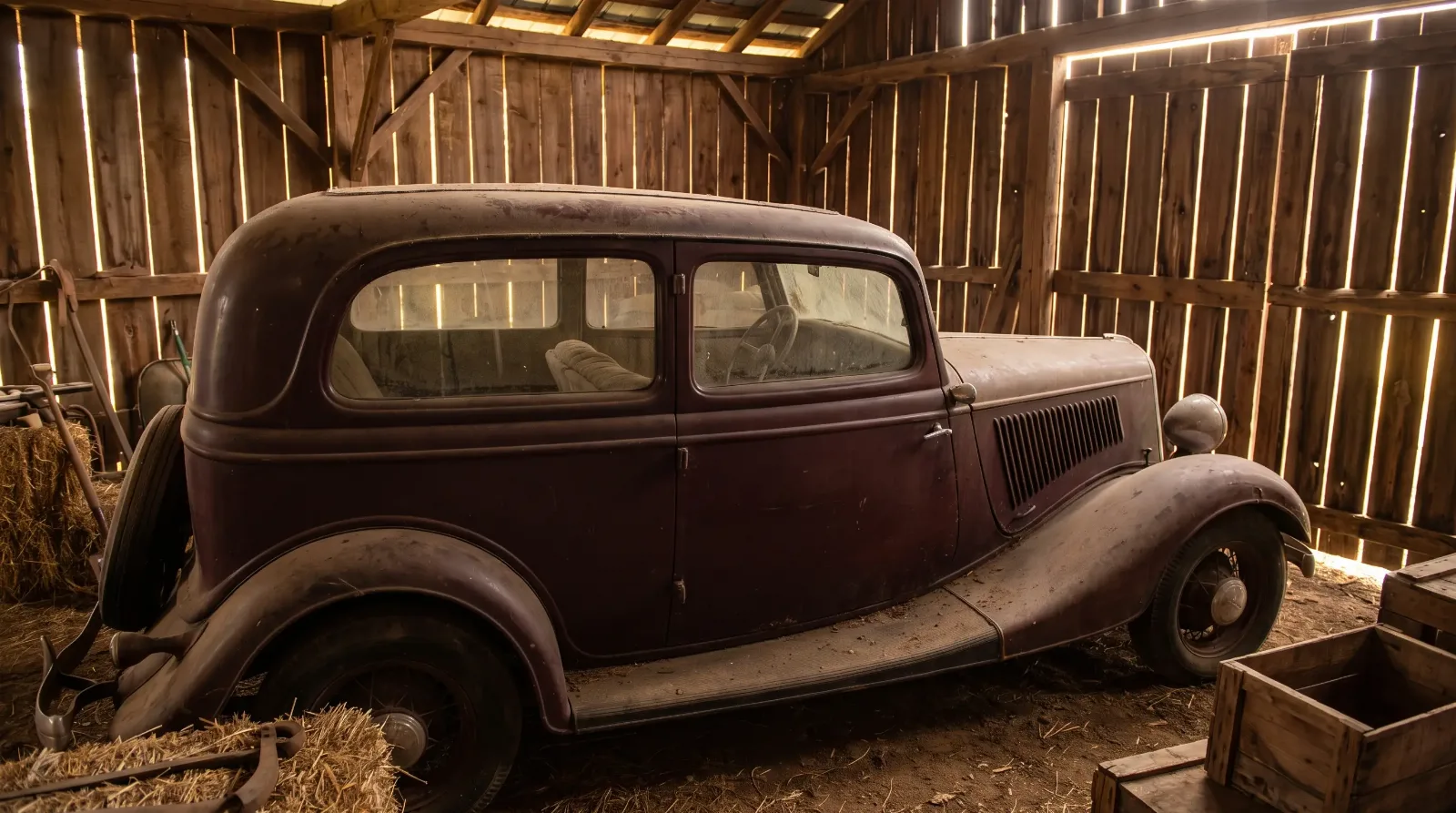
A car that has never been apart is worth something a freshly restored car cannot buy back: certainty. Every panel, every fastener, every layer of old paint under the newer layer is original, unaltered evidence of exactly what the factory built. Restoration can make a car look better than new. It cannot make it more original, and originality is what a growing share of serious buyers are actually paying for.
Car Features
6 min read
Unrestored Survivors: Why Originality Commands a Premium
A worn, original pre-war car can be worth more than a glossy restoration of the same model. Here is why unrestored survivors command a premium, and how to tell a real one from neglect.
What "survivor" actually means, and what it does not
A survivor car is one that retains its original paint, interior, mechanical components, and finishes, having avoided a full restoration despite its age. That does not mean untouched or unmaintained. A genuine survivor may have had routine service over the decades, a repainted fender after a minor parking-lot incident, or an interior panel replaced when the original wore through. What it has not had is a comprehensive, ground-up restoration that strips the car back to bare metal and rebuilds it. The distinction matters because a car with one repainted door is still fundamentally original. A car that has been fully repainted, re-upholstered, and mechanically rebuilt top to bottom is not a survivor regardless of how well the work was done.
Sellers sometimes stretch the term to cover cars with far more intervention than the word implies. Ask specifically what has been done to the car, panel by panel, rather than accepting "survivor" as a category on faith.
A useful test is to ask how many of the car's major surfaces, the body panels, the frame, the engine block, the interior surfaces, have never been fully refinished. A car that passes that test on most of its major components has a real claim to the term. A car that has had one or two full refinishing passes decades apart, even without a formal ground-up restoration, is closer to a driver-quality car with some original elements than a true survivor, and pricing it as the latter is where sellers overreach most often.
Why originality commands a premium over restoration
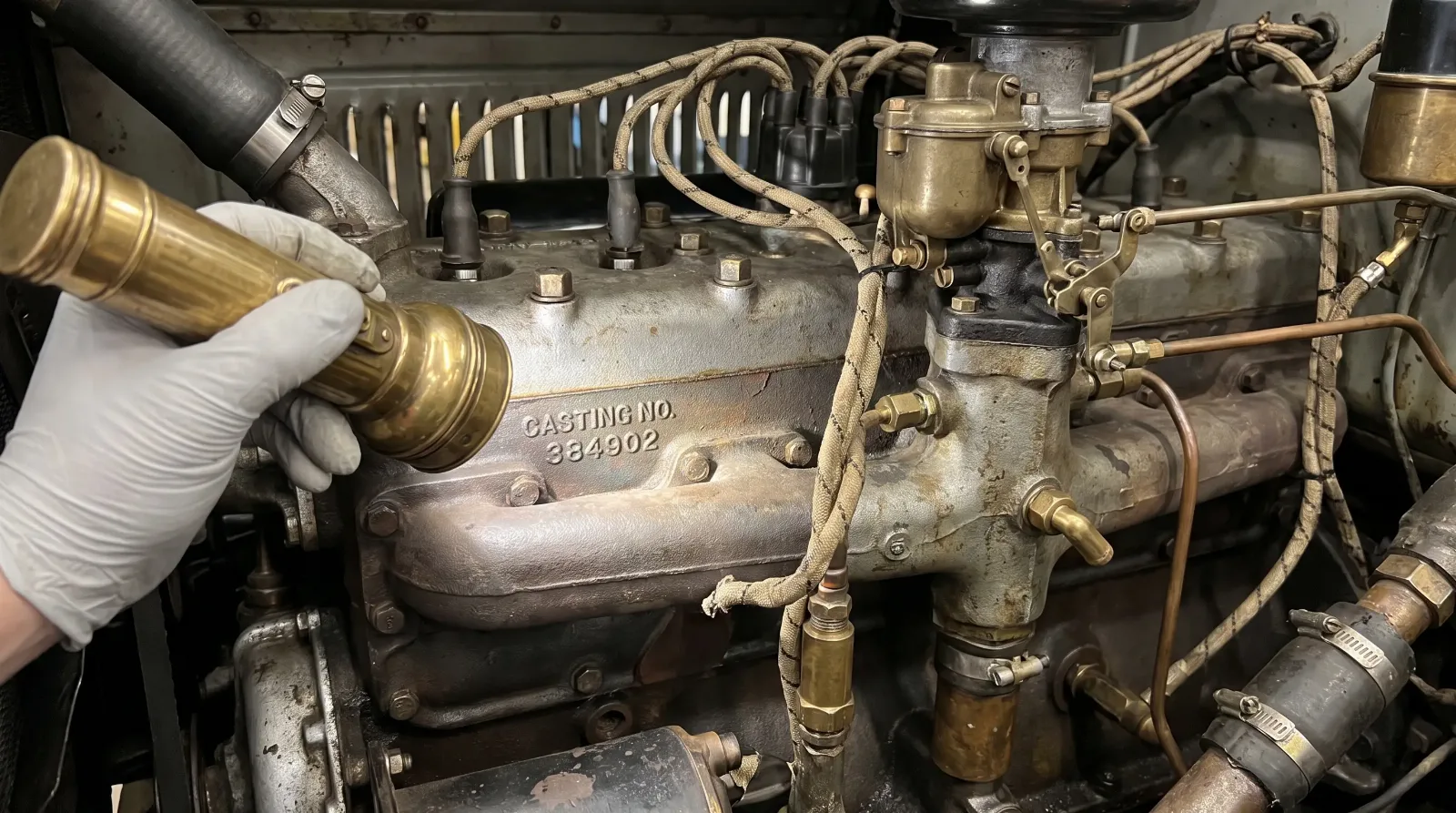
A restoration, even an excellent one, involves thousands of individual decisions: which paint formula approximates the original color, which reproduction parts substitute for unavailable originals, how tight to set panel gaps that may never have been perfectly tight from the factory. Every one of those decisions is an opportunity to drift from what the car actually was in period. A survivor car eliminates that guesswork. What you see is what the factory did, not what a restorer decided the factory probably did.
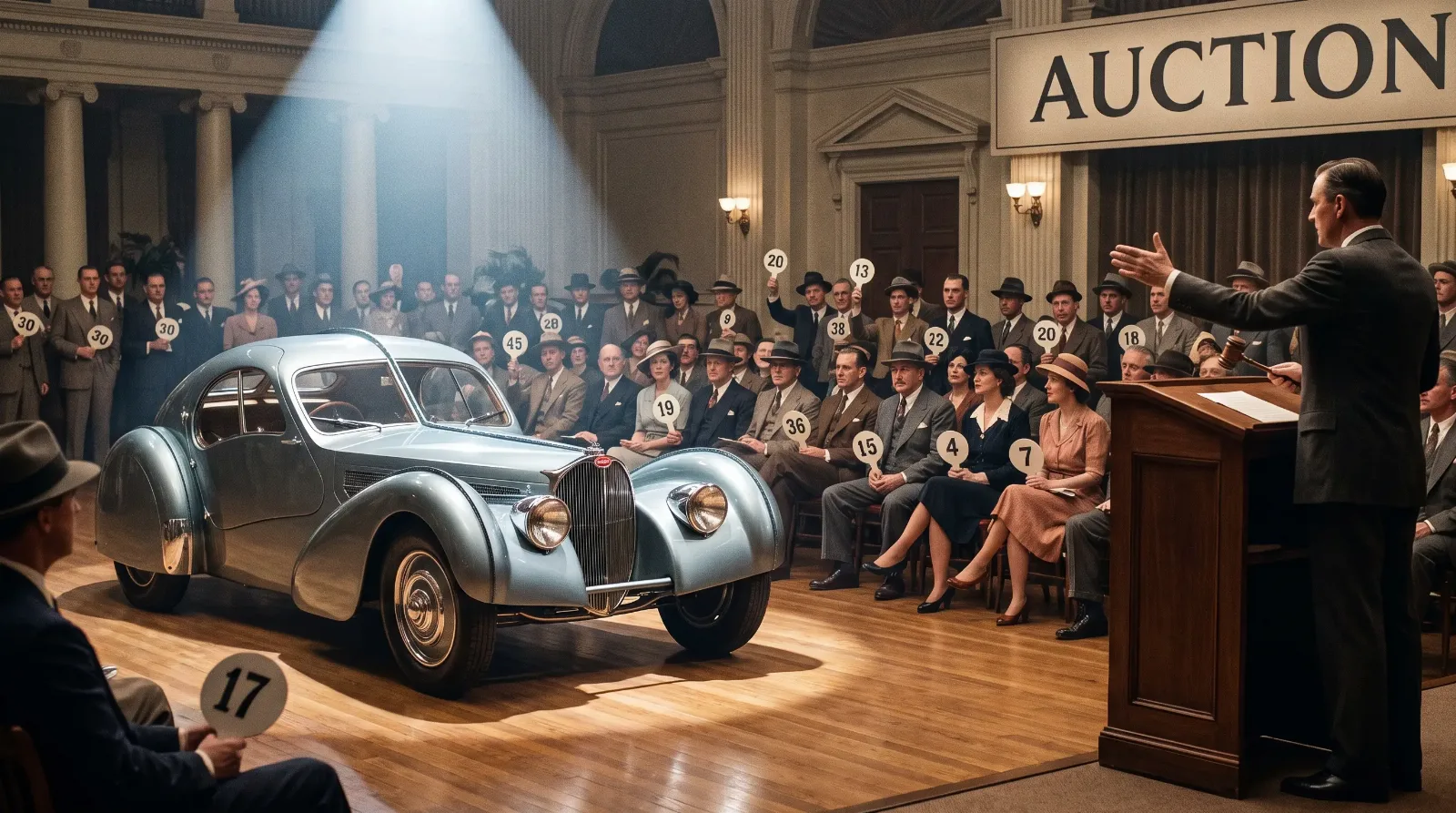
That certainty is scarce, and scarcity is priced. I have watched a genuine, honest survivor in unglamorous original condition sell for more than a comparable model restored to a higher cosmetic standard, purely because the buyer wanted the unbroken chain of originality more than they wanted shiny paint. This is not universal across every buyer, but among the serious end of the collector market, it happens often enough that sellers of true survivors should not undervalue what they are holding. The question of does restoration add value has a very different answer for a car like this than for a tired driver.
The premium tends to widen further on models where a documented restoration standard barely exists, meaning there is no strong consensus on what "correct" even looks like for that particular car. In that situation, a survivor eliminates the entire debate. There is nothing to argue about when the car in front of you is simply what left the factory, untouched by anyone's later interpretation of what it should have looked like.
The condition paradox: worn can still mean valuable
This is the part newer collectors struggle with. A survivor car can have faded paint, a cracked dashboard, and worn seat upholstery, and still be worth more than a glossy restoration of the same model. The logic only makes sense once you separate cosmetic condition from originality value. Cosmetic wear on a genuine survivor is evidence, not damage, and plenty of buyers would rather own that evidence than a car with no history to read.
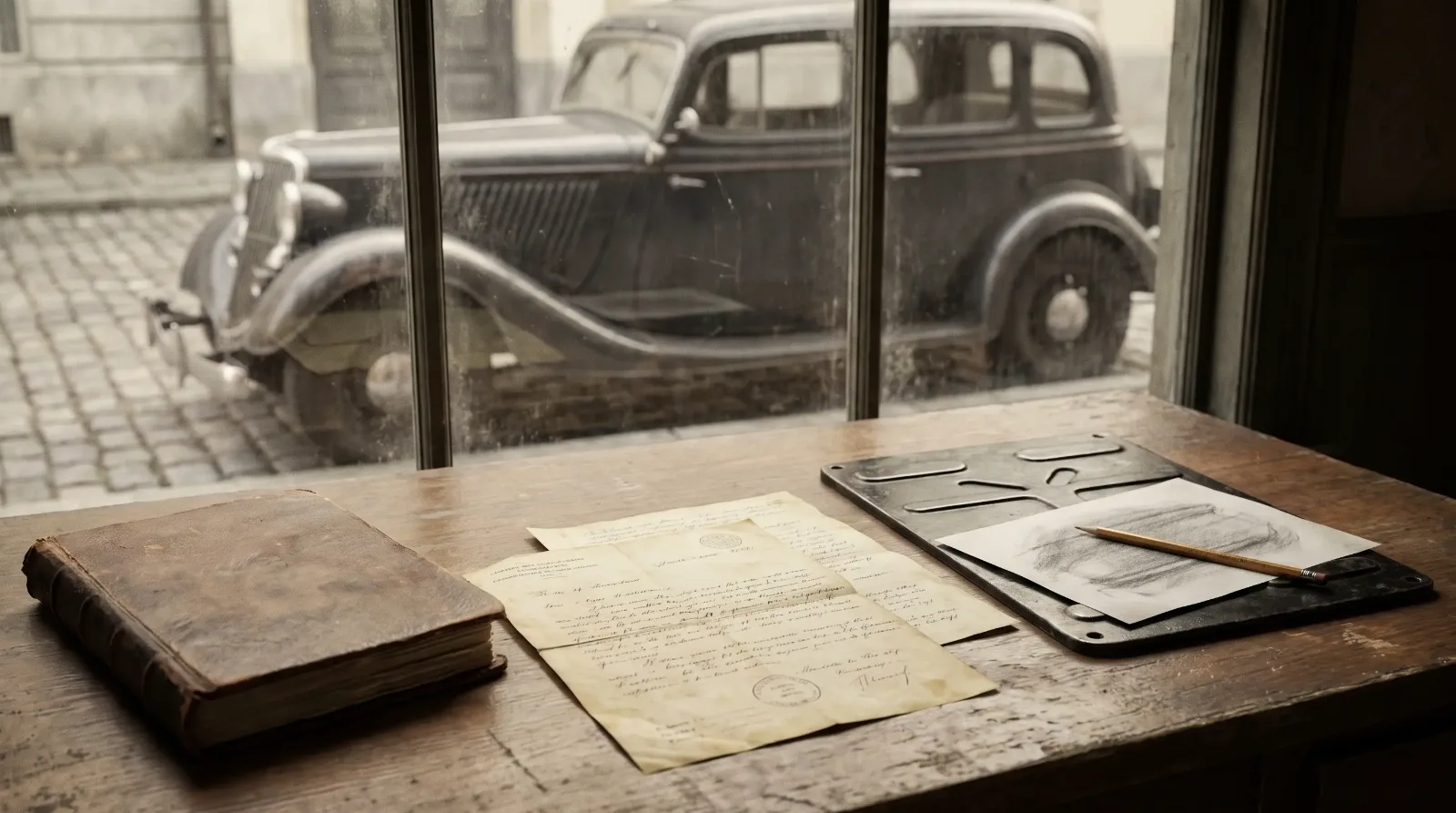
The caution here is real, though. Not every rough, unrestored car is a valuable survivor. A car that is original because nobody bothered to maintain it, rather than because it was deliberately preserved, may simply need the restoration it never got, with no premium attached to its condition. The difference is whether the car's originality is a documented asset or an accident of neglect. A thin paper trail, consistent wear patterns, and a coherent story from one owner to the next separate the two.
Storage history matters here too. A car kept in a dry garage for most of its life, even without active preservation effort, tends to age differently than one left outdoors or in a damp barn. Surface rust, sun-faded upholstery in a consistent pattern, and dry, unflaking original paint all point toward benign neglect rather than active damage. Active corrosion in the frame or floors, mismatched wear that suggests parts were swapped in from another car, or evidence of a fire or flood tell a different story, one where the originality is compromised rather than simply aged.
"Buyers ask me whether they should restore a survivor car to improve its value. Almost always, the answer is no. You cannot put the originality back once it is gone, and that is usually the more valuable half of what they already own."
Marcus Feld
What this means if you own or are buying a survivor
If you own a genuine survivor, resist the instinct to restore it before you sell. Document what you have instead: photograph the original finishes, gather whatever service history exists, and be honest in your listing about the handful of things that have been touched over the decades. That documentation is what lets a buyer trust the "survivor" label rather than discount it as marketing language. For more on unrestored survivor cars value, this sits alongside the broader factors that determine a pre-war car's price. If provenance and ownership history are part of what you are trying to establish, a related read covers how documented history compounds with originality to move the number further. For the wider context on the era these cars come from, America's antique automobiles is worth reading. And when you are ready to compare real listings against everything above, browse current vintage cars for sale to see how survivor status shows up in actual asking prices.
Sources and notes
- Hagerty Insider: is a low-mile, numbers-matching classic what you actually want
- Hagerty Insider: what a car's condition really looks like
- RM Sotheby's - preservation-class and unrestored auction results
- Bonhams - motor car department catalog notes
- Pebble Beach Concours d'Elegance - preservation class
- PreWarCar - survivor and originality reference articles
Related Reading
Have a
Classic Car
for Sale?
Reach thousands of serious classic car collectors across the US.
Sell It Here →
Are You a Classic Car Dealer?
List your full inventory and connect with targeted classic car buyers.
Join as a Dealer →
#pre-war cars
#survivor cars
#car provenance
#car valuation
#unrestored classics
#originality premium

About the author
Marcus Feld
Accredited collector-car appraiser who reads the market through hammer prices, condition tiers and risk.
Comments
Be the first to comment on this article.