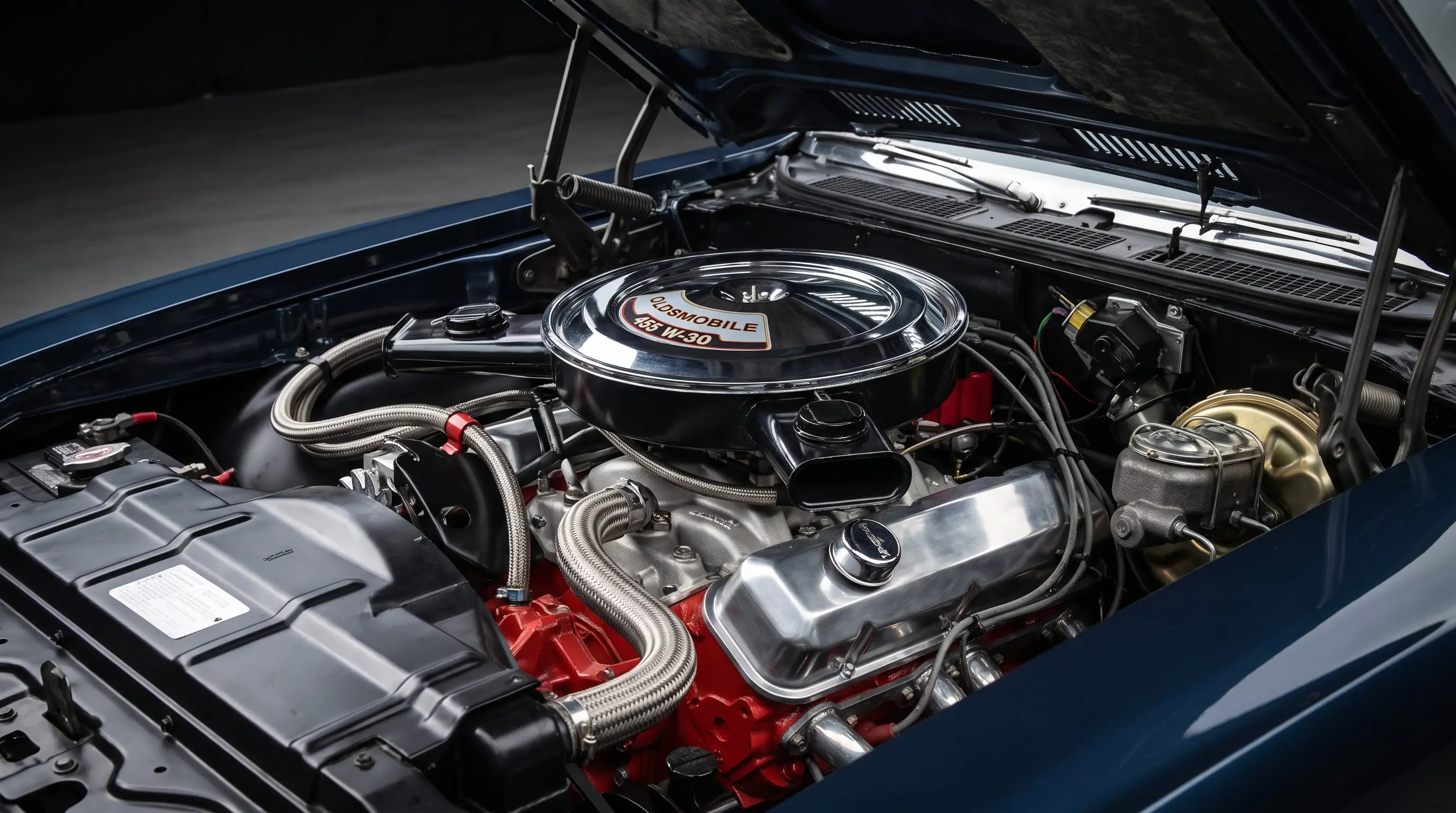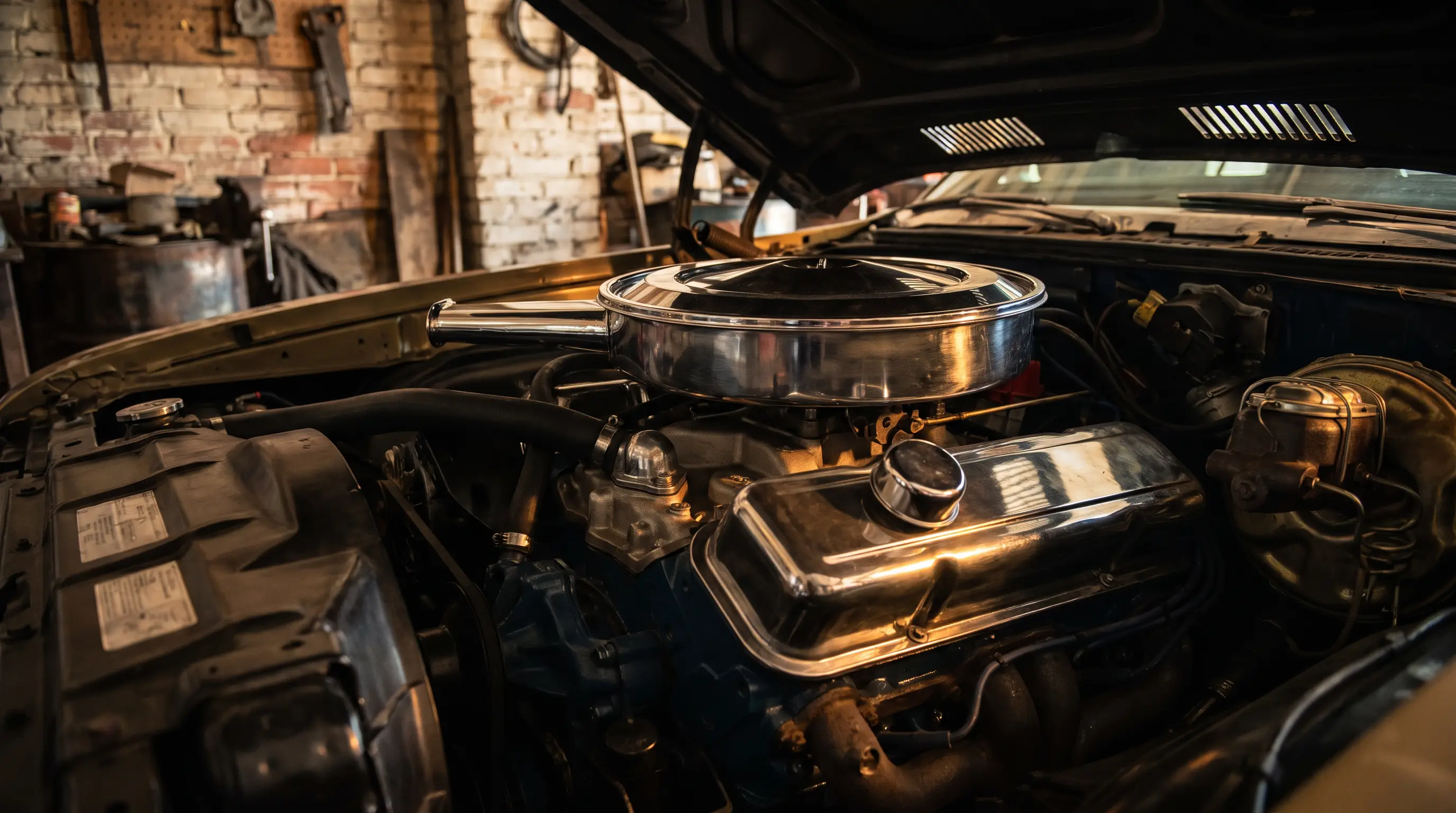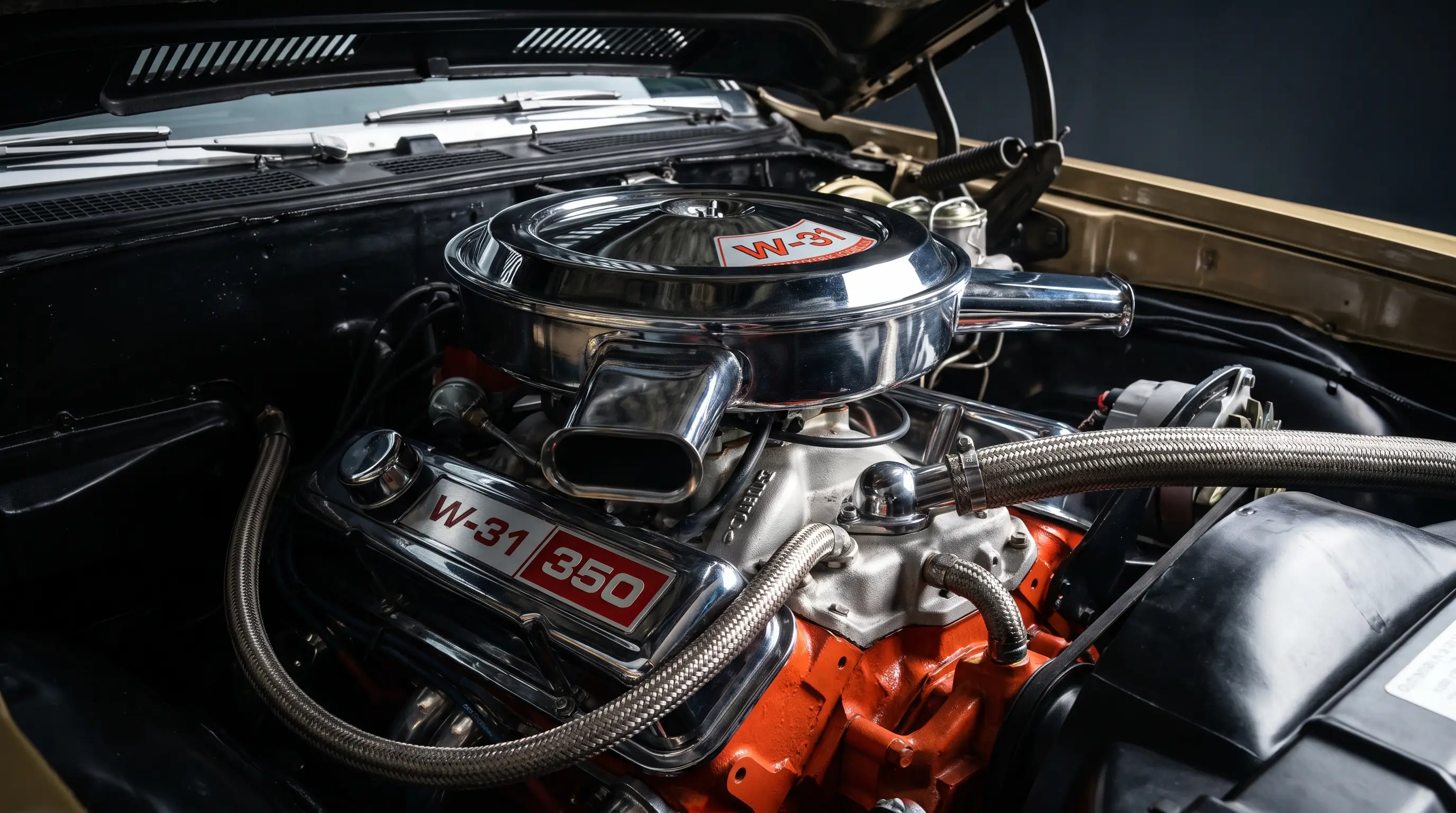
The W-30 455 is not a different engine from the base 455 in any dimensional sense. Same 455 cubic inches, same 4.126-inch bore, same 4.250-inch stroke. What separates a W-30 from a standard 455 is everything bolted around that block, and the gap between the two is bigger than a lot of buyers assume when they see "455" on a build sheet and stop reading.
Ten extra horsepower on paper, a lot more than that in reality
In its peak year, Oldsmobile rated the W-30 455 at 370 gross horsepower against the base 455's 365. Ten horsepower on a spec sheet looks like rounding error. It isn't, because the rated figure never captured what the W-30 package actually changed. A hotter camshaft, better-flowing cylinder heads, and, starting in 1970 and continuing through 1972, an aluminum intake manifold instead of cast iron all moved real air through the engine faster than the base 455 could manage, regardless of what the two numbers on paper said side by side. The published horsepower gap undersold the actual difference, which is a pattern that shows up across most factory performance ratings from this era.
Torque told a straighter story: both engines landed near 500 lb-ft, because that's what a 455-cubic-inch big-block with this stroke was always going to make regardless of the cylinder head work on top of it. The W-30's advantage wasn't a torque number, it was how quickly the engine could breathe its way to that torque and keep pulling past where the base engine started running out of air.
That distinction matters when you're comparing dyno sheets and seat-of-the-pants impressions from period road tests. Magazines of the era regularly found the W-30 pulling away from a base 455 car by more than a rated ten-horsepower gap would predict, and the honest explanation isn't a conspiracy about underrated factory numbers. It's that peak horsepower is a single point on a curve, and the W-30's cam and heads moved the whole curve, not just the peak.
The hood was not decoration
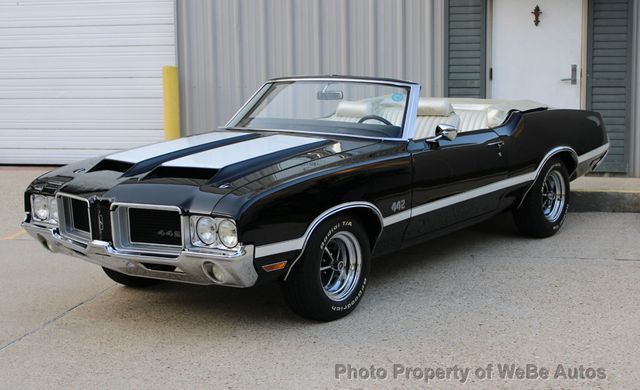
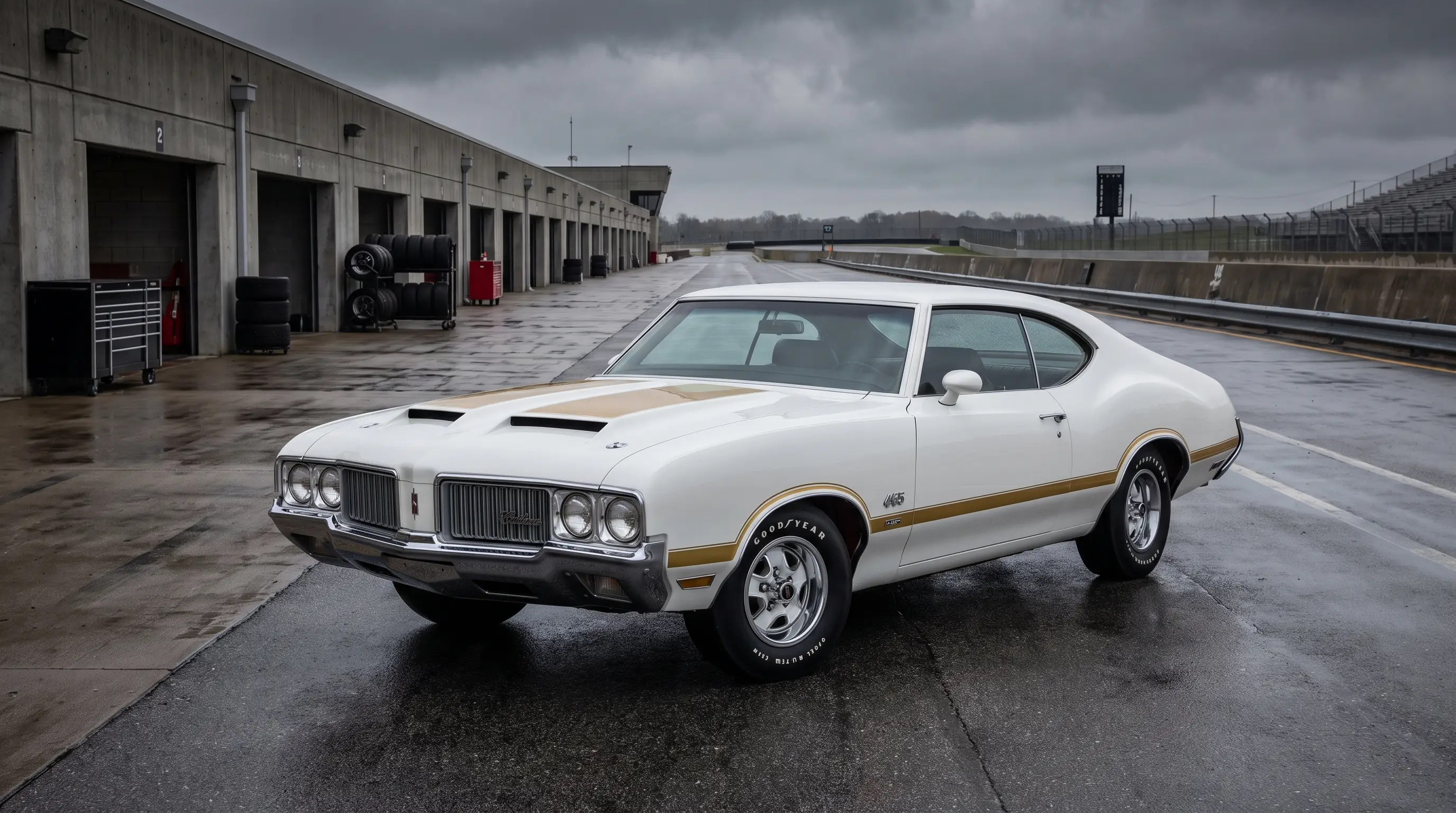
Oldsmobile's W-25 fiberglass hood, fitted to W-30 cars, carried functional scoops feeding outside air directly to the carburetor instead of letting the engine pull hot air from inside the engine bay. Cold, dense air makes more power than hot air for a given carburetor and cam, full stop. This wasn't a styling flourish bolted on to sell an option code. It was a functional part of the induction system, and cars that have the W-25 hood without the ductwork actually connected underneath are wearing a costume, not a W-30 induction system. Anyone shopping a W-30 needs to check that the scoops actually route to the air cleaner, not just that the hood has the right bulges.
Oldsmobile also lined the engine bay with red plastic inner fender panels on W-30 cars, a heat-management detail as much as a visual one, keeping underhood temperatures down around an engine already running hotter thanks to the added compression and cam work. Small detail, but it is one of the things a real W-30 has and a clone frequently doesn't.
1970 and the compression cliff that followed
Like the base 455, the W-30 hit its high-water mark around 1970, running compression near the top of what the engine platform ever saw before unleaded-fuel compatibility forced ratios down across the board starting in 1971. The W-30's output declined right alongside the base engine's in the years after, because the same compression and emissions pressures applied to both variants equally. No performance package survives a mandated compression cut untouched, and the W-30 was never an exception to that rule no matter how good the cylinder heads were. The broader context for why every Oldsmobile V8 followed this same arc is covered in the Cutlass engine story, where the 350, the base 455, and the W-30 all sit on the same declining curve through the early 1970s.
What separates a real W-30 from a badge job
Production numbers on genuine W-30 cars are low enough that documentation matters more than it does on almost any other Cutlass-adjacent variant. A build sheet, the correct casting numbers on the block and heads, and a hood with functioning air ducts are the three things worth verifying before paying W-30 money for a car. Plenty of 442s have been dressed up with W-30 badging and a fiberglass hood without the underlying engine specification to back it up, and the badge alone tells you nothing reliable.
The forged connecting rods and balanced rotating assembly fitted to genuine W-30 455 engines are another detail worth chasing down with documentation rather than assumption. That stronger bottom end meant the W-30 could tolerate more aggressive tuning and higher rpm use than a base 455 without the added risk that comes with pushing lesser components past their comfort zone. That durability margin rarely shows up in a horsepower rating, but it's part of what buyers are actually paying for when they pay W-30 prices.
"Ten horsepower on paper and a functional cold-air hood underneath. That gap between the printed number and the real one is the entire W-30 story in one sentence."
— Dan Reeves
Oldsmobile built a smaller high-output companion to this same formula in the small-block range, and the mechanics of how that package differed from a standard engine follow nearly the same logic as the W-30's story. If you want to see the same forced-air idea applied at 350 cubic inches instead of 455, keep reading the series. Both packages prove the same point: a performance option code changes far more than the number stamped on the valve cover, and the real difference is always in what got bolted around the block, not the block itself. The complete arc of how these engines fit into the model's history sits in the complete Cutlass saga, where displacement, compression, and rated output all connect back to specific years and specific decisions Oldsmobile made under pressure.