Art deco arrives on four wheels
Art deco started as a design movement for buildings, furniture, and jewelry, and it took the automobile industry most of a decade to catch up. By the time it did, in the early 1930s, the results were unmistakable. Fenders swept back instead of sitting bolt upright. Radiator shells narrowed into pointed prows. Chrome stopped being trim and became sculpture. For anyone tracing the art deco cars story, this is the moment the shape of the automobile stopped following engineering alone and started following a visual philosophy.
The style takes its name from the 1925 Exposition Internationale des Arts Décoratifs et Industriels Modernes in Paris, a display of geometric ornament, stepped forms, and machine-age materials. Cars were not part of that exhibition in any organized way, but the aesthetic it popularized, streamlined, symmetrical, unapologetically modern, filtered into coachbuilder studios within a few years. What came out the other end was a design language built for speed even when the car underneath was not especially fast.
The visual vocabulary of the style
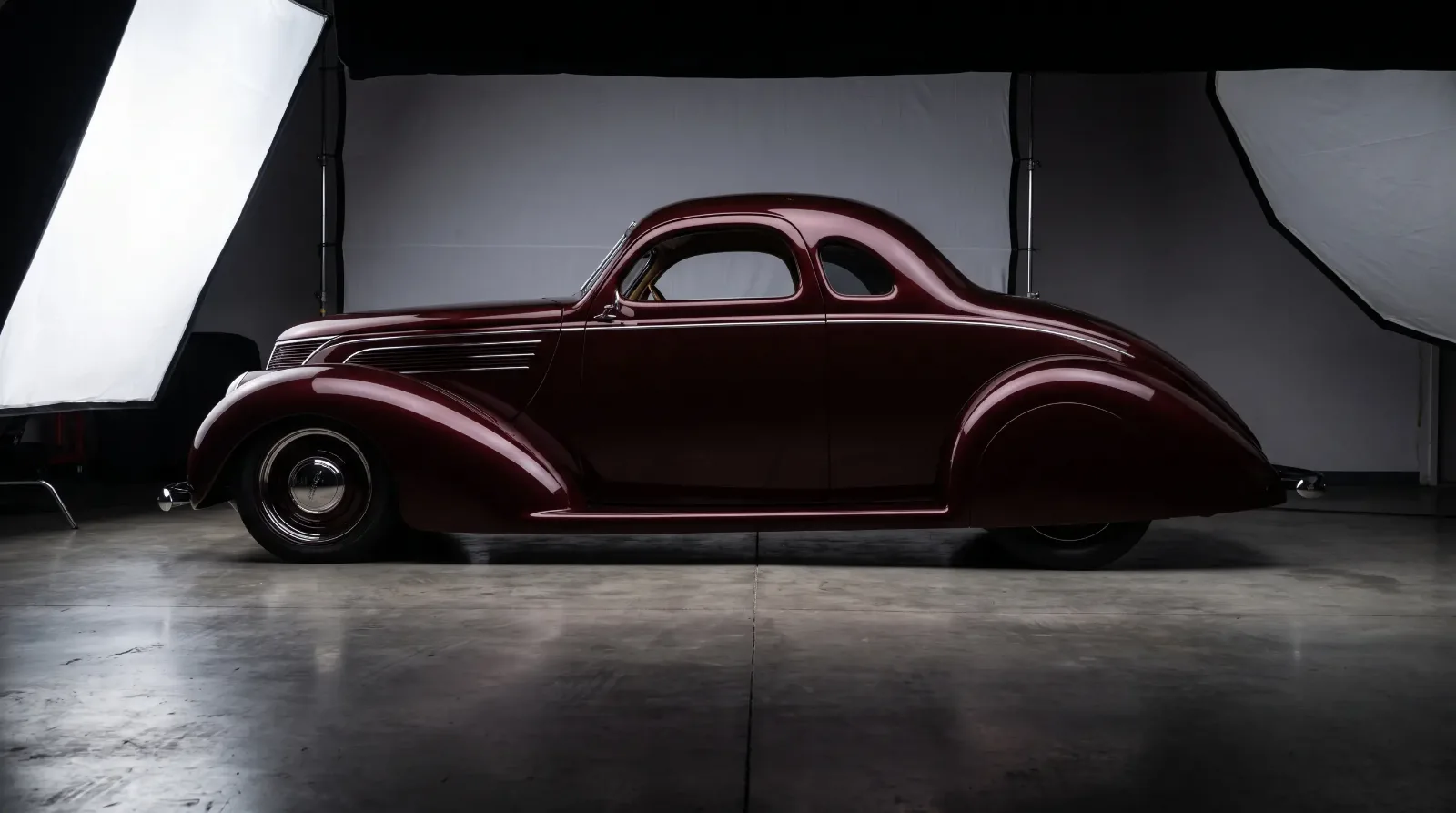
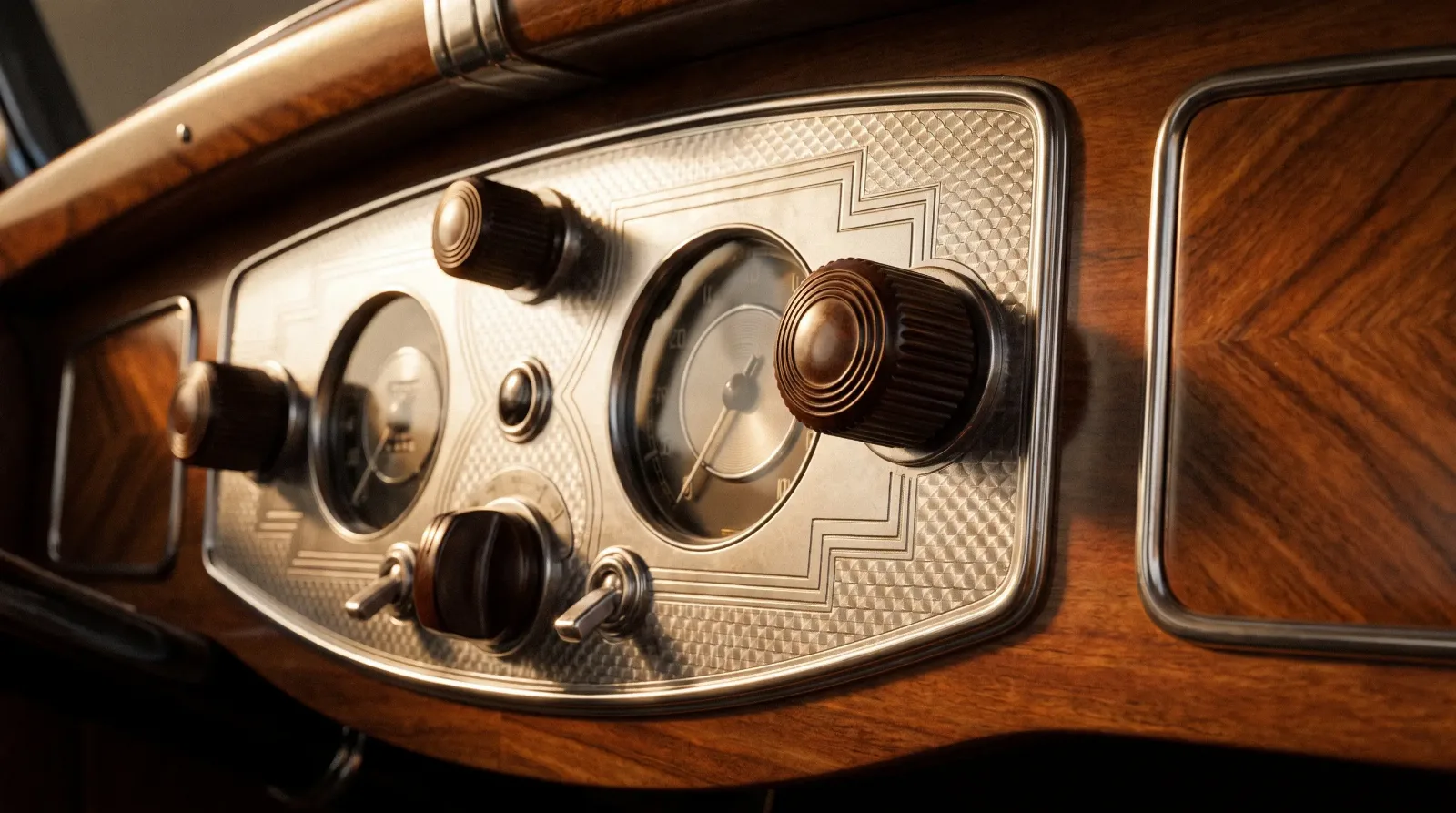
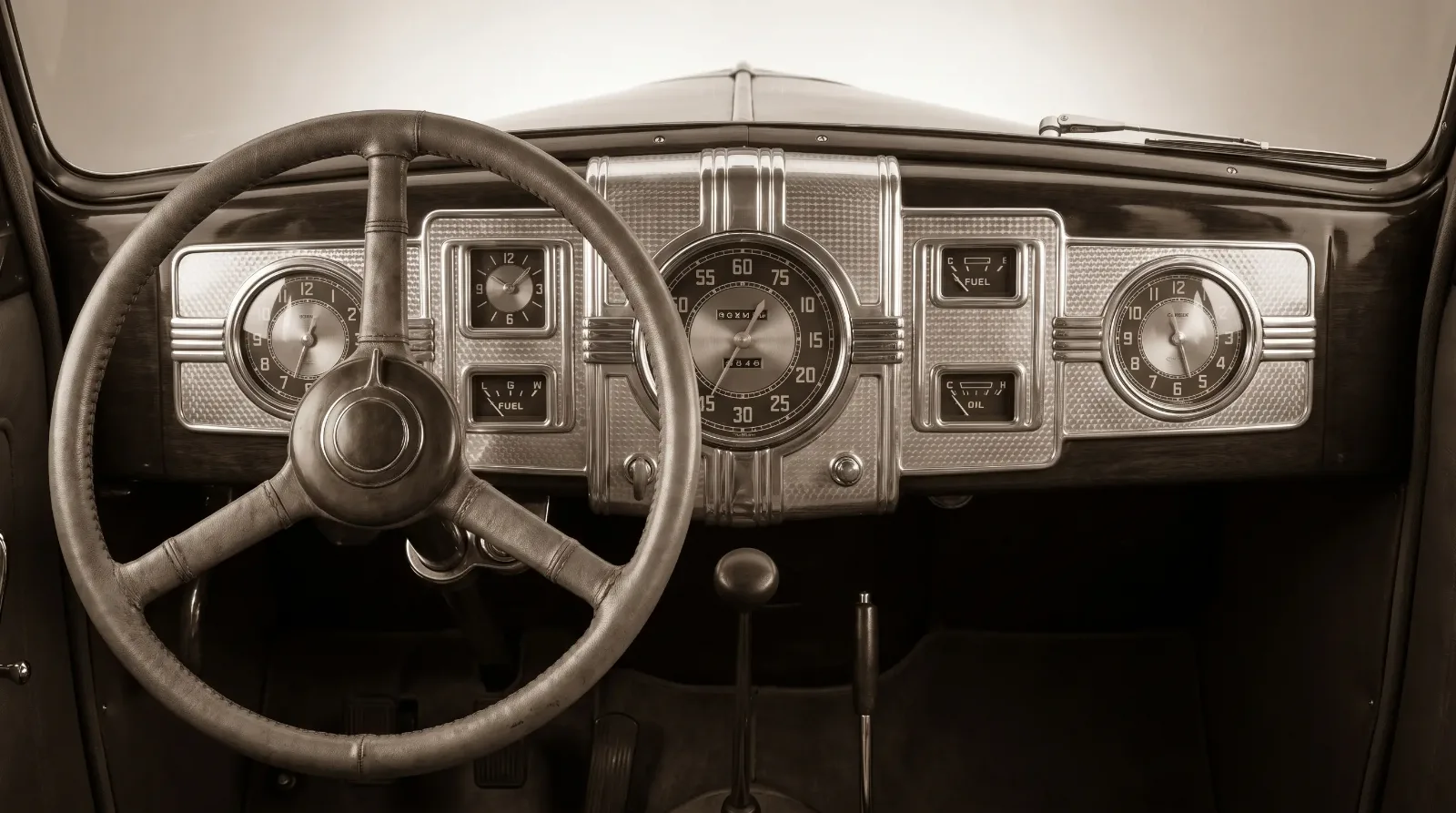
A handful of recurring elements mark a car as art deco rather than simply old. Horizontal speed lines, grooves pressed into hoods, fender skirts, and running boards, suggested motion even when the car sat still. Grilles narrowed and raked backward, echoing the prow of an ocean liner, itself a favorite art deco reference point. Headlamps were faired into the fenders rather than perched on separate stalks. Interiors picked up the theme too, with dashboards laid out in stepped, symmetrical panels and instrument clusters that looked more like a jewelry display than a control panel.
Color played a role as well. Two-tone paint schemes, usually a darker lower body against a lighter upper section, emphasized the horizontal lines designers were chasing. Chrome accented the transitions between panels rather than covering them, which is a subtle distinction but an important one when evaluating whether a restoration has kept the original intent or simply added more brightwork than the factory ever installed.
"The cars that define this period were not trying to look fast. They were trying to look inevitable, like the shape had always been there waiting to be found."
Sarah Whitfield
From Paris salons to Detroit assembly lines
European coachbuilders got there first, translating the exposition's ideas into one-off bodies for wealthy clients well before American manufacturers committed to the look on a production scale. By the middle of the decade, though, Detroit had absorbed the vocabulary and started building it into cars that ordinary buyers could actually purchase. The transition mattered. Streamlined styling had begun as a bespoke, hand-built statement and ended the decade as a stamped-steel, mass-produced default. That shift in scale is part of why art deco automotive design left such a broad footprint. It was not confined to a handful of show cars.
The design language did not appear in a vacuum, either. It grew alongside a broader fascination with speed records, aviation, and industrial machinery, all of which shared the same fondness for smooth, uninterrupted surfaces. Coachbuilders who had spent years hand-forming aluminum panels for custom clients found themselves supplying ideas, and sometimes staff, to the styling departments of larger manufacturers.
Where the movement began to fade
By the end of the 1930s the style had already started to soften into what design historians usually call streamline moderne, a related but distinct phase that leaned even harder into pure, uninterrupted curves and dropped some of the geometric ornament that defined the earlier deco years. If you want the fuller picture of how that transition played out, keep reading. World War Two then interrupted civilian car production almost entirely, and when it resumed in the late 1940s, the visual language had moved on again, toward a rounder, more envelope-bodied look that owed less to jewelry and architecture and more to postwar optimism.
What to look for on an original car
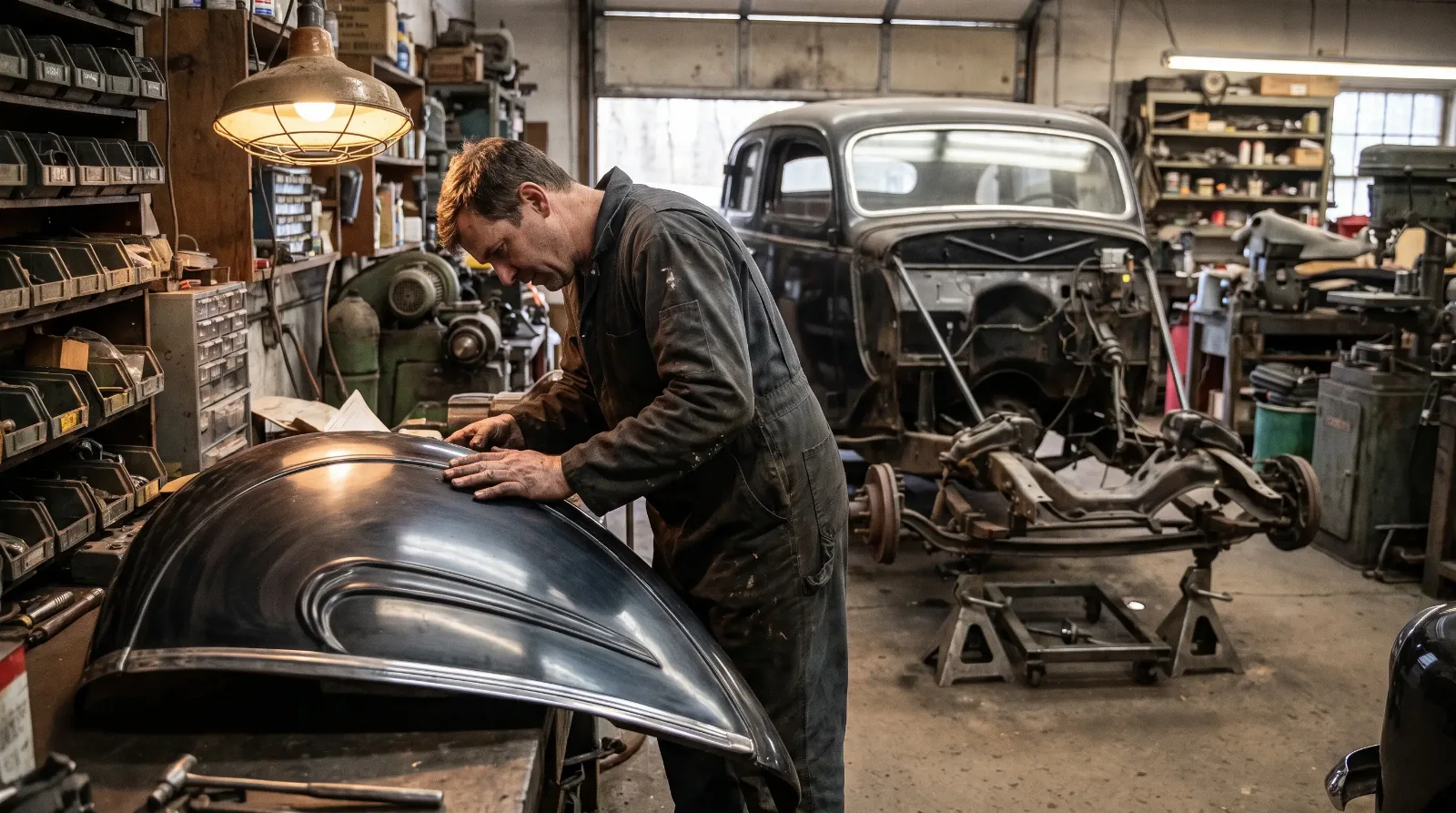
Originality in this category comes down to details that are easy to alter and easy to lose. Fender skirts get removed for easier tire changes and never reinstalled. Two-tone paint gets simplified to a single color during a budget repaint. Stepped dashboard trim gets replaced with generic reproduction pieces that miss the specific proportions of the original design. None of this is necessarily a dealbreaker, but it changes what you are actually buying. A car that has kept its original body lines, trim proportions, and color break is a more faithful piece of design history than one that has drifted toward a generic version of the era.
For collectors and buyers who want the full arc of this era, from its European origins through the specific American manufacturers who embraced it, the full pre-war story lays out how art deco fits into the broader pre-war landscape, alongside the other design and engineering trends that shaped cars before the war changed everything.
It would be a mistake to think of art deco automotive design as something reserved only for the expensive, coachbuilt end of the market. The vocabulary trickled down fast once manufacturers realized buyers responded to it, and mid-priced, mass-produced cars from the same years picked up plenty of the same cues, narrowed grilles, faired headlamps, two-tone paint, even if they did so with stamped steel instead of hand-formed aluminum panels. The difference was usually one of execution rather than intent. A modestly priced car might reach for the same visual language as an expensive custom body, but the panel fit, the material quality, and the attention paid to details like the transition between a fender and a running board would give away which end of the market it came from.
This matters for anyone evaluating a car today, because it means "art deco styling" alone tells you very little about a car's original price or status. A well-preserved, modestly priced sedan from this period can be just as legitimate an example of the design movement as an expensive custom body, and in some ways a more honest one, since it shows how far the style actually traveled beyond the show cars and one-off commissions that get most of the attention in retrospectives. Judging a car on the quality of its execution, not just the presence of the right visual cues, is the more useful habit to build.