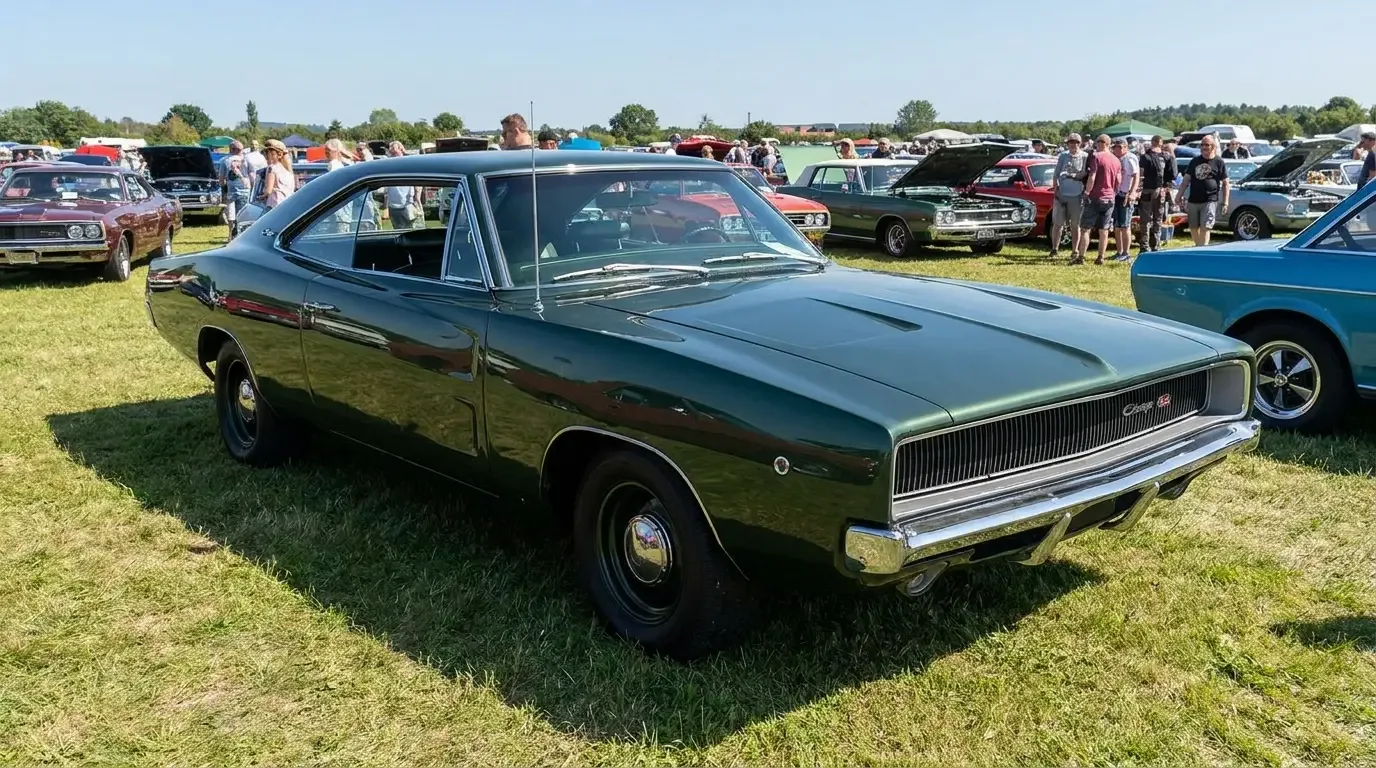
The 1968 Dodge Charger did not evolve out of the 1967 model. It replaced it, almost entirely, with a shape that owed nothing to the boxy fastback that came before. Dodge's stylists had one year to throw out the old formula and start over, and what they came back with reset what a mid-size performance coupe was allowed to look like.
To understand why that mattered, you have to understand how badly the first Charger had missed. The full story of that transformation, including the sales numbers that forced Dodge's hand, is covered in the full write-up, but the short version is this: a car built to be distinctive ended up looking like an accessory to a Coronet, and buyers noticed.
The 1966 and 1967 Charger did not sell the way Dodge wanted
The original Charger arrived for 1966 as Dodge's answer to the fastback craze, a full-width fastback roofline dropped onto the Coronet's B-body platform, with hidden headlights and a full-width taillight panel that looked sharp in photographs. It sold reasonably well in its debut year, helped by novelty, but 1967 volume dropped hard. Buyers cross-shopping a Mustang or a Barracuda saw a car that looked heavy and undifferentiated next to the Coronet it was based on. The fastback roof, meant to be the signature feature, read from three-quarter angles as just another slab-sided sedan roof with a steep rear window. Dodge's own dealers were reporting that the Charger didn't stand out on the lot, which for a specialty model built to draw showroom traffic was close to a fatal flaw. Something had to change, and it had to change fast, because the B-body platform itself was also being redesigned for 1968.
A clean-sheet body on a new platform
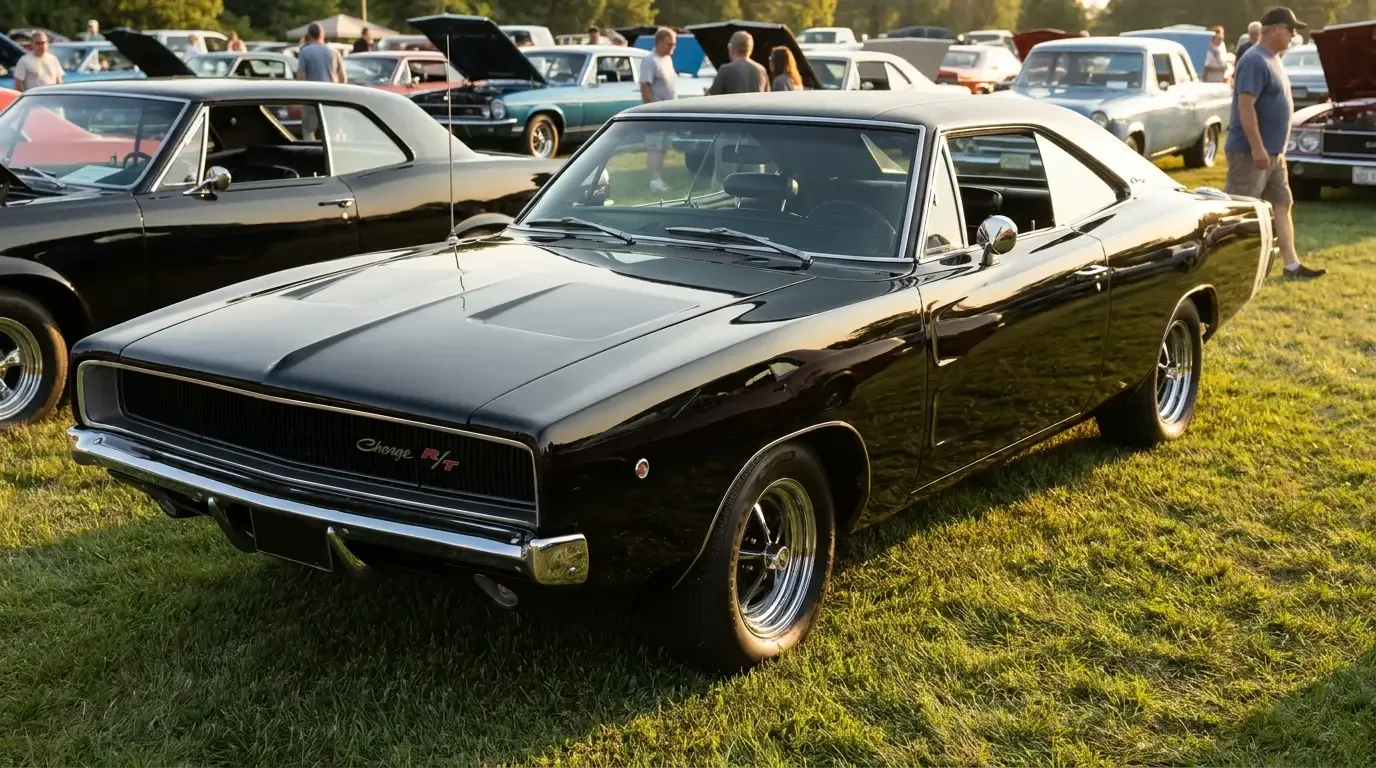
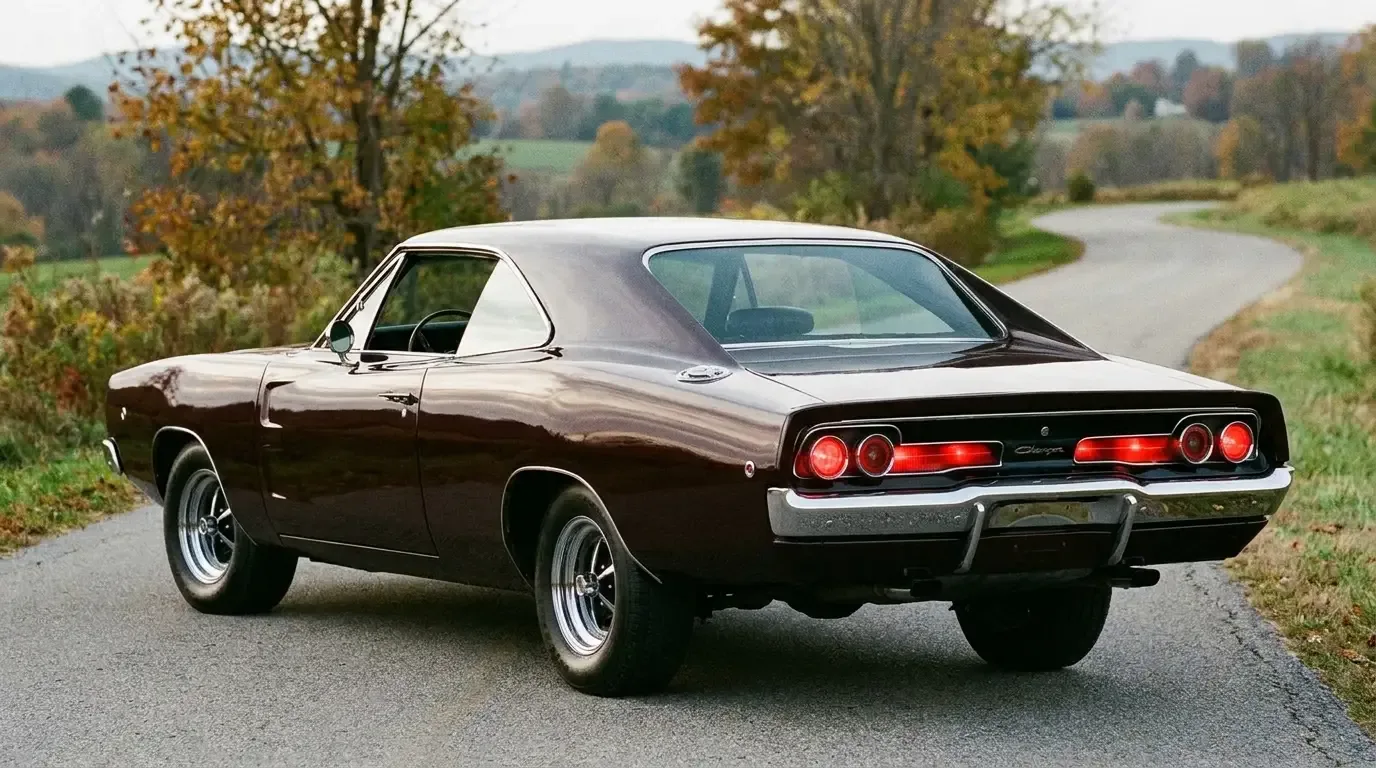
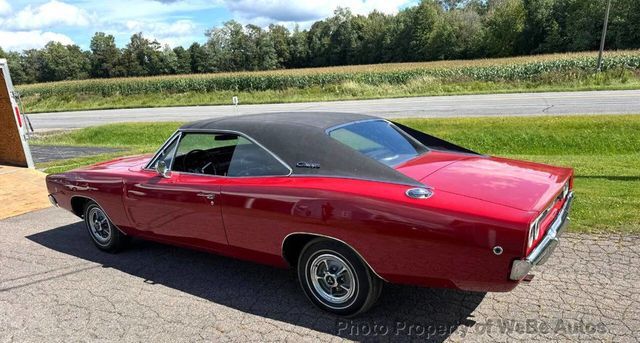
Dodge's timing worked in the Charger's favor for once. The entire Chrysler B-body line, Coronet included, was getting a new platform for 1968, with a longer wheelbase and revised proportions. That gave the Charger's design team room to build a genuinely separate silhouette rather than reskin an existing car. The result kept the hidden headlights and the general fastback idea but changed almost every surface: a tapered "coke bottle" waist that pinched in behind the front wheels and flared again over the rear haunches, a much more aggressive full-width grille, and a rear window and roof treatment that created two distinct sail panels flanking a recessed backlight, a look enthusiasts still call the flying buttress roof. That body is detailed separately in the 1968 Charger Body Design story, and it is the single biggest reason the 1968 car reads as a different species from the 1967. The taillights moved to round units set into a full-width panel, replacing the horizontal bar of the first generation, and for the first time the Charger's profile had genuine tension in it, a sense of the metal being pulled taut over the wheels instead of draped flat between them.
Why the coke-bottle shape mattered beyond styling
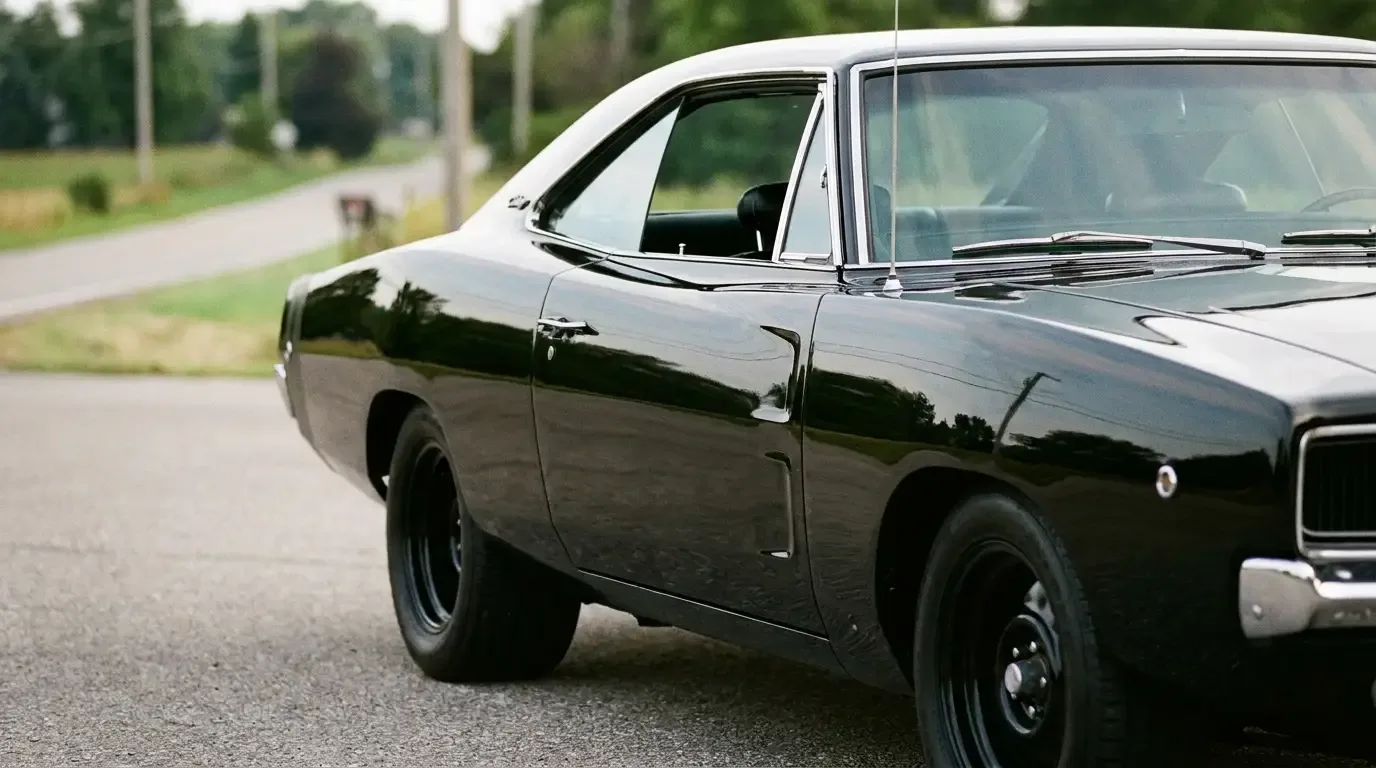
The coke-bottle profile was not just a fashion statement borrowed from GM, though GM's influence on the industry-wide trend is real. Pinching the body in at the beltline and flaring it at the rear fenders did two things at once. It made the car look lower and wider than its actual dimensions, a trick that mattered enormously in a market where the Charger was competing against genuinely lower cars. And it gave the rear fenders visual mass to balance the long hood, which kept the car from looking front-heavy the way the 1966 to 1967 body sometimes did in photographs. The flying buttress roof did similar work from the rear three-quarter view, the angle that matters most in a parking lot or a dealership showroom. Instead of one continuous fastback slope, the eye catches two separate sail panels framing a tucked-in backlight, which reads as sculpted rather than stretched. It is a more complicated stamping to produce than a simple fastback, and that complexity is part of why it still photographs so well decades later.
The hidden headlight grille tied the front to the new proportions
Up front, the full-width grille with concealed headlights carried over as an idea from the first Charger but was executed with more confidence in 1968. The vacuum-operated doors that hid the headlights gave the nose a clean, uninterrupted face when closed, which mattered because the rest of the car had gotten so much busier in profile. A cluttered front end would have fought the coke-bottle sides. The grille's details changed again for 1969, a story covered in depth elsewhere, but the 1968 execution set the template: hide the mechanical stuff, keep the face simple, let the body do the talking.
How the market and other manufacturers responded
The 1968 Charger did not just sell better than its predecessor, it changed what a mid-size specialty coupe was expected to offer. Competitors' redesigns in the following years show the coke-bottle influence spreading across the segment, and the Charger itself stayed on this basic body through 1970 with only detail changes to the grille and rear treatment each year, changes that are worth knowing if you are trying to date a car from photos alone. Anyone cross-shopping cars from these three years should look at browse 1970 Chargers against 1968 and 1969 examples side by side, because the differences, while real, are far more subtle than the gap between 1967 and 1968. Motorsport played a role too. The fastback shape's rear window and roof, while visually striking, created enough aerodynamic lift at high speed that Dodge would spend the next two years chasing a fix, first with the Charger 500's flush grille and rear window, then with the Daytona's wing and nose cone. None of that chapter happens without the 1968 body existing first as the shape that needed fixing.
"I talked to a guy at a Chrysler show who'd owned a '67 and a '68 Charger back to back, bought new. He said the '67 felt like a dressed-up Coronet from the day he drove it off the lot. The '68, he said, felt like Dodge had finally built the car the name deserved."
— Patrick Walsh
What this means for buyers today
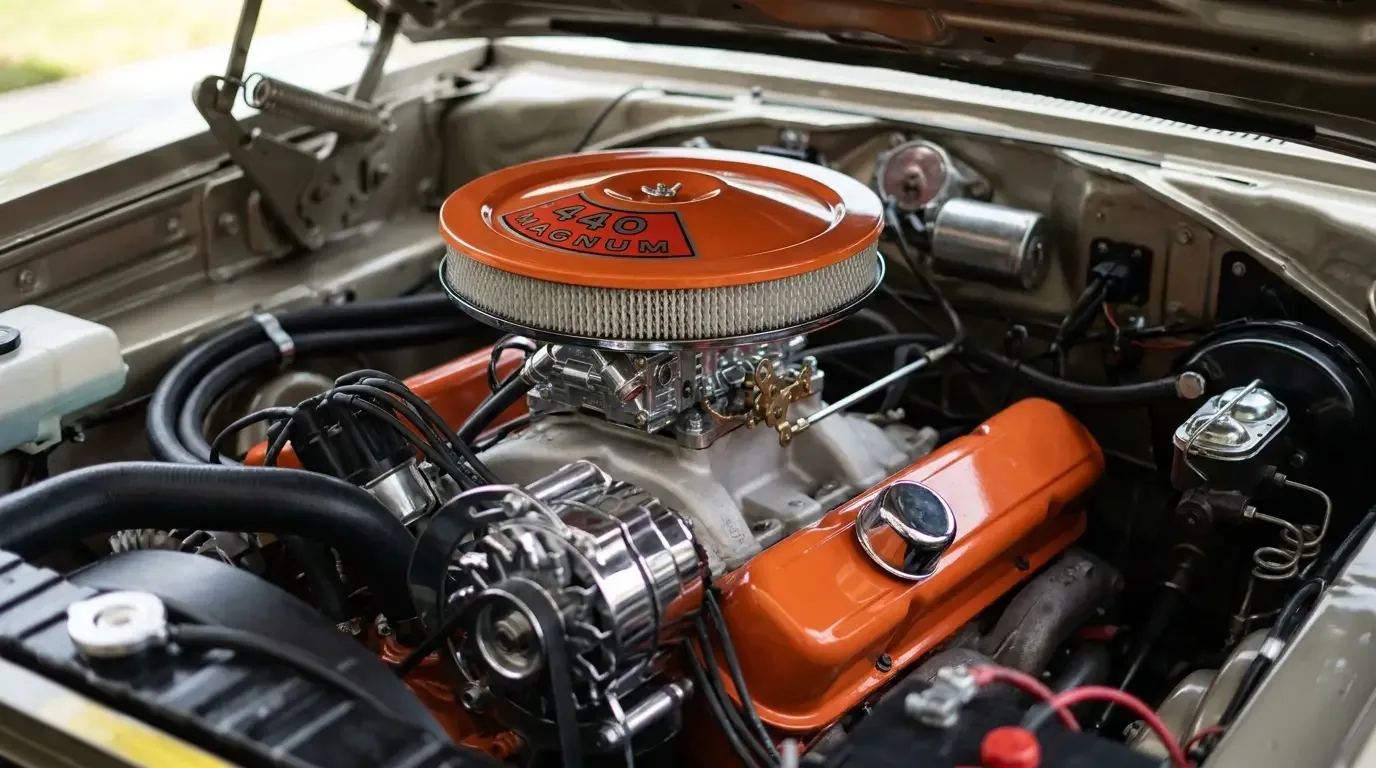
For collectors, the 1968 redesign is why the second-generation Charger, 1968 through 1970, commands so much more attention and money than the first-generation cars. The body is the draw. Engine options carried over largely unchanged across the platform switch, so the performance story is less about what moved and more about what finally looked the part. If you are shopping this generation, understanding the shape's history helps you spot reproduction panels and mismatched trim, since the coke-bottle quarters and buttress roof are complex enough stampings that poor repair work shows immediately under the right light. Anyone building out a fuller picture of the model should read the whole Charger saga before narrowing in on a single year, because the 1968 redesign only makes sense against the backdrop of what came before it and what it enabled after.
Sources and notes
- Wikipedia: Dodge Charger (1966) - 1968 production of 96,100 vs 15,788 in 1967, and the second-generation coke-bottle redesign.
- Muscle Car Facts: 1968 Charger - confirmed the 96,100 total, a 500%+ jump over 1967, and the coke-bottle body change.
- Classic Industries: Mopar production numbers - year-by-year Charger output showing the 1966-67 slump and 1968 recovery.
- ConceptCarz: Dodge Charger - body/styling continuity of the 1968-70 generation and its yearly front-end refreshes.
- American Muscle Car Museum: 1969 Charger 500 - how the second-gen body's aerodynamics later drove the Charger 500 and Daytona programs.