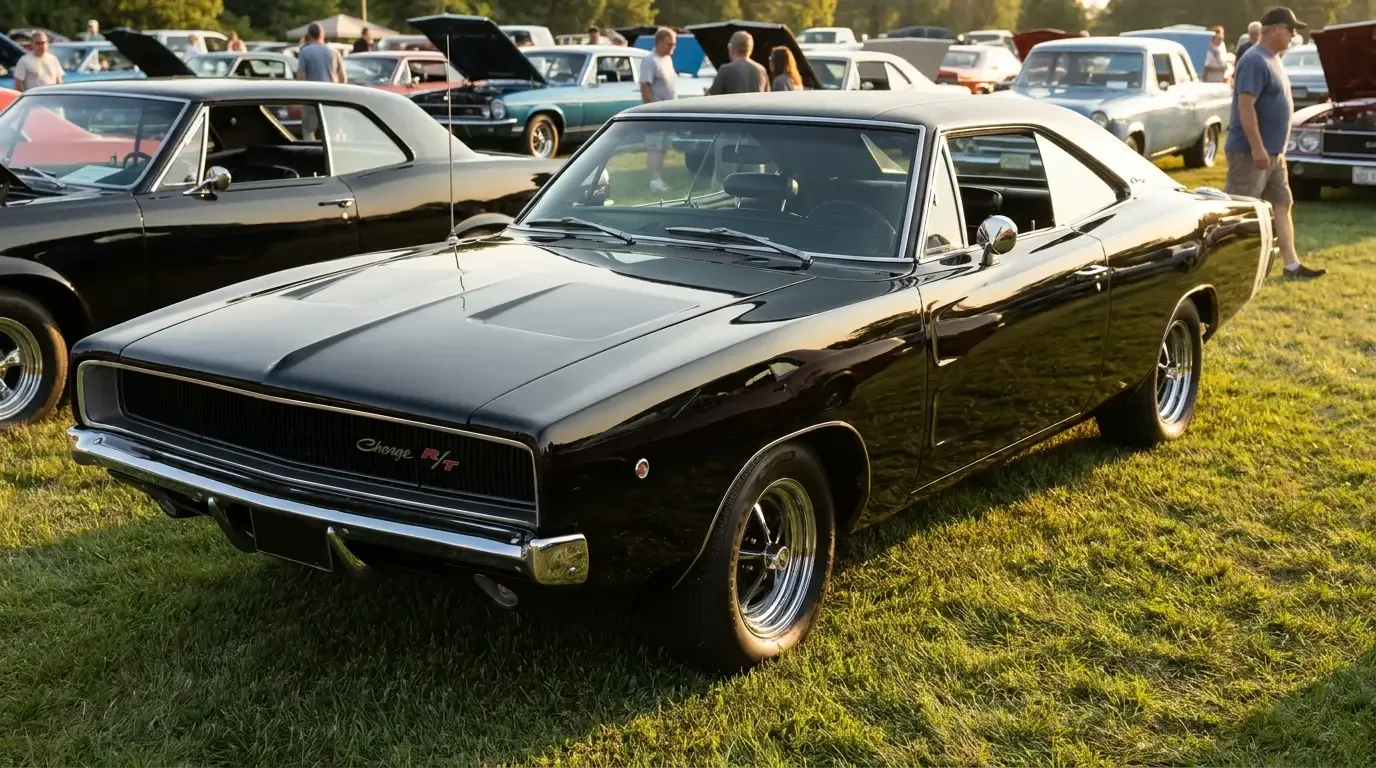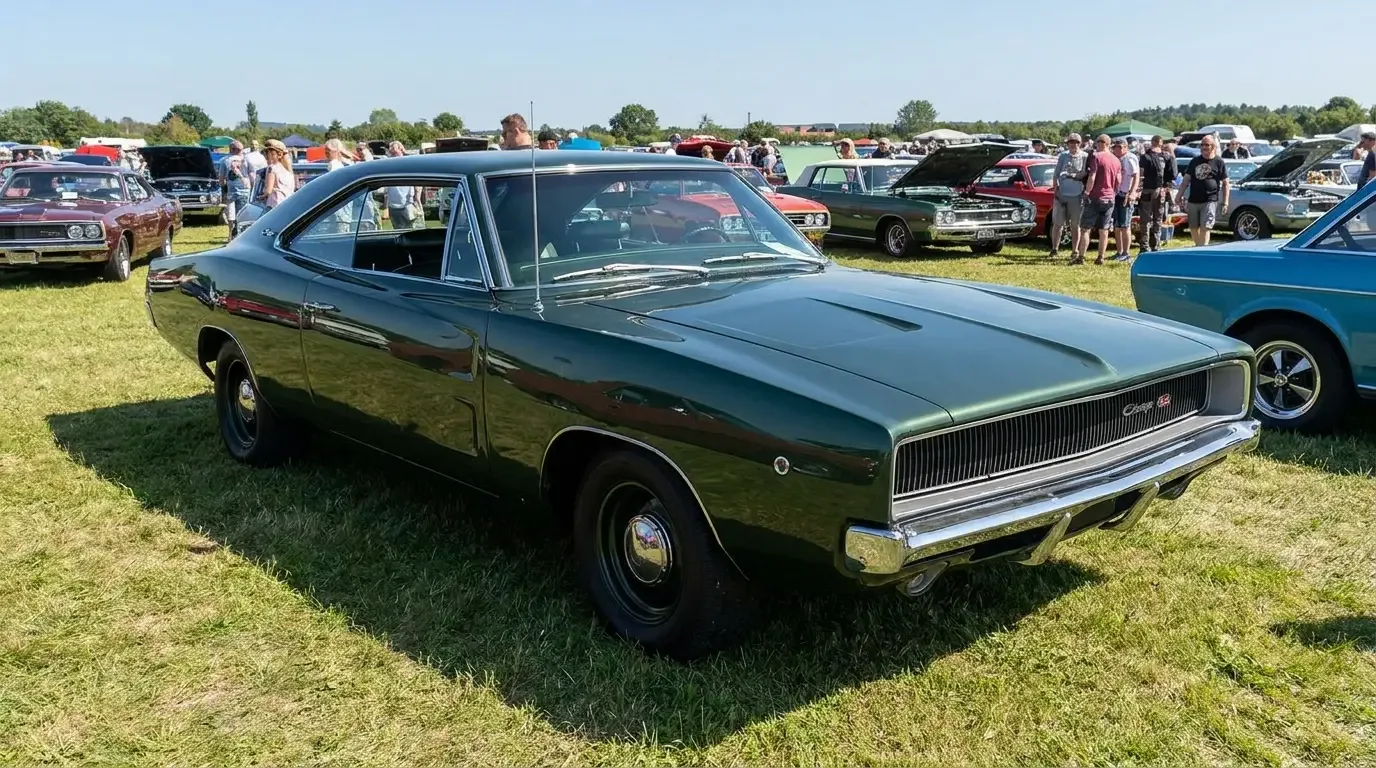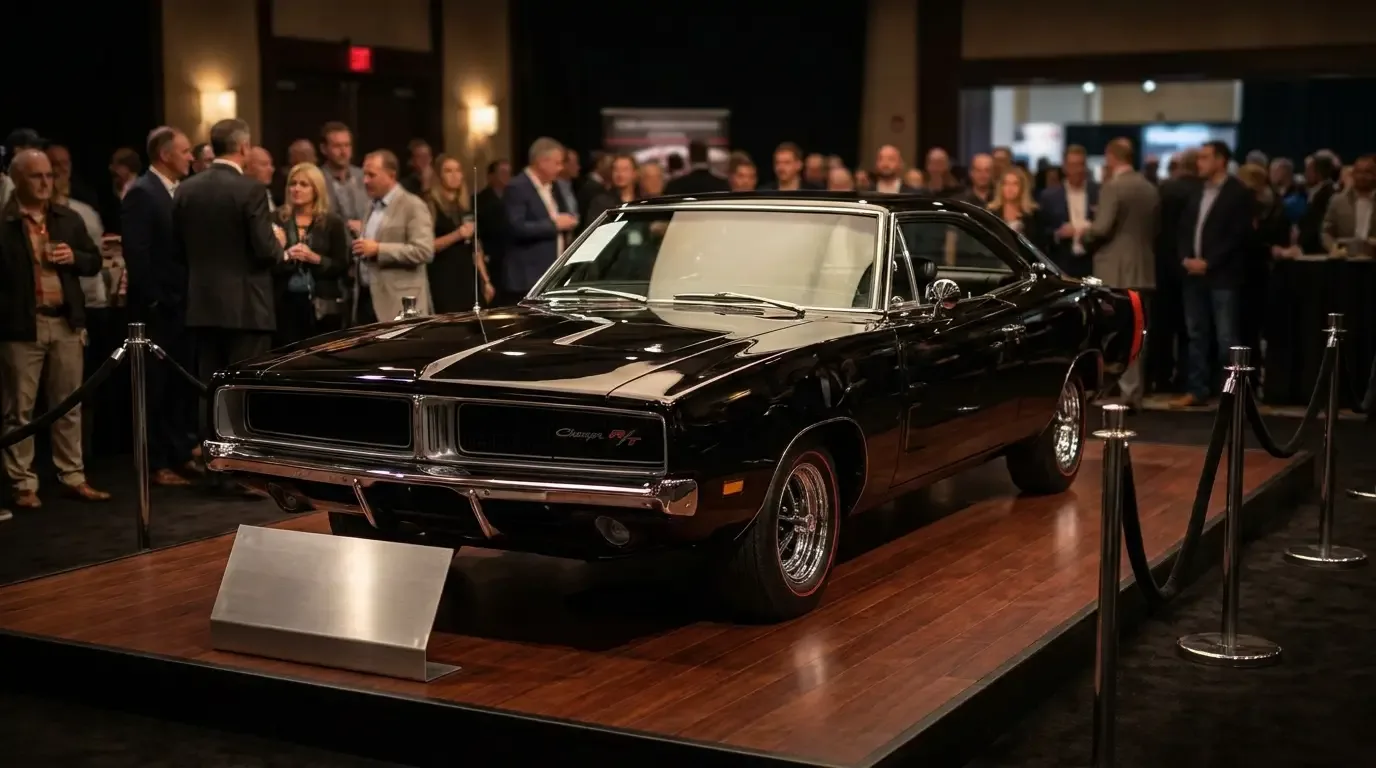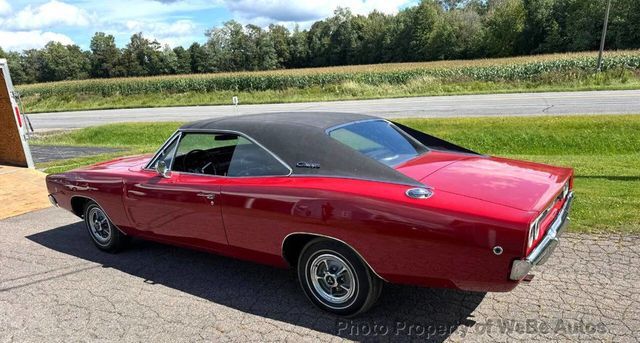
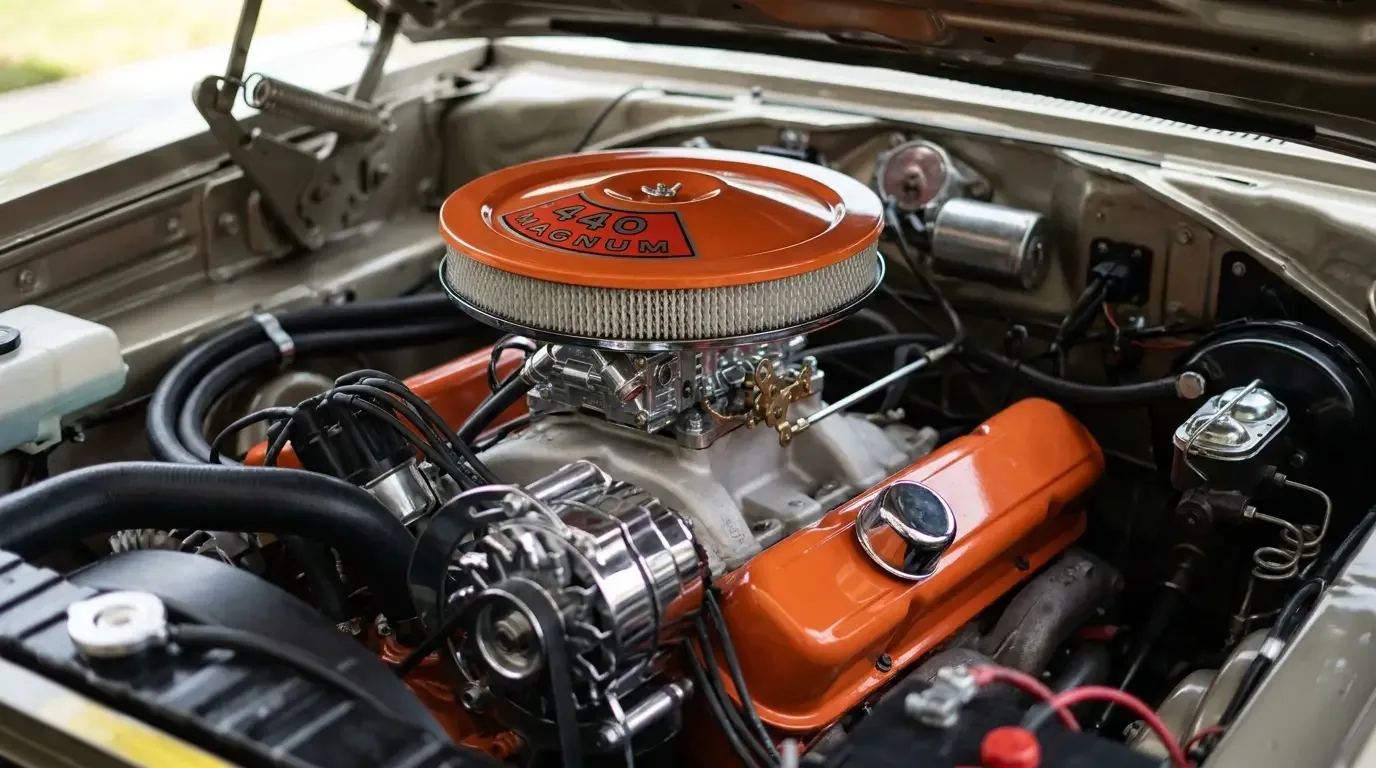
The 440 Magnum made 375 horsepower in the Charger, and that number is the one that matters more than any Hemi headline ever did, because the 440 is the engine most people actually bought and actually drove. The 426 Hemi got the magazine covers. The 440 Magnum got the sales numbers. If you want the real story of what powered the average second-gen Charger off the lot, it's this engine, not the one everybody talks about at car shows.
The 440 Magnum sat one step below the Hemi and one step above the standard 440 four-barrel in the Charger's engine lineup, and it was the volume performance choice for a reason. It made real power, it was cheaper to buy and maintain than a Hemi, and it didn't demand the kind of driveline reinforcement or cooling attention the 426 did. For the full context of the era this engine competed in, the second-gen Charger era is worth reading alongside this.
The number that matters: 375 horsepower
Dodge rated the 440 Magnum at 375 horsepower and 480 lb-ft of torque at 3,200 rpm in the Charger R/T application through most of the second-gen run. That's a gross rating by the measurement standards of the day, meaning it's higher than what a modern net-rated dyno would show, but it's also not fantasy. Independent dyno work on well-preserved, stock 440 Magnums has generally landed in roughly the 320 to 350 horsepower range at the flywheel by modern measurement standards, which is still a serious number for a cast-iron big block breathing through a single four-barrel carburetor.
The blower looks great on the invoice. On the dyno it made twelve more horsepower than the combo that cost a third as much. That's the number that matters, and it applies here too. A stock 440 Magnum in good tune, with the right carb jetting and ignition timing, will out-run a tired Hemi every time. Condition and tune beat catalog specs on the street.
440 versus 426 Hemi: what the numbers actually say
The Hemi was rated higher on paper, 425 horsepower against the 440 Magnum's 375, but the real-world gap was smaller than the rating suggests, and the ownership cost gap was enormous. A Hemi car cost significantly more to option from the factory, needed more attention to the dual-quad carburetion and the higher compression ratio, and was less forgiving of pump gas as the octane wars of the early 1970s took hold. The 440 ran fine on regular premium well into the emissions-choked years the Hemi struggled through.
For a buyer in 1969 comparing the two on a dealer lot, the 440 Magnum was the rational choice unless you specifically wanted the Hemi's reputation or planned to race the car seriously. Most buyers picked rational. That's why 440 Magnum Chargers vastly outnumber Hemi cars in surviving population today, and it's why the aftermarket and the parts supply for the 440 is deeper and cheaper than Hemi parts remain. That practicality traces back to the styling and engineering choices Dodge made a year earlier, which the Why 1968 Charger Changed Design story covers in more depth.
"The blower looks great on the invoice. On the dyno it made twelve more horsepower than the combo that cost a third as much. That's the number that matters."
— Dan Reeves
| Spec | 440 Magnum | 426 Hemi |
|---|---|---|
| Horsepower (gross rating) | 375 hp | 425 hp |
| Torque | 480 lb-ft | 490 lb-ft |
| Carburetion | Single 4-barrel | Dual 4-barrel |
| Factory option cost premium | Lower | Significantly higher |
| Street usability on pump gas | Good | Marginal by the mid 1970s |
What actually breaks on a 440 Magnum
The 440 is a durable engine, but it has known weak points and I'd rather name them than pretend the engine is perfect. The factory exhaust manifolds crack, especially the driver's side on cars that see hard use. Carburetor issues from ethanol-blended modern fuel eating old gaskets are common on cars that haven't been rebuilt with modern-compatible seals. And the factory cooling system, adequate when new, is often marginal on a car that's had 50 years of radiator scale buildup and a fan clutch nobody's replaced.
None of these are expensive problems individually. A cracked manifold is a bolt-on fix. A carb rebuild with modern seals runs a few hundred dollars at a shop. The mistake buyers make is assuming a running 440 Magnum needs nothing, when in reality most of these engines have accumulated small deferred maintenance items that add up if you ignore all of them at once.
🔧 Inspection Priorities
- Exhaust manifolds, especially driver's side. Listen for a tick at idle that changes with engine load. Cracked manifolds are common and not expensive to replace.
- Carburetor and fuel lines. Check for ethanol damage to old gaskets and float bowls. A rebuild with modern-compatible parts runs a few hundred dollars.
- Cooling system. Radiator, fan clutch, and water pump condition matter more on a big block than a small block. Overheating on a 440 in traffic is a common complaint on unrestored cars.
- Numbers matching verification. A 440 Magnum block casting number and date code should match what the fender tag claims. Don't take a seller's word for it.
Why the 440 Magnum matters to today's buyer
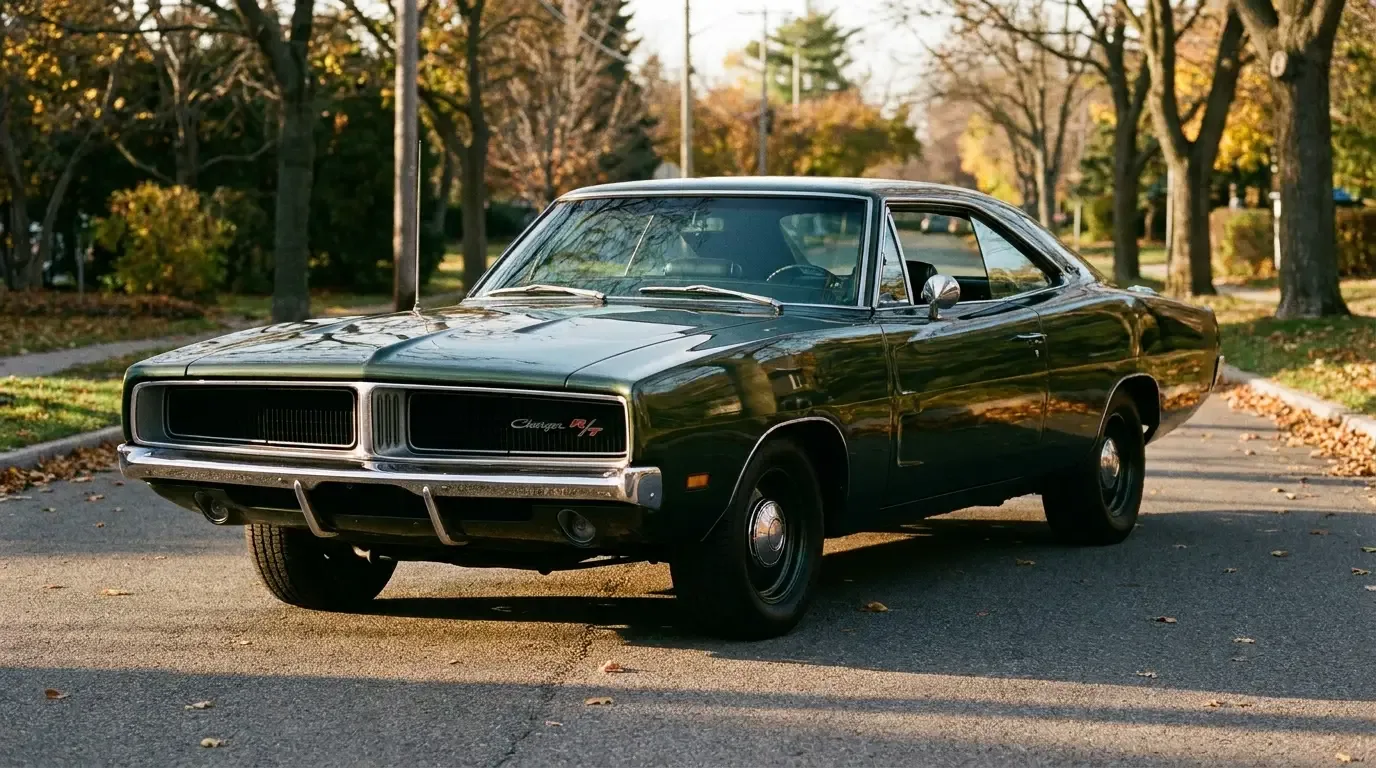
If you're shopping a second-gen Charger and comparing a 440 Magnum car to a small block, the 440 is the meaningful step up in real performance without stepping into Hemi money and Hemi maintenance. It's also, practically, the more sensible collector car to actually drive regularly, because parts are available and mechanics who've never touched a Hemi can still work on a 440 without much trouble. The R/T's read more here covers how the Magnum fit into the broader R/T performance package if you want the complete option-code picture.
The Hemi gets the legend status. The 440 Magnum gets driven. Both are valid ways to own a piece of this era, but only one of them shows up at the gas station on a Saturday morning without an owner sweating the fuel octane.
Sources and notes
- Chrysler B engine (Wikipedia) - confirms the 440 Magnum's 375 hp gross rating and 480 lb-ft at 3,200 rpm, and the 440 Six Pack's 390 hp.
- Chrysler Hemi engine (Wikipedia) - confirms the 426 Hemi's 425 hp gross and 490 lb-ft torque ratings.
- The 426 Hemi vs. the 440 Magnum (Chrysler Performance History) - corroborates the near-identical torque figures and the street-performance closeness of the two engines.
- Definitive 1968 - 70 Dodge Charger buyer's guide (Hagerty) - context on the second-gen Charger engine lineup and ownership considerations.
- 426 Hemi V8 (Mopar Enthusiast Network) - reference on Hemi carburetion, compression and maintenance demands versus the 440.