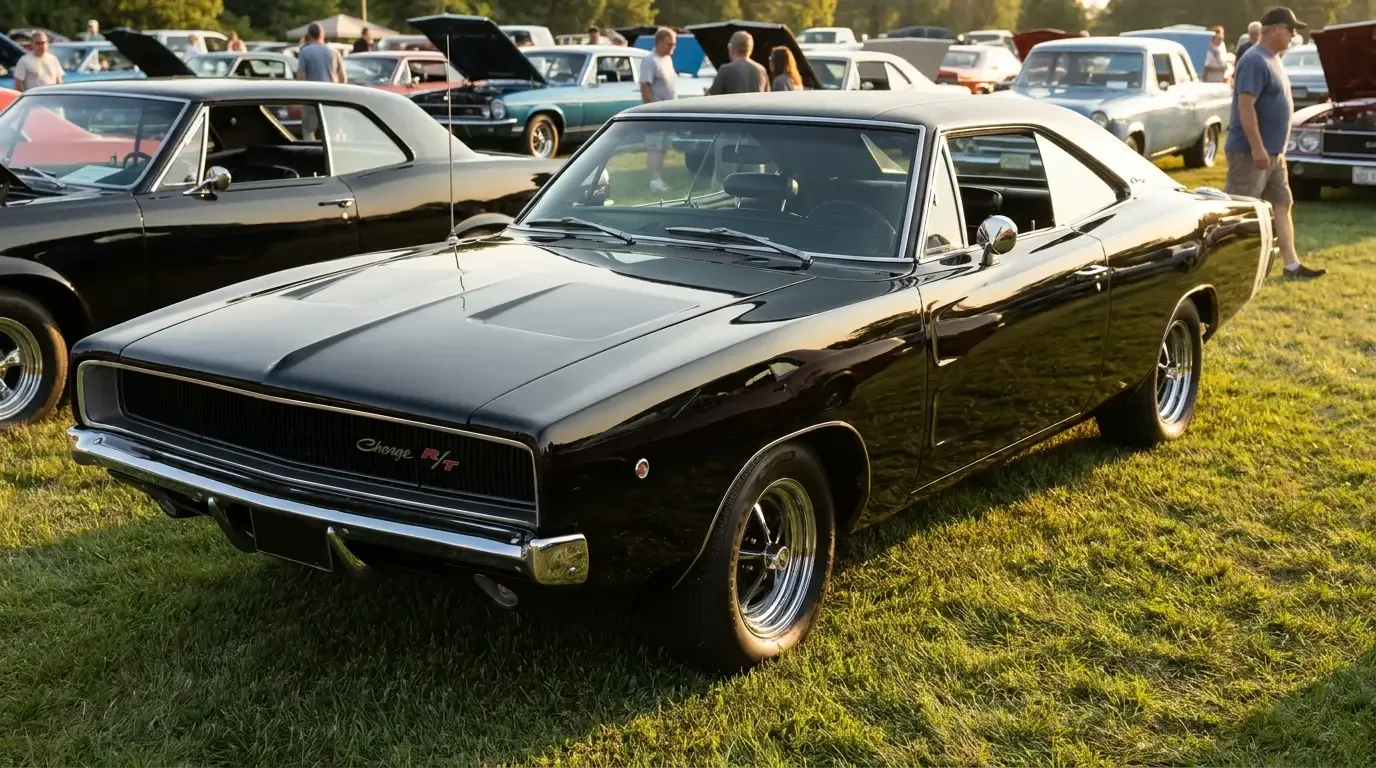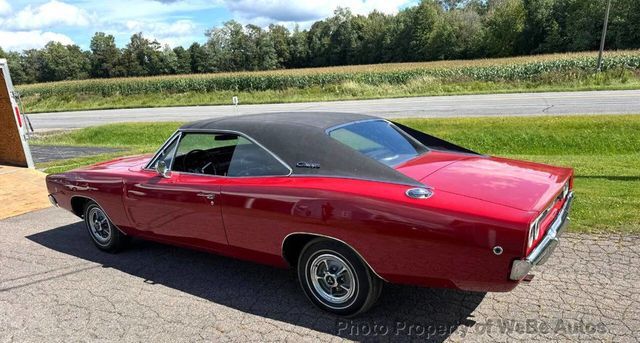
A 1969 Dodge Charger R/T with a documented 440 or a real Hemi sold for well under 50,000 dollars for most of the 1990s and a good chunk of the 2000s. Today the same car, properly documented, can clear six figures, and a genuine Daytona or a Hemi car with a paper trail can go multiples beyond that. That is not inflation. That is a market repricing what it decided this specific year of car actually represents, and the reasons behind it matter more than the number itself.
Value is condition plus documentation plus liquidity plus downside, in that order, and the 1969 Charger checks boxes on all four in ways a lot of other muscle cars from the era don't. see the details on the model itself if you want the full picture of what makes 1969 the year collectors circle on the second-gen Charger's three-year run.
The Bullitt effect, real and overstated
Every conversation about 1969 Charger values eventually mentions the black Charger that chased a Mustang through San Francisco in a 1968 film. That association is real, and it does move buyer interest, especially among people newer to the hobby who came to muscle cars through pop culture rather than through growing up around them. But I'd caution against crediting a movie car for the entire value story. A #2 car with a thin paper trail isn't a #2 car when the check clears. It's a #3 with a good story, and the appraisal has to say so. The film association gets a car looked at. It doesn't get it sold at a premium unless the documentation backs up everything else.
Homologation cars changed the collecting math
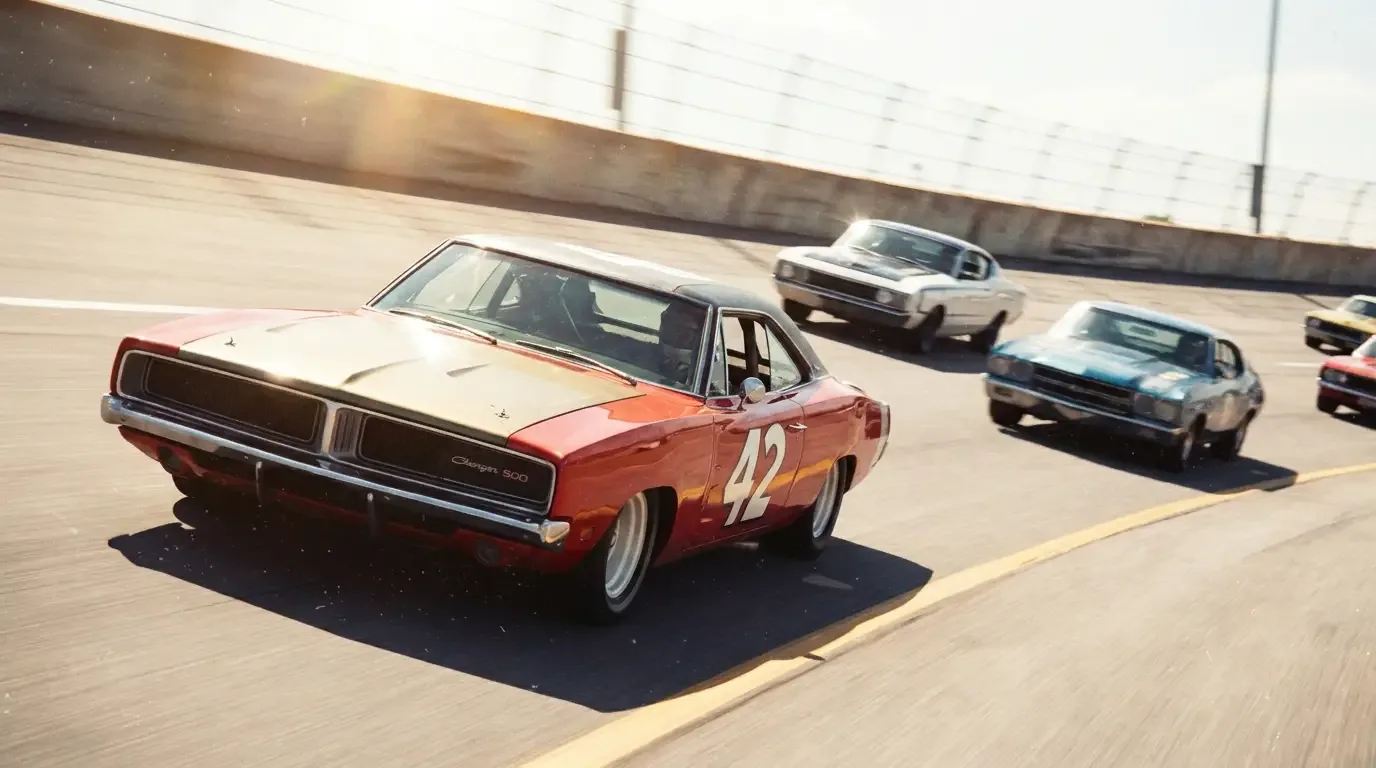
The bigger driver of the 1969 Charger's climb is the Charger 500 and the Charger Daytona, both built in limited numbers to satisfy NASCAR's homologation rules. Roughly 392 Charger 500s and around 503 Daytonas left the factory, and those cars occupy a different collecting tier entirely from a standard R/T. When one of those comes to market with real documentation, it doesn't just set a record for the Charger, it resets what buyers think the whole 1969 lineup is worth, because scarcity at the top of a model year pulls value up through the rest of the range.
This is the mechanism that matters most for anyone trying to understand why 1969 specifically, rather than 1968 or 1970, became the year that soared. The homologation cars gave the model year a ceiling that the other two years in the second-gen run don't have in the same way, and ceilings pull everything below them upward over time.
"A #2 car with a thin paper trail isn't a #2 car when the check clears. It's a #3 with a good story, and the appraisal has to say so."
— Marcus Feld
What documentation actually does to a sale price
I've appraised cars that looked identical from ten feet away and sold twenty to thirty percent apart because one had a broadcast sheet, a fender tag that matched, and a chain of title back to the original dealer, and the other had none of that. Buyers at the top of this market aren't paying for the car in front of them. They're paying for certainty that the car is what it's claimed to be, because a Hemi or 440 clone costs a fraction of the real thing to build and looks the same to anyone without documentation training.
The downside risk on an undocumented big-block Charger is real and it's specific. If you can't prove the engine is numbers-matching, you should price the car as if it isn't, because that's how the next buyer, and the one after that, will treat it. I've seen sellers get burned holding out for Hemi money on a car with a replacement block and no paperwork to prove otherwise.
| Documentation level | Typical value impact | Liquidity |
|---|---|---|
| Full build sheet + fender tag + title chain | Highest, commands top of market | Fast, multiple bidders |
| Fender tag only, partial history | Moderate discount, 10-20% | Slower, needs a patient buyer |
| No documentation, engine unverified | Priced as base car regardless of claims | Slow, price-sensitive buyers only |
Why liquidity matters as much as the sale price
A car that sells once for a big number at a televised auction tells you less than people think. What matters for real value is whether that price repeats across multiple sales with different buyers and different sellers. The documented 1969 Charger R/T and Daytona market has that repeatability now. Enough transactions have happened at the higher tiers that appraisers can point to a real trend line rather than a single outlier sale, and that's what separates a genuinely soared market from a car that had one good day at auction.
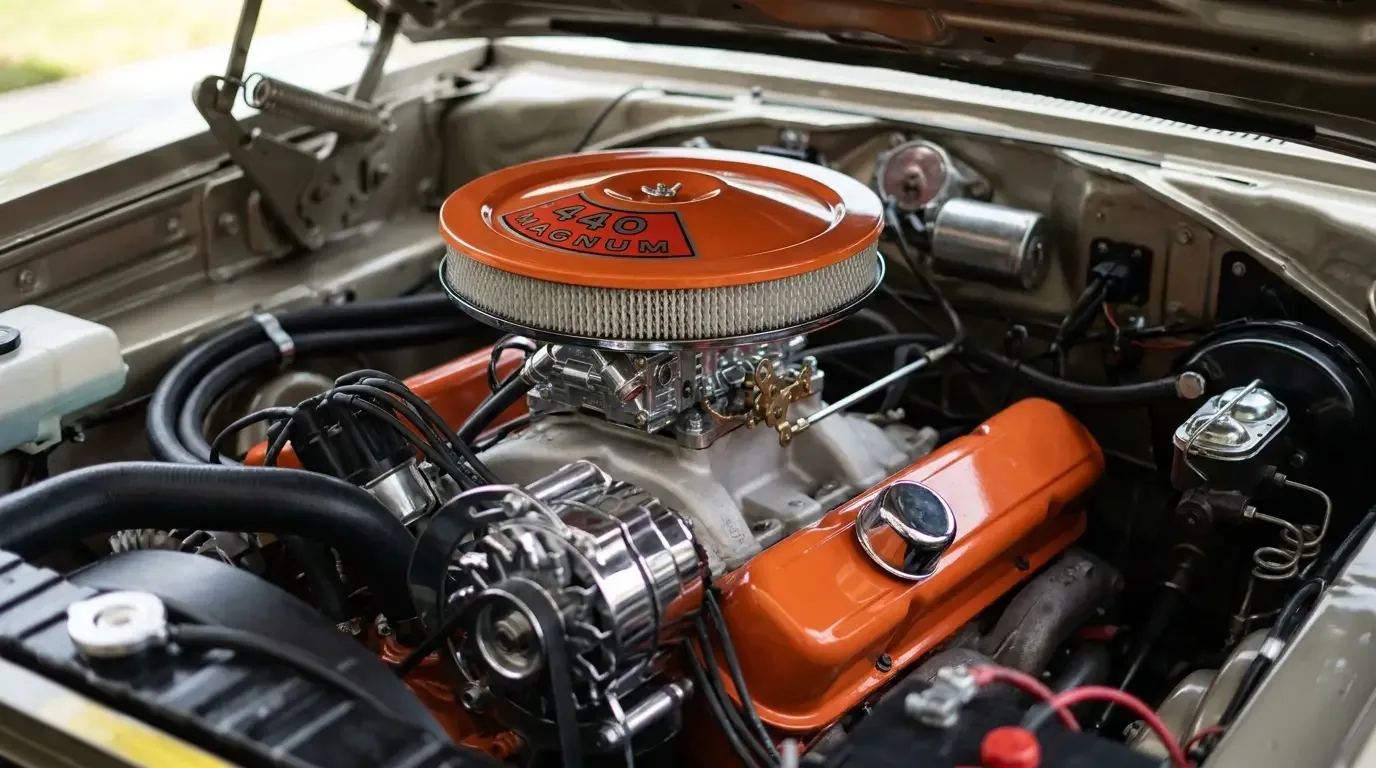
The 440 Magnum cars, in particular, have become the volume tier of this rising market, common enough that there's real trading activity but scarce enough in good condition that prices have moved up steadily rather than spiking and correcting. The the Charger feature on Classic Cars Arena covers that engine option in more detail if you're trying to figure out where a specific 440 car sits in this range.
What this means if you're buying or selling right now
If you're selling a documented 1969 Charger R/T or Daytona today, the market has genuinely moved in your favor over the past decade, and a professional appraisal before you list is worth the fee, because sellers routinely underprice cars they've owned for decades without tracking where the market actually sits now. If you're buying, budget for the documentation search before you budget for the car. A cheap 1969 Charger with no paper trail can turn into an expensive lesson if you pay Hemi-adjacent money for a car that can't prove what it is.
For the fuller picture of how this model got here across its whole production run, dodge charger history lays out the years before and after 1969 that set up this specific moment in the collector market. And if you want to see where the broader second-gen range sits today, pricing on classic 1970 Chargers gives a useful comparison point against the year that gets all the attention.
Sources and notes
- Dodge Charger Daytona (Wikipedia) - confirms 503 Daytonas built (only 70 with the Hemi), the scarcity that anchors the top of the 1969 market.
- 1969 Charger 500: or is it Charger 392? (Remember Road) - documents the roughly 392 Charger 500s actually built.
- Dodge Charger 2nd-gen market data (Classic.com) - repeat-sale price trends supporting the six-figure documented R/T and Daytona tiers.
- Definitive 1968 - 70 Dodge Charger buyer's guide (Hagerty) - valuation drivers, documentation and the Bullitt pop-culture effect.
- Bullitt (Wikipedia) - the 1968 film and its black 1968 Charger, the pop-culture association referenced in this piece.