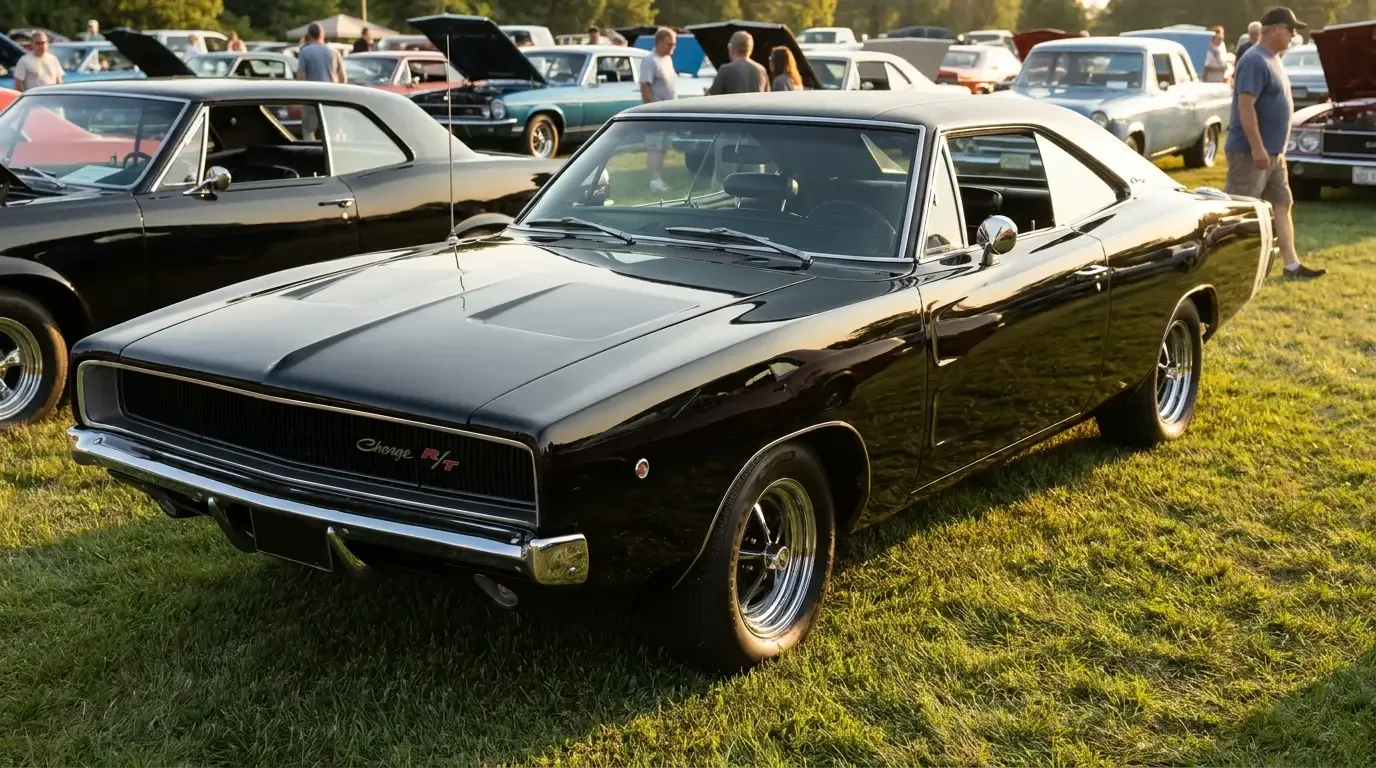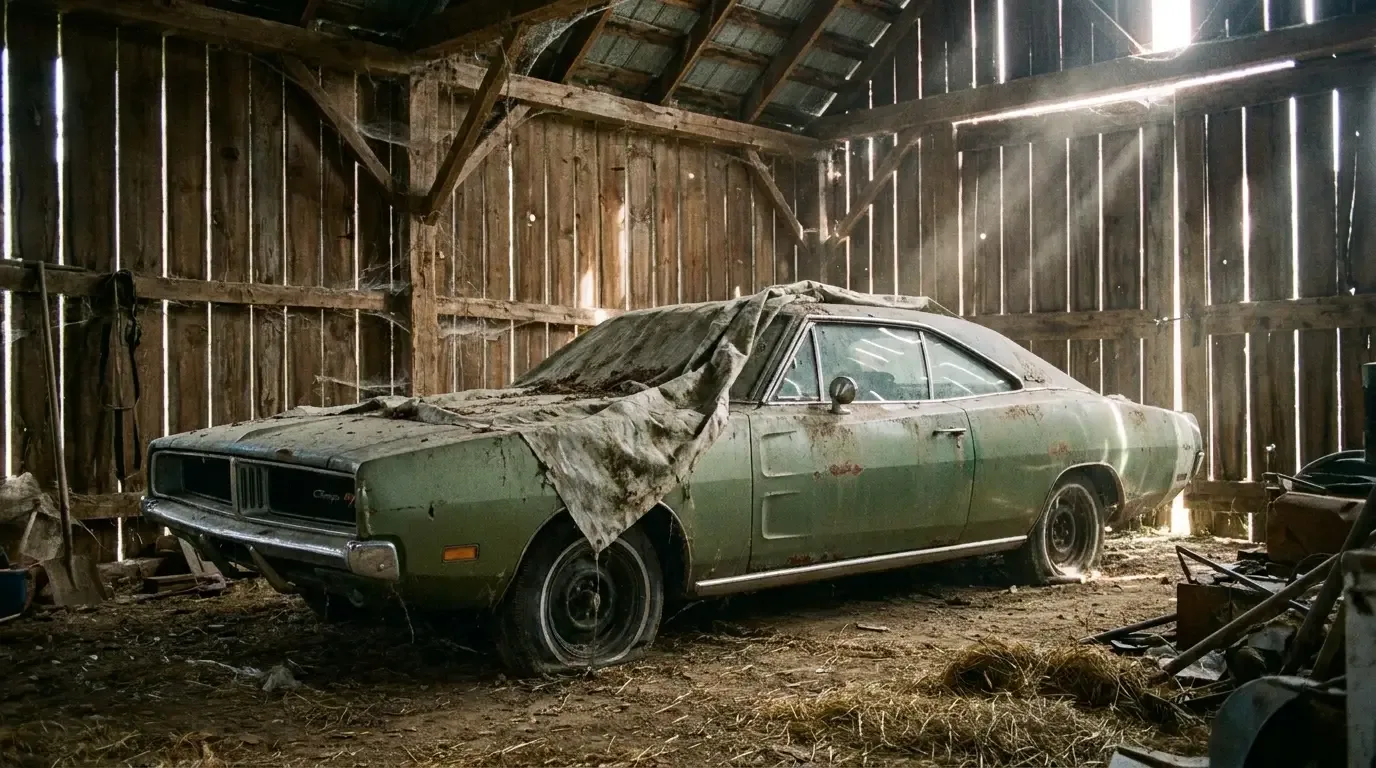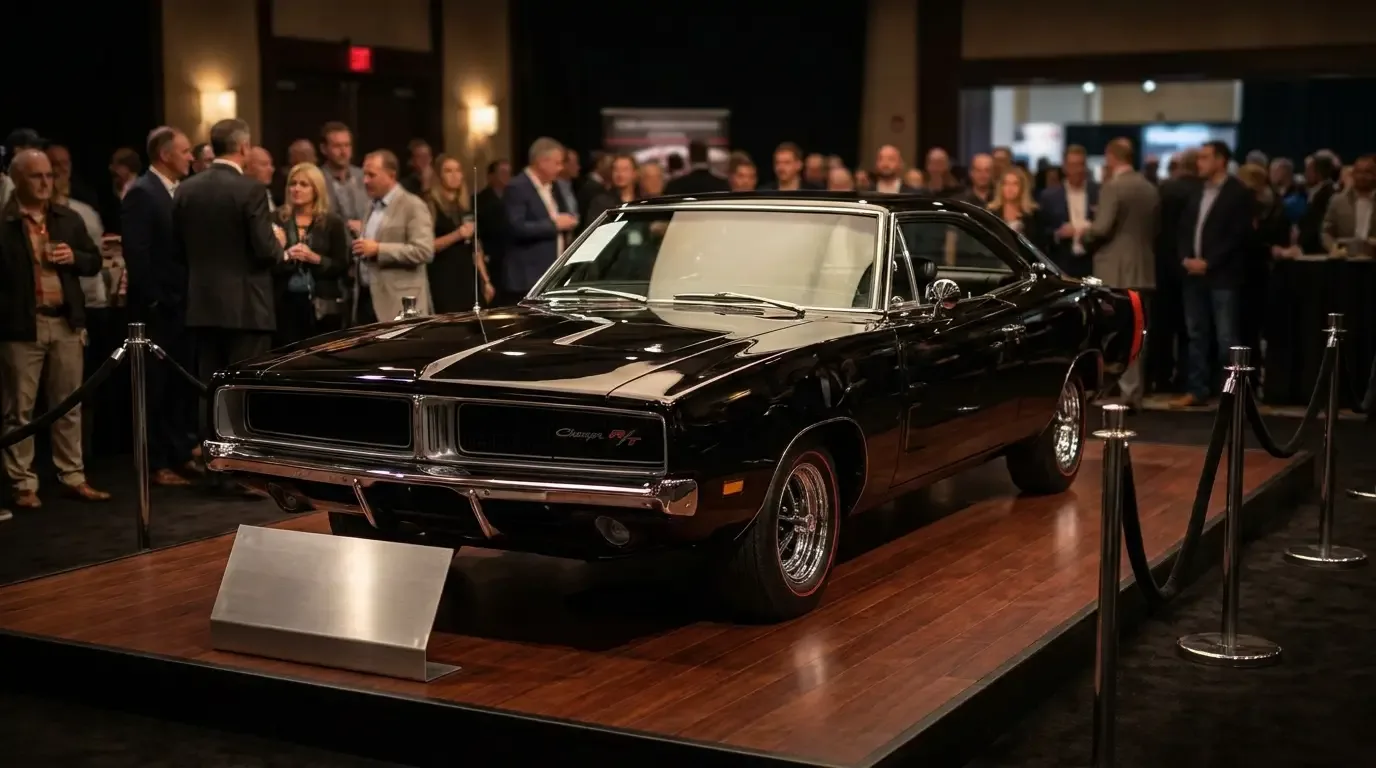
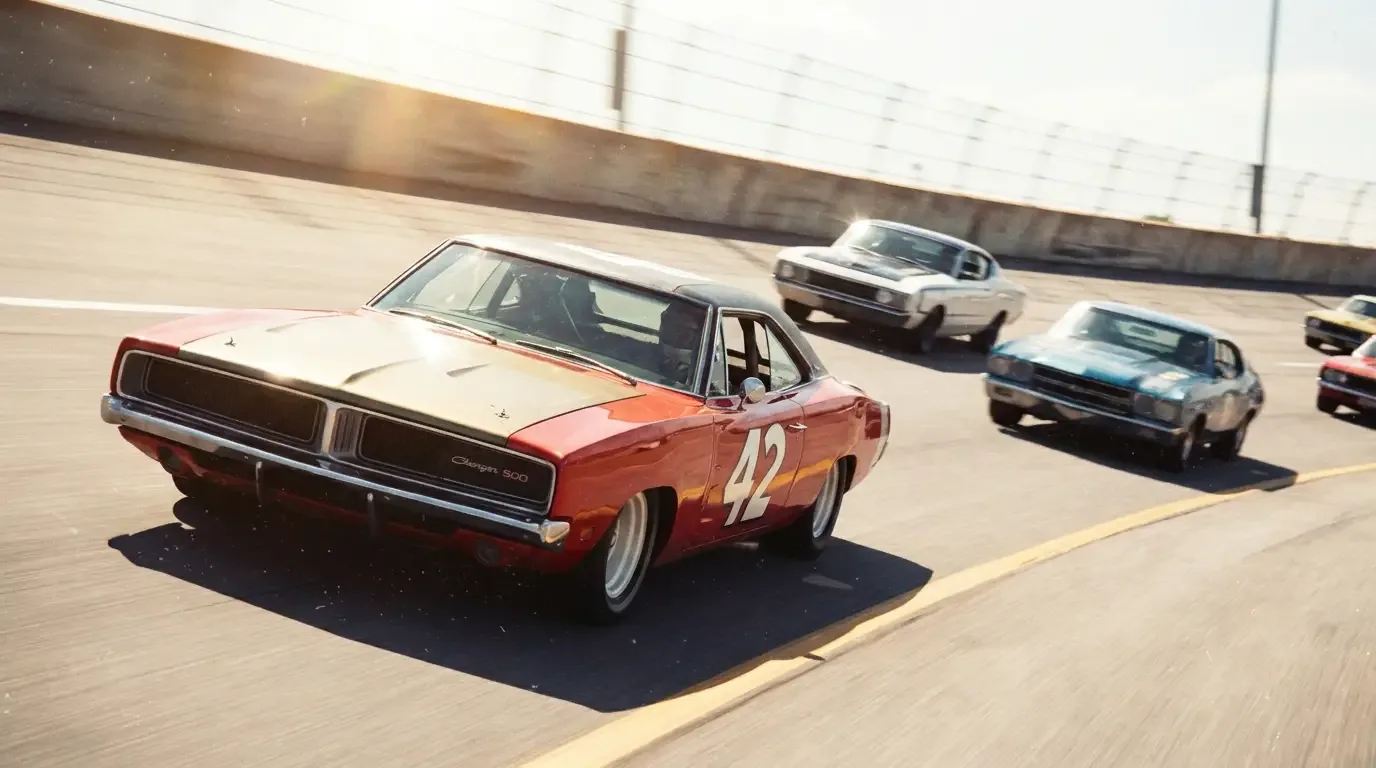
The guy I talked to at a Charlotte swap meet a few years back had a grandfather who worked the pits for a NASCAR team in the late 1960s, and he told me the story the way it had been told to him. Dodge showed up to the 1968 season with a Charger that looked fast standing still, and it took the team about half a season to figure out the car looked faster than it actually drove through the air. That gap between how a Charger looked and how it performed at 190 miles an hour is the whole story of the second-gen Charger's run in NASCAR, and it's a better story than the highlight reel usually tells.
The 1968 to 1970 Charger, the second generation of the car, was built around a fastback roofline and a tunneled rear window that looked sensational on a showroom floor and did something unfortunate at superspeedway velocities. If you haven't read up on the body style itself, read on for the full picture of what made that car a design landmark before it ever turned a lap at Daytona.
1968: a beautiful car that fought the wind
Dodge brought the redesigned Charger to NASCAR for the 1968 season expecting the new shape to be a clean improvement over the notchback Charger that preceded it. It wasn't. The recessed grille and the tunneled backlight created lift and drag at high speed that the previous body didn't have, and drivers noticed it immediately on the long straights at Daytona and Talladega. The car was quick in a straight line thanks to the 426 Hemi under the hood, but it got loose in the corners and lost ground on the superspeedways where aerodynamics matter more than raw horsepower.
Bobby Isaac, Charlie Glotzbach, and the rest of the Dodge stable ran the Charger through 1968 with mixed results. The car won races, because a Hemi and a good chassis will win races even with a mediocre body shape, but Dodge's engineers knew by the end of the season that the shape itself was working against them at the top tracks. That realization is what led directly to the Charger 500 for 1969, a running mod meant to fix the aero problem without starting over from scratch.
The Charger 500 fix
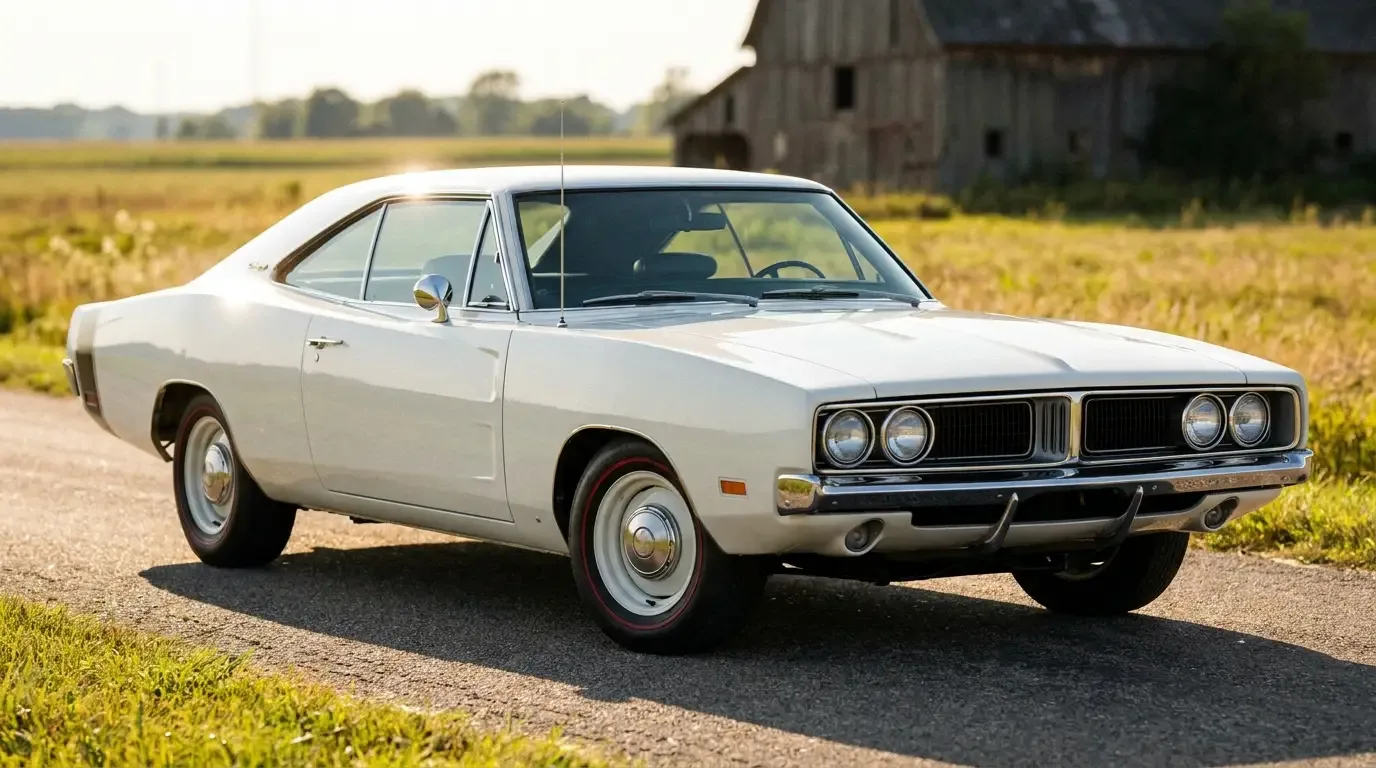
For 1969 Dodge built the Charger 500, a homologation special that flushed the grille forward to be nearly flat with the nose and swapped the tunneled rear window for a flush-mounted piece of glass borrowed from the Coronet. The idea was simple: reduce the turbulence those recessed features caused at speed. It worked, to a point. The Charger 500 was faster than the standard 1969 Charger on the big tracks, and NASCAR's rule called for 500 street versions to qualify it for competition, though Dodge actually built closer to 392, which is exactly the kind of homologation math that decided a lot of what showed up in showrooms during this era.
But the 500 wasn't enough. Ford's Talladega and Mercury's Cyclone Spoiler II were still faster in a straight line, and Dodge went back to the wind tunnel looking for more. That work produced the Charger Daytona for late 1969, the winged, nose-coned car that finally solved the aero problem completely and then some. the Charger Daytona story covers that car and the wing wars it kicked off in full, because it deserves its own telling rather than a paragraph here.
"The guy I talked to at Carlisle had owned his car since 1974. Drove it there every single year, even the time the water pump let go outside Harrisburg."
— Patrick Walsh
What the drivers actually said about the car
Bobby Isaac won the 1970 NASCAR championship in a Dodge, and by most driver accounts of the era, the second-gen Charger and its aero variants were a handful at the limit even after the fixes. These were heavy cars with skinny bias-ply tires by modern standards, running speeds that outpaced the chassis technology underneath them. Drivers respected the power. They were more careful about the speed the aero packages unlocked, because a car that's suddenly 15 or 20 miles an hour faster in a straight line changes how it behaves in every corner that follows.
The pit crews I've talked to over the years, secondhand through family or through old-timers at car shows, describe the Daytona and Superbird era as equal parts thrilling and terrifying to work on, because everybody understood these were experimental aero shapes bolted onto production car bodies, and nobody had decades of data on how they'd hold up at 200 miles an hour on a banked oval.
Homologation numbers and why they mattered
NASCAR's rule at the time required a minimum production run for a body style to be legal in competition, and that rule shaped the whole aero war. The Charger 500's homologation target and the roughly 503 Daytonas built meant regular buyers could walk into a Dodge dealership and drive home something that had, in effect, been designed in a wind tunnel for a superspeedway. That's an unusual thing to be able to say about a car parked in a suburban driveway, and it's part of why these specific homologation Chargers command such attention from collectors today.
| Model | Year | NASCAR purpose | Street units built |
|---|---|---|---|
| Charger (standard) | 1968 | Base racer, aero issues at speed | N/A, standard production |
| Charger 500 | 1969 | Flush grille and backlight, first aero fix | About 392 (500 was the target) |
| Charger Daytona | 1969 | Nose cone and wing, full aero solution | 503 |
Why this era still matters to Charger buyers
None of this racing history is separate from what a 1969 Charger is worth today. The NASCAR connection, real or aspirational, is baked into how collectors think about these cars, and it's a big part of why 1969 charger value has climbed the way it has over the past decade. A car doesn't need to have actually turned a lap at Daytona to benefit from the story of the cars that did. Buyers pay for that connection whether they can articulate it or not.
What's easy to lose in the mythology is that these were genuinely difficult engineering problems solved under real time pressure, by teams that didn't have computer modeling or years to iterate. The Charger's shape changed three times in about eighteen months chasing a wind tunnel number, and every one of those changes ended up as a distinct, collectible variant. That's not marketing. That's the actual history, and it's a better story than most of what gets repeated at car shows.
Sources and notes
- Dodge Charger Daytona (Wikipedia) - confirms 503 Daytonas built, the car's origin in the 1968 Charger 500's racing shortfall, and the 1971 NASCAR rule limiting aero cars to 305 cubic inches.
- Aero Warriors (Wikipedia) - overview of the 1969 - 70 Charger 500, Daytona, Talladega and Cyclone Spoiler II superspeedway war.
- 1969 Charger 500: or is it Charger 392? (Remember Road) - documents that roughly 392 Charger 500s were actually built against the 500-unit target.
- The story behind NASCAR banning the winged cars (SlashGear) - the 1970 dominance and 1971 rule change that ended the aero era.
- Definitive 1968 - 70 Dodge Charger buyer's guide (Hagerty) - background on the second-gen body's aero shortcomings and the homologation variants.