
Ask a room of collectors why a dusty, mouse-chewed coupe pulled from a collapsing barn can outsell a glossy frame-off restoration of the same model, and you will get a lot of romance and very little math. I deal in the math. A barn find carries a premium because of what it still has that a restored car has lost, and that difference shows up in hammer prices when the right car crosses the block. The premium is real, but it is narrow, conditional, and easy to overpay for if you do not understand where it comes from.
Car Features
6 min read
Why Barn Finds Are Valuable
Barn finds command a premium for a narrow, conditional reason. Here is where the value actually comes from, and when a rough original wins.
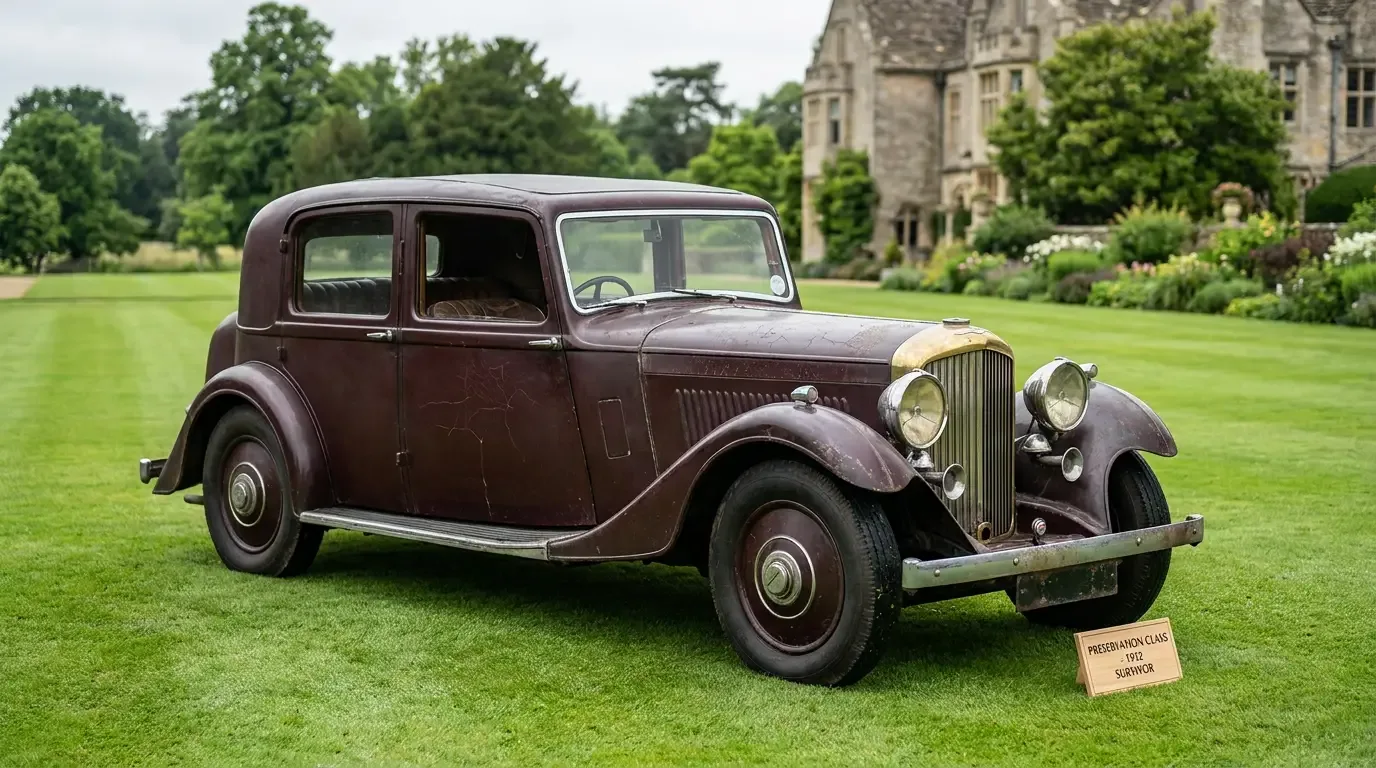
Before we talk value, it helps to be clear on the category itself. If you want the full definition of the term, start with what is a barn find, then come back here for the market side of the story.
Originality is a one-time asset
The single idea that drives barn find value is this: a car is only original once. Factory paint, factory panel gaps, the assembly-line spot welds, the date-coded glass, the untouched drivetrain stampings, the original interior with its correct grain and stitching. Once any of that is stripped, blasted, repainted, or reupholstered, it is gone for good. You can restore a car to a high standard many times over its life. You can never un-restore it back to born-with condition.
That is why serious buyers treat a well-preserved original as a finite resource. A restored car represents skilled labor and money, both of which are replaceable. An original survivor represents information that cannot be recreated: how the factory actually built that car on that day. For marques where documentation is thin, an unmolested example is a reference specimen, not just a vehicle.
What actually creates the premium
Originality alone does not print money. The premium attaches when several specific factors line up. When they do not, a barn find is just a rough car with a good story, and the market prices it accordingly.
- Desirability of the underlying model. A survivor premium is a percentage on top of a base value. A percentage of a common economy car is small. A percentage of a rare, sought-after model can be large.
- Completeness and correctness. Matching-numbers drivetrain, correct date-coded components, and original body panels. Missing or swapped parts erase most of the originality argument.
- Condition of what survives. Dry storage that preserved metal and interior beats a damp barn that turned the car into a rust sculpture.
- Provenance. A documented ownership chain, period paperwork, and a credible discovery story that can be verified.
Miss two or three of those and the "barn find" label does more marketing work than the car deserves. I have watched bidders chase the phrase itself and pay restoration-grade money for a car that needed a restoration anyway, which is the worst of both outcomes.
"I tell clients to price the car, not the cobwebs. Strip away the discovery story and ask what the metal, the numbers, and the paperwork are actually worth. If the answer still beats a comparable restored example, then you have found the rare case where the premium is genuine."
David Mercer
Provenance is the multiplier
Provenance is the part amateurs undervalue and the market rewards most. A believable, documented history does two things at once. It confirms the car is what the seller claims, and it removes the buyer's biggest fear, which is a rebody or a clone wearing someone else's identity. When a survivor arrives with period registration, service records, factory build documentation, and photographs across decades of single-family ownership, the risk premium collapses and the price climbs.
The reverse is just as true. An "original" car with no paperwork forces the buyer to underwrite the uncertainty themselves, and cautious buyers bid accordingly. Two cars in identical physical condition can sell tens of thousands of dollars apart on documentation alone. In the barn find world, the folder of papers in the glovebox is frequently worth more than any single mechanical component.
When a rough original beats a restoration at auction
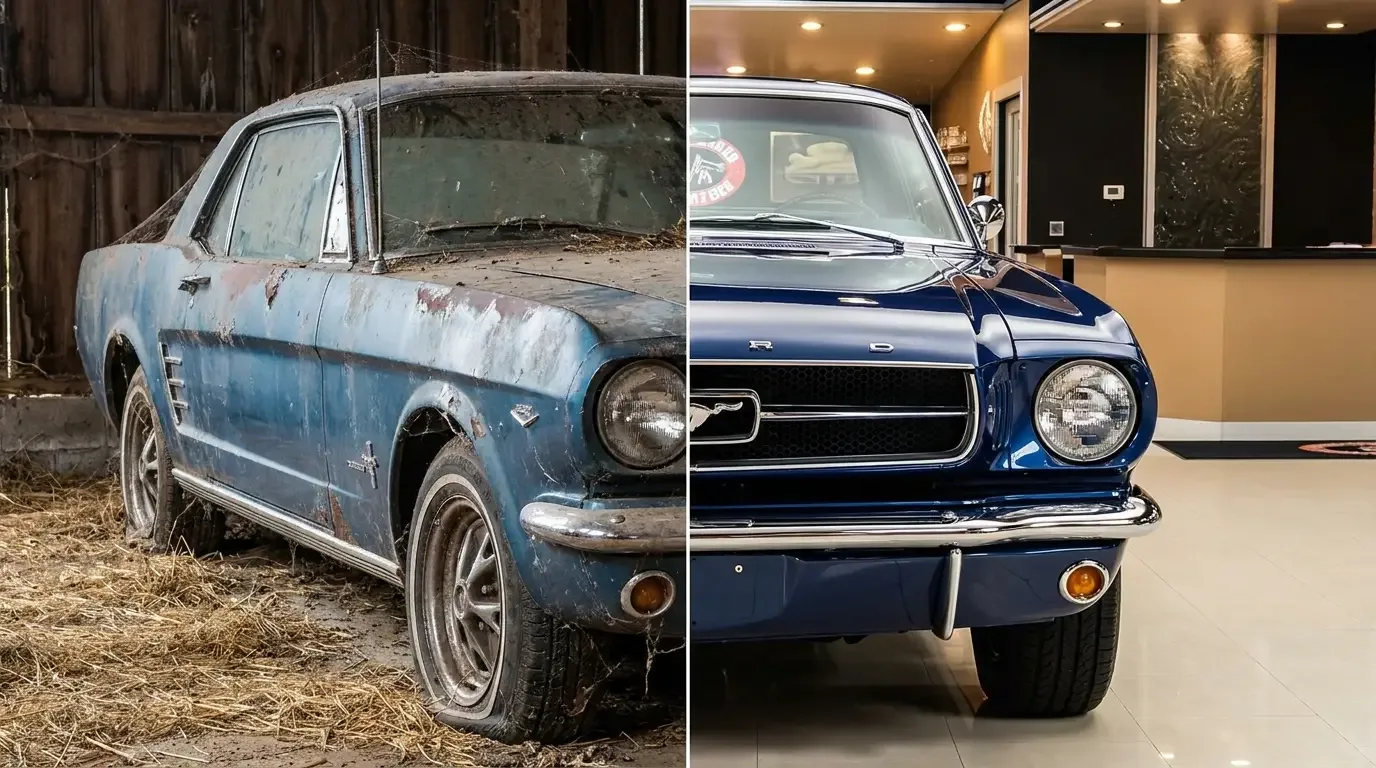
Here is the scenario collectors argue about, resolved with the way the block actually behaves. A rough, complete, matching-numbers original can outsell a clean older restoration of the same model when three conditions hold: the model is desirable enough that authenticity matters to buyers, the car is honest and complete rather than a picked-over shell, and the provenance is documented. Under those conditions the survivor sells as a reference car and the restoration sells as a nice driver, and the market pays more for the reference.
Outside those conditions the restoration usually wins, because most buyers want a car they can use, and a decade-old quality restoration is a known, usable quantity. That is the honest asymmetry. The barn find premium is not a rule, it is an exception that applies to a specific slice of desirable, well-documented, unmolested cars.
| Attribute | Rough original survivor | Older quality restoration |
|---|---|---|
| Factory originality | Intact, cannot be recreated | Replaced during restoration |
| Immediate usability | Often poor, needs recommissioning | Good, ready to drive |
| Reference value to marque | High | Low |
| Premium condition | Desirable model plus documented provenance | Broad demand for turn-key cars |
| Downside risk | Hidden condition, missing parts | Restoration quality and age |
This is also the decision every barn find owner eventually faces, and it has real money attached. The choice to leave a car as a preserved original or return it to as-new condition is covered in detail in Preserve vs Restore a Barn Find, and it deserves a clear-eyed look before anyone touches a car with intact originality.
If you want to see how these premiums translate into asking prices across real cars, browse current barn finds for sale and compare the honest originals against the picked-over projects. The gap between the two, once you know what to look for, is where the whole argument lives.
Sources and notes
- Collector-car auction records and published hammer results for survivor versus restored comparisons.
- Marque registry and factory build documentation practices for matching-numbers verification.
- Preservation-class judging standards from established concours organizations.
- Period registration, service records, and ownership paperwork as provenance references.
Related Reading
Have a
Classic Car
for Sale?
Reach thousands of serious classic car collectors across the US.
Sell It Here →
Are You a Classic Car Dealer?
List your full inventory and connect with targeted classic car buyers.
Join as a Dealer →

About the author
David Mercer
Classic car market analyst with two decades of experience tracking collector car valuations, auction results, and investment trends.




Comments
Be the first to comment on this article.